All Posts
Everything we've written

Buying a Home in Korea — From Subscription Points to Capital Gains Tax: 84 Points, a 3.00%p Stress Rate, 60 Days for Acquisition Tax and the 1.2 Billion Won Line
Subscription points top out at 84, with 35 for dependants, and your loan limit is the smallest of DSR, LTV, the price-band cap and the stress rate. You can back out only until performance starts, and acquisition tax is due within 60 days. 43 guides in the order you meet them.

Pensions and Retirement in Korea — From Building Up National Pension Years to Drawing It: 119 Months of Back Payment, 70% Early, 136% Deferred, the 15 Million Won Line
Years make the pension, and back payment fills missing ones up to 119 months. Workplace and private pensions open at 55, the National Pension at 65, and the same record pays 70% five years early or 136% five years deferred. 45 guides in the order you meet them.

Renting a Home in Korea — Jeonse and Monthly Rent From Contract to Deposit Refund: the 5% Caps, Registration and Your Deposit
Your right to stay comes from delivery and address registration together, and a fixed date adds priority repayment. The conversion cap is 5.00%, increases stop at one-twentieth, and if you must leave unpaid, register the lease first. 30 guides in the order you meet them.

What Changes in Korea in 2027 — Minimum Wage 10,700 Won, a Jobseeker Benefit Floor Above the Cap, Child Allowance to Under 10
Settled changes, government proposals and not-yet-announced figures in separate tables. Minimum wage 10,700 won, health insurance frozen at 7.19%, a jobseeker benefit floor of 68,480 won above the 68,100 cap, and the marriage credit ending with registrations on 31 December 2026.

Year-End Tax Settlement in Korea (2026 Income) — What to Do Before 31 December, in January and in February
Card spending, pension savings, donations and subscription deposits close on 31 December, and the 500,000 won marriage credit needs registration by 31 December 2026. January is for what the tax feed leaves out, February for splitting a bill, and five years for anything missed. 30 guides on a calendar.

Working in Korea — Pay, Leave, Unemployment Benefit and Severance, From Your First Day to Your Last (2026)
A written contract is required even with 4 or fewer workers; the 50% overtime premium is not. Jobseeker benefit needs 180 insured days in 18 months, and severance goes to an IRP within 14 days. Our 53 guides, in the order you meet the questions.
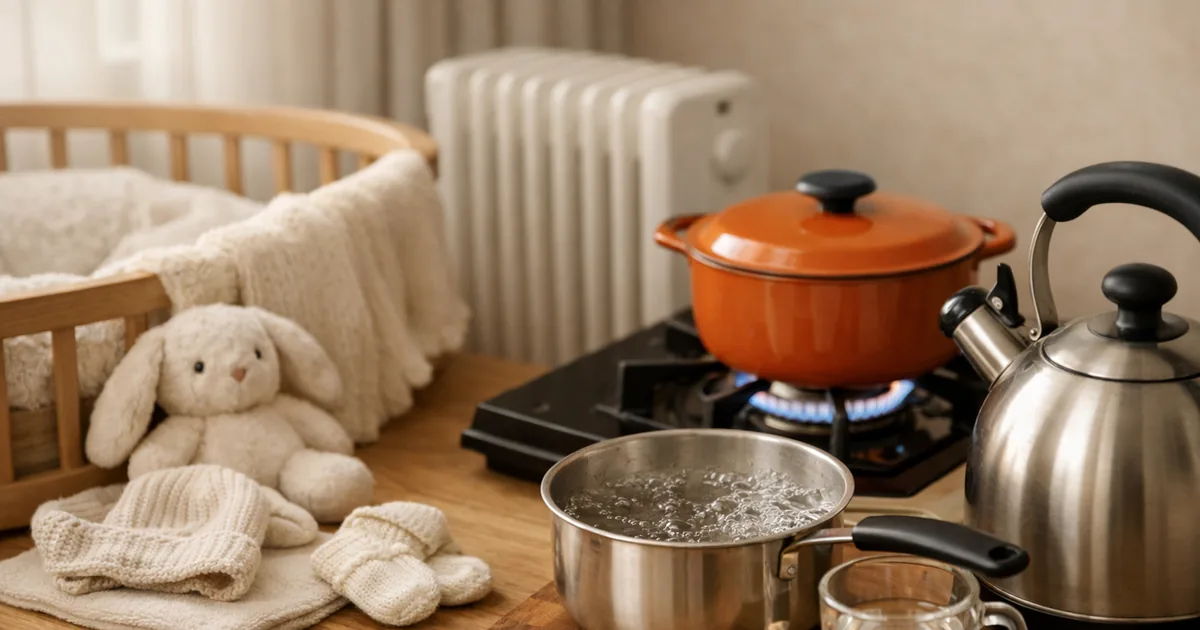
Staying Warm Indoors in a Winter Storm — CDC: No Baby Under 1 in a Cold Room, Never Heat With the Stove, Boil Water 1 Minute
The CDC says turning on the stove for heat is not safe and infants under 1 should never sleep in a cold room. Keep space heaters 3 feet from drapes and bedding, generators 20 feet from windows and doors, and boil water for 1 minute to kill most germs.

Snow Shoveling and Ice Safety — CDC: Cold Strains the Heart, Work Slowly, Stranded Cars Run About 10 Minutes an Hour
The CDC says cold weather puts extra strain on the heart, so follow your doctor's advice on shovelling snow and work slowly. Stay off the ice, and if stranded run the motor and heater about 10 minutes per hour with a window slightly open and the exhaust clear.
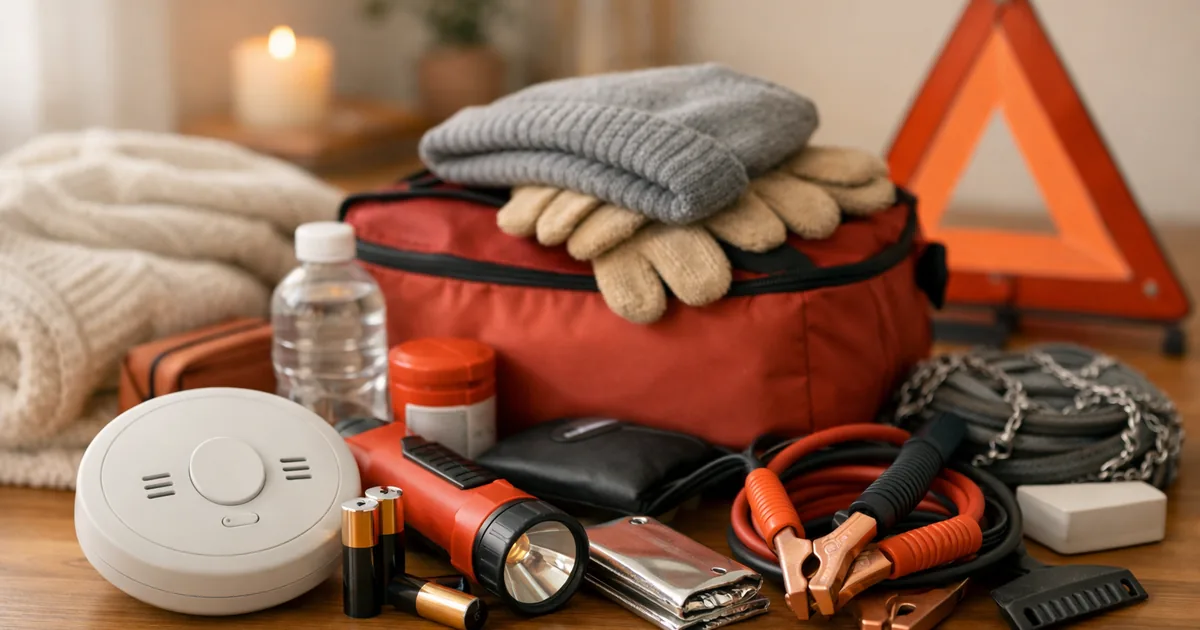
Winter Storm Preparation — CDC: Test CO Detectors Monthly, Batteries Twice a Year, a 17-Item Car Emergency Kit
The CDC says to insulate outside-wall water lines before a winter storm and, if you use a fireplace or heater, test smoke and battery CO detectors monthly and replace batteries twice a year. Keep tires typically at 30-35 psi and a 17-item kit in the car.

Pleurisy — NHS: Symptoms and Treatment, Sharp Chest Pain When Breathing In, Usually Better in a Few Days, 999 for Sudden Chest Pain Lasting 15 Minutes
The NHS describes pleurisy as inflammation of the lining around the lungs. The main symptom is sharp chest pain when breathing in; it usually gets better in a few days, but sudden chest pain lasting 15 minutes or more could be a heart attack or a pulmonary embolism, so call 999.

Labyrinthitis and Vestibular Neuritis — NHS: Vertigo Symptoms and Treatment, Balance Back in 2 to 6 Weeks, Medicines for No More Than 3 Days
The NHS describes labyrinthitis and vestibular neuritis as inner ear infections that affect balance. They cause spinning dizziness and sickness; hearing loss points to labyrinthitis. Balance usually returns in 2 to 6 weeks, and dizziness medicines are taken for no more than 3 days.
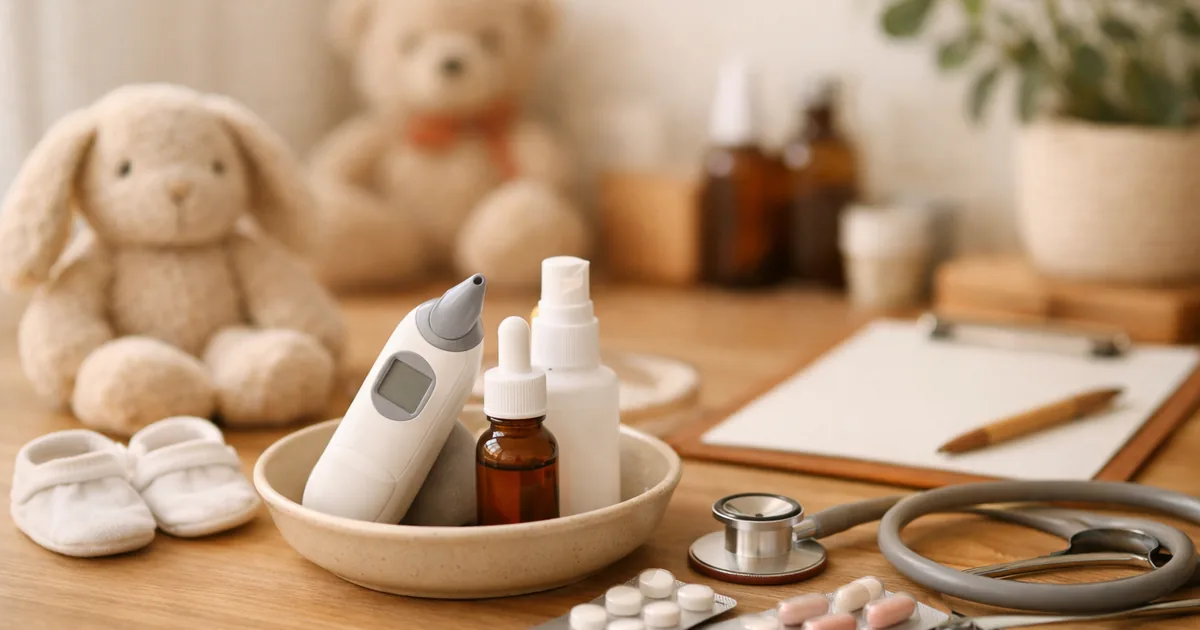
Ear Infections — NHS: Symptoms and Treatment, Often Better Within 3 Days, Pharmacist for Ages 1 to 17, GP for Babies Under 12 Months
The NHS says ear infections are very common, particularly in children, and often get better on their own within 3 days. Children aged 1 to 17 can see a pharmacist; babies under 12 months and earache past 3 days need a GP, and fever, swelling, discharge or hearing change need urgent help.

Korea Housing Rent Increase 5% Cap Calculator — One-Twentieth of Rent or Deposit, No Claim Within 1 Year (Housing Lease Act Art. 7)
Article 7 of Korea's Housing Lease Protection Act caps an increase claim at one-twentieth of the agreed rent or deposit and bars it within 1 year of the lease or last increase; ordinances may set lower. A 200 million won deposit can rise by up to 10 million won; 800,000 won rent by 40,000.

Jeonse Fraud Auction Deferral Calculator (Korea) — Up to 1 Year From the Day After, Priority Purchase at the Highest Bid by the Sale Date (Special Act Arts. 17, 20)
Korea's Special Act on Jeonse Fraud Victims lets a victim ask the court to defer or suspend an auction for up to 1 year from the day after. A victim who declares by the sale date at the highest bid price must be granted the sale. A deferral from 26 October 2026 runs to 26 October 2027 at most.

Jeonse Fraud Victim Checker (Korea) — All Four Conditions, Deposit Up to 500 Million Won (Raisable by 200 Million), 30-Day Committee Review (Special Act Art. 3)
To be decided a jeonse fraud victim in Korea a tenant must meet all four conditions of Article 3: opposing power and fixed date, a deposit of 500 million won or less, loss to 2 or more tenants, and suspected intent not to repay. The committee may raise the cap by 200 million and reviews within 30 days.
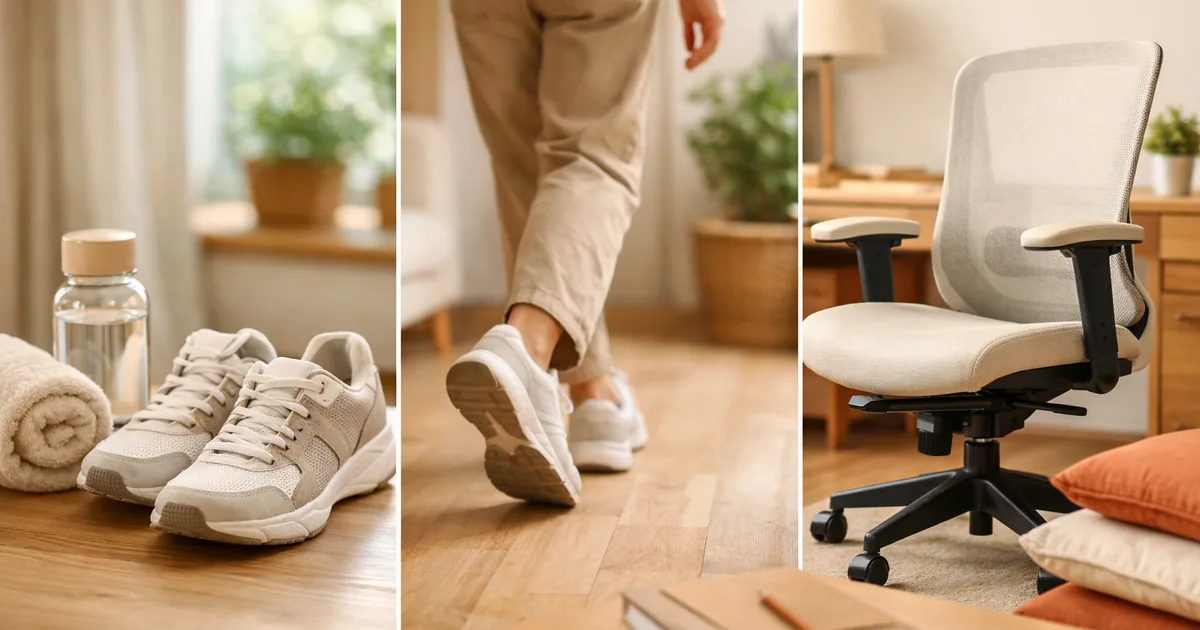
Work-Related Musculoskeletal Injuries — NHS inform: Prevention Tips, a 20-Minute Walk Twice a Day, Change Position Often
NHS inform says muscle, back and joint problems are the biggest single cause of work absence in Scotland, with over a million GP visits a year. A 20-minute walk twice a day, stretches, changing position and a proper chair help prevent them.
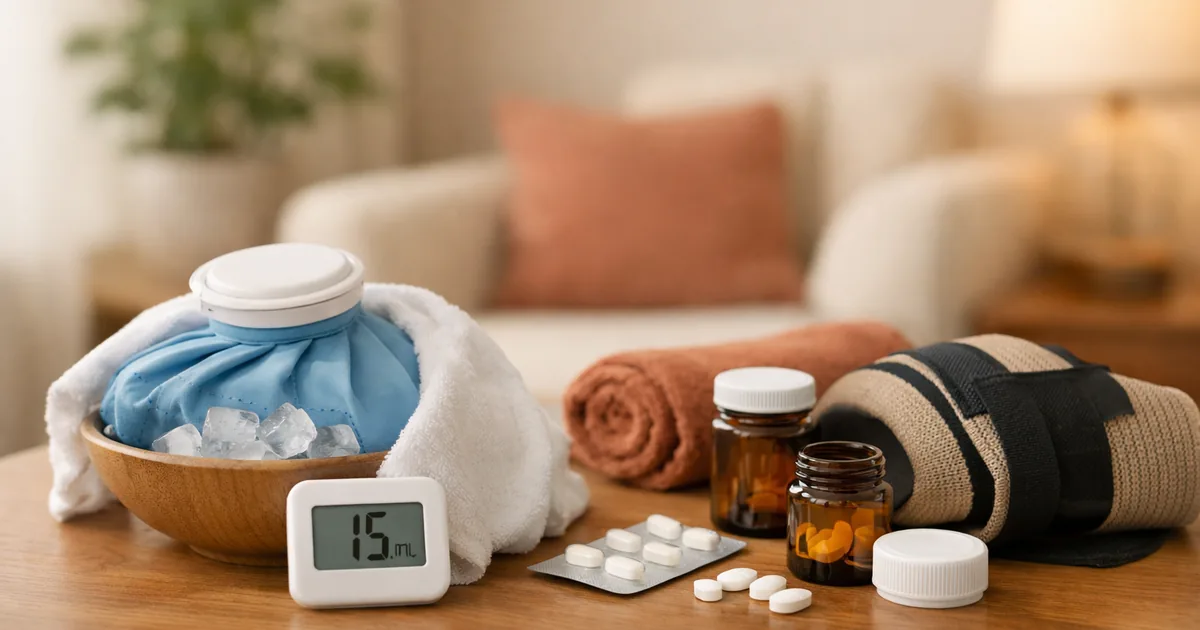
Soft Tissue Injury — NHS inform: Sprains and Strains Advice, Don't Over-Rest, Ice Up to 15 Minutes, Early Anti-Inflammatories May Slow Healing
NHS inform says the first few days after a ligament, muscle or tendon injury are the worst, but too much rest slows recovery. If swelling is a major problem, ice with a towel for up to 15 minutes, a few hours apart.
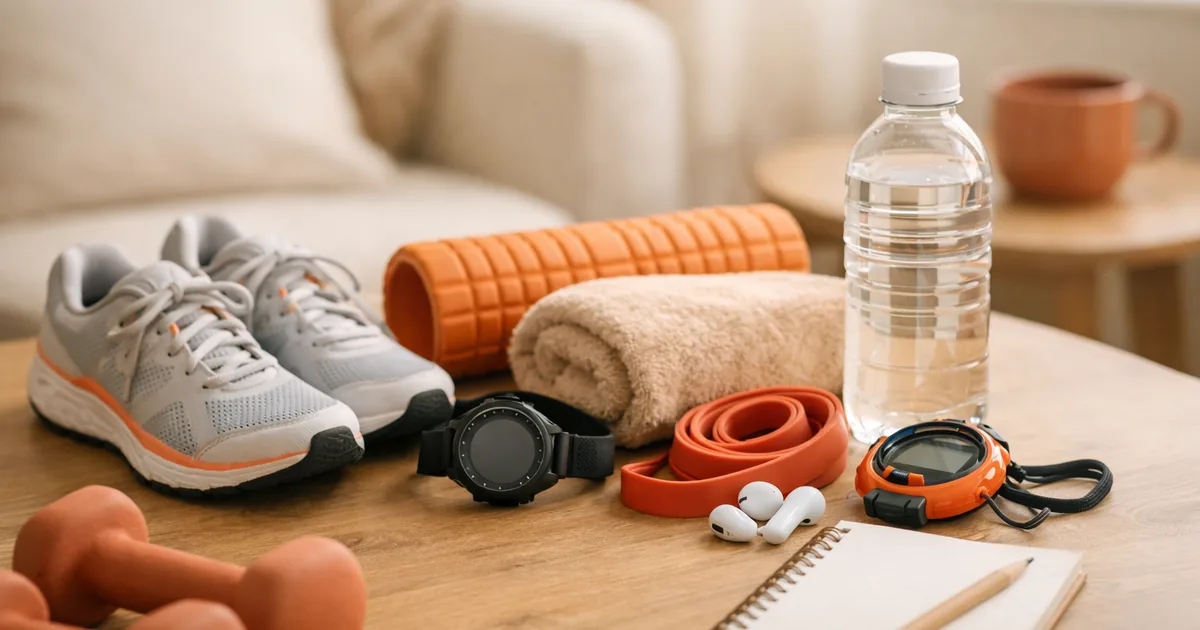
Exercise Injury Prevention — NHS inform: Warm Up 10 to 15 Minutes, Cool Down 5 to 10, Raise Running 10% a Week or Less
NHS inform says warm up for around 10 to 15 minutes, cool down for 5 to 10, and allow over 24 hours to recover from an intense session. Raise running by 10% a week or less, rest at least one day a week, and do resistance training twice a week.

Severance Tax Deferral Calculator (Korea) — Into an IRP Within 60 Days and No Tax Is Withheld, Refunds If Already Paid, 70%, 60% or 50% When Drawn as a Pension
Under Korean Income Tax Act Art. 146(2), retirement income paid into a pension account within 60 days is not taxed until drawn other than as a pension, and tax already withheld can be refunded. Drawn as a pension, the rate is 70%, 60% or 50% of the lump-sum rate.

Is Unemployment Benefit Taxable in Korea? — Jobseeker's Allowance, Parental Leave and Maternity Pay Are Tax-Free and Left Out of Total Pay (Income Tax Act Art. 12)
Korean Income Tax Act Art. 12(3)(e) makes unemployment benefit, parental leave benefit, reduced-hours benefit and maternity-related leave benefits under the Employment Insurance Act tax-free. They are left out of total pay: 24 million won of salary plus 9 million of parental leave benefit is 24 million (our example).

Severance Pay Income Type Checker (Korea) — Retirement Income, Wage Income or Tax-Free: Where 30 Days' Notice Pay and the 70% Shutdown Allowance Go
The Korean Income Tax Act sorts money paid on leaving into retirement income (Art. 22), wage income (Art. 20) or tax-free income (Art. 12). Severance and interim settlements are retirement income; unemployment benefit and absence compensation are on the tax-free list, the shutdown allowance is not. On 100,000 won a day, 30 days' notice pay is 3,000,000 won.

SME Retirement Pension Fund Subsidy Calculator (Korea) — 30 or Fewer Workers, Pay Under 2.81 Million Won, 10% up to 281,000 Won a Year, 3 Years
Korea’s SME Retirement Pension Fund is open to firms under 100 workers. The state subsidy goes to firms of 30 or fewer, for members paid under 2.81 million won a month: 10% of on-time regular contributions, up to 281,000 won each a year, for 3 years. A 2.5 million won contribution earns 250,000 won.

Average Wage Calculator (Korea) — 3 Months’ Pay Divided by Total Days, 8 Excluded Periods Such as Probation and Parental Leave
Under the Labor Standards Act, average wage is the pay in the 3 months before the reason arises divided by the total days, with 8 kinds of period such as probation and parental leave taken out of both. Below the ordinary wage, the ordinary wage applies. With 31 of 92 days on parental leave, 6 million won ÷ 61 days = 98,360 won.

DC Pension Employer Contribution Calculator (Korea) — 1/12 of Annual Pay, 10% Late Interest, 20% After 14 Days From Leaving
In a Korean DC pension the employer must pay at least 1/12 of the member’s annual pay at least once a year. Late payment carries interest from the next day: 10% a year until 14 days after leaving, 20% after that. Annual pay of 36 million won means at least 3,000,000 won.

Foreign Dividend Tax Credit Calculator (Korea) — 14% Withholding Minus Foreign Tax, the Comprehensive-Tax Credit Limit and a 10-Year Carry-Forward
If tax was taken abroad on a foreign dividend, Korean withholding is 14% minus that foreign tax, and nil if the foreign tax is larger (Income Tax Act Art. 129(4)). On a 1 million won dividend with 10% taken abroad, Korean income tax is 40,000 won.

Interest and Dividend Income Timing Checker (Korea) — Deposit Interest When Actually Paid, Dividends on the Resolution Date, and Which Year's 20 Million Won
Which year interest or dividends belong to is set by Income Tax Act Enforcement Decree Arts. 45 and 46: deposit interest when actually paid, the cancellation date if cancelled, and surplus dividends on the resolution date. 6 million won of interest paid on 28 December 2026 is 2026 income; paid on 4 January 2027, it is 2027 income.

Foreign Dividends and Interest Tax Filing Checker (Korea) — Not Withheld in Korea Means Added Even Under 20 Million Won, File in May
Income Tax Act Art. 14(3)6 keeps interest and dividends out of comprehensive income only if they total 20 million won or less and were withheld. So 3 million won of dividends paid straight to an overseas account is added even alongside 5 million won of Korean interest, and must be reported between 1 and 31 May next year.
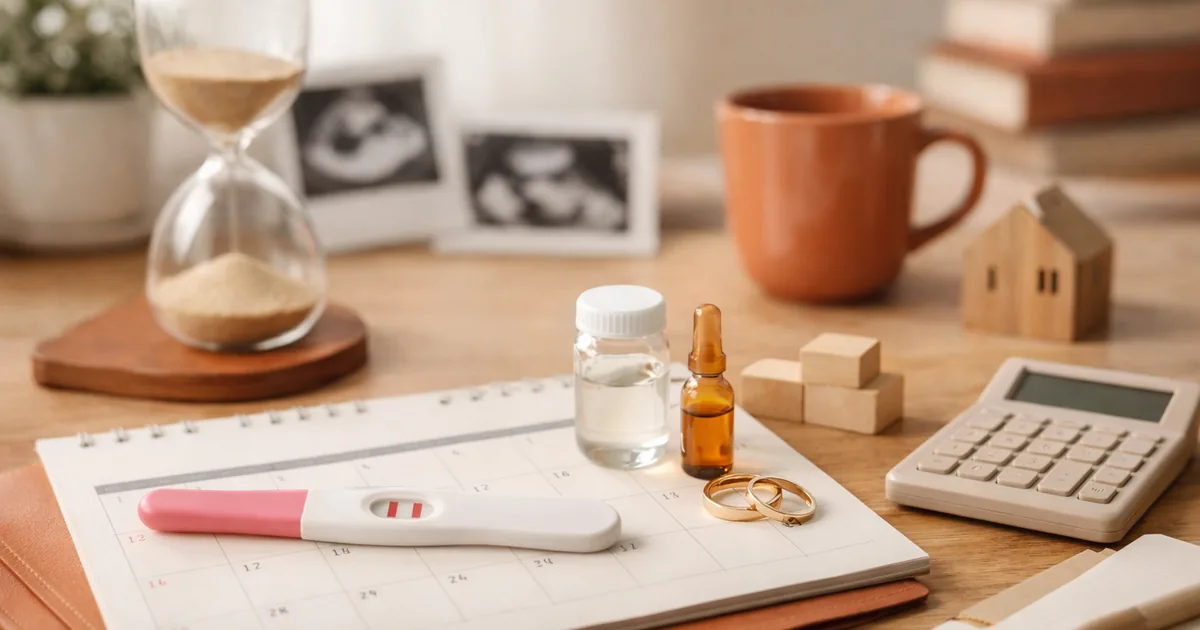
Infertility Treatment Leave Calculator (Korea) — 6 Days a Year, Paid Days Rise From 2 to 4 on 27 November 2026, an 84,210 Won Daily Cap
Article 18-3 of Korea's Equal Employment Act gives up to 6 days a year of infertility treatment leave, the first 2 paid. From 27 November 2026 the first 4 days are paid. At priority-support firms, Employment Insurance pays up to 84,210 won a day.

Paternity Leave Calculator (Korea) — 20 Paid Days, From 50 Days Before the Due Date to 120 Days After the Birth, Up to 3 Parts, a 1,684,210 Won Cap
Article 18-2 of Korea's Equal Employment Act gives a partner 20 days of paid leave for the spouse's birth, usable from 50 days before the due date until 120 days from the birth, in up to 3 parts. At priority-support firms, Employment Insurance pays up to 1,684,210 won for 20 days.

Daily Worker Unemployment Benefit Checker (Korea) — Under One-Third Working Days Since the 1st of Last Month, or 14 Days Off for Construction
Article 40(1) item 5 of Korea's Employment Insurance Act requires a daily worker's working days from the 1st of the month before the application month to the application date to be under one-third of the days. Construction day workers may instead have 14 straight days without work. Applying on 26 October allows 18 of 56 days.
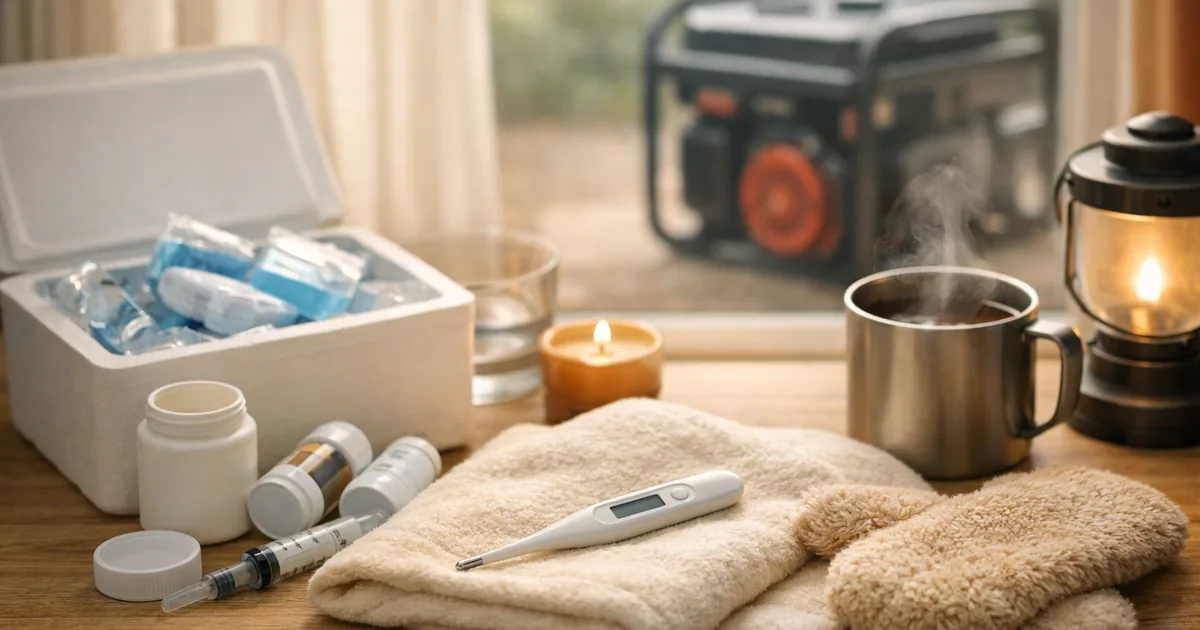
Power Outage Safety — CDC: Refrigerated Medicine After 1 Day, Generators 20 Feet from Windows, Hypothermia Below 95°F
The CDC says never run generators or gasoline engines indoors, in garages or within 20 feet of windows, doors or vents; throw out refrigerated medicine after 1 day without power unless the label says otherwise; and get help at once if a suspected hypothermia temperature is below 95°F (35°C).
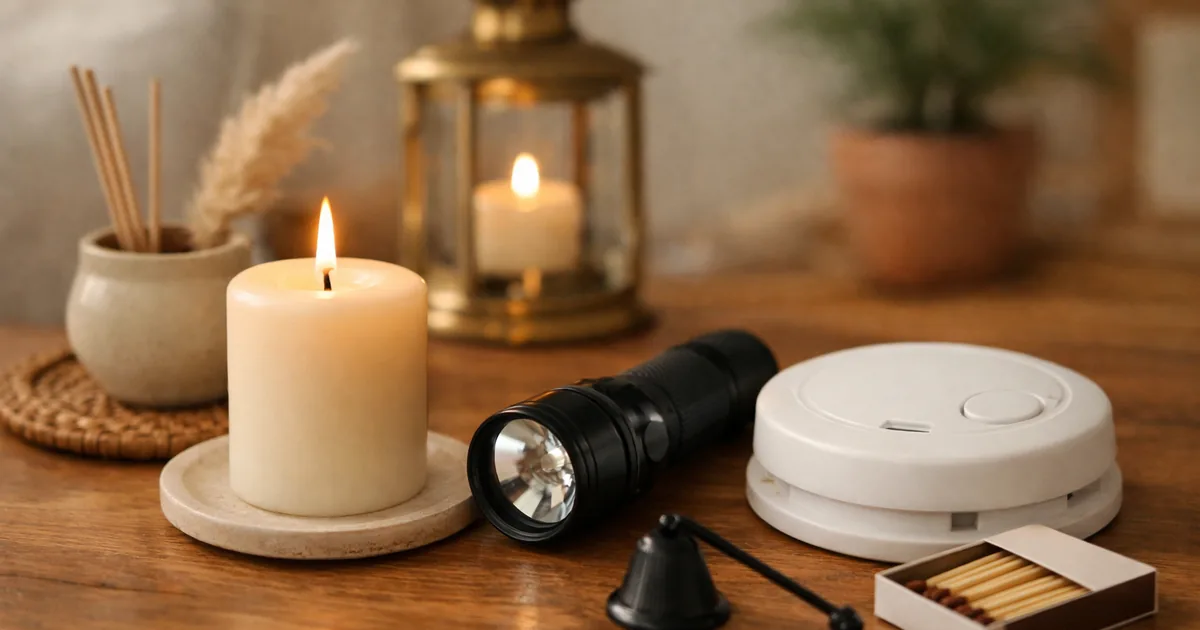
Candle Fire Safety — USFA: 12 Inches from Anything That Burns, No Candles in Bedrooms, Flashlights in a Power Outage
The US Fire Administration cites NFPA data of an average of 20 home candle fires a day in the US. Keep lit candles at least 12 inches (about 30 cm) from anything that can burn, none in bedrooms, bathrooms or sleeping areas, and use flashlights instead of candles in a power outage.

Fireplace and Wood Stove Safety — USFA: 3 Feet Clear, Ashes in a Lidded Metal Can 10 Feet Out, Chimney Checked Every Year
The US Fire Administration says heating was the second leading cause of home fires in 2021 (about 32,200). Keep anything that can burn at least 3 feet from a fireplace or wood stove, have the chimney inspected every year, and put ashes in a lidded metal container at least 10 feet from the home.

Flu Symptoms — NHS: Sudden Onset Within Hours, Treatment at Home, Get Help If No Better After 7 Days
The NHS says flu comes on within a few hours with a sudden high temperature, aches and a dry cough, while a cold builds over 1 to 2 days. Rest and drink fluids; get help if no better after 7 days, or if you are 65 or over or pregnant.
RSV Vaccine — NHS: Pregnancy From 28 Weeks, Adults 75 and Over, One Dose, Side Effects
The NHS offers the RSV vaccine from 28 weeks of pregnancy in every pregnancy, and 1 dose to adults 75 and over. Vaccination in pregnancy protects the baby for the first 6 months; people aged 65 to 74 qualify with a weakened immune system or a long-term lung condition.

Pneumococcal Vaccine — NHS: Who Should Have It, 1 Dose at 65, Babies at 16 Weeks and 1 Year, Side Effects
The NHS says the pneumococcal vaccine helps protect against pneumonia, meningitis and sepsis. Babies have it at 16 weeks and 1 year, adults at 65 have 1 dose, and higher-risk people at least 1. Some protection starts after about 2 to 3 weeks.

Rent Arrears Lease Termination Checker (Korea) — Two Periods of Unpaid Rent Let the Landlord Terminate, Worse Clauses Void (Civil Act Art. 640)
Korea's Civil Act Article 640 lets a landlord terminate a building lease once the tenant's arrears reach two periods' rent. At 500,000 won a month the line is 1,000,000 unpaid; a one-period clause reads as void under Article 652.
Korea Housing Subscription Ineligible Winner Ban Calculator — 1 Year in the Capital Region, 6 Months Elsewhere, 3 Months in Slump Areas
If an ineligible win is cancelled, Article 58 of Korea's Rules on Housing Supply bars selection for another sale home from the win date: 1 year in the capital region, 6 months elsewhere (1 year in speculation or overheated areas), 3 months in slump areas, judged at the new notice date.

Korea Housing Subscription Re-Winning Restriction Calculator — 10 Years for Price-Capped or Speculation-District Homes, 7 for Overheated Areas, 5 for 85㎡ or Less in Crowded Zones
Article 54 of Korea's Rules on Housing Supply bars a winner's whole household from another sale home for 10 years after winning a price-capped or speculation-district home, 7 years in an overheated area and 5 for a land-lease home. If more than one applies, the longest.

Postnatal Exercise — NHS: Pelvic Floor 10 Seconds, 10 Repeats, 3 Times a Day, Deep Stomach Exercise, Check the Tummy Gap at 8 Weeks
The NHS says after birth to build up to 10 long pelvic floor squeezes of up to 10 seconds and 10 quick ones, at least 3 times a day. Tummy muscle separation usually goes by about 8 weeks; if the gap is still obvious then, contact a GP.
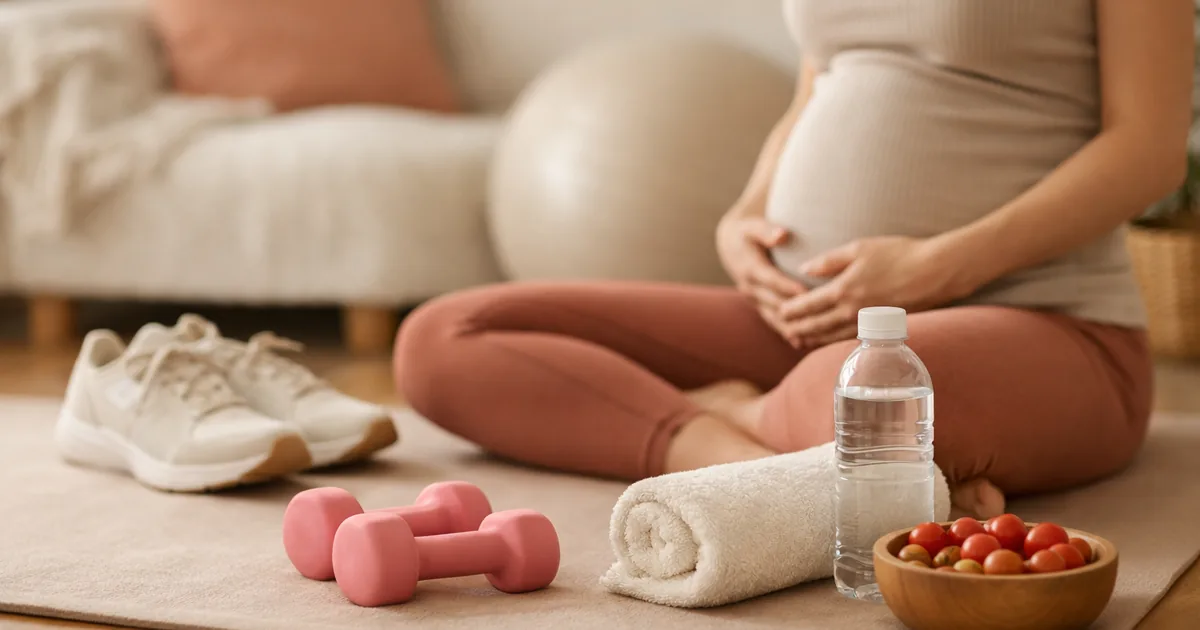
Exercise in Pregnancy — NHS: 150 Minutes a Week, Start With 10 Minutes a Day, Strength on 2 Days, Avoid Lying Flat
The NHS says exercise is safe in pregnancy and recommends, as for all adults, 150 minutes (2 and a half hours) of moderate activity a week plus strengthening on 2 days. New to exercise? Start with about 10 minutes a day and don't take up running.

How to Be More Active — NHS Better Health: Move Every 30 Minutes, About 20 Minutes a Day for 150 a Week, Strength 2 Times a Week
NHS Better Health sets a target of 150 minutes of moderate activity a week, about 20 minutes a day, and says every minute counts. Set a reminder to move every 30 minutes, take the stairs, and do strength activity at least 2 times a week.

Capital Gains Carryover Basis Checker (Korea) — Gifted by a Spouse or Parent and Sold Within 10 Years, the Donor's Cost Applies (Income Tax Act Art. 97-2)
Sell land or a building received from a spouse or lineal relative within 10 years and the gain uses the donor's original cost, with gift tax paid as an expense. It doesn't apply if the sale would be one-home exempt or the carryover tax is lower. For shares it is 1 year.

Inherited House Capital Gains Exemption Checker (Korea) — Only a Home You Already Owned, Not One Gifted Within 2 Years (Decree Art. 155(2))
A household with one inherited home and one ordinary home is treated as owning one home when it sells the ordinary one. The ordinary home must already be held when the inheritance began; a home gifted by the deceased within 2 years before is excluded.

Burden-Gift Capital Gains Calculator (Korea) — Only the Debt Share Is a Sale: a KRW 1bn Home With a 400m Deposit Sells for 400m (Decree Art. 159)
In a Korean gift with assumed debt, the part equal to the debt the recipient takes on is treated as a sale. Sale price and cost are both scaled by debt ÷ gift value. A KRW 1bn home gifted with a 400m deposit, bought for 500m, gives a 400m sale price, 200m cost and 200m gain.

Korean National Pension Unemployment Credit Calculator — 1 Month per 30 Benefit Days, Up to 1 Year, Up to Three-Quarters Supported, Apply by the 15th (Art. 19-2)
If you apply to the National Pension Service while receiving jobseeker's benefit, that period is added to your membership: one month per 30 cumulative days, up to 1 year, with contributions supported within three-quarters. Apply by the 15th of the month after the benefit ends.

Korean National Pension Military Service Credit Checker — 6 to 12 Months Now, the Whole Service Period for Discharges From 1 January 2027 (Art. 18)
Service as an active-duty soldier, alternative service member, regular reservist or social service agent is added to National Pension membership. For 2026 discharges it must be at least 6 months and at most 12 are added; an amendment of 20 October 2026 adds the whole period for discharges from 1 January 2027.
Korean National Pension Childbirth Credit Calculator — 12 Months for One Child, 27 for Two From 2027, 18 Each After (Art. 19)
Korea's National Pension childbirth credit adds 12 months for one child. Under an amendment of 20 October 2026, a second child from 1 January 2027 makes 27 months for two, plus 18 for each child after. With a first child by 2025 and a second from 2027 it is 15 months.

Tax-Free Comprehensive Savings Checker (Korea) — Seniors on the Basic Pension, Disabled People and Five More Groups, 50 Million Won, Join by 31 December 2028
Restriction of Special Taxation Act Art. 88-2 charges no income tax on interest and dividends when one of seven groups, such as people 65 or over on the basic pension or registered disabled people, joins by 31 December 2028 with up to 50 million won per person. 50 million won at 3% for 12 months saves 231,000 won.

Interest Income Tax Calculator (Korea) — 15.4% Is 14% Income Tax Plus 1.4% Local Tax, 27.5% on Private-Loan Interest, Small Dividends Untaxed
Under Income Tax Act Art. 129, withholding tax on interest and dividends is 14% by default, and local income tax adds 10% of that, making 15.4%. Interest on a loan to a person is 25%, unconfirmed-name income 45%. Deposit interest of 1,000,000 won loses 154,000 won, leaving 846,000.

Dividend Gross-Up Calculator (Korea) — 11% Added to Dividends Above 20 Million Won, Then Credited Back as the Dividend Tax Credit
Once interest and dividends pass 20 million won a year, Korea adds 11% to dividends from Korean companies and gives the same amount back as a dividend tax credit. Interest fills the line first, so 5 million won of interest and 30 million won of dividends put 15 million won over it, with 1.65 million won added.
Unemployment Benefit Deadline Calculator (Korea) — 12 Months From the Day After Leaving, a 7-Day Waiting Period, Days Lost by Reporting Late
Korea's Employment Insurance Act pays job-seeking benefit within 12 months from the day after leaving, and Article 49 makes the first 7 days from your report a waiting period. Leave on 31 October and report on 2 March, and 33 of 270 days fall outside the window (our estimate).
Unemployment Benefit Extension Calculator (Korea) — Training Extension at 100% for Up to 2 Years, Individual and Special Extensions at 70% for 60 Days
Korea's Employment Insurance Act Arts. 51–55 add a training extension (100% of the daily benefit, up to 2 years) and individual and special extensions (70%, within 60 days) after benefit days run out. Below the minimum daily benefit, 70% is raised, so 60 individual days at 40 hours a week come to 3,962,880 won (our sum).

Unemployment Benefit 180-Day Rule Calculator (Korea) — Insured Days in the 18 Months Before Leaving (24 for Very Short Hours)
Korea's Employment Insurance Act Arts. 40–41 require 180 or more days that wages were paid for in the 18 months before leaving. Under 15 hours and 2 days a week, the window is 24 months; a run of 30+ unpaid days extends it, up to 3 years.

Window Cord Safety — About 9 Deaths a Year Under 5, 48% of Incidents Fatal, Go Cordless (CPSC)
US CPSC says about 9 children under 5 die each year strangled in window covering cords, and 48% of more than 200 incidents in 2009–2021 were fatal. Use cordless coverings where children are; if you can't, shorten, raise and anchor cords.
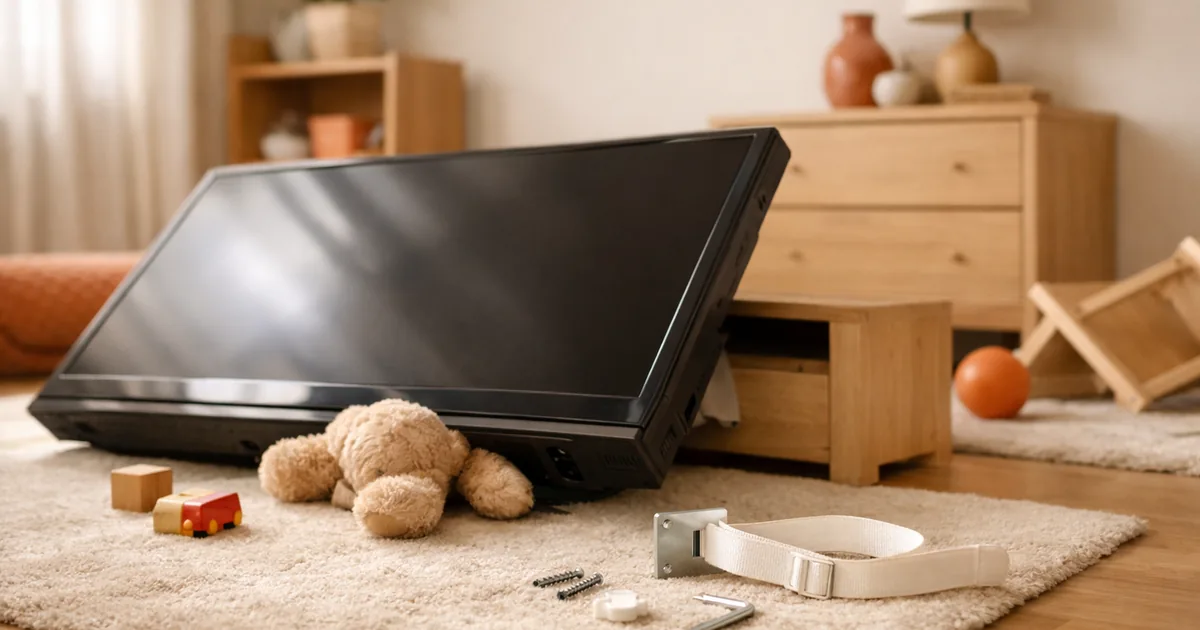
TV and Furniture Tip-Overs — 592 Deaths, TVs in 70% of Child Deaths, Anchor Them First (CPSC)
US CPSC reports 592 deaths from furniture, TV and appliance tip-overs in 2000–2021, 81% children, with a TV involved in 70% of child deaths. About 19,400 ER injuries a year; the first tip is anchoring TVs and furniture to the wall.
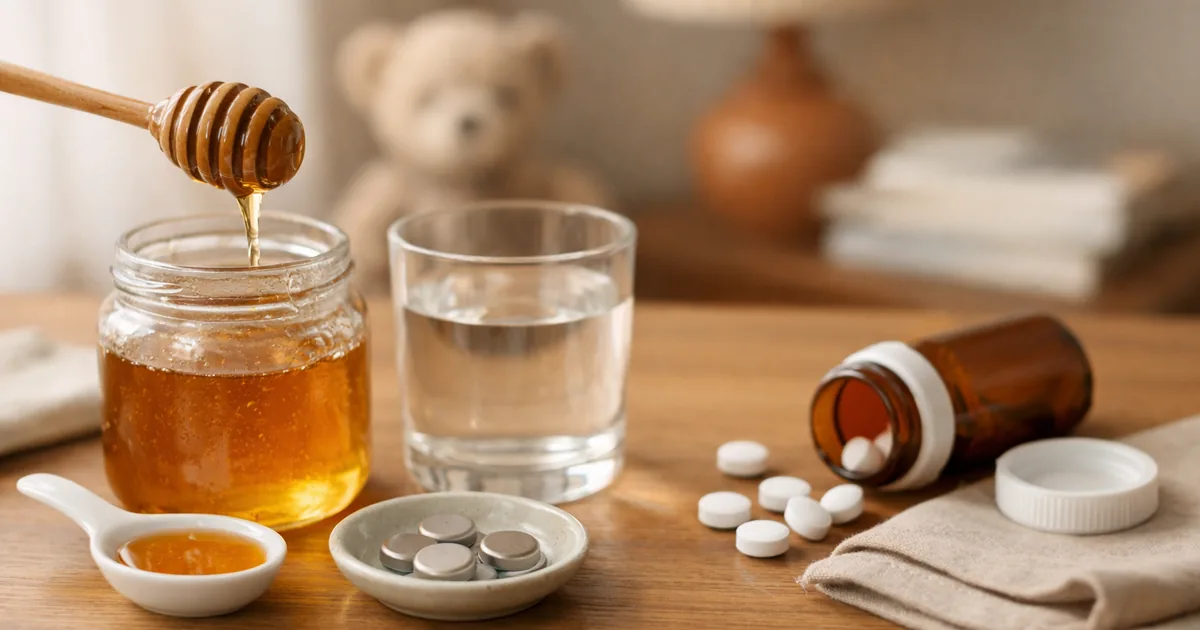
If a Child Swallows a Button Battery — Damage Within 2 Hours, Straight to the ER, 10 mL Honey Every 10 Minutes (CPSC)
A swallowed button battery can burn through a child's oesophagus in as little as two hours, so go straight to the ER. For children 12 months or older within 12 hours, give 10 mL of honey every 10 minutes on the way, up to six doses. The US recorded 27 deaths in 2011–2021.

Whooping Cough — Minutes-Long Coughing Bouts, Antibiotics Within 3 Weeks, 48 Hours Off, Vaccine at 20 Weeks of Pregnancy (NHS)
Whooping cough starts like a cold, then from about a week brings minutes-long coughing bouts and a whoop, with a cough lasting weeks or months. Diagnosed within 3 weeks, antibiotics are given and you stay off school or work for 48 hours after starting (3 weeks without). A baby under 6 months with symptoms needs urgent help.
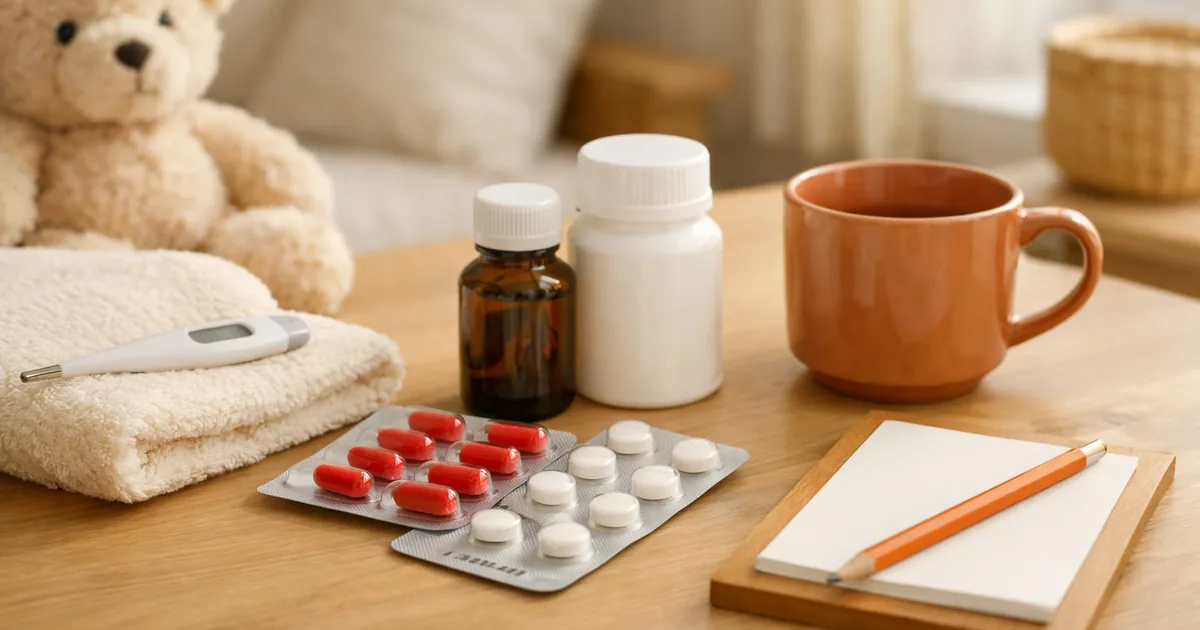
Scarlet Fever — Sandpaper Rash 12 to 48 Hours Later, Back 24 Hours After the First Antibiotic (NHS)
Scarlet fever brings a high temperature, sore throat and swollen neck glands, then 12 to 48 hours later a rough, sandpaper-like rash from the chest and tummy and a strawberry tongue. Stay off nursery, school or work until 24 hours after the first antibiotic dose; untreated, it's infectious for 2 to 3 weeks.

Bronchitis — Usually Better in 3 Weeks; a Cough Past 3 Weeks or Blood in Mucus Needs Urgent Help (NHS)
Bronchitis is inflammation of the lungs' airways, usually from an infection, with a cough that may bring up mucus, chest pain and breathlessness, usually better within about 3 weeks. A cough past 3 weeks that isn't improving, blood in mucus, or being over 65, pregnant or having a long-term condition means urgent help.

Implied Lease Renewal Calculator (Korea) — Landlord 6 to 2 Months Before, Tenant 2 Months, Then 3 Months' Notice to End
If a Korean landlord gives no notice 6 to 2 months before a lease ends, or the tenant none by 2 months before, it renews for 2 years on the same terms. After that the tenant can end it at any time, effective 3 months after notice arrives — received 21 October 2026, from 22 January 2027.

Lease Registration Order Checker (Korea) — Moving Out Without Your Deposit: Register First and Your Rights Stay
If a Korean lease has ended and the deposit isn't returned, the tenant can apply to the local court for a lease registration order; once registered, opposing power and priority are kept even after moving. Costs can be claimed from the landlord.

Small-Tenant Priority Repayment Checker (Korea) — In Seoul, Deposits of 165 Million Won or Less Get 55 Million First
When a home goes to auction in Korea, tenants whose deposits are under the regional limit and who moved in and registered before the auction registration get a set amount ahead of mortgage lenders. In Seoul that's 55 million won for deposits of 165 million or less, never more than half the house value.
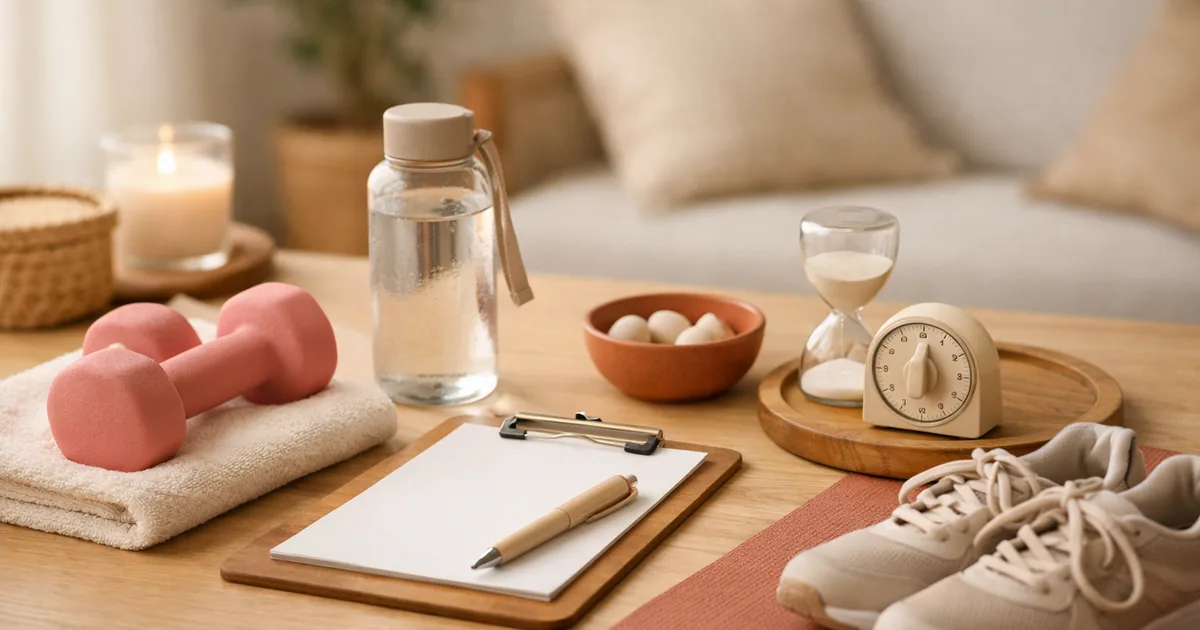
Building Up Exercise When It Hurts — Pain 0 to 5, Start at 2 to 3 Reps, Up to 2 Sets of 15 (NHS inform)
NHS inform's rules for exercising with joint and muscle pain: keep pain within 0 to 5 out of 10, start new exercises at 2 to 3 reps, add 1 or 2 every few days, and aim for a maximum of 2 sets of 15. Stretches: 20 to 30 seconds, 2 to 3 sets, 2 to 3 times a day.
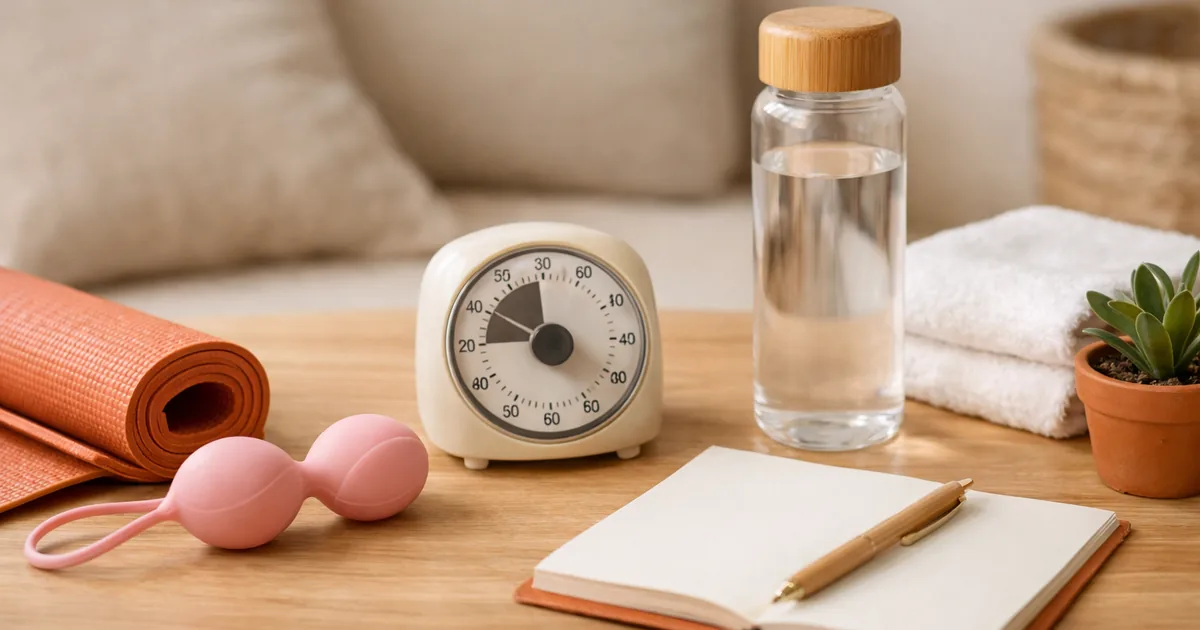
Pelvic Floor Exercises — At Least 8 Squeezes, 3 Times a Day, for 3 Months (NHS Incontinence Treatment)
The NHS says pelvic floor muscle training can help everyone with urinary incontinence: at least 8 squeezes at least 3 times a day for at least 3 months. Bladder training usually takes at least 6 weeks; cut caffeine and drink neither too much nor too little.

Breathing Exercise for Stress — Deep into the Belly, Counting 1 to 5, at Least 5 Minutes (NHS)
The NHS breathing exercise for stress: breathe deep into your belly, in through the nose and out through the mouth, counting 1 to 5 each way if it helps, for at least 5 minutes. Lying, sitting or standing; it works best as a daily routine.

Tax Arrears 5-Million-Won Checker (Korea) — Credit Data After a Year, Licence Suspension or Revocation After Three Defaults
Korean national tax arrears of 5 million won or more, over a year old or after three defaults in a year, can be reported to credit bureaus. Unpaid tax from a licensed business can block renewals, and three defaults totalling 5 million won or more can bring suspension or revocation.

High-Value Tax Defaulter Listing Checker (Korea) — 200 Million Won Over a Year, Excluded at a 50% Paid Ratio
Korea can publish the names of those owing 200 million won or more in national tax more than a year overdue, but excludes them if the paid ratio (B + C) ÷ (A + B) reaches 50%. With A at 250 million and B at 0, paying 125 million before the committee meets gets there.

Tax Arrears Travel Ban Checker (Korea) — 50 Million Won, One of Six Circumstances, Nothing to Secure
Korea's NTS must request a travel ban for people owing 50 million won or more in national tax without good reason who meet one of six circumstances, whose debt can't be secured and who may evade collection. Once arrears drop below 50 million, the lift must be requested.

Forfeiture of Inheritance Checker (Korea) — Heirs Who Seriously Breached the Duty of Support, Six Months to Apply
Civil Act Art. 1004-2 lets the family court strip inheritance from an heir who seriously breached the duty to support, or committed a serious crime or gross mistreatment. With a notarial will the executor applies; otherwise co-heirs apply within six months of learning.

Reserved Share (Yuryubun) Calculator (Korea) — Half the Statutory Share for Children and Spouse, a Third for Parents, None for Siblings
Korea's Civil Act Art. 1112 reserves half the statutory share for descendants and the spouse and a third for ascendants; siblings' reserved share was deleted on 20 September 2024. With a spouse and two children and a 700 million won basis, each child's reserved share is 100 million.
Inheritance Renunciation & Qualified Acceptance Deadline Calculator (Korea) — Three Months from Learning, Otherwise Outright Acceptance
In Korea, renunciation or qualified acceptance must be filed with the family court within three months of learning the inheritance opened, or you're deemed to accept outright. Learn of excess debt later, without gross negligence, and you get three months from then for qualified acceptance. Learned on 21 October 2026: by 21 January 2027.

Phone-Scam Refund Calculator (Korea) — Freeze, Extinction Two Months After Notice, Pro Rata Refund Within 14 Days
Korean phone-scam victims can ask a bank to freeze the fraud account; two months after the FSS notice the holder's claim is extinguished and refunds are decided within 14 days, shared by loss if the balance is short. A 20 million balance, 40 million total losses and a 10 million loss gives 5 million won.

Insurance Money Seizure Checker (Korea) — Death Benefit 15 Million, Actual-Cost Cover in Full, Refunds 2.5 Million
Under Korean law, protection-type insurance death benefits up to 15 million won, all actual-cost treatment cover, half of other treatment benefits and up to 2.5 million won of surrender and maturity refunds can't be seized. A surrender value from a creditor's cancellation is fully protected.

Wage Garnishment Calculator (Korea) — Half Is Protected, Floor 2.5 Million, Ceiling 3 Million Plus Half the Excess
Korea's Civil Execution Act protects half of wages, with a floor of 2.5 million won a month and, above 3 million, protection of 3 million plus half the excess. On 4 million won a month, 2.5 million stays and up to 1.5 million can be seized.

Daily Worker Income Tax Calculator (Korea) — Nothing up to 150,000 Won a Day, 1,350 Won on 200,000, Under 1,000 Not Collected
Korean daily workers' tax is (day's pay − 150,000) × 6% less 55% of that, and nothing is collected under 1,000 won. On 200,000 won that's 1,350 won income tax plus 135 won local tax; on 187,000 won it's 0.

Break-Time Checker (Korea) — 30 Minutes at 4 Hours, 1 Hour at 8, and the 4-Hour Proviso from 10 December 2026
Labour Standards Act Art. 54 requires at least 30 minutes' break for 4 hours' work and 1 hour for 8, during working time, in workplaces of any size. From 10 December 2026 a 4-hour shift can skip the break if the worker explicitly asks.
Overtime & Night-Work Pay Calculator (Korea) — 50% over 8 Hours or 22:00–06:00, None under 5 Workers
Labour Standards Act Art. 56 adds at least 50% of ordinary wages for work beyond 8 hours a day and for night work between 10 p.m. and 6 a.m. It doesn't apply to workplaces of four or fewer. At 12,000 won an hour, 18:00 to 03:00 with a 60-minute break pays 126,000 won.
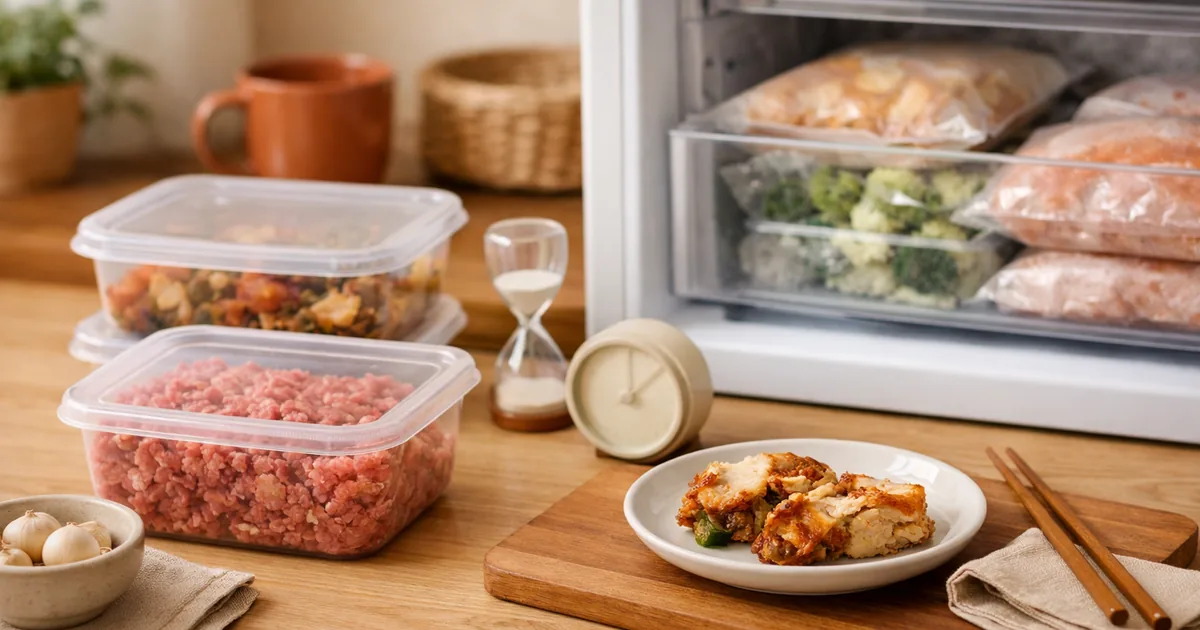
Fridge and Freezer Storage Times — Ground Meat 1–2 Days, Leftovers 3–4 Days, Freezer Times Are for Quality (FoodSafety.gov)
The FoodSafety.gov chart lists ground meat 1–2 days, steaks 3–5 days, leftovers 3–4 days and raw eggs 3–5 weeks in the fridge. Fridge times are safety, freezer times quality; food at -18°C stays safe. With a lookup tool.

Four Steps to Food Safety — Hands 20 Seconds, Separate Boards, 4–60°C Danger Zone, Fridge Within 2 Hours (FoodSafety.gov)
FoodSafety.gov sets food poisoning prevention out as Clean, Separate, Cook, Chill: hands at least 20 seconds, don't wash raw meat, a 4–60°C danger zone, perishables in the fridge within 2 hours (1 if hot), fridge 4°C or below.
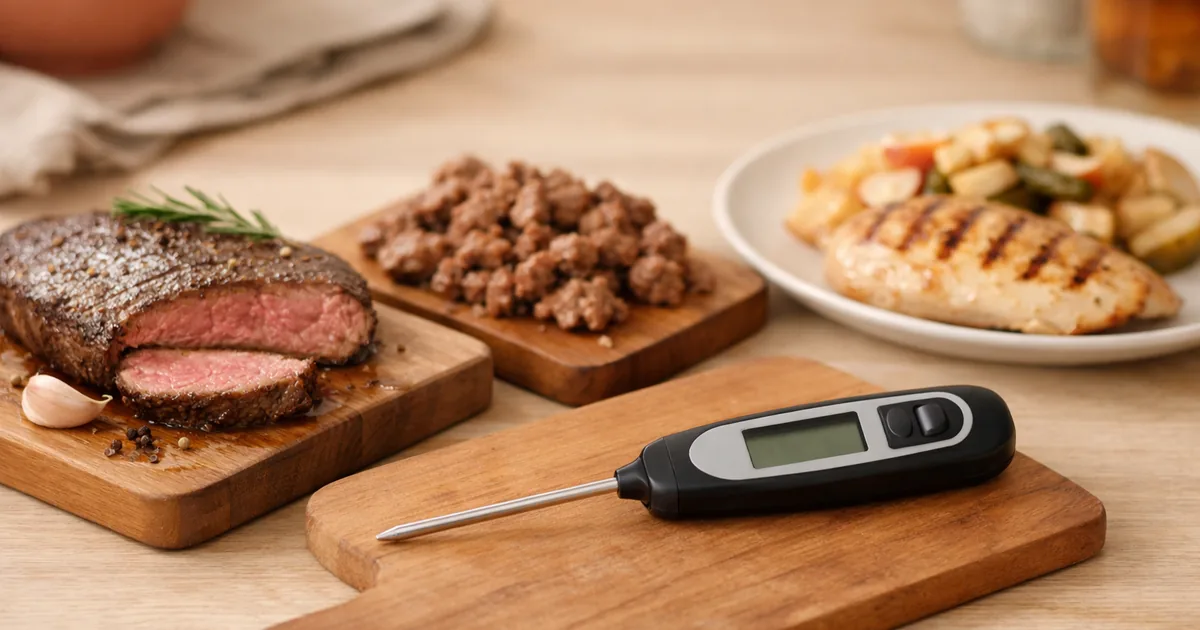
Safe Cooking Temperatures — Steaks and Fish 63°C, Ground Meat 71°C, Poultry and Leftovers 74°C (FoodSafety.gov)
FoodSafety.gov says use a thermometer, not colour: beef and pork steaks and fish 63°C (rest 3 minutes), ground meat and egg dishes 71°C, all poultry and leftovers 74°C. With a checker for your reading.
Kidney Stones — Side-to-Groin Pain, Urgent Help If Symptoms, 2.5–3 Litres of Water a Day (NHS)
The NHS says waves of pain from the side or lower back to the groin may be kidney stones, and symptoms need urgent help. Most pass over a few weeks; prevention means 2.5 to 3 litres of water and under 6g of salt a day.

Irritable Bowel Syndrome (IBS) — Pain Worse After Eating and Better After a Poo, GP After 4 Weeks, 1.5 Litres of Fluid (NHS)
The NHS says tummy pain that's worse after eating and eases after a poo, with bloating, diarrhoea or constipation, may be IBS; see a GP after 4 weeks. Drink about 1.5 litres, keep fruit to 3 portions and caffeine to 3 drinks; bleeding or weight loss is urgent.
Migraine — Attacks Last 4 Hours to 3 Days, Aura Within 1 Hour, Painkillers No More Than 2 Days a Week (NHS)
The NHS says migraine attacks usually last 4 hours to 3 days and aura shouldn't exceed 1 hour; take painkillers at the start but not on more than 2 days a week. Attacks over 72 hours need urgent help; a sudden extreme headache or weakness is an emergency.

Restoration Obligation — Restore on Moving Out, a Right to Remove Fittings, Claims Within 6 Months (Korean Civil Act)
Korean Civil Act Art. 615 requires restoring a borrowed thing on return while allowing removal of attached items, and Art. 654 applies it to leases. Damage and cost claims must be made within 6 months of the landlord getting the property back.

Who Pays for Rental Repairs — The Landlord's Upkeep Duty, Necessary Costs Now, Improvements at the End, a 6-Month Deadline
Korean Civil Act Art. 623 makes landlords keep a rental fit for use. Tenants can claim necessary costs straight away and improvement costs only if the added value remains when the lease ends, within 6 months of handing the property back.

Long-Term Repair Reserve Refund Calculator — The Owner's Cost, Get It Back If You Paid as a Tenant (Korea)
Under Korea's Multi-Family Housing Management Act, the long-term repair reserve is collected from owners, so tenants who paid it in their fees get it back from the owner under Decree Art. 31(8). 18,000 won for 24 months is 432,000 won.
Exercising with Chronic Conditions — Arthritis, Diabetes, Heart Disease, Osteoporosis, Rest Swollen Joints (NIA)
The US National Institute on Aging says most older adults can exercise safely if they build up slowly: rest swollen arthritic joints, do weight-bearing activity 3–4 times a week for osteoporosis, and aim for 150 minutes for heart health. Inactivity nearly doubles heart disease risk.

Exercise for Bone Health — Weight-Bearing Exercise Builds Density, Not Swimming or Cycling, 700mg Calcium (NHS)
The NHS says weight-bearing exercise such as running, skipping, dancing and jumping builds bone density, while swimming and cycling don't count. It adds resistance exercise like press-ups and weights, 700mg of calcium and 10 micrograms of vitamin D a day.

Weekly Exercise Plan — 150 Minutes + 2 Strength Days, 30 × 5, CDC's Three Sample Weeks and a Checker
The CDC recommends adults get 150 moderate minutes and 2 strength days a week, split like 30 minutes on 5 days, and shows three sample weeks; three 25-minute jogs (75 minutes) also work. A checker tells you whether this week meets the guideline.
Tax Penalty Calculator — Non-filing 20%, Under-reporting 10%, Fraud 40%, Late Payment 0.022% a Day
Korea's Framework Act on National Taxes adds 20% of tax for not filing (interim returns included), 40% for fraud, 10% for under-reporting, plus 0.022% a day for late payment. 10 million won unfiled and 100 days late means 2.22 million won.

Capital Gains Final Return — 1–31 May Next Year, Skippable After Interim Returns, Not After Two or More
Korean residents with capital gains file a final return from 1 to 31 May the next year, but may skip it after interim returns, unless they filed two or more interim returns on progressive-rate assets that year. Foreign shares are first filed in May.

Capital Gains Interim Return Deadline Calculator — Property: 2 Months from Month-End; Shares: 2 Months from Half-Year End
In Korea, sell property and file an interim capital gains return within 2 months from the end of the month of sale; Korean shares within 2 months of the half-year end. File even at a loss; foreign shares and derivatives have no interim return. Sold 20 October, due 31 December.

Unemployment Benefit After 65 — Not for Jobs Started After 65, Yes If Insured Before 65 and Kept On
Korea's Employment Insurance Act Art. 10(2) disapplies unemployment and parental-leave benefit chapters to people hired or starting self-employment after 65, except those insured before 65 and kept on. The rule moves to para. 3 from 2027.

Re-employment Support Service Checker — 1,000+ Employers, Age 50+, 1 Year Insured: Mandatory from 3 Years Before Leaving
Korean employers with 1,000+ workers must give re-employment support to leavers aged 50+ with 1 year's insured service (3 for fixed-term) leaving involuntarily, starting 3 years before leaving (1 year for redundancy).
Retirement Age 60 — Anything Lower Counts as 60, Rehiring Is a Duty to Try, Aged Means 55+ (Korea)
Korea's aged employment act requires a retirement age of 60 or above and deems a lower one to be 60. Rehiring retirees is a duty to try, and on rehiring, service and pay can be reset by agreement. 'Aged' means 55 and over.

Dividend Record Dates — Within 3 Months, 2 Weeks' Notice, Paid Within 1 Month, 5-Year Claims (Commercial Act)
Korean dividends go to shareholders on the register on the record date the company sets, within 3 months before the rights are exercised and announced 2 weeks ahead. Payment is due within 1 month of the resolution, and claims last 5 years. Quarterly dividends need a board resolution within 45 days.

High-Dividend Company Checker — 40% Payout, or 25% Plus 10% Dividend Growth, No Fall Below 2024
To qualify for Korea's 2026 dividend separate taxation, a company must be listed (not KONEX), keep dividends at or above 2024, and have a 40%+ payout ratio or 25%+ with 10%+ dividend growth. Zero or negative profit means a deemed 25% ratio.

High-Dividend Company Separate Tax Calculator — 14% to 20m, 20% to 300m, 25% to 5bn, 30% Above (from 2026)
Cash dividends received from 1 January 2026 from Korean high-dividend companies can be taxed apart from other income: 14% up to 20 million won, 20% to 300 million, 25% to 5 billion, 30% above. 50 million won gives 8.8 million won.

Statutory & Late-Payment Interest Calculator — 5% Civil, 6% Commercial, 12% in Court, 20% Cap
In Korea, unpaid money carries 5% a year under the Civil Act or 6% for commercial acts absent agreement, and 12% from the day after a claim is served once judgment is given. Agreed interest is capped at 20%. 10 million won at 5% for a year is 500,000 won.

Legal Period Calculator — First Day Excluded, Weekend Last Day Moves to the Next (Civil Act), Administrative Exception
Under the Korean Civil Act, periods in days, weeks, months or years leave out the first day and end at the end of the last, moving to the next day if that is a Saturday or holiday. Restrictions and duties count the first day and end even on weekends. 14 days from 17 October ends on 2 November.

Korean Legal Age Calculator — Birth Day Counted, Up on the Birthday, Months Under 1 (Civil Act Art. 158)
Civil Act Article 158 counts age in full years including the day of birth, expressed in years, or in months under 1. Administration follows the same rule unless another law provides otherwise. Someone born 21 October 1990 is 35 on 20 October 2026.
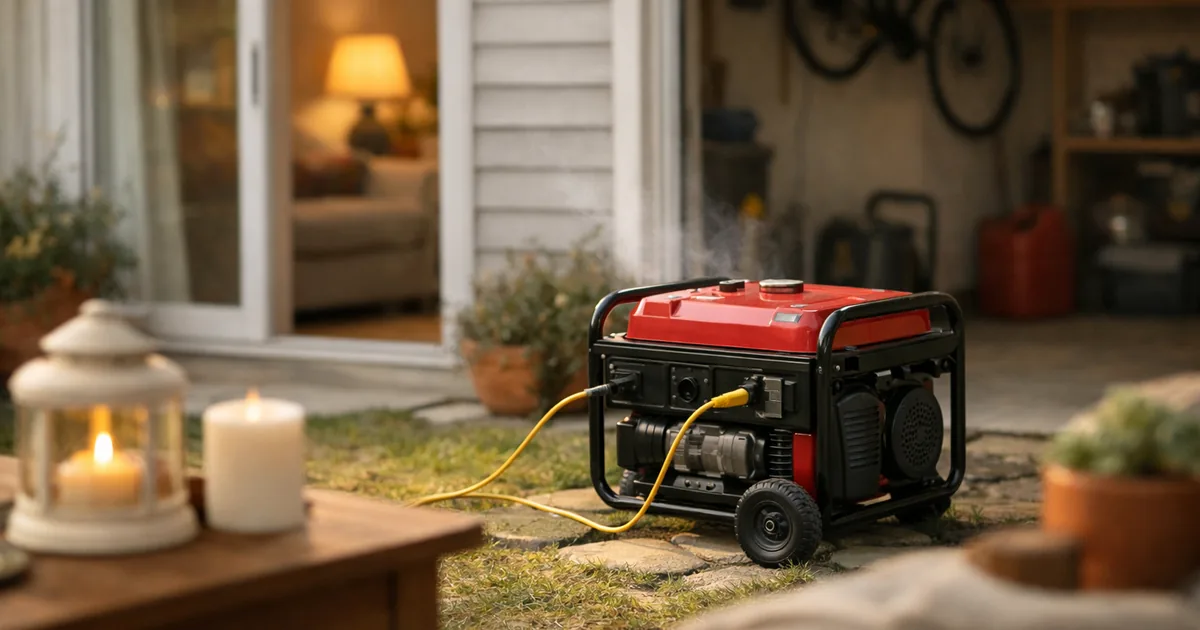
Generator Safety in a Power Cut — 20 Feet from the House, Never in a Garage, About 100 Deaths a Year (CPSC)
The CPSC says about 100 people a year in the US die from portable generator carbon monoxide. Run generators outdoors at least 20 feet from the house, never indoors or in a garage even with doors open. Alarm, heater, charcoal and gas tips too.
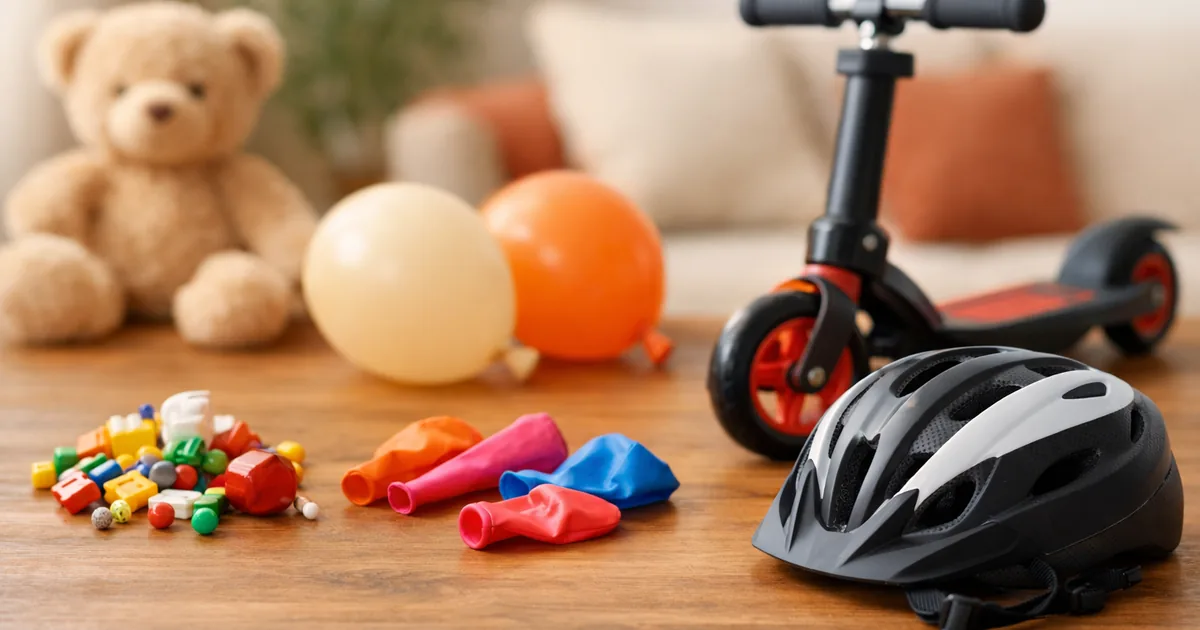
Toy Gift Safety — No Small Parts Under 3, No Balloons Under 8, Helmets with Scooters (CPSC: 154,700 in 2023)
Per the CPSC, about 154,700 US children aged 12 or younger were treated in ERs for toy injuries in 2023 and 10 died. Keep small balls and parts from under-3s and deflated balloons from under-8s, and use a helmet with scooters every time.

Holiday Decorating Safety — About 160 Injuries a Day, Nearly Half Falls, Three Sets of Incandescent Lights Max (CPSC)
The CPSC says there are about 160 Christmas decorating injuries a day in the season, nearly half falls, and about 14,900 ER visits in the 2023 season. Never string more than three sets of incandescent lights; keep candles in sight.

Tennis Elbow — Outer Elbow Pain, GP After 2 Weeks, Physio at 6 Weeks, Most Common at 35–54 (NHS)
The NHS says tennis elbow is inflamed elbow tendons from repeated gripping and twisting such as typing, mouse use or manual tasks. It usually improves with a few weeks' rest; see a GP after 2 weeks, physiotherapy after 6.
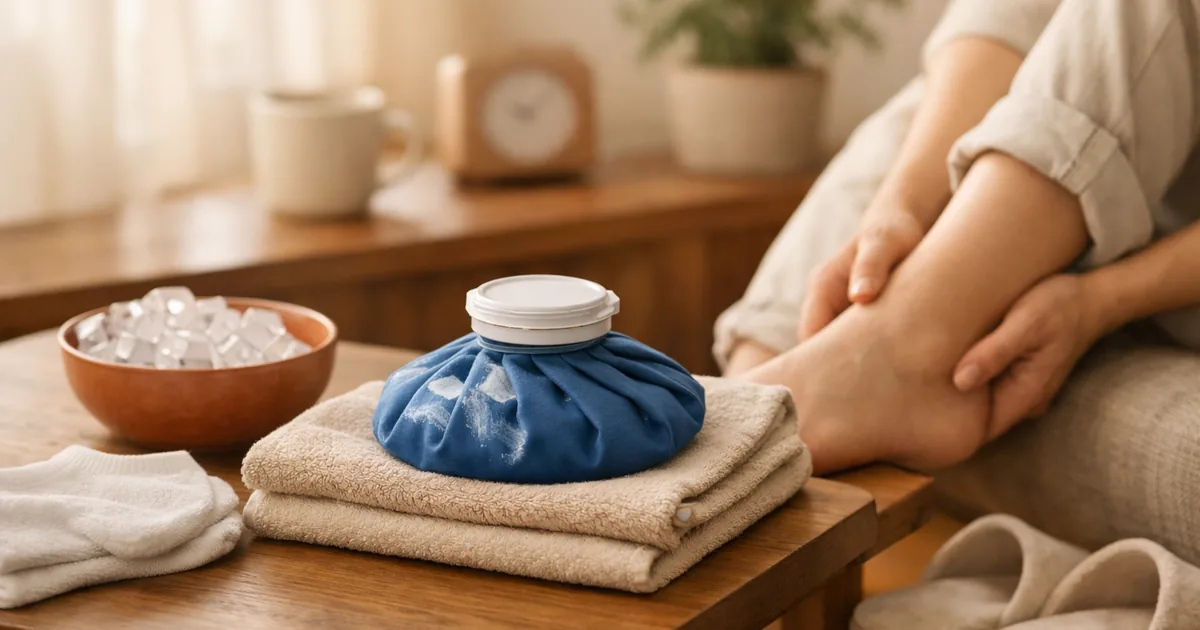
Plantar Fasciitis — Heel Pain on First Steps, Ice 20 Minutes Every 2–3 Hours, See a GP After 2 Weeks (NHS)
The NHS says heel pain much worse on first steps after sleep or rest that eases with movement is likely plantar fasciitis. Ice up to 20 minutes every 2 to 3 hours, cushioned shoes, stretches; see a GP if no better after 2 weeks.

Gout — Sudden Big-Toe Pain, Attacks Last 1–2 Weeks, Ice 20 Minutes, 14 Units a Week or Less (NHS)
The NHS describes gout as arthritis from too much uric acid forming crystals in joints. Untreated, attacks usually last 1 to 2 weeks; take medicine straight away, ice up to 20 minutes, and keep to 14 units of alcohol a week or less.

Commercial Lease Converted Deposit & 5% Increase Calculator — Deposit + Rent×100, Seoul 900 Million Won Threshold
The 5% cap on Korean commercial rent increases applies when the converted deposit (deposit + rent × 100) is within 900 million won in Seoul, 690 million in the control zone and Busan, 540 million in metropolitan cities, 370 million elsewhere. 50 million + 3 million rent gives 350 million won.

Commercial Lease Premium Protection — From 6 Months Before Expiry, 4 Obstructive Acts, Damages Capped at the Lower Premium, 3-Year Limit
Article 10-4 of the Commercial Building Lease Protection Act bars the landlord from obstructing premium collection from 6 months before expiry until the end and lists four obstructive acts. Damages are capped at the lower of two premiums; claims lapse after 3 years.

Commercial Lease Renewal Right — Ask 6 to 1 Months Before Expiry, Up to 10 Years, 8 Grounds for Refusal
A Korean commercial tenant can ask for renewal between 6 months and 1 month before expiry, and the landlord can't refuse without just cause. The right runs up to 10 years in total, with 8 refusal grounds from three periods' arrears to reconstruction.
Physical Inactivity in Numbers — 31% of Adults (1.8 Billion) Fall Short, 20–30% Higher Risk of Death (WHO)
The WHO physical activity fact sheet says 31% of adults worldwide, about 1.8 billion, miss the recommended level, projected to reach 35% by 2030, and that insufficient activity carries a 20–30% higher risk of death.
Exercise with Diabetes — 150 Minutes a Week, 30 Minutes Most Days, Start with a 10-Minute Walk After Dinner (CDC)
The CDC sets a goal of 150 minutes+ of moderate activity a week with diabetes, about 30 minutes on most days, starting small with a 10-minute walk after dinner and no more than two days off in a row. Blood sugar is likely lower after a walk.
Exercise with a Disability — the 150-Minute Guideline Still Applies; Do What You Can; 82% More Active When a Doctor Advises (CDC)
The CDC recommends that adults with disabilities get 150 minutes moderate or 75 vigorous a week plus 2 strength days, or be as active as abilities allow. A doctor's recommendation made activity 82% more likely, but only 44% received one.

Tax Review Reports for Large Sole Traders in Korea — 1.5bn, 750m or 500m Won in Revenue, File by 30 June
Income Tax Act Article 70-2 and Decree Article 133 require sole traders with revenue of 1.5 billion, 750 million or 500 million won or more, by sector, to file with a tax review report between 1 May and 30 June of the next year.

Simple Expense Rate Thresholds in Korea — Last Year Under 60m, 36m or 24m Won; Freelancers at 36 Million
Income Tax Decree Article 143(4) applies the simple expense rate to new businesses or those whose previous year's revenue is under 60, 36 or 24 million won by sector, if this year's revenue is also under the simple-books line. Freelance personal services sit in the 36 million group.

Simple Books or Double-Entry in Korea — Last Year Under 300m, 150m or 75m Won; a Books, Expense Rate and Review Checker
Income Tax Decree Article 208(5) treats new businesses, or those with last year's revenue under 300m, 150m or 75m won by sector, as simple-books taxpayers. The same sector groups set the simple expense rate and tax review lines.
Continuing National Pension Contributions After 60 in Korea — Until 65, Three Exclusions, and Leaving
Article 13 of Korea's National Pension Act lets members who turn 60 apply to keep contributing until 65. People who never paid, are drawing an old-age pension or took a lump-sum refund are excluded; you can leave any time by applying.

Severance Pay Must Go to an IRP in Korea — Within 14 Days, with Five Exceptions Including Leaving After 55
Article 9 of Korea's Employee Retirement Benefit Security Act requires severance to be paid within 14 days by transfer to the IRP account the worker names, or to an IRP in their name. Leaving after 55, small amounts, death, foreign workers departing and deductions under other laws are exceptions.

Pension Account Withdrawal Limit Calculator for Korea — Value ÷ (11 − Year) × 120%; 12 Million Won in Year 1 on 100 Million
Income Tax Decree Article 40-2 treats withdrawals as pension receipt if you apply after 55, 5 years after opening, within the limit. The limit is value ÷ (11 − pension year) × 120%: 12 million won in year 1 on a 100 million won account.

Overseas Stock Capital Gains Tax Calculator for Korea — 20% After a 2.5 Million Won Deduction; 1.5 Million Won on a 10 Million Gain
Korea's Income Tax Act taxes gains on shares listed on foreign markets as capital gains, at 20% for non-SME shares, with a 2.5 million won annual deduction. A 10 million won gain means 1.5 million won (local tax extra).

Major Shareholder Capital Gains Tax in Korea — 1% (KOSDAQ 2%) or 5 Billion Won; 20% up to 300 Million, 25% Above (Calculator)
Income Tax Decree Article 157 makes you a major shareholder if, at the previous year-end, you held 1% of a KOSPI company (KOSDAQ 2%, KONEX 4%) or 5 billion won of it. Gains are taxed at 20% up to 300 million won and 25% above, after a 2.5 million won deduction.

Tax on Selling Shares in Korea, 2026 — KOSPI 0.05% + 0.15% Rural Tax, KOSDAQ 0.20%; 20,000 Won on 10 Million (Calculator)
The Securities Transaction Tax Decree sets, for sales from 1 January 2026, 0.05% on KOSPI, 0.20% on KOSDAQ and 0.10% on KONEX; KOSPI also carries 0.15% rural development tax for 0.20% in all. Selling 10 million won costs 20,000 won.

Waist-to-Height Ratio Calculator — Keep Your Waist Under Half Your Height, 85 cm at 170 cm (NHS, NICE)
The NHS says to keep your waist under half your height and use the ratio alongside BMI; NICE says a waist over half your height signals greater risk. At 170 cm the line is 85 cm.

Multi-Child Car Tax Relief in Korea — Exempt for 3+ Children (1.4 Million Won Cap), 50% for 2, Clawed Back If Sold Within a Year
Article 22-2 of Korea's Restriction of Special Local Taxation Act exempts one child-rearing vehicle from acquisition tax for 3+ children under 18 (cars other than 7–10 seats capped at 1.4 million won) and gives 50% off for 2 (other cars over 1.4 million won: 700,000 off). Acquisitions to 31 December 2027.

Car Acquisition Tax Calculator — 7% for Cars, 4% for Light Cars, with Light-Car, EV and Multi-Child Relief
Article 12 of Korea's Local Tax Act sets 7% for non-business passenger cars, 4% for light cars, 5% for other non-business vehicles and 4% for business use. Light cars get 750,000 won off and electric cars 1.4 million (to 31 December 2026); a 30 million won car pays 2.1 million won.
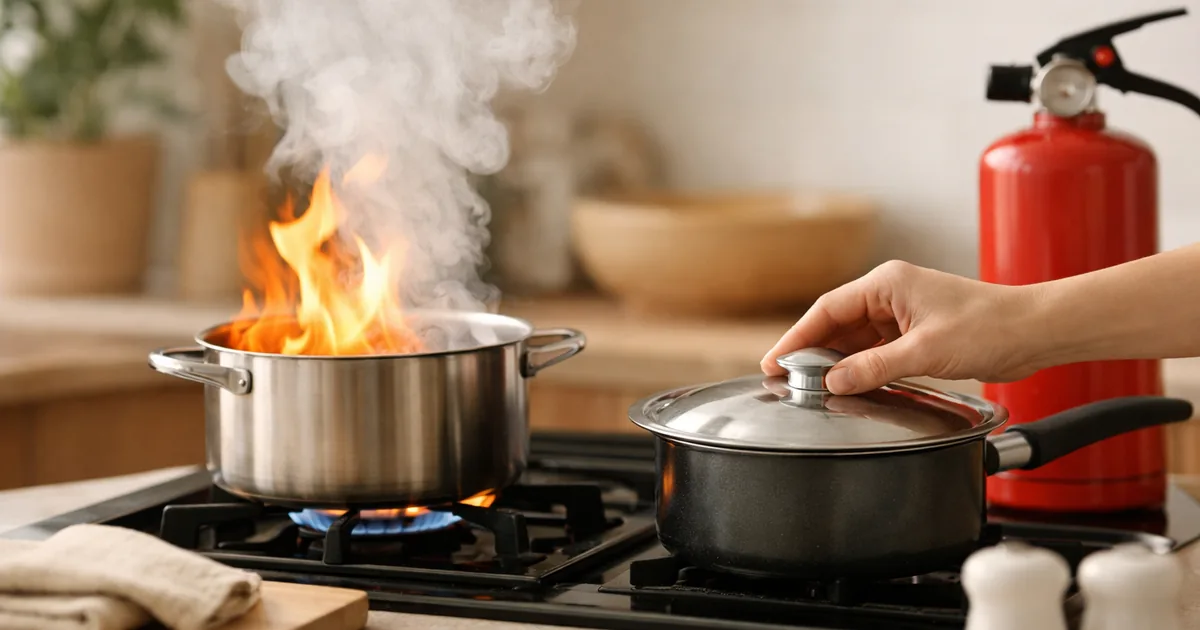
Cooking Fire Safety — Stay by the Pan, Turn Off at Smoke, Smother Small Fires with a Lid (US Fire Administration)
The US Fire Administration says cooking is the leading cause of home fires, and unattended equipment is the top factor (37%) in cooking fires that spread. Stay by the pan, turn it off at the first smoke, and slide a lid over a small pan fire.
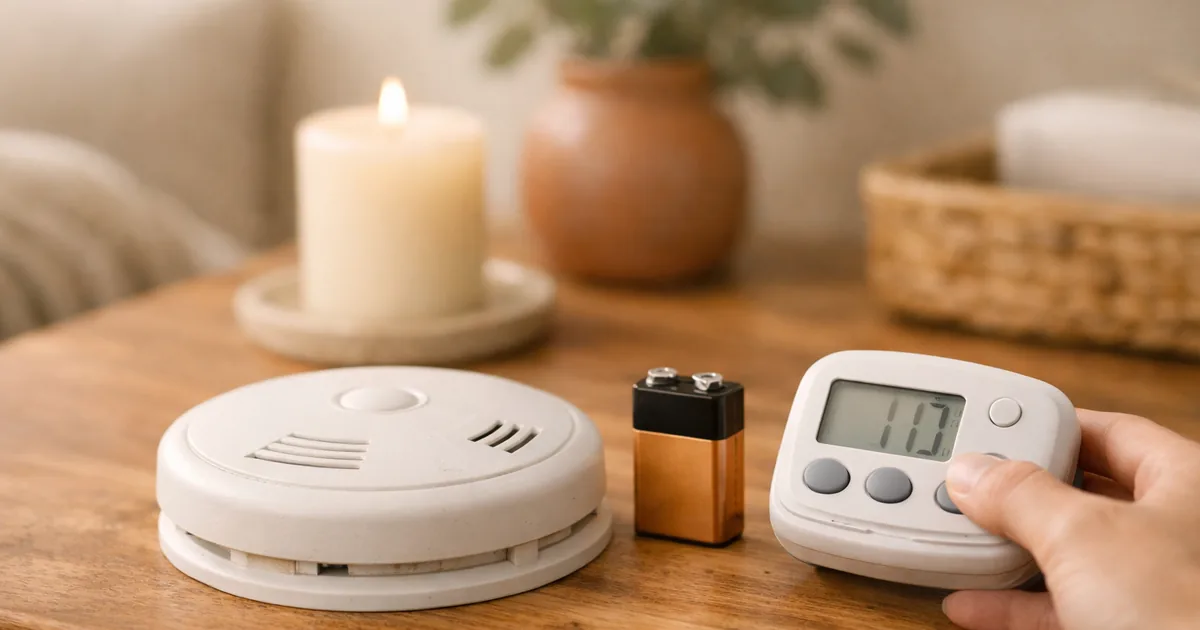
Smoke Alarms — Test Monthly, Batteries Yearly, Replace After 10 Years (US Fire Administration)
The US Fire Administration says to test smoke alarms monthly, change 9-volt batteries at least once a year, and replace alarms 10 years from manufacture. Don't remove the battery when cooking sets it off.
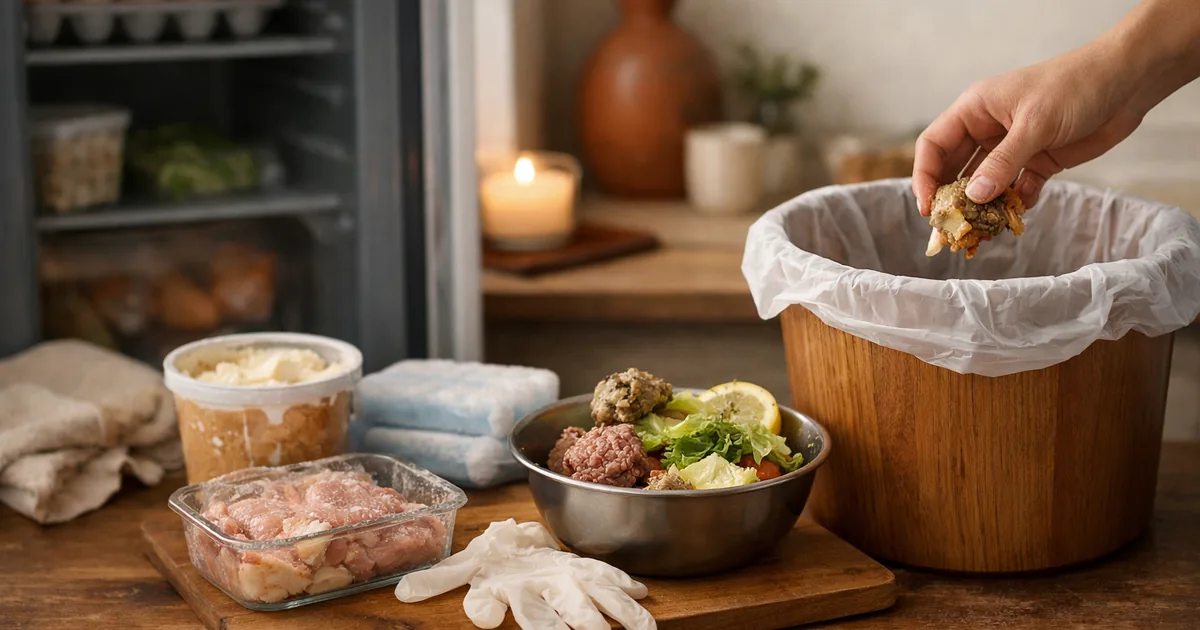
Food Safety in a Power Cut — Fridge 4 Hours, Full Freezer 48 Hours, Don't Taste-Test (CDC)
The CDC says that with doors closed, food stays safe for about 4 hours in a fridge, 48 hours in a full freezer and 24 hours in a half-full one. Throw out meat, eggs, milk and leftovers after 4 hours without cold, and never taste food to check.

Atopic Eczema — Emollients at Least Twice a Day, Rub Don't Scratch, Urgent Help for Blisters, Pus or Fever (NHS)
The NHS says atopic eczema usually starts in childhood and tends to improve with age; there's no cure but it can be managed. Use emollients at least twice a day, even when skin improves, and wash with an emollient instead of soap.

Cystitis and UTIs — Antibiotics Aren't Always Needed; 65+, Men, Pregnancy or Blood in Urine Need Urgent Care; No Evidence for Cranberry as Treatment (NHS)
The NHS says antibiotics aren't always needed for UTIs and waiting 48 hours is an option. People 65 or over, children 15 or under, men, diabetes, pregnancy, back pain under the ribs, blood in urine or no improvement in 48 hours need an urgent appointment; cranberry drinks don't treat an active infection.
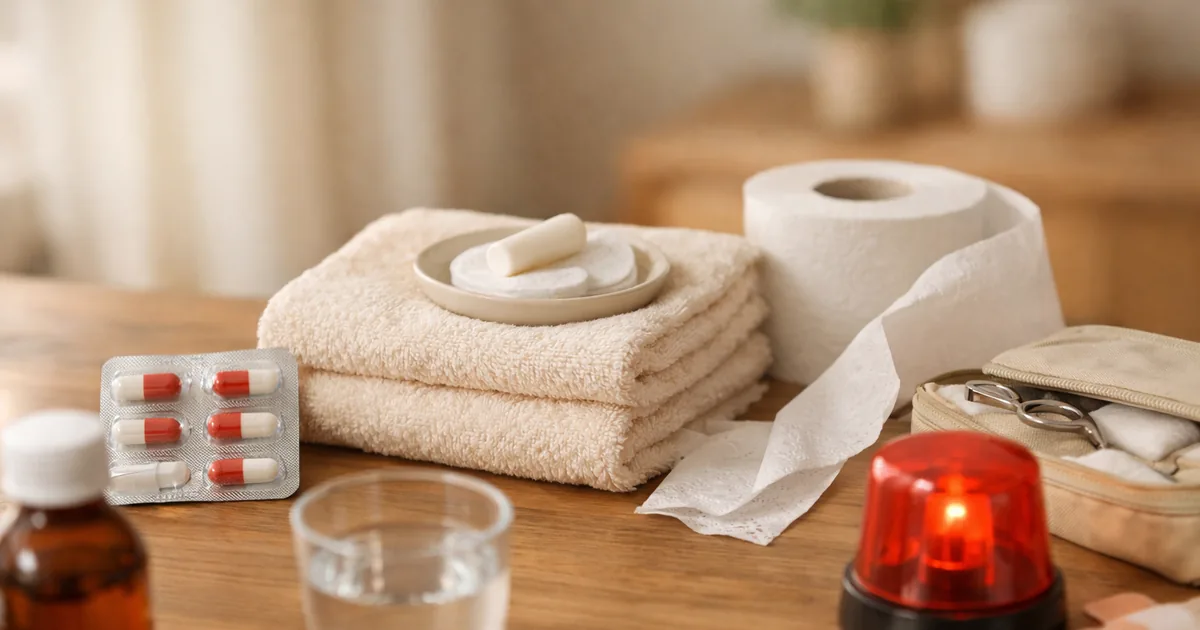
Piles (Haemorrhoids) — Often Better in a Few Days; No Ibuprofen If Bleeding; Non-Stop Bleeding Means 999 (NHS)
The NHS says piles often get better on their own within a few days. Keep stools soft with fluids and fibre, don't strain, avoid ibuprofen if bleeding and codeine, which causes constipation. Non-stop or heavy bleeding, large clots or severe pain need A&E.

When an Estate Agent's Mistake Costs You — Guarantee Cover of 400 Million Won for Firms and 200 Million for Individuals in Korea
Article 30 of Korea's Licensed Real Estate Agents Act makes agents liable for property loss caused intentionally or negligently, and Decree Article 24 sets guarantee cover at 400 million won or more for firms (plus 200 million per branch) and 200 million or more for individuals.

The Property Confirmation and Explanation Statement in Korea — Explained Before the Deal, Records Shown, Kept 3 Years, 4 Extra Items for Leases
Article 25 of Korea's Licensed Real Estate Agents Act requires agents to confirm and explain rights and restrictions before a deal completes, show records such as the land register, and hand over a written statement kept for 3 years. Decree Article 21 lists 13 items.

Land Transaction Permit Zones in Korea — A Permit Over 60 m² in Residential Areas, 2 Years' Own Use, Penalties up to 10% (Calculator)
Article 11 of Korea's Act on Report on Real Estate Transactions requires a permit for land deals above set areas inside permit zones, and contracts without one have no effect. A home bought for own use must be used so for 2 years, with penalties of up to 10% of the price each year for breaches.

Eight Reasons People Don't Exercise and How to Get Past Them — Find Five 30-Minute Slots in a Week (CDC)
The CDC names eight barriers to exercise — time, social support, energy, motivation, fear of injury, skill, cost and facilities, and weather — and, for lack of time, suggests tracking a week to find at least five 30-minute slots.
Calories Burned by Activity — 140 kcal for a 30-Minute Walk and 295 for a Run at 70 kg; Weight Loss Is Mostly Diet (CDC Table)
By the CDC table, a 154 lb (70 kg) person uses about 140 kcal walking at 3.5 mph for 30 minutes and about 295 kcal running at 5 mph. The CDC says most weight loss comes from eating less, and keeping it off needs regular activity.

Exercise for Depression — Especially Useful for Less Severe Depression, Start with 10 Minutes, NICE Suggests 10 Weeks of Group Exercise (NHS)
The NHS says regular exercise can improve mood in people with depression and is especially useful for less severe depression. Start with a 10-minute brisk walk and build to 150 minutes a week; NICE NG222 recommends group exercise more than once a week over 10 weeks.
How Much Exercise Adults Need — 150 Minutes Moderate or 75 Vigorous a Week, Strength on 2 Days (NHS, Ages 19 to 64)
The NHS guidelines for adults aged 19 to 64: 150 minutes moderate or 75 vigorous a week, spread over 4 to 5 days or more, plus strength work for all major muscles on at least 2 days. Moderate means you can talk but not sing.

Yellow Umbrella Deduction in Korea — 6 Million Won up to 40m of Business Income, 2 Million Over 100m, Other Income If Cancelled (Calculator)
Article 86-3 of Korea's Restriction of Special Taxation Act deducts Yellow Umbrella (small business mutual aid) contributions from business income, capped at 6, 5, 4 or 2 million won by business income. Property rental income is taken out by its share.

Disability Tax Breaks in Korea — No Age Limit, an Extra 2 Million Won, 15% Insurance Credit and No 7 Million Won Medical Cap
Korea's Income Tax Act puts disabled dependants in the basic deduction with no age limit (Art. 50), adds 2 million won a year (Art. 51), credits disability-only insurance at 15% and leaves disabled medical costs outside the 7 million won cap (Art. 59-4).

Year-End Tax Settlement When You Leave a Job in Korea — Done with Your Final Pay, Only Your Own Deduction Without a Declaration, May Return If No New Job
Article 137 of Korea's Income Tax Act has leavers settled when paid for the month they leave, applying only the personal basic deduction and standard credit without a declaration. A new employer in the same year re-settles (Art. 138); otherwise the May return is the window.

Working While on the National Pension — No Reduction Below 2 Million Won of Excess Income From 17 June 2026, With a Calculator
Article 63-2 of the National Pension Act reduces the old-age pension of pensioners in income-earning work according to excess income (monthly income minus the A value). A December 2025 amendment deleted the bands below 2 million won, so from 17 June 2026 there is no reduction there, applying to income from 1 January 2025.

National Pension Subsequent Payment (Chunap) — Under 10 Years, Application-Month Contribution × Months
Article 92 of the National Pension Act lets members pay later, for less than 10 years, for gaps after first paying, exemption periods, and military service where they joined afterwards. The amount is the application-month contribution times the months, with interest if paid in instalments.

Youth First National Pension Contribution Support — From 2027, Ages 18 to Under 27, Once
Article 100-5 of the National Pension Act, added in May 2026, says the state pays one month’s contribution, once, for anyone aged 18 to under 27 who applies. Those who have already paid get one month added instead. It applies to people who turn 18 on or after 1 January 2027.

How Fees Eat Returns — SEC Example: 1% a Year Costs About $29,000 Over 20 Years, With a Calculator
Investor.gov says $100,000 growing 4% a year for 20 years ends at about $208,000 with a 0.25% annual fee and about $179,000 with 1.00%. We’ve added a calculator that shows what fees take for any amount, return, fee and period.

Nine Investment Scam Red Flags — SEC: “There’s No Such Thing as High Guaranteed Returns”
Investor.gov lists high returns with little risk, pressure to act now, fear of missing out, unsolicited contact building trust, impersonation, fake testimonials, celebrity endorsements and suspicious payment methods as red flags, and says check the person offering the investment is registered.

Asset Allocation, Diversification and Rebalancing — SEC: Every 6 or 12 Months, or Past a Preset Drift
The SEC describes asset allocation as dividing a portfolio among stocks, bonds and cash, and says it matters because their returns have historically not moved together. Rebalancing returns the mix to the original, every six or twelve months or when a weight drifts past a preset percentage.
Target Heart Rate Calculator — 220 Minus Age; Moderate 50–70%, Vigorous 70–85%
The American Heart Association puts maximum heart rate at about 220 minus your age, with moderate exercise at 50–70% of that and vigorous at 70–85%. Enter your age: at 40 that’s 90–126 bpm moderate and 126–153 bpm vigorous.
Alcohol Unit Calculator — ABV × ml ÷ 1,000, Against 14 Units a Week
The NHS counts alcohol as strength (ABV %) × volume (ml) ÷ 1,000 = units, and says men and women shouldn’t regularly drink more than 14 units a week, spread over 3 or more days. Enter the strength, volume and number of drinks to see units and how far you are from 14.
Due Date Calculator — First Day of Last Period + 280 Days, Plus Weeks Pregnant
A due date is worked out by adding 280 days (40 weeks) to the first day of your last period. It assumes a 28-day cycle and is a rough guide; the 12-week scan gives a more accurate date. Enter dates for the due date, weeks pregnant and days to go.
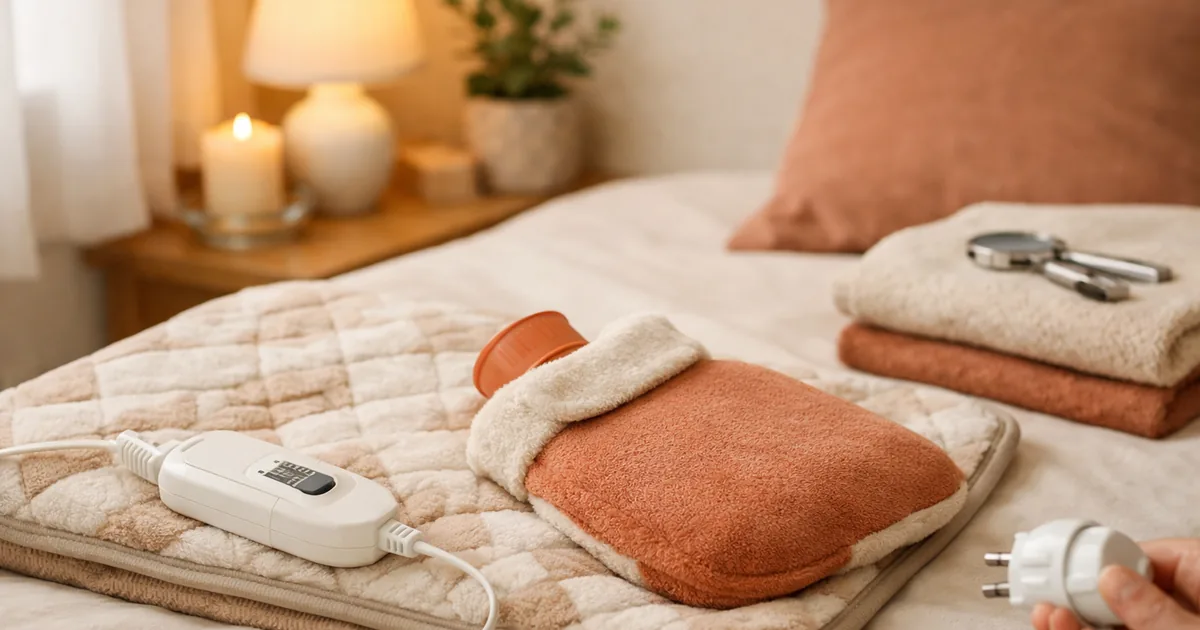
Electric Blanket Safety — UK Fire Service: No Hot Water Bottle, a Check Every Three Years
Essex County Fire and Rescue Service says check an electric blanket for scorch marks, visible wires, fraying or a buzzing control before use, and don’t use it with a hot water bottle or when wet or folded. Have it checked every three years and never buy second-hand.
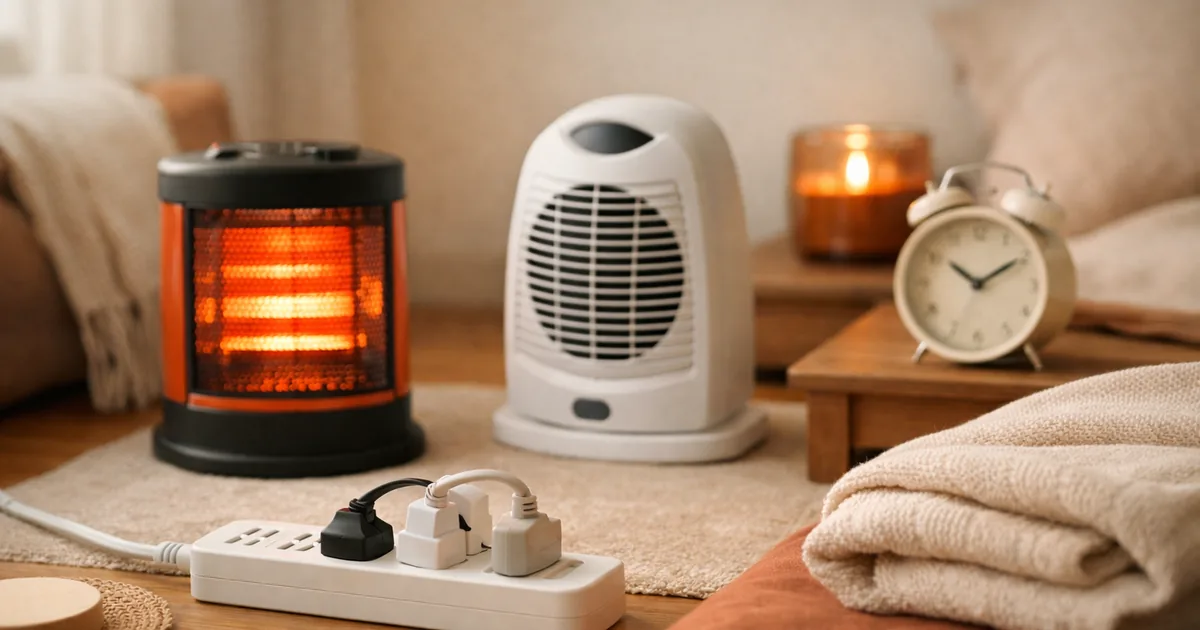
Space Heater Safety — USFA: 3 Feet Away, No Power Strips, Off at Bedtime
The US Fire Administration says keep bedding, clothes and curtains at least 3 feet from a space heater, turn it off when you go to bed or leave the room, and plug it straight into the wall — never an extension cord or power strip.
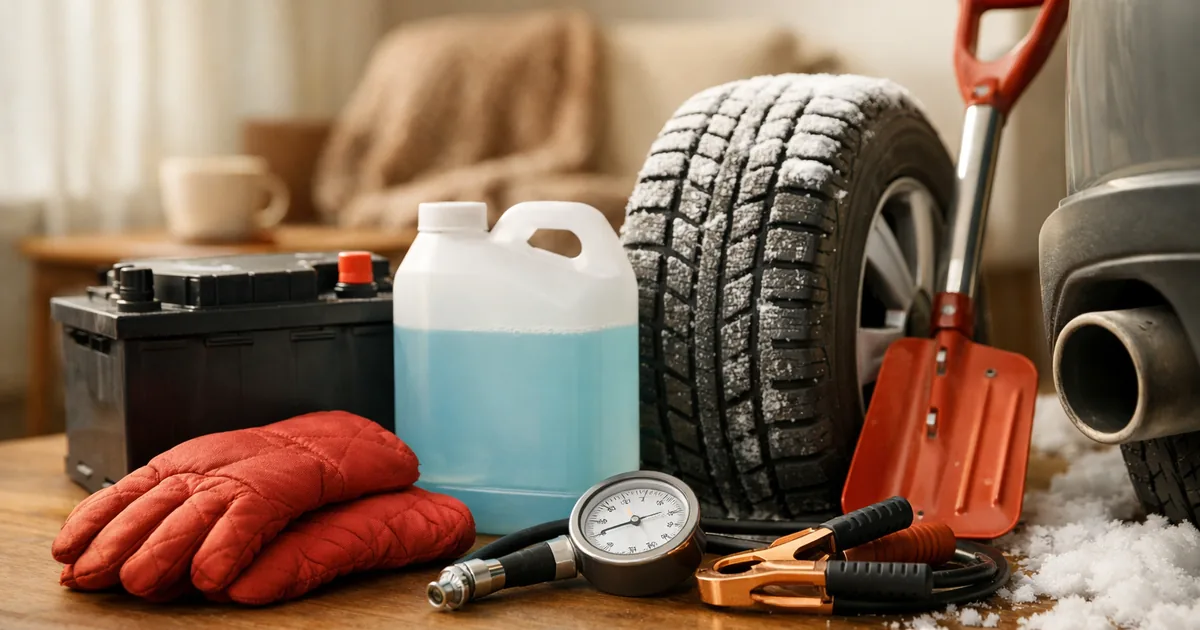
Winter Car Prep — NHTSA: Battery, Coolant, Tyre Pressure; Keep the Exhaust Clear If Stranded
NHTSA says before winter check the battery, charging system and belts, coolant, winter washer fluid and lights, and remember tyre pressure drops in the cold, so use the maker’s recommended figure. If stranded, stay with the car, clear the exhaust of snow and run the engine only sporadically.
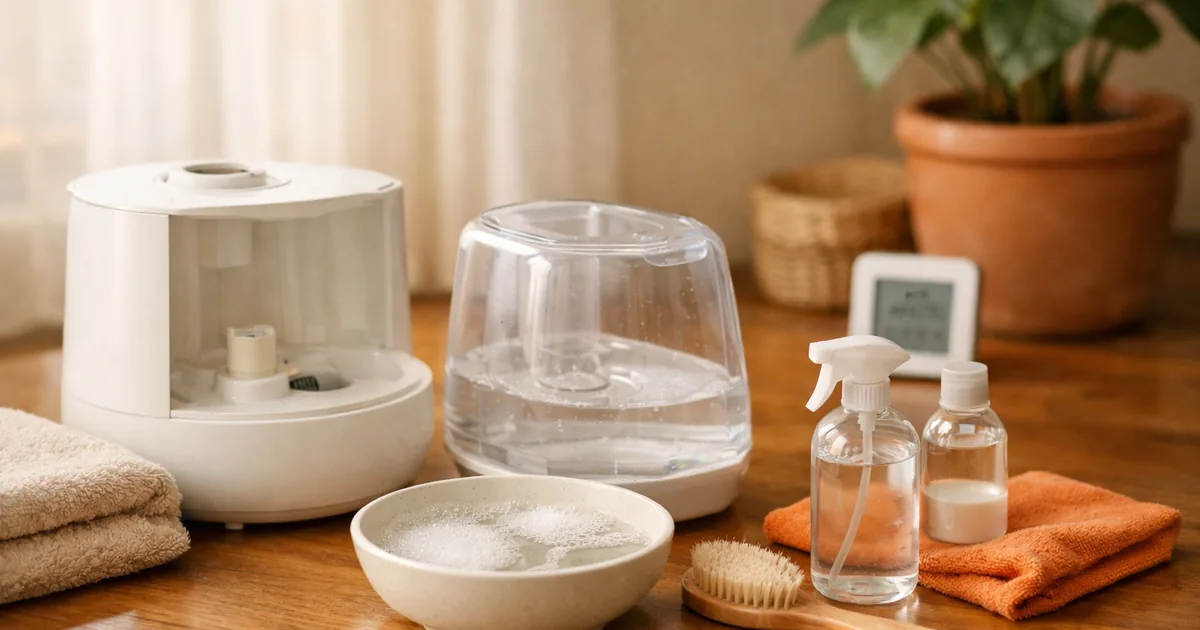
Humidifier Care — EPA: Empty and Dry Daily, Clean Every Third Day, Humidity Up to 50%
The US EPA says empty, wipe dry and refill portable humidifiers daily and clean them every third day. It recommends bottled water labelled “distilled”, says don’t humidify above 50%, and to turn it down if the area around it gets damp.
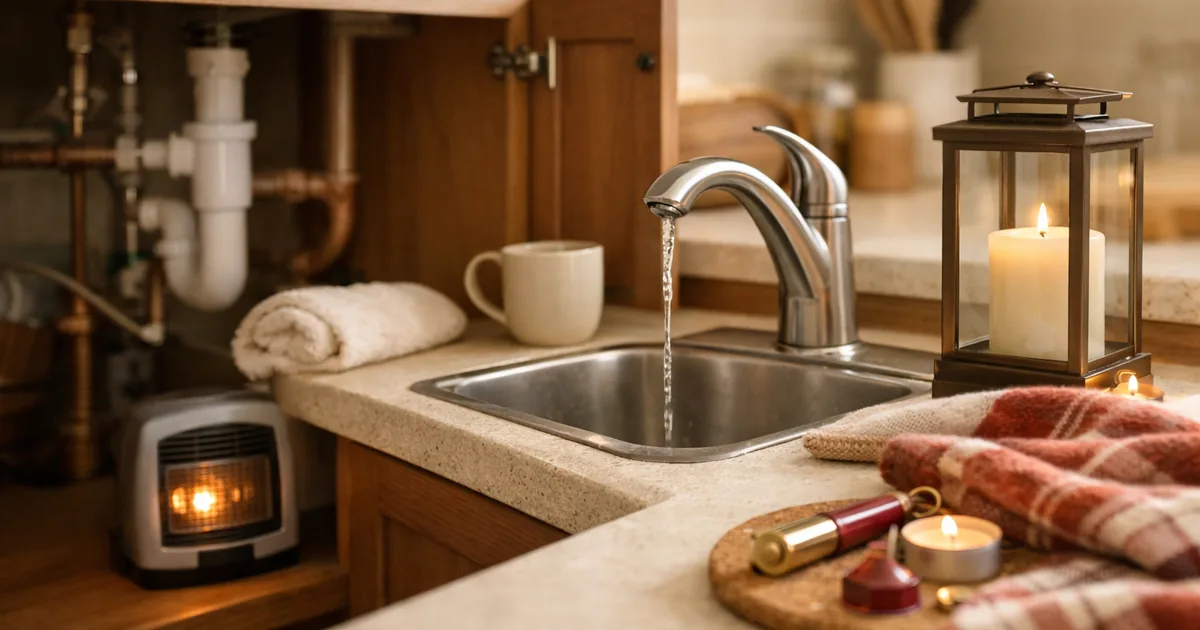
Frozen Pipes — American Red Cross: Drip the Cold Tap, Open Sink Cabinets, No Open Flames
The American Red Cross says water expands as it freezes and can break pipes. In very cold weather let cold water drip, open sink cabinets and keep the same heat day and night; thaw a frozen pipe with a hair dryer or hot wet towels, never a blowtorch or open flame.
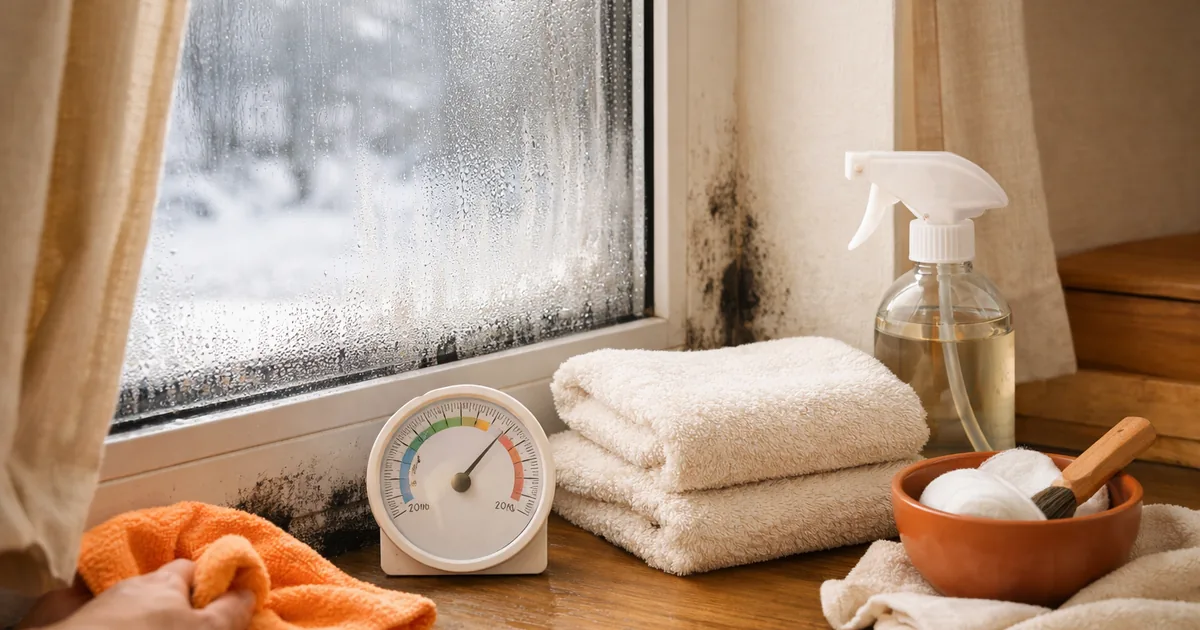
Winter Condensation and Mould — EPA: Humidity 30 to 50%, Dry Condensation Straight Away
The US EPA says keep indoor humidity below 60% if possible, ideally 30 to 50%, and dry condensation on windows or walls quickly while reducing the source. Clean mould under about 10 square feet yourself with detergent and water, and never mix bleach with ammonia cleaners.

Tinnitus — NHS: Usually Not Serious; Avoid Total Silence
The NHS says tinnitus is not usually a sign of anything serious and may get better by itself. Avoid total silence and don’t focus on it; see a GP if it’s constant or affecting sleep, get an urgent appointment if it beats with your pulse, and call 999 after a head injury or with sudden hearing loss.

Restless Legs Syndrome — NHS: No Caffeine After Midday, No Alcohol 2 Hours Before Bed
The NHS says restless legs syndrome causes a strong need to move your legs with uncomfortable feelings, usually worse at night when resting. Keep the same sleep times, exercise in the day, avoid caffeine after midday, alcohol 2 hours before bed and naps, and see a GP if it stops you sleeping.

Stomach Ache — NHS: Most Pass in a Few Days; Sudden or Severe Pain Means 999
The NHS says most stomach aches aren’t serious and go away after a few days, and says not to self-diagnose. Get urgent help if it gets much worse, keeps coming back or you’re pregnant; call 999 if it came on suddenly or is severe, hurts to touch, you’re vomiting blood or can’t pee, poo or fart.

Indigestion — NHS: Don’t Eat 3 to 4 Hours Before Bed; See a GP If It Keeps Coming Back
The NHS says indigestion is usually not a sign of anything serious and you can treat it yourself. Cut down tea, coffee, cola and alcohol, raise your head in bed and don’t eat 3 to 4 hours before bed; see a GP if you keep getting it, are in severe pain or lose weight.

Catarrh — NHS: Usually a Few Days; Salt Water Nose Rinses Up to 3 Times a Day
The NHS says catarrh is your body’s natural reaction to things like infection and symptoms usually last only a few days. Drink plenty of water, sip ice-cold water, try a humidifier and salt water gargles and nose rinses; see a GP if it lasts more than a few weeks or you get new symptoms.

Glandular Fever — NHS: Better Within 2 to 4 Weeks; No Strenuous Exercise
The NHS says glandular fever is most common at 15 to 24 and you should start to feel better within 2 to 4 weeks, though tiredness can last months. It spreads in spit, so avoid kissing and sharing cups or cutlery, don’t do heavy lifting or sport, and call 999 if you can’t swallow your spit, have severe breathing difficulty or severe stomach pain.

Threadworms — NHS: Treat the Whole Household; Hygiene Steps for 2 Weeks With Medicine
The NHS says threadworms cause extreme itching around the anus, particularly at night. Treat everyone aged 2 and over in the household with pharmacy mebendazole, follow hygiene steps for 2 weeks with medicine or 6 weeks without, and there’s no need to stay off school or nursery.

Dry Mouth — NHS: Rarely Serious; Take Regular Sips of Cold Water
The NHS says a dry mouth is rarely a sign of anything serious, and suggests regular sips of cold water, ice, sugar-free gum and brushing twice a day. See a GP if it makes talking or eating difficult, it’s still dry after a few weeks, or your mouth is painful, swollen or bleeding.
Swollen Glands — NHS: Usually 1 to 2 Weeks; See a GP If Not Down After 1 Week
The NHS says swollen glands are usually a sign the body is fighting an infection, and if so they usually get better within 1 to 2 weeks. See a GP if they’re getting bigger or haven’t gone down within 1 week, feel hard or fixed, or you have night sweats; get urgent help if it’s very hard to swallow or breathe.
Shingles — NHS: A Rash on One Side; Antivirals Within 3 Days
The NHS says the shingles rash appears on one side of the body only and can take up to 4 weeks to heal. Antiviral medicine needs to start within 3 days of the rash first appearing; get urgent help if you’re pregnant, the rash is on your eye or nose, or your vision changes.

Hand, Foot and Mouth Disease — NHS: Usually 7 to 10 Days; No Need to Wait for Blisters to Heal
The NHS says hand, foot and mouth disease is a common childhood illness that can also affect adults and usually gets better on its own in 7 to 10 days. Medicines can’t cure it, so use cool drinks, soft foods and painkillers; stay off only while too unwell, and get urgent help if a child is peeing less or has a very high temperature.

Insect Bites and Stings — NHS: Scrape a Stinger With a Fingernail, Lift a Tick With Fine Tweezers
The NHS says insect bites and stings should get better in a few days. Scrape a stinger out sideways with a fingernail (not tweezers), wash it, ice it for at least 20 minutes if swollen, and don’t scratch. Get urgent help if stung in the mouth, throat or near the eyes or more than once; call 999 for swollen lips, tongue or throat or trouble breathing.
Hives — NHS: Usually Better in a Few Days; Get Seen If No Better After 2 Days
The NHS says hives usually get better within a few days and you can often treat them yourself. Ask a pharmacist about antihistamines and try to find your triggers; get an urgent GP appointment or use 111 if they don’t improve after 2 days or are spreading, and call 999 if your lips, throat or tongue swell or you struggle to breathe.
Bloating — NHS: Eat Smaller Meals More Often; See a GP If It Keeps Happening
The NHS names a lot of gas in your gut as a common cause of bloating and suggests regular exercise, chewing with your mouth closed, plenty of water and smaller, more frequent meals. See a GP if you feel bloated regularly, lose weight or have blood in your poo; call 999 for a sudden severe stomach ache or vomiting blood.
Chickenpox — NHS: Usually 1 to 2 Weeks; Stay Off Until Every Spot Has Scabbed
The NHS says chickenpox usually gets better on its own after 1 to 2 weeks, and is infectious from 2 days before the spots appear until they have all scabbed (usually 5 days). Stay off school, nursery or work until then, don’t use ibuprofen unless a doctor says so, and use 111 if the skin around the blisters is red, hot or painful.

Chest Infection — NHS: Usually 7 to 10 Days, but the Cough Can Last Up to 3 Weeks
The NHS says chest infections often follow colds or flu and usually get better on their own in about 7 to 10 days, though the cough and mucus can last up to 3 weeks. Rest, drink lots of water and raise your head with pillows; see a GP if you cough up blood, the cough lasts over 3 weeks, or you get worse.

Conjunctivitis — NHS: Usually Clears in a Couple of Weeks; See a GP If Not Better in 7 Days
The NHS says conjunctivitis usually gets better in a couple of weeks without treatment. Clean your eyelids with cooled boiled water and don’t wear contact lenses until it’s better; see a GP if it hasn’t cleared within 7 days, and get urgent help for eye pain, light sensitivity, vision changes or very red eyes.
Fungal Nail Infection — NHS: 6 to 12 Months of Treatment; Cured When Healthy Nail Grows Back
The NHS says fungal nail infections are not serious but can take a long time to treat. Pharmacy antifungal nail medicine needs to be used for 6 to 12 months, and the infection is cured when healthy nail grows back at the base. See a GP if treatment hasn’t worked, it spreads, or you have diabetes or a weakened immune system.

Neck Pain — NHS: Most of It Lasts a Few Weeks; a Collar Only If a Doctor Says So
The NHS says most neck pain only lasts a few weeks and suggests painkillers, a low firm pillow, heat or cold packs and neck exercises. Wear a collar only if a doctor advises it; see a GP if it isn’t gone after a few weeks or comes with pins and needles or a cold arm.

Shoulder Pain — NHS: It Should Start to Improve in About 2 Weeks; Keep It Moving Gently
The NHS says shoulder pain should start to improve after about 2 weeks of self-care, though full recovery can take 6 months or longer. Keep moving it gently rather than resting it completely; see a GP if it’s no better after 2 weeks, and get urgent help for sudden or severe pain, not being able to move your arm, or pain after an injury.
Knee Pain — NHS: You Should Feel Better in a Few Days; Ice Up to 20 Minutes Every 2 to 3 Hours
The NHS says knee pain can often be treated at home and you should start to feel better in a few days. Put less weight on it, use an ice pack for up to 20 minutes every 2 to 3 hours and take painkillers; see a GP if it doesn’t improve within a few weeks, and call 111 if it’s very painful, can’t take weight, locks or gives way.

Croup — NHS: Usually Better Within 48 Hours; Sit Them Upright and Calm Them; No Steam
The NHS describes croup as a common condition affecting babies' and young children's airways: after a cold come a barking cough, hoarse voice and rasping sound when breathing in, often worse at night, usually better within 48 hours. Sit them upright and calm them but don't use steam; get a doctor to check croup, and call 999 for breathing difficulty.

Tonsillitis — NHS: Usually 3 to 4 Days, Not Contagious Itself; GP After 1 Week, A&E If You Can't Open Your Mouth
The NHS says tonsillitis symptoms usually go after 3 to 4 days; tonsillitis itself isn't contagious, though most infections that cause it are. Rest, drink cool drinks, take painkillers and gargle salt water; see a GP after 1 week, call 111 for pus or trouble eating, and go to A&E if breathing, swallowing or opening your mouth is difficult.

Laryngitis — NHS: Usually 1 to 2 Weeks; Don't Shout or Whisper; GP If No Better After 2 Weeks
The NHS describes laryngitis as irritated or swollen vocal cords that start suddenly, get worse over the first 3 days and usually go within 1 to 2 weeks. Speak as little as possible and drink plenty, but don't talk loudly or whisper, since both strain your voice; see a GP if there's no improvement after 2 weeks.

Pneumonia Symptoms — NHS: Most Better in 2 to 4 Weeks, No Cough Medicine, Call If No Better After 2 to 3 Days of Antibiotics, Pneumococcal and Flu Vaccines Over 65
The NHS describes pneumonia as inflammation of the lungs, usually from an infection, with cough, breathlessness, fever and chest pain that start suddenly or over a few days; most people get better in 2 to 4 weeks. Rest and drink fluids but don't take cough medicine, and contact your doctor if antibiotics haven't helped after 2 to 3 days.

Bronchiolitis — NHS: Common Under 2, Worst on Days 3 to 5, Cough Lasts 3 Weeks; Call 999 for Pauses in Breathing
The NHS describes bronchiolitis as a common chest infection in babies and children under 2. It starts like a cold, is usually worst on days 3 to 5, and the cough usually gets better in 3 weeks. It's usually caused by RSV; babies under 6 months are at higher risk, and difficulty breathing, pauses in breathing or blue lips need 999.

Raynaud's — NHS: Fingers Turn White, Blue, Then Red in the Cold; Keep Warm, Cut Caffeine; GP If It Starts After 30
The NHS describes Raynaud's as a common condition where blood stops flowing properly to the fingers and toes; in the cold or with stress they turn white, blue and red for minutes to hours. Keep warm, avoid smoking and too much caffeine, and see a GP if it starts after 30 or affects one side only.

Common Cold — NHS: Better in 1 to 2 Weeks, No Antibiotics; GP If Fever Lasts 3 Days, Cough 3 Weeks
The NHS says cold symptoms come on over 2 to 3 days and you should start to feel better in about 1 to 2 weeks. Rest, drink fluids, gargle salt water and try lemon and honey. Antibiotics aren't recommended, and see a GP if a fever lasts over 3 days, symptoms haven't improved after 10 days or a cough lasts over 3 weeks.
Sinusitis — NHS: Common After a Cold, Usually Clears in 4 Weeks; Salt-Water Rinses; Antibiotics Rarely
The NHS says sinusitis is common after a cold or flu and usually clears up on its own within 4 weeks. Rest, fluids, painkillers and salt-water nose rinses help; see a GP if there's no improvement after 7 days of pharmacy treatment or 3 weeks of self-care. Antibiotics are rarely prescribed because it's usually viral.
RSV Symptoms — CDC: 4 to 6 Days After Infection, Over in 1 to 2 Weeks, Contagious 3 to 8 Days
The CDC describes RSV as a common virus infecting the nose, throat and lungs. Runny nose, cough, fever and wheezing appear in stages 4 to 6 days after infection, and most infections clear in a week or two. People are usually contagious for 3 to 8 days, some babies for 4 weeks or longer, and infants under 6 months and older adults are most at risk.

Burns and Scalds — NHS: Cool Running Water for 20 Minutes Within 3 Hours, Cling Film, No Butter or Creams
The NHS says to cool a burn or scald under cool running water for 20 minutes, as soon as possible and within 3 hours, then cover it with cling film without wrapping. Don't use creams, oils, butter or plasters, don't burst blisters, and go to A&E for large or deep burns, burns on the face or genitals, and chemical or electrical burns.

Seasonal Affective Disorder — NHS: Comes in Winter, Goes in Summer; Daylight Every Day; 10,000 Lux Light Therapy
The NHS describes seasonal affective disorder (SAD) as a type of depression that usually happens in winter, thought to be linked to reduced daylight. It suggests going outside in daylight every day, regular exercise and consistent sleep and wake times, and lists light therapy (10,000 lux), CBT and antidepressants as treatments.
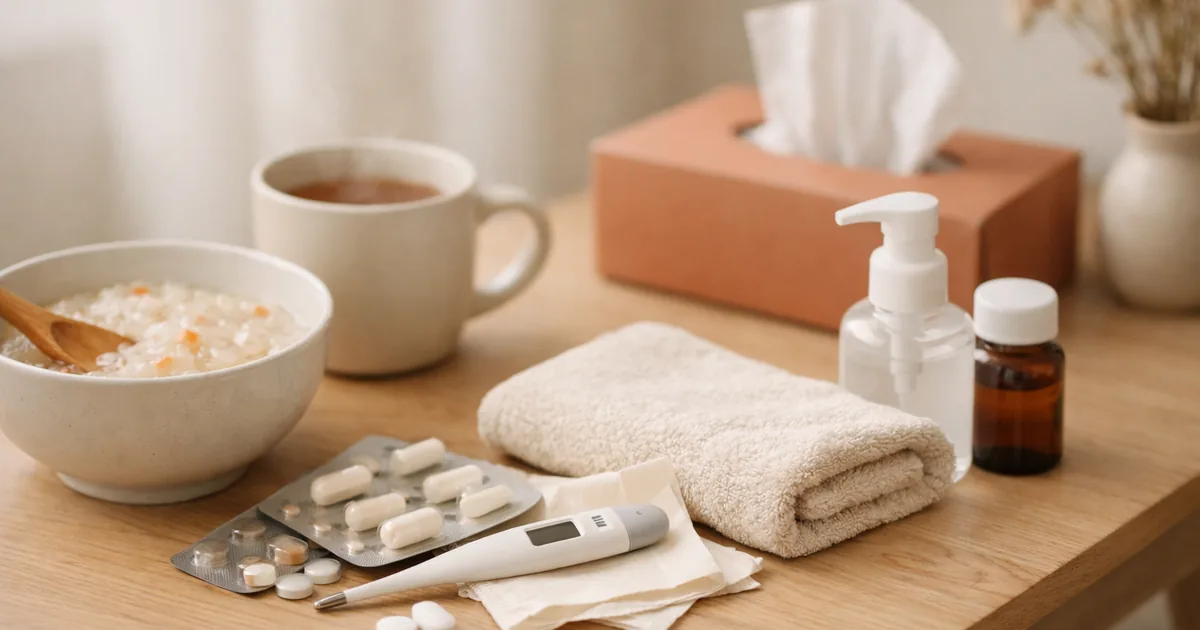
Norovirus Incubation and Symptoms — CDC: Starts 12 to 48 Hours After Exposure, Over in 1 to 3 Days, Contagious for 2 Weeks or More
The CDC describes norovirus as a very contagious virus causing vomiting and diarrhea. Symptoms start 12 to 48 hours after exposure and most people recover within 1 to 3 days, but you can spread it for 2 weeks or more, so stay home for 2 days (48 hours) after symptoms stop and wash hands with soap and water for at least 20 seconds.

Cold or Flu — CDC: Colds Come On Gradually, Flu Abruptly; Flu Fever Lasts 3 to 4 Days, but Not Everyone Has One
The CDC compares a cold, which starts gradually, with flu, which starts abruptly; fever is rare with a cold but common with flu and lasts 3 to 4 days. Not everyone with flu has a fever, and shortness of breath, chest pain, or fever or cough that improves then worsens need care right away.

Hypothermia — NHS: Below 35C Is an Emergency; Remove Wet Clothes, Wrap the Head, No Hot Bath or Rubbing
The NHS defines hypothermia as a drop in body temperature below 35C and treats it as a medical emergency. Move the person indoors, remove wet clothing and wrap them up including the head; don't use a hot bath, hot water bottle or heat lamp, rub their limbs or give alcohol. Older people living alone are particularly at risk.

Frostbite — NHS: At 0C or Below, Fingers, Toes, Nose and Ears; Warm, Not Hot, Water and No Rubbing
The NHS says frostbite can happen at 0C (32F) or below and most often affects fingers, toes, nose and ears. Remove tight items, warm the area in warm (not hot) water and raise it; don't rub it, use a fire, radiator or hot water bottle, have a hot bath or drink alcohol. Go to A&E for frozen skin, loss of feeling or blisters.

Carbon Monoxide Poisoning — NHS: No Smell or Colour; Headaches Worse at Home; Switch Off and Get Outside
The NHS says carbon monoxide has no smell or colour, and symptoms such as headache, dizziness and nausea often get worse in the affected room or building and ease outside. If you suspect it, stop using the appliance, go outside and get medical advice; fit an alarm in each room with a fuel-burning appliance.
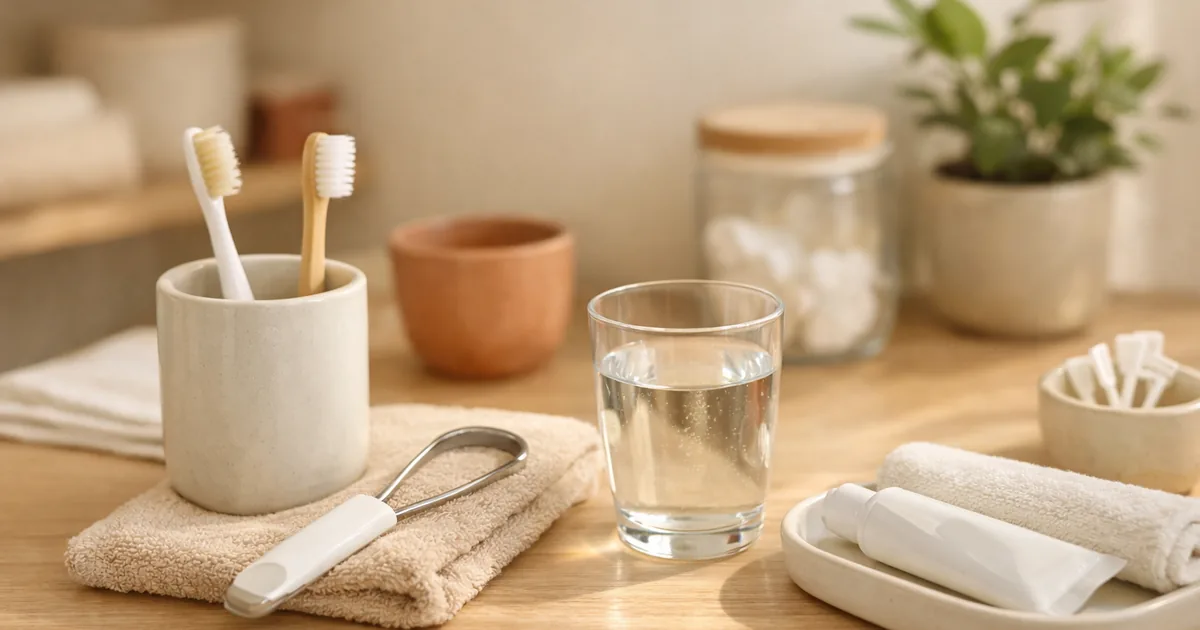
Bad Breath — NHS: Brush Twice a Day for 2 Minutes, Clean Your Tongue Daily, Don't Rinse Straight After
The NHS lists strong-smelling food, gum disease and holes in teeth, crash dieting, dry mouth, tonsillitis or acid reflux, and smoking as common causes of bad breath. Brush at least twice a day for 2 minutes, clean your tongue and between your teeth daily, don't rinse straight after brushing, and see a dentist if it hasn't gone after a few weeks.

Snoring — NHS: Sleep on Your Side, Lose Weight, Avoid Smoking, Alcohol and Sleeping Pills
The NHS explains snoring as your tongue, mouth, throat or nasal airways vibrating as they relax in sleep, with being overweight, smoking, drinking and sleeping on your back as risks. It suggests losing weight and sleeping on your side, avoiding sleeping pills, and seeing a GP if you're sleepy in the day or your breathing stops and starts.
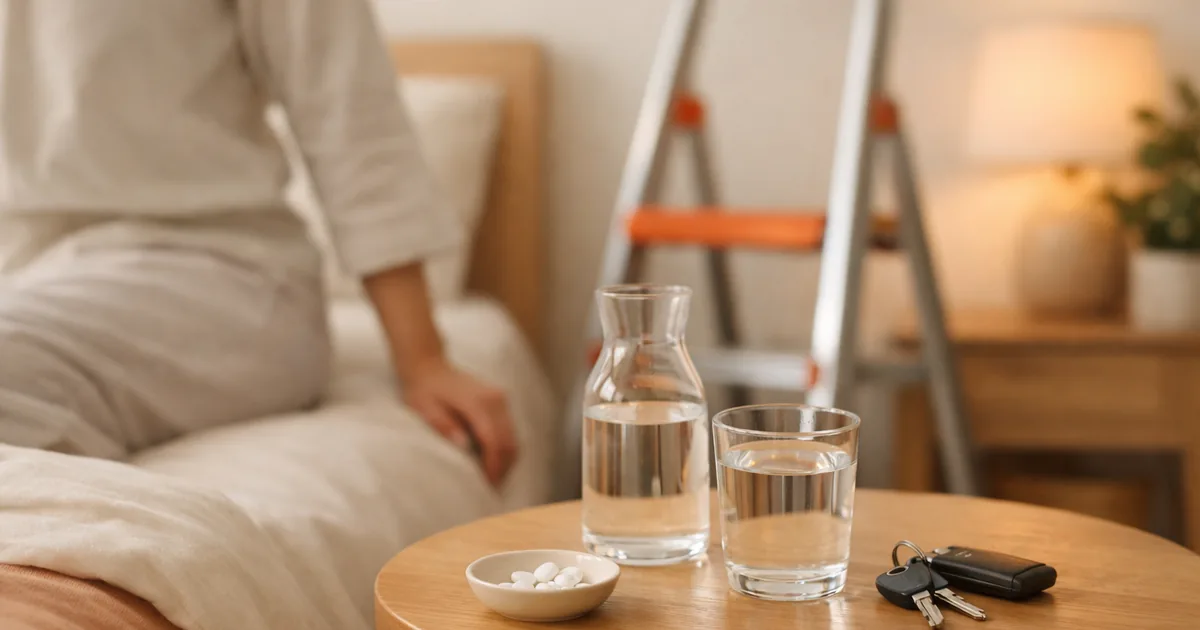
Dizziness — NHS: Lie Down, Then Get Up Slowly; Drink Plenty; No Driving or Ladders While Dizzy
The NHS says dizziness usually goes away on its own. Lie down until it passes and get up slowly, drink plenty of fluids and avoid coffee, cigarettes and alcohol; don't bend or stand up suddenly or do anything dangerous like driving, and see a GP for trouble hearing or speaking, vision changes, or numbness or weakness.
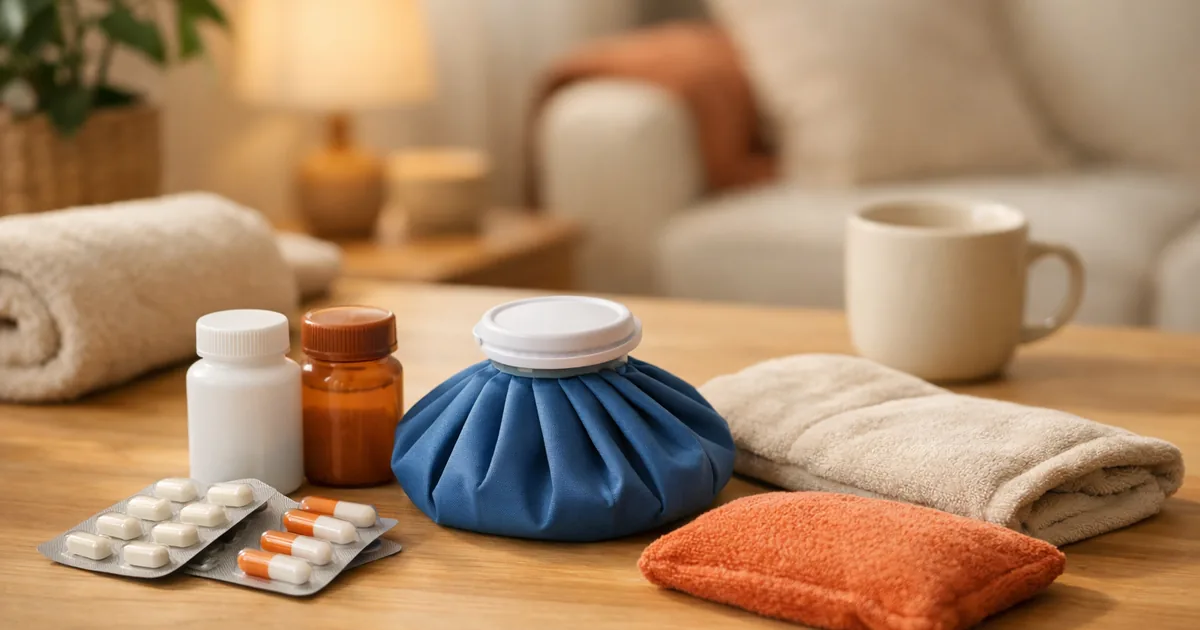
Back Pain — NHS: Keep Moving, Not Bed Rest; Anti-inflammatories, Ice and Heat; Usually a Few Weeks
The NHS says back pain usually improves within a few weeks. Stay active rather than in bed, and use anti-inflammatories like ibuprofen, an ice or heat pack wrapped in a towel, and exercises and stretches. Paracetamol alone isn't recommended; numbness in both legs or bladder and bowel changes need A&E.

Dry Eyes — NHS: Clean Your Eyelids Daily, a Warm Flannel, and Less Time in Heated Rooms
The NHS says dry eyes happen when you don't make enough tears or they dry quickly. Clean your eyelids daily, take screen breaks, use a warm (not hot) flannel and a humidifier, and avoid smoking, too much alcohol and long periods in air-conditioned or heated rooms; get your eyes checked if they're still dry after a few weeks.
Diarrhoea and Vomiting — NHS: Diarrhoea 5 to 7 Days, Vomiting 1 to 2; Lots of Fluids; Stay Home for 2 Days After
The NHS says diarrhoea usually stops within 5 to 7 days and vomiting within 1 or 2, and the key is lots of fluids to avoid dehydration. Avoid fruit juice and fizzy drinks, stay off school or work until 2 days after the last bout and out of pools for 48 hours, and get advice if diarrhoea lasts over 7 days or vomiting over 2.
Earache — NHS: Painkillers and a Warm Flannel; No Cotton Buds; Urgent Help After 2 to 3 Days
The NHS says earache is often an ear infection but has many causes. It suggests painkillers (no aspirin under 16) and a warm flannel, and says not to put cotton buds in your ear, remove earwax or let water in; get urgent help if it lasts more than 2 to 3 days or comes with fluid, swelling or hearing changes.
Toothache — NHS: Painkillers and Salt-Water Rinses Until the Dentist; Avoid Sweet, Hot and Cold Food; Dentist After 2 Days
Until you see a dentist, the NHS suggests painkillers (no aspirin under 16), a pain-relieving mouth gel, a salt-water rinse (half a teaspoon in a glass of warm water, not for children) and soft foods, and says to avoid sweet, very hot or very cold food and smoking. See a dentist if it lasts more than 2 days or painkillers don't help.

Insomnia — NHS: Bed Only When Sleepy, the Same Wake Time, No Caffeine or Alcohol 6 Hours Before; Sleeping Aids for 1 to 2 Weeks
The NHS says insomnia usually improves by changing sleep habits: only go to bed when sleepy, get up at the same time every day, avoid alcohol, tea, coffee and smoking for 6 hours before bed and exercise within 4 hours, and don't nap or sleep in. Pharmacy sleeping aids are for 1 to 2 weeks at most; see a GP after months of trouble.

A Lingering Cough — NHS: Usually 3 to 4 Weeks; Lemon and Honey From Age 1; See a GP After 3 Weeks
The NHS says a cough usually clears up on its own within 3 to 4 weeks and most come from a cold or flu. Rest, drink plenty, and hot lemon and honey (not under 1) can work like cough syrup; pharmacy cough medicines help you cough less but won't stop it; see a GP if it lasts more than 3 weeks.

Warts and Verrucas — NHS: Usually Go On Their Own but Take Months to Years; Pharmacy Treatment Up to 3 Months, Never on the Face
The NHS says warts and verrucas usually go away on their own but may take months or even years, and spread through contaminated surfaces or skin contact. Wash your hands after touching them, don't share towels, socks or shoes and don't pick them; pharmacy creams and plasters can take up to 3 months and should not be used on the face.

Itchy Skin — NHS: Pat, Don't Scratch; Lukewarm Water and Unperfumed Moisturiser; See a GP If It's All Over or in Pregnancy
For itchy skin the NHS suggests patting instead of scratching, cool or lukewarm baths or showers, an unperfumed moisturiser used regularly and loose cotton clothing, and says to avoid tight, wool or synthetic clothes, long showers and perfumed products. See a GP if it is all over your body, severe or during pregnancy.

Mouth Ulcers — NHS: Usually 1 to 2 Weeks; Skip Spicy, Acidic and Crunchy Food; See a Dentist After 3 Weeks
The NHS says mouth ulcers clear up on their own within a week or 2 and are not contagious. It suggests a soft toothbrush, cool drinks through a straw and softer foods, says to avoid spicy, salty, acidic or crunchy food and toothpaste with sodium lauryl sulphate, and to see a dentist or GP if one lasts longer than 3 weeks.

Leg Cramps — NHS: Seconds to 10 Minutes; Stretch and Massage; Wall Calf Stretch 3 Times a Day
The NHS says leg cramps are common, usually harmless, last from a few seconds to 10 minutes and mostly come at night or when resting. During one, stretch and massage the muscle or stand on the leg; to prevent them, do a wall calf stretch holding 2 or 3 seconds for 5 minutes, 3 times a day, the last just before bed.
Athlete's Foot — NHS: Rarely Clears Alone; Pharmacy Antifungals for a Few Weeks; Don't Wear the Same Shoes 2 to 3 Days Running
The NHS says the main symptom of athlete's foot is itchy white patches between the toes; it is unlikely to clear on its own, and pharmacy antifungals usually take a few weeks. Dry between your toes, wear clean cotton socks daily, don't wear the same shoes more than 2 to 3 days in a row, and wear flip-flops in changing rooms and showers.
Frequent Headaches — NHS: Water, Rest, Painkillers; Don't Oversleep or Skip Meals; See a Doctor Past 3 Days a Week
The NHS says headaches can last 30 minutes to several days but most go away on their own; it suggests water, rest, relaxing and painkillers, and says to avoid skipping meals, oversleeping, long screen time and alcohol. MedlinePlus says painkillers more than 3 days a week can cause rebound headaches.
Constipation — NHS: Fibre, Fluids, a Daily Walk and a Footstool; Laxatives Only Briefly (No More Than 7 Days)
The NHS counts not pooing at least 3 times in the last week, or hard stools, as constipation, and suggests adding fibre gradually, drinking plenty, walking daily, keeping a regular toilet time and resting your feet on a low stool. Don't take laxatives bought without a prescription for longer than 7 days, and ask for advice if 3 days haven't helped.
Ingrown Toenail — NHS: Warm Salty Water and Wide Shoes; Don't Cut It; Trim Straight Across
The NHS says ingrown toenails are common and usually affect the big toe; it suggests soaking in warm, salty water, keeping the foot dry, wide comfortable shoes and painkillers. Don't cut or pick the ingrown nail; to prevent it, don't cut too short and cut straight across, and see a GP for pus, a high temperature or diabetes.

Sore Throat — NHS: Usually a Week, Antibiotics Rarely Needed, A&E for Trouble Breathing or Swallowing
The NHS says sore throats normally get better within a week, are usually caused by viruses such as colds or flu or by smoking, and do not normally need antibiotics. It suggests salt water gargles (not for children), fluids, soft food and rest, and A&E for difficulty breathing, inability to swallow or drooling.

Heartburn and Acid Reflux — NHS: Smaller Meals, Nothing 3 to 4 Hours Before Bed, Raise the Bed 10 to 20cm
The NHS says to eat smaller, more frequent meals, avoid eating within 3 or 4 hours of bedtime, and raise the head of the bed by about 10 to 20cm for heartburn. Extra pillows can make it worse, and you should see a GP if you have heartburn most days or food gets stuck.
Should You Pop a Blister — NHS: Don't Burst It, Cover It, Leave the Skin On, Usually a Week
The NHS says blisters often heal on their own within a week, and says not to burst them but to cover them with a soft plaster or padded dressing. If one bursts, leave the skin on, let it drain and cover it; a hot blister with green or yellow pus is infected and should not be ignored.

Chilblains — NHS: Dry and Warm Slowly, No Radiators or Hot Water, Usually 2 to 3 Weeks
The NHS says chilblains — itchy, burning patches on fingers and toes a few hours after the cold, turning red or purple — usually go away in 2 to 3 weeks. Dry your skin and warm it slowly rather than on a radiator or under hot water, don't scratch, and avoid smoking, caffeine and decongestants.

Cold Sores — NHS: Antiviral Cream at the First Tingle, No Kissing Until Healed, 10 Days
The NHS says cold sores should start to heal within 10 days and are contagious from the first tingle until fully healed. Use antiviral cream as soon as you notice the tingling, and don't kiss anyone until it has healed — kissing a baby can cause neonatal herpes.

Getting Rid of Head Lice — NHS: Wet Comb on Days 1, 5, 9 and 13, Check on Day 17, No Need to Miss School
The NHS says the only way to be sure of head lice is finding live lice with a detection comb, and recommends wet combing with conditioner from roots to ends on days 1, 5, 9 and 13, then checking on day 17. There is no need to keep children off school, and nothing can prevent head lice.

How to Stop a Nosebleed — NHS: Lean Forward, Pinch 10 to 15 Minutes, A&E If Longer, Take Care for 24 Hours
The NHS says to sit down, lean forward, breathe through your mouth and pinch just above the nostrils for 10 to 15 minutes. Go to A&E if it lasts longer than 10 to 15 minutes or follows a blow to the head, and for 24 hours afterwards avoid blowing your nose, hot drinks, alcohol and strenuous exercise.

How to Treat a Stye — NHS: Warm Flannel 5 to 10 Minutes, 2 to 4 Times a Day, Don't Burst It, Usually a Week
The NHS says a stye should go within a week, and suggests a clean flannel soaked in warm water held against the eye for 5 to 10 minutes, 2 to 4 times a day. Don't burst it or pull out eyelashes, avoid lenses and eye make-up until it has healed, and get seen urgently if it is very painful or affects your vision.

Choosing a Dandruff Shampoo — NHS: Not About Hygiene, Ketoconazole, Coal Tar, Salicylic Acid, Try Up to 4 Weeks
The NHS says dandruff is not caused by poor hygiene and can be made worse by stress and cold weather, and suggests a shampoo with ketoconazole, coal tar or salicylic acid for up to 4 weeks. The American Academy of Dermatology adds zinc pyrithione, selenium sulfide and sulfur for 6 ingredients, and says some shampoos need 5 to 10 minutes on the scalp.

Vitamin D From October — NHS: 10 Micrograms (400 IU) a Day, Adult Upper Limit 100 Micrograms (4,000 IU)
The NHS says sunlight is not enough from October to early March, so everyone should consider a 10 microgram (400 IU) vitamin D supplement a day. The adult upper limit is 100 micrograms (4,000 IU) a day, 50 micrograms for ages 1 to 10 and 25 micrograms under 1.

Don't Dig Earwax With Cotton Buds — NHS: Olive Oil 3 to 4 Times a Day for 3 to 5 Days, About 2 Weeks, See Someone After 5 Days
The NHS says not to use fingers or objects like cotton buds to remove earwax. Lying with the blocked ear up and using olive or almond oil 3 to 4 times a day for 3 to 5 days should bring the wax out over about 2 weeks; if it has not cleared after 5 days, get it seen.
How to Stop Hiccups — NHS: Usually a Few Minutes, 6 Things to Try (No Proof for Everyone), See a GP After 48 Hours
The NHS says hiccups should only last a few minutes, and lists 6 things to try — breathing into a paper bag, knees to chest, sipping ice-cold water, swallowing sugar, lemon or vinegar, and a short breath-hold — while noting there is no evidence they work for everyone. See a GP if they last longer than 48 hours.
How Long and How Often to Brush — NHS: Twice a Day for About 2 Minutes, 1,350ppm Fluoride, Spit Don't Rinse
The NHS says to brush twice a day for about 2 minutes, with one of those last thing before bed. Adult toothpaste should contain at least 1,350ppm fluoride, and you should spit rather than rinse after brushing. Floss before brushing, and use mouthwash at a different time.
How Loud Is Too Loud for Earphones — WHO: Under 60% Volume, 40 Hours a Week at 80dB, 4 Hours at 90dB
The WHO says to keep device volume at no more than 60% of maximum, and gives safe listening time per week by sound level: 40 hours at 80dB, 12 hours 30 minutes at 85dB, 4 hours at 90dB and 20 minutes at 100dB. At concerts, rest 10 minutes somewhere quiet every hour.
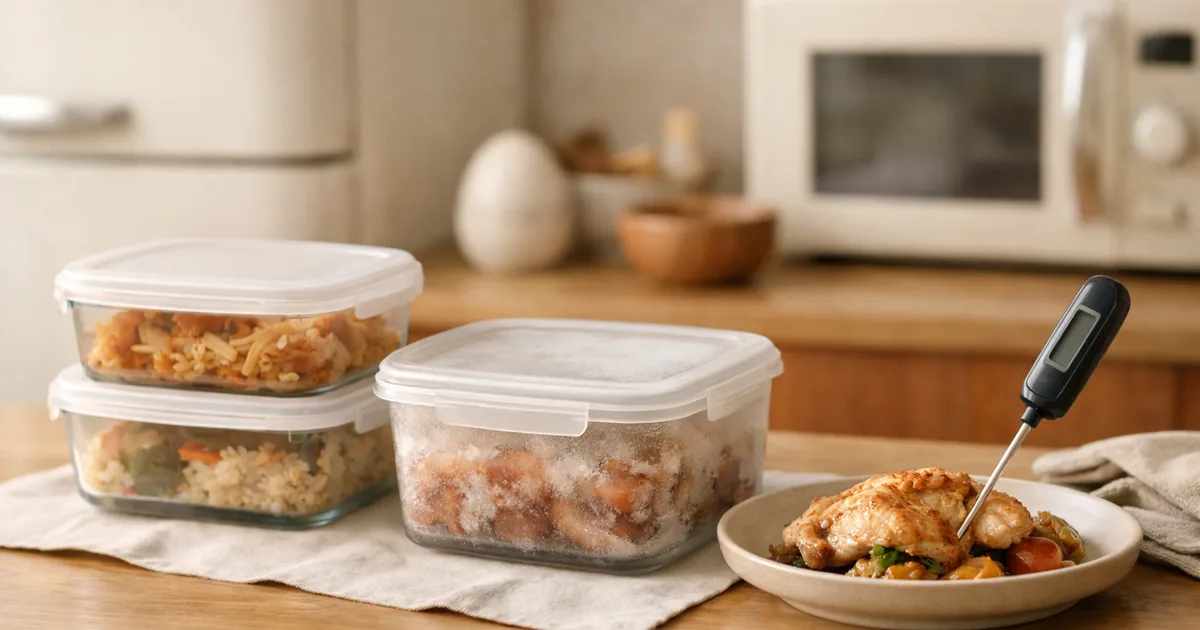
How Long Leftovers Keep — USDA: Fridge Within 2 Hours, 3 to 4 Days Chilled, 3 to 4 Months Frozen, Reheat to 165°F
The USDA Food Safety and Inspection Service says to refrigerate leftovers within 2 hours of cooking (1 hour above 90°F) and eat them within 3 to 4 days. Frozen leftovers keep 3 to 4 months, reheating should reach 165°F (about 74°C), and hot food can go straight into the fridge.

Handwashing for 20 Seconds — CDC: Happy Birthday Twice, Five Steps, and Sanitizer With at Least 60% Alcohol
The US CDC says to scrub with soap for at least 20 seconds, timed by humming Happy Birthday from beginning to end twice. There are five steps — wet, lather, scrub, rinse, dry — and when soap and water are not available, use hand sanitizer with at least 60% alcohol.
How Much Sugar a Day — WHO Free Sugars Under 10% (50g, 12 Teaspoons at 2,000 Calories), Better at 5% or Less
The WHO says to keep free sugars under 10% of daily energy intake — 50g, or about 12 level teaspoons, for an adult eating 2,000 calories a day. Going to 5% or less may bring extra benefits, and sugar in honey, syrups and fruit juices counts as free sugar.
Winter Indoor Temperature of 18°C — the WHO's Floor for Health and Korean Public Buildings' Heating Cap
The WHO Housing and health guidelines propose 18°C as a safe and well-balanced indoor temperature in the cold season, adding that older people, children and people with chronic illness may need it warmer. Korea's public-institution energy rule caps heating at an average 18°C or below and cooling at 28°C or above, with exceptions such as hospitals, childcare and elderly care facilities.

How Much Caffeine a Day — FDA's 400mg, Two to Three Cups When One Holds 113 to 247mg, and Decaf Is Not Zero
The US FDA cites 400mg of caffeine a day for healthy adults, about two to three 12-ounce cups of coffee. The same coffee ranges from 113 to 247mg a cup, and decaf still has 2 to 15mg in 8 ounces. Pure caffeine can cause toxic effects such as seizures at around 1,200mg, less than half a teaspoon.

How Much Is Too Much to Drink — NHS Units: One Unit Is 10ml of Alcohol, 14 a Week, and the Sum Is ABV × ml ÷ 1,000
The NHS counts drinks in units, not glasses. One unit is 10ml (8g) of pure alcohol, counted as strength × volume (ml) ÷ 1,000. Men and women are advised not to drink more than 14 units a week regularly, and to spread it over 3 or more days. A 360ml bottle of 16% soju is about 5.8 units (our arithmetic).
How Much Salt a Day — WHO's Under 5g (2,000mg Sodium), a World Average of 11g, and Label Sodium × 2.5 as Salt
The WHO recommends adults have less than 5g of salt, or 2,000mg of sodium, a day, just under a teaspoon. The global adult average in 2021 was 4,278mg of sodium, or 11g of salt, and about 1.7 million deaths in 2023 were associated with too much sodium. Multiplying label sodium by 2.5 gives roughly the salt (our arithmetic).

Business Registration in Korea — Within 20 Days of Starting, 1% of Sales If Late (0.5% for Simplified Taxpayers), and a 20-Day Rule for Input VAT
Article 8 of Korea's VAT Act requires registration for each place of business within 20 days of the start date, and a late registration adds 1% of the supply value from the start date to the day before applying. For a simplified taxpayer it is 0.5% of the supply price. The certificate is issued within 2 days of applying.

Korea's National Pension Livelihood Test — Registered Household for the Dependants' Addition, Home and Transfers for the Survivor's Pension
The dependants' addition, survivor's pension, death lump sum and unpaid benefits all ask whether family members' livelihood was maintained, but Table 1 of the Decree sets a different test for each. For the dependants' addition a parent must share the registered household; for the survivor's pension a parent living apart counts with a reason or regular living costs.
Sciatica — NHS: Keep Moving Rather Than Rest, Usually Better in Weeks to Months, and Five Emergency Signs
The NHS says sciatica usually improves within a few weeks to a few months, and advises carrying on with normal activities and starting gentle exercise as soon as possible. It says not to sit or lie down for long, and treats symptoms in both legs, numbness around the genitals or bottom, and loss of control of pee or poo as emergencies.

Korea's Child Allowance in 2026 — Under 9 at 100,000 Won a Month, the 2017 Cohort Paid Until 2029, and 1,000,000 or 500,000 Won More Under Age 2
The Child Allowance Act as amended on 20 March 2026 extends eligibility to children under 13, phased in from under 9 in 2026 and rising a year at a time. Children born in 2017 are paid every month until 2029 regardless of age, and those cut off at their 8th birthday are paid back to January 2026. Children under 2 receive 1,000,000 or 500,000 won a month more.

Korean Passport Costs — 40,000 Won for 10 Years and 58 Pages Plus a 12,000 Won Contribution, 5 Years Under 18, 2 Years After Repeated Loss
The fee annex to the Passport Act Decree sets a 10-year multiple-entry passport at 40,000 won for 58 pages and 37,000 won for 26, and adults aged 18 or over also pay a 12,000 won international exchange contribution. Under 18 the passport runs 5 years at 35,000 or 32,000 won, with a 9,000 won contribution from age 8. Three or more losses within 5 years cut validity to 2 years.

No Written Employment Contract in Korea — A Fine of Up to 5 Million Won, Even With 4 or Fewer Workers; 500,000 or 300,000 Won per Item for Part-Time and Fixed-Term Staff
Article 17 of Korea's Labor Standards Act requires the employer to hand the worker a document stating wages, contractual hours, holidays and annual leave, on pain of a fine of up to 5 million won, and it applies to workplaces with 4 or fewer workers. For fixed-term and part-time workers a second Act adds an administrative fine of 500,000 or 300,000 won on a first violation for each item left out.

Extending a Korean Tax Payment Deadline — Up to 9 Months, Apply 3 Days Before, No Late-Payment Penalty Meanwhile
Korea's National Tax Collection Act lets the tax office extend a payment deadline, or allow instalments, on grounds such as disaster, business loss or 6 months or more of medical treatment. The period is within 9 months and the application is due 3 days before the deadline; apply 10 days before and hear nothing in 10 days, and it is deemed approved.

Objecting to a Korean Health Insurance Decision — 90 Days From Learning of It, 180 From the Disposition, Decided in 60 Days
If you object to an NHIS disposition on eligibility, contributions or benefits, you may file an objection within 90 days of learning of it and 180 days of its date. The Service decides within 60 days, extendable by 30, and a further appeal lies to the Health Insurance Dispute Mediation Committee.
Should You Exercise With Arthritis — CDC: 150 Minutes and 2 Days of Strength Work, Start From 5 Minutes, Some Pain at First Is Normal
The CDC says physical activity is safe for people with arthritis and reduces pain. The amounts match other adults: 150 minutes a week of moderate aerobic activity and strength work on 2 days, and 5 or 10 minutes at a time counts. It recommends joint-friendly activities such as walking, cycling, swimming and tai chi.

Medicare Late Enrollment Penalties — 10% a Year for Part B, 1% a Month for Part D, and a 7-Month First Window
Medicare's first sign-up window runs 7 months around the month you turn 65. Miss it and Part B costs 10% more for each year late and Part D 1% for each month, usually for life. On the 2026 standard premium of $202.90, 2 years late makes $243.50.

US Required Minimum Distributions — From Age 73, First Due by 1 April of the Next Year, 25% if Missed or 10% Once Corrected
A traditional IRA or 401(k) requires a minimum withdrawal each year from age 73. The first is due by 1 April of the following year and later ones by 31 December; a shortfall draws a 25% excise tax, 10% if corrected within 2 years. Roth IRAs have no lifetime requirement.

US Child Tax Credit — Up to $2,200 per Child, $1,700 Refundable, Under 17 and an SSN Required
The IRS states the Child Tax Credit as up to $2,200 per child, of which up to $1,700 is refundable as the Additional Child Tax Credit. The child must be under 17 at year-end, and both parent and child need a Social Security number valid for employment. The full amount applies up to $200,000 of income, $400,000 joint.

US Estimated Tax — In Scope From $1,000, Due 15 April, 15 June, 15 September and 15 January, Safe at 90% or 100%
An individual who expects to owe $1,000 or more on filing has to pay estimated tax in four instalments. They fall due on 15 April, 15 June, 15 September and 15 January of the following year, and paying the smaller of 90% of this year's tax or 100% of last year's avoids the penalty.

FDIC Deposit Insurance of $250,000 — Per Depositor, Per Bank, Per Ownership Category; Funds and Crypto Excluded
The FDIC's standard limit is $250,000 per depositor, per bank, for each ownership category. Only deposits such as checking, savings and CDs are covered; stocks, bonds, mutual funds, annuities and crypto assets are not, even if bought at a bank. Deposits in the same category at one bank are added together.
US Credit Freeze and Fraud Alert — a Freeze Is Free and Goes to All Three Bureaus; an Alert Lasts 1 Year (7 Extended) and Needs Only One
According to the FTC, a credit freeze stops new credit accounts being opened in your name; it is free, lasts until lifted and does not affect your score. A freeze must be placed at all three bureaus, while a fraud alert needs contact with only one. An alert lasts 1 year, an extended alert 7 years.

Late on a Korean Local Tax — 3% on a Bill Plus 0.66% a Month (3% Only Under 450,000 Won), 20% for Not Filing
Under Article 55 of Korea's Framework Act on Local Taxes, missing a bill's due date adds 3% of the tax, then 0.66% for each month. Under 450,000 won there is no monthly charge, and 60 months is the ceiling. Filed taxes carry 20% for non-filing and 10% for under-reporting, cut by 50% and 90% if corrected within 1 month.

Duties While Receiving Korea's Basic Pension — Report Within 30 Days, Overpayments Recovered, Object Within 90 Days, 5-Year Prescription
Basic Pension recipients must report within 30 days when a suspension ground ends, income or assets change, or they marry, divorce or lose a spouse; failure carries a fine of up to 100,000 won. Overpayments are recovered, objections run 90 days from learning of a disposition, and prescription is 5 years.
How Active Should You Be at 65 and Over — NHS: Every Day, 150 or 75 Minutes a Week, Strength, Balance and Flexibility on 2 Days
The NHS guidance for adults aged 65 and over has four lines: be active every day even if only lightly, do strength, balance and flexibility activities on at least 2 days, do 150 minutes of moderate or 75 minutes of vigorous activity a week, and sit less. With examples by intensity and a sample week.

Korea's Resident Tax — Individual Portion: Reference Date 1 July, Payable 16 to 31 August, Capped at 10,000 Won by Ordinance
Korea's Local Tax Act splits the resident tax into an individual, a business-place and an employee portion. The individual portion is charged on a person with an address on 1 July, payable 16 to 31 August, at a rate set by ordinance within 10,000 won. Household members, minors and benefit recipients are excluded.

Challenging a Korean National Pension Decision — Review Within 90 Days of Learning of It and 180 Days of the Disposition, Decided in 60 Days
If you object to a disposition of Korea's National Pension Service, you may request a review within 90 days of learning of it and within 180 days of its date. The Service decides within 60 days, extendable by 30, and a re-review may be sought within 90 days of receiving the decision.
Exercise for Wheelchair Users — NHS: the Same 150 Minutes and 2 Days of Strength Work, Starting at 10 Minutes and Building to 20
The NHS recommends that adults aged 19 to 64, wheelchair users included, do at least 150 minutes of aerobic activity a week plus strength exercises on 2 or more days. Start with 10-minute sessions, build to 20, and look after the chest and shoulders that tighten and the back that weakens from pushing.

Korea's Marriage Tax Credit of 500,000 Won — Register by 31 December 2026, Once Only, 1,000,000 Won if Both Spouses Claim
Article 92 of Korea's Restriction of Special Taxation Act deducts 500,000 won, once only, from a resident's global income calculated tax for the year in which a marriage is registered on or before 31 December 2026. The test is the registration date, not the wedding, and two spouses together get 1,000,000 won. The government's reform plan would abolish it.

Foreigners and Korea's National Pension — Automatic Coverage, a Lump-Sum Refund in Only 3 Cases, and Social Security Agreements First
Article 126 of Korea's National Pension Act automatically covers foreigners employed at a covered workplace or residing in Korea, unless their home country's law does not apply its pension to Koreans. The lump-sum refund is not available in principle, with 3 exceptions: reciprocity countries, workers under the foreign-worker employment Act, and industrial trainees.
How Much Strength Exercise, by the NHS — At Least 2 Days a Week, 2 Sets of 8 to 12 Repetitions, Separate From the 150 Aerobic Minutes
The NHS says to do strength exercise at least 2 days a week, working all the major muscle groups, with 8 to 12 repetitions as 1 set and at least 2 sets (3 for more benefit). Strength time does not count towards the 150 aerobic minutes, though 75 minutes of vigorous activity can cover both.

Tax on Lecture and Manuscript Fees in Korea — 60% Deemed Expenses, 20% Withholding, 8% of What You Receive, Nothing at 50,000 Won or Less per Case
For other income such as lecture and manuscript fees, 60% of the amount received is deducted as necessary expenses and 20% is withheld on the remaining 40%, so income tax is 8% of what you receive. An other-income amount of 50,000 won or less per case is not taxed, which covers up to 125,000 won received. On 1,000,000 won the tax is 80,000 won.

Time Limits on Korea's National Pension — 5 Years to Claim Benefits, 10 Years for a Lump-Sum Refund, 3 Years to Collect Contributions, No Running While Fully Suspended
Article 115 of Korea's National Pension Act sets prescription at 3 years for the right to collect contributions, 5 years for the right to receive benefits, to recover overpaid amounts and to recover wrongly paid benefit, and 10 years for the lump-sum refund under Article 77(1)1. Time does not run while the whole benefit is suspended, and a claim interrupts it.
Benefits of Exercise, by the NHS — Up to 30% Lower Risk of Early Death, 10 Lower Risks, 150 Minutes a Week, and 7 Hours of Sitting
The NHS says exercise can reduce the risk of major illnesses such as heart disease, stroke, type 2 diabetes and cancer and lower the risk of early death by up to 30%. It lists 10 lower risks and tells adults to aim for at least 150 minutes a week. Many adults sit for more than 7 hours a day.

Why Korean Employees Skip the May Tax Return — Wage Income Only, With Two Employers or a Missed Year-End Settlement Outside the Exception
Article 73 of Korea's Income Tax Act says people with wage income only, retirement income only, public pension income only and certain others need not file a final tax base return. The exception does not apply to pay from two or more employers, or where the employer did not withhold through the year-end settlement.

Reporting Duties and Suspension While Drawing Korea's National Pension — A Death Within 1 Month of Learning of It, Late-Reported Payments Recovered With Interest
Article 121 of Korea's National Pension Act requires changes in or the end of a benefit right to be reported to the Service, and a pensioner's death to be reported within 1 month of learning of it. Failing to report without just cause can suspend payment under Article 86, and wrongly paid benefit is recovered under Article 57.
Five Running Injuries, by the NHS — Knee, Achilles, Shin, Heel and Muscle Strain: Ice up to 20 Minutes, See a Doctor After 1 Week for the Knee and 2 to 3 Weeks for the Achilles
The NHS sets out how five common running injuries feel and what to do. Ice goes on wrapped, for up to 20 minutes a few times a day; for the heel, roll a frozen bottle for 15 to 20 minutes. See a doctor if knee pain lasts 1 week or Achilles pain 2 to 3 weeks, and warm up and cool down for 5 to 10 minutes.

Reverse-Mortgage Interest Deduction in Korea — Up to 2 Million Won a Year Off Pension Income, Home Value 1.2 Billion Won or Less at Sign-Up, Claim Required
Article 51-4 of Korea's Income Tax Act deducts the year's interest cost on reverse-mortgage payments from pension income. Above 2 million won, 2 million is deducted; anything above the pension income amount is treated as nil. The home's standard value must be 1.2 billion won or less at sign-up, and it applies only on a claim.

When a Korean Employer Deducts the National Pension Contribution but Does Not Pay — 1/2 Counted, 0 From the Month After the Arrears Notice, All if You Pay Directly
Article 17 of Korea's National Pension Act counts 1/2 of a period in which the employer deducted the contribution from wages and did not pay. From the month after an arrears notice nothing is counted; paying the employee's share gives 1/2 and paying both shares gives the whole period. On 6 months of arrears that is 3 or 6 months.
Knee Exercises for Runners, by the NHS — Five Moves: Thigh Contraction 10 Sets of 5 Seconds, Hamstring 3 Sets of 15 Seconds, Lunges 3 Sets of 5 Reps
The NHS sets out five knee exercises for runners: wall squats, thigh contraction, hamstring stretch, squats and lunges. Thigh contraction is 10 sets of 5 seconds with each leg, the hamstring stretch 3 sets of 15 seconds and lunges 3 sets of 5 reps. They are not suitable for people with an existing knee injury.

Social Insurance Premium Deductions in Korea — National Pension, Health and Employment Insurance Premiums Deducted in Full Under Two Provisions
Article 51-3 of Korea's Income Tax Act deducts public pension premiums from global income, and Article 52 deducts the employee's share of health, employment and long-term care insurance premiums from wage income. No cap appears in the text. Paying 1.8 million and 1.5 million won takes 3.3 million off income.

National Pension Contribution Deadline and Late Charge in Korea — The 10th of Next Month, 1/1,500 a Day to 2%, Then 1/6,000 a Day to 5%
Article 89 of Korea's National Pension Act sets the deadline at the 10th of the following month. Under Article 97 a late charge of 1/1,500 of the overdue amount accrues daily up to 2%, and after 30 days a further 1/6,000 a day up to 5%. By our arithmetic that is 2% at 30 days and 5% at 210 days.
How to Stretch After Exercise, by the NHS — Five Stretches, About 5 Minutes: Buttock, Hamstring, Inner Thigh, Calf and Thigh for 15 to 20 Seconds Each
The NHS says about 5 minutes of gentle stretching after exercise helps you gradually relax, improve flexibility and slow your heart rate. Hold the buttock, hamstring, inner thigh, calf and thigh stretches for 15 to 20 seconds each. Counting both sides there are 9 holds, 2 minutes 15 seconds to 3 minutes.

Wage Income Deduction in Korea — 70% of the First 5 Million Won, Then 40, 15, 5 and 2%, a 20 Million Won Cap, 150,000 Won a Day for Daily Workers
Article 47 of Korea's Income Tax Act deducts 70% of total pay up to 5 million won, 3.5 million plus 40% up to 15 million, 7.5 million plus 15% up to 45 million, 12 million plus 5% up to 100 million and 14.75 million plus 2% beyond, capped at 20 million won. On 40 million won the deduction is 11.25 million.

National Pension Contribution Exemption in Korea — 7 Grounds Such as Unemployment, Leave, Military Service and School, Not Counted, Back Payment Within Less Than 10 Years
Article 91 of Korea's National Pension Act lets contributions go unpaid while one of 7 grounds continues, including business suspension, unemployment, leave, military service and school enrolment, but the period is not included in the insured period. Under Article 92 it can be paid back within a range of less than 10 years and then counts.
How to Warm Up Before Exercise, by the NHS — Five Moves, at Least 6 Minutes: 3 Minutes Marching, 60 Heel Digs, 30 Knee Lifts
The NHS says a warm-up should take at least 6 minutes: marching on the spot for 3 minutes, 60 heel digs in 60 seconds, 30 knee lifts in 30 seconds, 2 sets of 10 shoulder rolls and 10 knee bends of no more than 10cm. The three timed moves add up to 4 minutes 30 seconds.

Wage Income Tax Credit in Korea — 55% Up to 1.3 Million Won, Caps of 740,000 to 200,000 by Pay, and the 130,000 Won Standard Credit
Article 59 of Korea's Income Tax Act credits 55% of calculated tax on wages up to 1.3 million won and 30% above, capped at 740,000 won for total pay up to 33 million won, at least 660,000 up to 70 million, at least 500,000 up to 120 million and at least 200,000 beyond. Employees claiming no special deductions get a 130,000 won standard credit.

National Pension Payment Day and Unpaid Benefits in Korea — The 25th, From the Next Month to the Month the Right Ends, Claim Within 5 Years of a Death
Article 54 of Korea's National Pension Act pays each month's pension on the 25th (the day before on Saturdays and holidays), from the month after the ground arose to the month the right ends. Benefits left unpaid at a pensioner's death are claimed by the spouse, children, parents, grandchildren, grandparents or siblings, in that order, within 5 years.
Brisk Walking, by the NHS — Start With 10 Minutes a Day, About 3 Miles an Hour, Talk but Not Sing, Counts Towards 150 Minutes
The NHS says a brisk 10-minute daily walk has health benefits and counts towards 150 minutes of weekly exercise. A brisk walk is about 3 miles an hour (roughly 4.8 km/h), a pace at which you can talk but not sing. Ten minutes a day is 70 minutes a week; 22 minutes a day passes 150.

Child Tax Credit in Korea — 250,000 Won for One Child 13+, 550,000 for Two, 950,000 for Three, Plus 300,000 to 700,000 in the Year of Birth
Article 59-2 of Korea's Income Tax Act credits 250,000 won for one dependent child or grandchild aged 13 or over, 550,000 won for two, and 400,000 won more for each beyond two. In the year of birth or adoption a separate credit of 300,000 won for a first child, 500,000 for a second and 700,000 for a third or later applies.

National Pension Dependants' Addition in Korea — 150,000 Won a Year for a Spouse, 100,000 per Child or Parent as the Base, Lost at 19 or With Their Own Pension
Article 52 of Korea's National Pension Act adds a price-adjusted amount based on 150,000 won a year for a dependent spouse and 100,000 won per child under 19 or parent 60 or over. In 2026 that is 306,630 and 204,360 won; it stops when the family member draws a pension or a child turns 19.
Sitting Exercises From the NHS — Twice a Week, Chest Stretch 5-10 Seconds 5 Times, Twists and Hip Marching 5 Each, Ankles 2 Sets of 5
The NHS sets out five exercises done on a solid chair without wheels, at least twice a week: a chest stretch held 5 to 10 seconds 5 times, an upper-body twist held 5 seconds 5 times each side, hip marching 5 lifts each leg, an ankle stretch in 2 sets of 5 per foot, and neck rotations held 5 seconds 3 times each side.

Stamp Duty in Korea — 20,000 to 350,000 Won on Property Deeds, Homes Up to 100 Million and Loans Up to 50 Million Exempt, Per Copy
Article 3 of Korea's Stamp Tax Act charges deeds transferring property 20,000 won (up to 30 million won) to 350,000 won (over 1 billion), and article 6 exempts homes of 100 million won or less and loan agreements of 50 million won or less. Duty is due per copy, with joint liability for joint drafters.

Withdrawing From Card Instalments in Korea — 7 Days in Writing, to the Card Company Too, Refusal Right From 200,000 Won
Korea's Installment Transactions Act lets consumers withdraw from instalment contracts (3+ payments over 2+ months) in writing within 7 days of receiving the contract or goods, and card instalments need written notice to the card company too. The right to refuse remaining instalments for non-delivery or unfixed defects needs a credit card instalment price of 200,000 won or more.

Sitting Too Long, by WHO — No Hour Limit, Sit Less and Move More Than 150-300 Minutes a Week
WHO's 2020 guidelines define sedentary behaviour as any waking behaviour at 1.5 METs or lower while sitting, reclining or lying, and set no daily hour limit because evidence was insufficient. Instead, replace sitting with activity of any intensity, and if you sit a lot, do more than the 150-300 minutes a week recommended.
Late Tax Return Penalty Relief in Korea — 50% Within a Month, 30% Within 3, 20% Within 6, on a 20% Non-Filing Penalty
Article 48 of Korea's Framework Act on National Taxes cuts the non-filing penalty (20% of tax due) by 50% if a late return is filed within a month, 30% within three months and 20% within six. The late-payment penalty of 22/100,000 a day is not reduced, so pay with the late return to stop it growing.

Voluntary National Pension Membership in Korea — Ages 18-60 Not Compulsorily Covered, Homemakers and Students Under 27, Lost After 6 Months of Arrears
Article 10 of Korea's National Pension Act lets anyone aged 18 to under 60 who is not a workplace or regional member join voluntarily. Spouses without income and students or service members under 27 are the typical cases; membership starts when the application is accepted and ends after 6 months of continuous arrears or at 60.

Exercise During Pregnancy, by WHO — 150 Minutes a Week, Strength and Stretching, No Lying Flat After the First Trimester, Heat or Fall Risks
WHO's 2020 guidelines recommend at least 150 minutes a week of moderate aerobic activity, plus muscle strengthening and gentle stretching, for pregnant and postpartum women, and say women already doing vigorous exercise can continue. Avoid heat, contact and fall risks, lying flat after the first trimester, and high altitude.

Income Tax Reduction for SME Employees in Korea — Youth 90% for 5 Years, Others 70% for 3 Years, 2 Million Won a Year, Jobs Started by End-2026
Article 30 of Korea's Restriction of Special Taxation Act cuts income tax by 90% for 5 years for young people who join an SME by 31 December 2026, and by 70% for 3 years for people 60+, with disabilities or returning from a career break, capped at 2 million won per tax year. Youth means 15 to 34 at contract, with up to 6 years of military service deducted.

Housing Lease Reporting in Korea — Over 60 Million Won Deposit or 300,000 Won Rent Means 30 Days, Fines of 20,000 to 300,000 Won, Fixed Date Included
Article 6-2 of Korea's Real Estate Transaction Reporting Act and article 4-3 of its Decree require housing leases with a deposit over 60 million won or rent over 300,000 won to be reported jointly within 30 days. Late reports draw 20,000 to 300,000 won by delay and amount, false reports 1 million won, and submitting the contract counts as a fixed date.

How Much Exercise Children Need, by WHO — 60 Minutes a Day at 5-17, Muscle and Bone 3 Times a Week, 180 Minutes at 1-4, Screens Under 1 Hour
WHO recommends 5- to 17-year-olds get at least 60 minutes of moderate-to-vigorous activity daily and muscle- and bone-strengthening activity at least 3 times a week. Children aged 1-4 should move at least 180 minutes a day, with 60 of those moderate to vigorous at 3-4, and no more than 1 hour of screens at 2-4. 81% of 11-17-year-olds fall short.

Non-Taxable Pay Allowances in Korea — Meals, Car and Childcare 200,000 Won a Month, Childbirth Support in Full, Production Overtime 2.4 Million a Year
Article 12 of Korea's Income Tax Act and its Decree exempt meal allowances (where no meals are provided), car allowances and childcare allowances for children 6 or under up to 200,000 won a month each, and childbirth support paid up to twice within 2 years in full. Production workers' overtime is exempt up to 2.4 million won a year if monthly fixed pay is 2.6 million won or less and prior-year pay 37 million or less.
National Pension Disability Pension in Korea — 100%, 80% and 60% for Grades 1-3, a 225% Lump Sum for Grade 4, and the Contribution Tests
Articles 67 and 68 of Korea's National Pension Act pay members disabled by illness or injury 100%, 80% or 60% of the basic pension (grades 1-3) plus dependants' additions, and 225% as a lump sum for grade 4. At first treatment you must be 18 or older and have paid for a third of the liable period, 3 of the last 5 years, or 10 years.
Flexibility Exercises for Older Adults — Twice a Week, Neck Rotations and Stretches Held 5 Seconds 3 Times, Sideways Bends, Calf Stretches
The NHS sets out four flexibility exercises to do at home at least twice a week alongside strength and balance work. Neck rotations and neck stretches are held 5 seconds, 3 times each side; sideways bends 2 seconds, 3 times each side; calf stretches 3 each side, building up repetitions slowly.

Choosing 80% or 120% Withholding on Korean Wages — Employees Pick the Table Rate, the Year's Tax Is the Same
Article 194 of Korea's Income Tax Decree lets employees ask for withholding at 120/100 or 80/100 of the simplified table amount. Year-end settlement evens out the year's tax: on 150,000 won a month, 80% withholds 360,000 won less a year but trims the February refund or adds to the bill by the same amount.

National Pension Lump-Sum Refund in Korea — Under 10 Years at 60 Means Contributions Plus Interest, but No Voluntary Extension
Article 77 of Korea's National Pension Act refunds contributions with interest when someone with under 10 years reaches 60, dies without a survivor's pension being paid, or emigrates. Taking it at 60 rules out voluntary membership to 65, and rejoining lets you repay in up to 3, 12 or 24 instalments to restore the years.
Couch to 5K Running Plan — 9 Weeks, 3 Runs a Week, From Eight 1-Minute Runs to 30 Minutes Non-Stop
The NHS Couch to 5K builds running over 9 weeks, 3 times a week with rest days between. Week 1 alternates 1-minute runs and 1 minute 30 second walks for 28 minutes 30 seconds in all; the last week is a 5-minute walk then 30 minutes non-stop, 40 minutes in all. Repeat a week if you are not ready.

Insurance Premium Tax Credit in Korea — 12% for Protection, 15% for Disability-Dedicated, Up to 1 Million Won Each, Rent Guarantees Included
Article 59-4(1) of Korea's Income Tax Act credits wage earners 12% of protection-type premiums and 15% of protection premiums dedicated to people with disabilities, each up to 1 million won a year. That caps the credits at 120,000 and 150,000 won, and the decree includes rent deposit return guarantee fees for deposits of 300 million won or less.

National Pension Death Lump Sum in Korea — Siblings and Cousins When No Survivor Qualifies, Capped at 4 Times Monthly Income
When a National Pension contributor dies, article 73 survivors such as a spouse, children under 25 and parents 60 or older receive a survivor's pension. Without them, article 80 widens the circle to siblings and relatives within the fourth degree for a death lump sum equal to the refund but capped at 4 times standard monthly income, with a 5-year limitation.
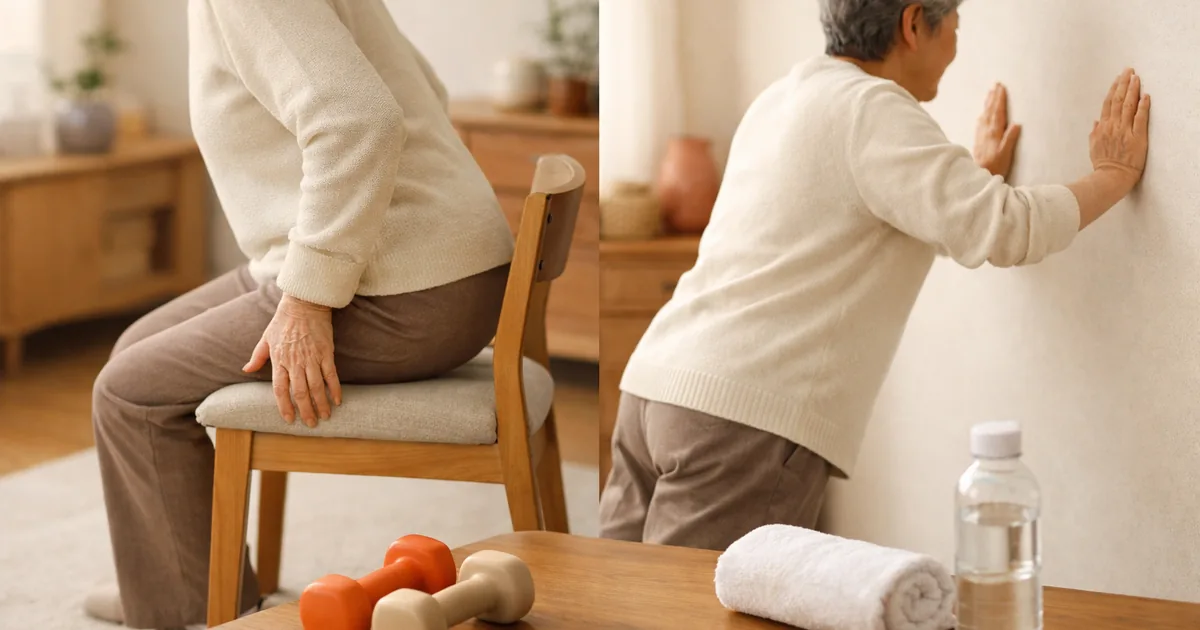
Strength Exercises for Older Adults — Twice a Week, 5 Sit-to-Stands, 3 Sets of 5-10 Wall Press-Ups
WHO recommends strength training on 2 or more days a week for people 65+, and the NHS sets out seven chair-and-wall moves at least twice a week. Sit-to-stands, mini-squats and calf raises are 5 each, leg extensions are held 5 seconds 5 times, and wall press-ups are 3 sets of 5-10.

Donation Tax Credit in Korea — 15%, 30% Above 10 Million Won, and a 10-Year Carry-Forward
Article 59-4(4) of Korea's Income Tax Act credits 15% of donations and 30% of the part above 10 million won. General donations are limited to 30% of income (a separate formula with religious giving), excess carries forward 10 years, and political and hometown love donations earn 100/110 up to 100,000 won.

Protecting Your Pension From Seizure in Korea — Entitlement Protected, 2.5 Million Won of Paid Pension Protected, and New Living-Expense Accounts
Article 58 of Korea's National Pension Act bans transferring, seizing or pledging the pension entitlement, and protects paid benefits up to the Civil Execution Act Decree amount. That amount became 2.5 million won from 1 February 2026, the same day one-per-person living-expense accounts of 2.5 million won a month took effect.
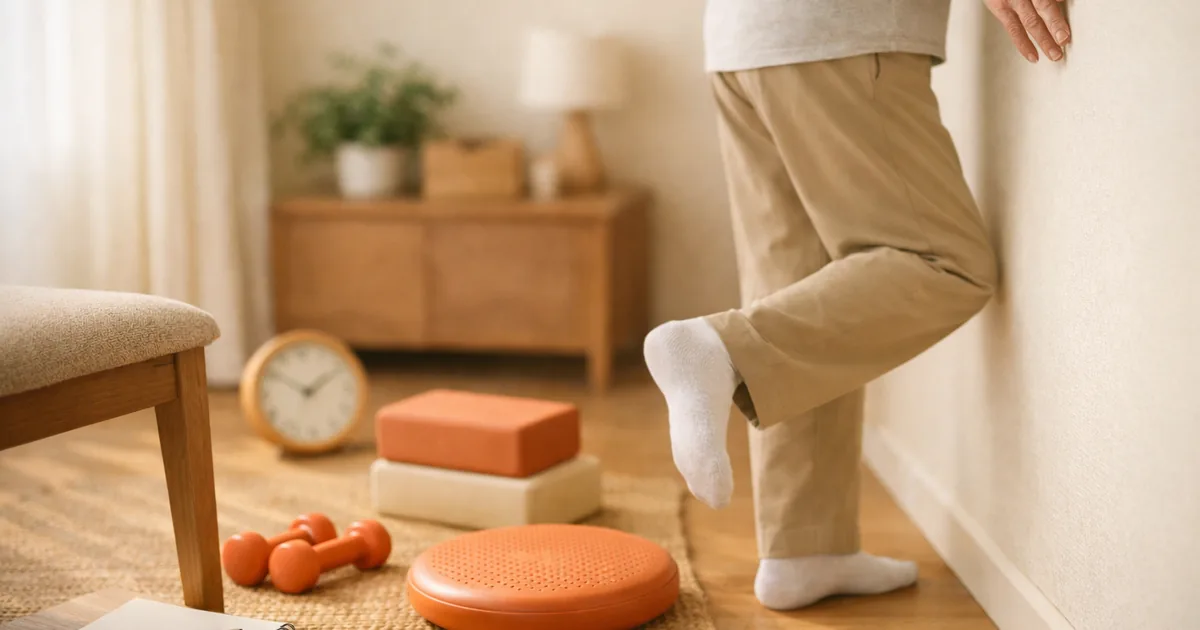
Balance Exercises for Older Adults — 3 Days a Week With Poor Mobility, One-Leg Stands of 5-10 Seconds, Five Moves by a Wall
WHO recommends balance activities on 3 or more days a week for people 65+, and the NHS sets out five moves by a wall or chair at least twice a week: sideways walking 10 steps, grapevine 5, heel-to-toe 5 steps, one-leg stand 5-10 seconds 3 times, and step-ups 5.

Hometown Love Donation Tax Credit in Korea — 90,909 Won on 100,000, 40% up to 200,000, 15% Above
Article 58 of Korea's Restriction of Special Taxation Act credits hometown love donations at 100/110 up to 100,000 won, 40% from 100,000 to 200,000 won and 15% above that. A 100,000 won gift earns a 90,909 won credit and up to 30,000 won in thank-you gifts; the annual cap is 20 million won, and you cannot give to your own local government.
Long-Term Care Grades in Korea — Grade 1 From 95 Points, Cognitive Support Under 45, 15% at Home and 20% in Facilities
Article 7 of Korea's long-term care insurance decree grades applicants by a recognition score: 95 or more grade 1, 75-95 grade 2, 60-75 grade 3, 51-60 grade 4, and for dementia patients 45-51 grade 5 and under 45 the cognitive support grade. Co-payments are 15% for home-based care and 20% in facilities.
Measuring Exercise Intensity — Talk but Not Sing Is Moderate, and 1 Vigorous Minute Counts as 2
The CDC gauges exercise intensity by the talk test, METs (3 to 5.9 moderate, 6 or more vigorous) and perceived exertion (5-6 moderate and 7-8 vigorous on a 0-10 scale). WHO recommends 150 moderate or 75 vigorous minutes a week, and by the ratio of those numbers 1 vigorous minute counts as 2 moderate minutes.

Move-In Reports in Korea — 14 Days, Then 5,000 to 50,000 Won, and 3 Years or 30 Million Won for False Reports
Article 16 of Korea's Resident Registration Act requires a move-in report within 14 days of moving. Late reports are fined under Decree Annex 4: 5,000 won within 7 days, 20,000 within 1 month, 30,000 within 3 months, 40,000 within 6 months and 50,000 after, while false reports carry up to 3 years in prison or a 30 million won fine.

Birth and Death Reports in Korea — 1 Month, Then 10,000 to 50,000 Won, Doubled After a Reminder
Korea's Act on the Registration of Family Relationships requires a birth report within 1 month of the birth and a death report within 1 month of learning of the death. Late reports are fined 10,000 won for under 7 days up to 50,000 won for 6 months or more under Supreme Court Rule Annex 3, and 20,000 to 100,000 won after a reminder.

Covered Licence Plates in Korea — From 500,000 Won a Fine, or 1 Year and 10 Million Won If Deliberate
Article 10(5) of Korea's Motor Vehicle Management Act bars anyone from covering a registration plate, making it hard to read or driving such a vehicle. Deliberate cases carry up to 1 year in prison or a 10 million won fine; otherwise Decree Annex 2 fines 500,000 won the first time, 1,500,000 the second and 2,500,000 from the third.

Speeding Fines in Korea — 30,000 to 120,000 Won for a Car, 10,000 More by Camera
Annexes 8 and 6 of Korea's road traffic decree split excess speed into 20 km/h or less, 20-40, 40-60 and over 60. A car pays penalty charges of 30,000, 60,000, 90,000 and 120,000 won, or camera fines of 40,000, 70,000, 100,000 and 130,000 won, with points from 15, 30 and 60. More than 100 km/h over means a fine of up to 1 million won or detention.

Illegal Parking in Korea — 40,000 Won for a Car, 50,000 After 2 Hours, and Eight No-Stopping Places
Korea's Road Traffic Act calls a halt of up to 5 minutes stopping, and keeping a car stationary or leaving it parking. The eight places in article 32 — 5 m from junction corners, 10 m from crossings and bus stops, 5 m from hydrants and more — ban even stopping, and the fine for a car is 40,000 won (50,000 won after 2 hours).

Expressway Shoulder and Bus Lane in Korea — a 60,000 Won Penalty or 90,000 Won Fine and 30 Points for a Car
Article 60 of Korea's Road Traffic Act bans driving on the expressway shoulder except for breakdowns and similar, and article 61 bans unauthorised vehicles from expressway dedicated lanes. A car pays a 60,000 won penalty charge or a 90,000 won fine plus 30 points; the bus lane is for 9 or more seats, with 6 or more aboard if 12 seats or fewer.

Phones While Driving in Korea — a 60,000 Won Penalty and 15 Points, or a 70,000 Won Fine If Proved on Video
Article 49(1)10, 11 and 11-2 of Korea's Road Traffic Act ban using a mobile phone while driving, showing video where the driver can see it, and operating a display. Penalty charges are 60,000 won for cars, 70,000 for vans, 40,000 for motorcycles and 30,000 for bicycles, with 15 points; the fine on the employer or keeper when proved on video is 70,000 won for a car.
Seatbelt Fines in Korea — 30,000 Won for the Driver, 60,000 Won on the Driver for a Child Under 13
Article 50(1) of Korea's Road Traffic Act makes drivers belt up and make passengers in every seat belt up too. A driver without a belt pays a 30,000 won penalty charge; an unbelted passenger means a fine for the driver of 60,000 won if under 13 and 30,000 won if 13 or older, and motorcycle helmets carry 20,000 won each.
Car Window Tint in Korea — 70% for the Windscreen, 40% Beside the Driver, a 20,000 Won Fine If Darker
Article 28 of Korea's road traffic decree sets visible light transmittance standards of 70 percent for the windscreen and 40 percent for the side windows beside the driver's seat. Driving a car darker than that means a 20,000 won fine, and police can order the film removed or remove it themselves.

Lapsed Compulsory Car Insurance in Korea — 6,000 Won a Day Even Parked, a 400,000 Won Penalty If Driven
Annex 5 of Korea's automobile accident compensation decree fines a private car without liability cover 10,000 won up to 10 days, then 4,000 won a day (capped at 600,000 won), and without property cover 5,000 won plus 2,000 won a day (capped at 300,000 won). Driving uninsured carries up to 1 year in prison or a 10 million won fine, or a 400,000 won penalty charge for a car if there was no accident.

Fire-Engine Bays and Hydrants in Korea — 500,000 Won for the Bay, 80,000 Won at a Red Kerb
Annex 3 of Korea's fire-fighting services decree fines parking in or blocking an apartment fire-engine bay 500,000 won the first time and 1,000,000 won after, and obstructing a fire engine on a call 1,000,000, 1,500,000 and 2,000,000 won. Stopping within 5 metres of a hydrant falls under the Road Traffic Act: 80,000 won for a car where a safety sign is installed.

Used-Car Ownership Transfer in Korea — 15 Days for a Sale, Then 10,000 Won a Day up to 500,000 Won
Article 26 of Korea's Motor Vehicle Registration Decree sets transfer deadlines of 15 days for a sale, 20 days for a gift and 6 months for an inheritance. Late filing brings a penalty charge under Annex 3 of the motor vehicle management decree: 100,000 won up to 10 days, 10,000 won a day from day 11 and 500,000 won from 50 days. Reselling without transferring carries up to 3 years in prison or a 30 million won fine.

Scrub Typhus in Autumn Korea — Cases Peak in October and November; Fever Within 10 Days and a Black Scab Are the Signs
The KDCA is monitoring chigger mites at 18 sites for 16 weeks from 26 August. Korea sees roughly 3,000 to 6,000 cases a year, concentrated in October and November; fever and rash appear within 10 days of infection, and a black scab (eschar) at the bite is the hallmark.
Korea's First Japanese Encephalitis Case of 2026 — The Warning Came Earliest in Ten Years, on 17 June; Under-12s Are Vaccinated Free
On 9 September the KDCA confirmed this year's first Japanese encephalitis patient, a woman in her 60s with no vaccination. 80% of cases fall in September and October and 65.9% are 50 or older, and up to 20–30% may die if it becomes encephalitis. Of 146 reported cases in 2017–2025, 24 died.

Late Car Inspection in Korea — 40,000 Won, Then 20,000 More Every 3 Days, 600,000 Won by Day 114
Annex 2 of Korea's motor vehicle management decree fines a late periodic inspection 40,000 won up to 30 days, adds 20,000 won for every 3 days from day 31, and sets 600,000 won from 115 days. Since 2025 the window runs from 90 days before to 31 days after expiry, and new passenger cars are first inspected after 5 years.

No-Smoking Fines in Korea — 100,000 Won Indoors, 50,000 in Apartment Corridors, Waived If You Use a Stop-Smoking Service
Annex 5 of Korea's health promotion decree fines smoking in public-use facilities 100,000 won, in apartment areas designated at residents' request 50,000 won, and within 30 metres of schools 100,000 won. An education course can halve the fine, and a stop-smoking service can waive it entirely.
Littering Fines in Korea — 50,000 Won for a Butt, 200,000 for a Bag, 500,000 If You Bring It by Car
Annex 8 of Korea's wastes control decree grades dumping by method. Things you were carrying, such as cigarette butts and tissues, cost 50,000 won; bagged or outing rubbish 200,000 won; dumping by vehicle or handcart 500,000 won; and household-type waste from business 1,000,000 won.

School-Zone Fines in Korea — From 8 a.m. to 8 p.m. Parking Costs Three Times as Much, and a Red Light 130,000 Won
Korea's Road Traffic Act decree applies Annexes 7 and 10 to violations in children's protection zones between 8 a.m. and 8 p.m. The car parking fine triples from 40,000 to 120,000 won, a signal violation rises from 70,000 to 130,000 won, and every speeding band goes up 30,000 won.
E-Scooter Rules in Korea — 100,000 Won Without a Licence, 20,000 Without a Helmet, 40,000 for Two Riders
Under Korea's Road Traffic Act an e-scooter is a personal mobility device, a kind of motorised bicycle. Nobody under 16 can get the licence, riding without one costs 100,000 won, no helmet 20,000 won, and scooters carry 1 person, so two riders cost 40,000 won. A guardian who lets a child under 13 ride is fined 100,000 won.
Dog-Walking Rules in Korea — 2-Metre Leads, Hold Your Dog in the Lift, and Up to 600,000 Won for Not Registering
Korea's animal protection decree requires dogs 2 months or older to be registered within 30 days, and its rule caps leads at 2 metres. Fines run 200,000, 400,000 and 600,000 won for not registering, 200,000, 300,000 and 500,000 won for no lead, and from 50,000 won for no tag or uncollected droppings.

Senior Discounts in Korea at 65 — Subways, Palaces and Museums Free, Saemaeul and Mugunghwa 30%, the KTX Not in the Law
Annex 1 of Korea's senior welfare decree sets 100% off Seoul-area commuter rail, urban subways, palaces and public museums, 30% off Saemaeul and Mugunghwa trains (Saemaeul excluded on Saturdays and public holidays) and 50% off commuter trains. The KTX is not listed, and the law says only 'may'.

Driving Licences at 70 and 75 in Korea — The Cycle Follows Your Age at Last Renewal, Tests at 70, Training at 75
Article 87 of Korea's Road Traffic Act sets renewal every 5 years if you were 65 to under 75 on the last renewal date and every 3 years from 75. Second-class holders need an aptitude test at 70 or over, and those 75 or over need training to renew. Missing it costs 20,000 or 30,000 won, and more than 1 year means revocation.

Overseas Shopping into Korea: 150 Dollars, 200 from the US — Measured Without Freight, and Supplements Miss the 200-Dollar Concession
The 150 dollars in article 45 of Korea's Customs Act rule is the goods price without freight, and the US 200 dollars is the list-clearance threshold in article 9 of the express-cargo notice. Twelve categories such as supplements and medicines are excluded from list clearance, and items bought from the same seller on the same day are combined.

Selected for Korea's Youth Rent Subsidy? It Counts From May and Ends in December 2028 — You Have 8 Months of Slack
MOLIT says the subsidy is paid retroactively from the May rent regardless of when you applied, and Bokjiro says new 2026 recipients are supported only until December 2028. Paid without a break, the 24th payment is April 2028, leaving 8 months of slack.
364 Cold-Related Illnesses in Korea Last Winter — Deaths Rose 1.75 Times, and Over-80s Were More Than Half
Korea's surveillance system recorded 364 cold-related illnesses (14 presumed deaths) last winter: cases 1.09 times the year before, deaths 1.75 times. People over 80 were 32.4% of cases but 57.1% of deaths, and those over 65 collapsed most often near or inside their homes.

Fire Extinguishers at Home and in the Car in Korea — Apartments Are Out, Used Cars Are In
Article 10 of Korea's firefighting systems Act requires owners of detached and multi-unit houses to install an extinguisher and a stand-alone smoke alarm, excluding apartments and dormitories. The vehicle extinguisher duty began on 1 December 2024 and applies to cars sold or re-registered after that date.
Halloween Coloured Contacts in Korea — Zero Power Is Still a Contact Lens
Korean law narrows glasses to “for vision correction only” but widens contact lenses to “including those not for vision correction.” The brackets run opposite ways, so zero-power coloured lenses cannot be sold online.

Halloween Sweets in Korea — Allergens Must Be Declared “Regardless of Quantity”
The annex requires every allergen used as an ingredient to be declared whatever the amount. The list runs to nineteen entries as written, and “may contain” means a shared production line, not an ingredient.
A Halloween With No Organiser — Who Owns Crowd Safety in Korea? The Threshold Is 1,000
The proviso to article 66-11 of Korea's disaster framework Act requires the head of the competent local government to draw up a safety plan where a festival has no organiser or an unclear one. The sentence entered on 26 December 2023.

Korea's H2 2026 Stress DSR Operating Direction — the Document That Is Not a Press Release
The title is absent from the FSC newsroom and site:fsc.go.kr does not help. It is administrative guidance on the regulation portal, and the figures sit in an attachment.
Korea's Floor-Noise Limit Is 39 dB — One Thud Does Not Break It
Every number in Korea's floor-noise standard sits in one table. And a note under that table says the peak limit is only exceeded when it is passed three or more times in an hour.
Drunk Driving in Korea — Refusing the Test Costs More Than Failing It
What happens if you refuse the breath test? Art. 148-2(2) of the Road Traffic Act puts it at one to five years - heavier than blowing under 0.08%, and the licence is revoked with no discretion left.

Should You Go to the ER Over a Holiday? Korea Writes the List Into the Rule
What counts as an emergency symptom is set out under nine headings in Table 1 of Korea's Emergency Medical Service Rule - and one entry has the word "holiday" inside it: a child's fever over 38C.

When a Parcel Arrives Broken — Taking It "Without Reservation" Ends the Claim
Art. 146 of Korea's Commercial Act extinguishes the carrier's liability once you receive the goods without reservation and pay the fee. Damage you could not see gets two weeks - and a valuable is not covered at all unless you declared it.

Overtime Limit Checker (Korea) — The 52-Hour Week Is the Ordinary-Hours Figure
52 is art. 50's 40 plus art. 53's 12, and that 40 is the ordinary-hours figure - under a flexible scheme it becomes 48 or 52, so a single week may lawfully reach 64. Enter the scheme and the worker to see this week's ceiling.

Habitual Wage Arrears Checker (Korea) — "Five Times" Means Five Workers
Read art. 43-4's "five or more times" as five late paydays and you have it wrong - the Decree counts the workers who went unpaid. Enter the convictions and the arrears to see which of the four routes attach.

Unpaid Wage Interest Calculator (Korea) — 20% a Year, and Three Times in Court
Fourteen days after you leave, and from the next day interest runs at 20% a year. Since 23 October 2025 it runs on wages unpaid while you are still employed, and any one of three grounds lets you claim up to three times in court.

Holiday Substitution Checker (Korea) — The Weekly Rest Day Has No Substitution Clause
"Work the holiday, rest next week instead" - the basis is one proviso in art. 55(2), and it is attached to public holidays only. Enter the kind of holiday and the kind of agreement to see whether the substitution stands and what the premium comes to.

Unpaid Retention Subsidy Calculator (Korea) — This Money Goes to the Worker's Account
Same name, different pocket: the paid retention subsidy goes to the employer, the unpaid one straight to the worker. A 20-person workplace needs half its staff off for 30 days; a 99-person one needs ten - and both numbers are ten.

Employment Retention Subsidy Calculator (Korea) — A Large Firm Gets Two-Thirds Too, Past a Half-Cut
The state returns two-thirds of the shutdown allowance the employer paid - one-half at a large firm. But cut more than half the month's contract hours and a large firm gets two-thirds as well, because item (ii) of the provision carries no large-firm bracket.

Annual-Leave Substitution Checker (Korea) — Since 2022 a Public Holiday Is Not a "Working Day"
"Use your annual leave on the public holiday" - art. 62 allows substitution only on a specific working day, by written agreement with the workers' representative, and since 2022 public holidays are paid holidays at every workplace with five or more workers. Enter the kind of day and the kind of agreement to see whether it stands and how much leave is left.

Shutdown Allowance Calculator (Korea) — The Floor Is 70% of the Ordinary Wage, the Ceiling 100%
The statute says "70% of the average wage", but for a monthly-paid worker without bonuses it becomes 70% of the ordinary wage, because art. 2(2) lifts the average to it. Enter the shutdown date and three months' pay for the legal minimum; anything received comes off before the 70%.

Maternity Leave Benefit Calculator (Korea) — Firm Size Changes Who Pays, Not What You Get
On a 3m won monthly wage a priority-support firm's worker gets 6.6m from the state and 1.6m from the employer; at a large firm it is 2.2m and 6m - the same 8.2m won either way. Enter your wage and firm size to see the split.

Annual-Leave Use-Promotion Deadline Calculator (Korea) — Ten Days from 1 July, Then 31 October
Whether the employer's notice fell inside the "10 days from six months before" window turns on a single date. Enter your hire date for the window and both deadlines; under one year of service there are two clocks.

Korea's Severance Interim-Settlement Checker — the 9 Reasons, and the Only Route That Runs Before Your Pay Falls
Of the 9 settlement reasons, three (a wage-peak scheme and two kinds of hours cut) appear in neither the collateral list nor the DC withdrawal list. And even a listed reason leaves the employer with "may".

Separation Code Checker (Korea) — Between Codes 11 and 12 Sits Table 2
The leaving confirmation has nine codes, and they live on the back of a statutory form, not outside the law. Code 11 goes to art. 58(2), code 12 points at Table 2, and 26 is not a bar by itself.

Unemployment Benefit for the Self-Employed in Korea — Only Extended Benefit and the Early-Return Allowance Are Left Out
The base amount comes not from your takings but from the figure you insured on. And one missed premium is enough to block it if you have only just passed a year.

Korea's EITC Half-Year Claim — the Months-Worked Divisor Moves More Than the 35%
Annualising first-half income multiplies it by seven at one month worked and by two at six. Fewer months means a larger deemed income - unless you left mid-year, when it is fixed at six months.

Korean Unemployment Benefit for Artists and Contract Workers — the Thirteen Just Causes
The list has thirteen items, the same as for employees - but it carries one figure the employee list does not: a change of 20 per cent or more to the contract terms. And what the borrowing list leaves out matters more.

Korea's Other Unemployment Allowances — 10,320 Won a Day, 25 Kilometres and 7.5 Tonnes
Three more payments sit beside the jobseeker's benefit. None of them carries its amount in the Act, and two are sent to a table in the civil-service travel rules - which turns out to have no distance in it.

Unemployment Benefit After Resigning in Korea — the 13 Just Causes (Table 2)
The Act lists what disqualifies, not what qualifies. The exceptions are the thirteen items of Table 2, and only four of them carry a figure: two months, three hours, 30 days, age 8.

Korea's Youth Housing Subscription Account — One Account, Two Clocks
The interest exemption and the deduction are separate schemes. They read different years (last vs this), and claw back over different windows (two years vs five). Subtract military service and 40 still counts as young.

Korea's Housing Subscription Deduction — a 1.2m Won Deduction Hands You 198,000 Won
40% of up to 3 million won a year comes off your income, not your tax, so only your rate returns. And closing within five years repays 2.27 times what the 6% band ever saved.

Korea's Early Reemployment Allowance — Nothing at 104 Days, 3.47m Won at 105
It pays half of the jobseeker benefit you leave behind. But you must leave at least half, start more than 14 days after filing, and earn under 5.74m won a month at the new job.
2027 Minimum Wage Checker (Korea) — 10,700 Won, and Why the Same Pay Is 9,743 If Meals Are in Kind
Up 380 won (3.7%) to 2,236,300 a month. But the pay measured against it is not the total - it is regular monthly pay, and bonuses and meal money have counted in full since 2024.

Regional Health Insurance Premium Calculator (Korea) — the Same 24m Won Costs 71,900 as a Pension and 143,800 as Business
One line for income, one for property. Only wages and pensions count by half, and property is nothing to 100m, then 4,653 won from the next 10,000.

Health Insurance Dependant Test (Korea) — Interest Counts as Zero to 10m Won, and in Full One Won Over
There is more text between "income 20m" and "property 540m". Pensions count in full, financial income is a cliff, and past the property line the income limit halves.

Basic Pension Income Test — the Same 100m Won Can Be Nothing, 267,000 or 100m
A home under the allowance is zero, savings convert at 4 percent over 12 months, and a car counts whole every month. That is the order of the words in the Rule.

Deductions Korea's Tax Feed Leaves Out — and Why
It was the Decree, not the tax office, that removed glasses and hearing aids. One proviso explains it.

Korean City Gas Bill Calculator — Heat Units and Discounts
A heat value sits between the volume and the charge, so the same cubic metres cost differently each month.
Korean Energy Voucher Calculator — Eligibility and Amount
The bracket is not the summer share; it is all that remains once winter comes from elsewhere.

Korean Housing Fund Deduction Calculator — One Shared Cap
Rent loan and savings share 4m won, and both sit inside the mortgage interest cap.

Korean National Health Screening — Who Is Eligible This Year
Age is the year minus your birth year, not your age in full years. And only non-desk staff go annually.

Korean Medical Expense Tax Credit Calculator — The 3% Floor
The 7m won cap sits on paragraph 1 only. Whose return a parent's bills go on is decided right there.
Korean Year-End Tax Settlement Calculator — Refund or Bill
The rates do not apply to gross pay. Two subtractions come first. And the child credit now starts at 13.

Korean Interim Income Tax Calculator — Not Half of Last May
The statute adds last November's interim payment too, then halves the sum. Under 500,000 won nothing is collected.

Korean VAT Calculator — Simplified VAT Does Not Subtract Input Tax
It multiplies sales by a sector rate instead, so however large the purchases, no refund arrives.

Monthly Rent Tax Credit Calculator (Korea) — Four Thresholds, and Rent Counted by Days
In February 2026 the way the rent itself is counted changed - days rented, not months paid.

Korean Inheritance Tax Calculator — The Deductions Come Before the Rate
With a spouse and children, nothing is due up to 1bn won - that is what the statute says.

Pension Savings and IRP Tax Credit Calculator (Korea) — Two Caps, and You Need Tax to Owe
The same 9m won lands differently by where it went, and short of tax the rest simply disappears.

ISA Tax-Saving Calculator (Korea) — The Tax Is Not on the Profit
Only interest and dividends after losses and fees are taxed - this puts a number on the difference.

Korea's ISA Loss Set-Off — There Is an Order, and Fees Come Off Too
Gains on listed Korean shares are not taxed, yet the losses are allowed into the set-off.

A Korean ISA Is Not Locked for Three Years — Withdrawals Come Out of Principal
Take out anything up to what you paid in and nothing happens - the Decree orders it that way.

Child Credit Calculator (Korea) — Per Child, and How It Compares With the Child Tax Credit
The table figure is per child, so the count multiplies straight through - and the end is a cliff.

Korea's EITC Household Types — Both Spouses Working Is Not the Test
The statute asks for 3m won from each — a spouse who earned 2.5m leaves you a one-earner household.

Korea's EITC: the Statutory Formula and the Amount Paid Are Different Numbers
The table prices each band at its favourable end and rounds up — so it always pays more than the formula.

Korea's Earned Income Tax Credit Calculator — What the Table Pays, Not the Formula
Working the statutory formula under-reports the benefit; the amount comes from the Decree's benefit table.

Age and Holding Relief — the Tables Add to 90%, the Law Cuts at 80%
Age 65 with 15 years and age 70 with 10 land on exactly the same figure — and nothing beyond it.

Two Rate Tables — Korea's Three-House Heavy Rate Really Starts at KRW 2.9bn
The tables are identical up to a base of 1.2bn — below that line, the number of houses changes nothing.

Comprehensive Real Estate Tax Calculator — Six Steps from the Published Price
Deduction off, 60% applied, property tax given back — the notice built in the order the statute builds it.

Spending an HSA on Something Other Than Medical Care — the 20% and Age 65
At 65 the 20% goes away but the income tax does not — it is not free from there on.

The Dependent Care FSA — the 2026 Limit Is $7,500
Same name as the other FSA, 2.2 times the size — and the lower earner's income is the ceiling.

IRA Contribution and Deduction Calculator — What Is Left Inside the Band
Halfway through the band you get exactly half the limit — and the IRS worksheet carries two lines the short page does not.
The Last $400 of the Roth IRA Band — the Cliff the $200 Floor Creates
One dollar of income costs $200 — and two IRS pages give different answers.

The Traditional IRA Deduction Bands — Same Rule, Widths Reversed
A single filer loses the deduction first and fast; a joint filer loses the contribution first.

Social Security Claiming-Age Calculator — 62 vs 67 vs 70, and Where They Cross
The early reduction is not one rate — the three years before full retirement age cost 6.67pp each, and everything earlier costs 5.0pp.

The 78-83 Social Security Break-Even — Re-Run, It Is Three Numbers
“Around 78 to 83” was never a range. Name the comparison and it lands on 78y8m, 80y4m or 82y6m.

Social Security Withheld for Working — It Comes Back at Full Retirement Age
Withheld months are erased from the reduction count. Claim at 62 with an FRA of 67 and the benefit climbs from 70% to 75% to 80%.

Korea's Long-Term Holding Deduction — Residence Alone Is Worth KRW 11.6m
Two people sell the same home after the same ten years. One pays 2.62m, the other 14.23m. Holding is not what separates them.

Korea's KRW 1.2bn Apportionment — A Slope, Not a Cliff
“Exempt up to 1.2bn” is right. The sentence that usually follows is not — crossing it does not put the whole gain into tax.

Korean Capital Gains Tax Calculator — Apportionment and Both Deduction Tables
Sell above KRW 1.2bn as a one-home household and a sixth step appears — apportionment. It is why crossing the line does not mean a big bill.

Korea's 600m to 900m Acquisition Tax Slope — KRW 10m Costs 923,000
“1 to 3%” is right on average. Measure what another KRW 10m of price costs in tax and a different number appears.

The Rural Surtax and the 85 Square Metre Line
Cross 85 square metres of exclusive area and the notice gains a line. On a KRW 900m home that is 1.8m won; under the 12% heavy rate, 9m.

Korean Acquisition Tax Calculator — With Both Surtaxes
The notice carries more than one tax. And between KRW 600m and 900m the rate is not in any table — it comes out of a formula.

One Korean Gift Tax Return Is Worth KRW 25 Million
File on time and 3% comes off; fail to file and 20% goes on — twenty-three percentage points on the same tax.

Korea’s Ten-Year Gift Rule — Aggregation Splits, the Deduction Merges
“Ten years” appears twice in the gift tax. Same number, opposite ways of counting people — which is where most of the confusion lives.

Korean Gift Tax Calculator — Statute Order, Deduction to Filing Credit
It gets remembered as “fifty million won is fine.” What decides the bill is who gave it to you, and whether they gave you anything in the last ten years.

Counting Dependents for Korea’s Subscription Score
Thirty-five of the 84 points sit here, at five points a person. But the term does not mean what the everyday word means, and counting the people you live with will be wrong.

Where Korea’s No-Home Period Splits — The Start Date Is Settled Twice
Fifteen years of renting from age 20 counts as zero if the start date has not arrived. The errors come not from adding wrong but from picking the wrong date.

Korea Subscription Score Calculator — 84 Points in Three Parts
32 points for years without a home, 35 for dependents, 17 for the account. The arithmetic is not the hard part — which day the count starts, and who counts, are.
What Unused Annual Leave Is Worth in Korea — Ordinary Wage and the 209 Hours
“Unused leave gets paid out” is half true. The statute's default is that it lapses and payment is the exception — and the number you divide by, 209, appears in no statute at all.

Leaving After Exactly One Year in Korea — When One Day Decides Fifteen
You counted on “a year worked, so fifteen days” and eleven arrived. It is not an error: finish exactly one year and the fifteen days never come into existence.

Korean Annual Leave Calculator — 11 Days at One Year, 26 One Day Later
Enter a hire date and a reference date and you get both the days accrued and what the unused ones are worth. The sharpest split is leaving after exactly one year: 11 days against 26, decided by a single day.

Cancelling a Chuseok Train Ticket — Free on a Weekday, 20% Over the Holiday
KORAIL's penalty table has two rows. Monday to Thursday is free until three hours before departure; Friday to Sunday and holidays carry a minimum penalty even a month out. On a 100,000 won fare that is 5,000 against 20,000.
Chuseok Groceries — We Counted 74 Items, and 54 of Them Fell
The median retail item is down 7.2% on a year ago. Yet Singo pear is +24.9% and Tsugaru apple is −29.1% — 54 points apart inside the same category. It is not an average, it is a split.

Korean Gift With Assumed Debt — Gift Tax vs Capital Gains Tax, and Between Family the Default Runs the Other Way
The Act subtracts assumed debt, and the Decree names the rental deposit as one. One paragraph later it presumes that between spouses and lineal relatives the debt was never assumed.

Korea's 20m Won Financial Income Threshold — Crossing It Can Cost Nothing
Twenty million is not the line where the rate changes but where the method does. The statute runs two calculations and keeps the larger — and with no other income the withholding side wins up to 77.61m won.

Korean Retirement Pension Early Withdrawal — Enough to Pledge, Not Enough to Withdraw
Art. 14 never lists the grounds itself — it calls art. 2, then defers to a ministry notice. Opening that notice narrows loan repayment to a shutdown-or-disaster loan three months in arrears.

Korean Severance Tax Calculator — The Same 100m Won, Taxed 39 Ways
How much you received is only half of it. The statute divides the payout by years of service, runs it through the rate table, then multiplies it back — so longer service drops it into lower brackets.

Chuseok Safety — 1,474 Bee Stings, and 12,038 Road Injuries in the Same Tables
Korean holiday notices lead with bees and snakes. The same fire service tables carry a number eight times larger — and because the holiday runs 4 to 6 days, the yearly totals do not compare.

Korea's Chuseok Toll Exemption — Three Days by Decree, a Fourth by Cabinet
The Decree names three lunar days. But item 3 of the same paragraph opens it to any day the Cabinet designates - and for 2026 that made it four, 24 to 27 September.

Only One Renewal in Three Used Korea's Statutory Renewal Right — We Counted 7,719 Filings
The statute cannot tell you how often the right is used. The rental filing data can, because it carries the answer as a field.

Seoul's Policy Loans Cost 2.65% After the Subsidy — and the Subsidy Is Where Banks Differ
A policy loan brochure quotes two rates: what the bank charges and what the city pays. The borrower carries the gap, which nothing publishes.
Jeonse Loan Rates Differ by 1.99 Points Between Banks — With the Same Guarantee Behind Them
The lowest was 3.79% and the highest 5.78%. On a KRW 100 million loan that is KRW 1.99 million a year.

Korean DSR Calculator — the Ratio That Sets Your Limit, Not You
Enter income and existing debt to see how much more you can borrow, and what the limit would be with the stress rate switched off.

Korea's 40% DSR Is Not in the Statute — the Three Documents That Set It
The Banking Act carries no figure, the regulation pushes it into a table, and the arithmetic is delegated again to the supervisor.

Five Places People Get Korea's DSR Wrong — All of Them in Figures
Counting interest only gets you a quarter of the way, the heavy thing is the term rather than the balance, and the LTV limit is not your limit.

Korea's Housing Subscription Deposit Goes by Where You Live, Not Where You're Buying
The note under table 2 pins the threshold to your resident registration area. And you may pay 500,000 won a month while only 250,000 is ever counted.
Korea's National Health Screening — There Is No “Odd or Even Birth Year” in the Law
The decree fixes an interval of once every two years, nothing more. Birth-year parity is how that two-year cycle is run, not a legal requirement.

The First Gate Before a Korean Small-Business Policy Loan — Counting Staff Has Its Own Rules
A part-timer at 60 or more hours a month counts as half a person, and the measure is last year's month-end average rather than how many work here today.

The Order to Check Before Buying a Home in Korea — The Reversible Stretch Ends at “Beginning Performance”
Money leaves as deposit, interim and balance, but the point of no return and the point of ownership arrive somewhere else. The order comes from the statutes.
What Korea's Fine Dust “Bad” Actually Means — Two Different Rulers
The top of the PM2.5 “Moderate” band, 35 micrograms, is the legal 24-hour standard itself. “Moderate” is not safe; it means today's limit has not been passed yet.

Korean Holiday Work Pay Calculator — Chuseok 2026, and Why Headcount Comes First
The 1.5x answer is right but incomplete. Table 1 of the Enforcement Decree omits article 56 from the Chapter 4 cell, so below five staff the premium is not 1.5x but zero.

Korean Card Deduction Calculator (2026) — Start With How Far to the Threshold
The card deduction closes on 31 December, so checking it in January changes nothing. This calculator answers one question instead: have you cleared the threshold, and if not, how much is left?

Flu Vaccination in Korea — Who Pays Nothing, and What “by the End of October” Means
Brought forward on 16 September — children and pregnant women from 21 September, older adults from 6 October by age band to 15 October. “By the end of October” counts from when antibodies appear, so 17 October is the ideal single-dose cut-off; after that, vaccination still continues while flu circulates.

Korea's 2026 Tax Reform Bill — From Holding to Living There, and It Is Still a Bill
Almost every write-up says “here is what changes from 2027.” But this goes to the National Assembly on 3 September. One axis runs through all of it — not how long you held the home, but how long you lived in it.

2.73 Million Cancer Survivors in Korea — What ‘One in 19’ Means (2026)
62% of that number were diagnosed more than five years ago. It counts 25 years including people who were cured, and over half are 65 or older.

Bone Density Testing — When to Go, and How to Read T and Z on the Report
Korea's programme covers women at 54, 60 and 66. Before menopause the report gives a Z-score rather than a T-score, so read the letter before the number.

Anaemia Testing — The Health Check Measures One Thing (2026)
Ferritin, which shows stored iron, is not a national screening item. There is a stretch where the stores drain while the blood still holds — and the report prints ‘normal’.

Korea Housing Market 2026 — Supply Cliff, Jeonse Squeeze, Stress DSR
Supply cliff, jeonse squeeze, tight lending. Check your loan limit before timing the market.

Korean Inheritance Tax — Facts, Not Headlines (2026)
“A 20% financial-asset deduction” only holds between ₩100M and ₩1B — the provision actually has four bands.

Jeonse to Monthly Rent Calculator — The 5.00% Cap Comes From Two Clauses (2026)
Enter deposits and a rate for the fair monthly rent — plus where “the lower of base rate plus two and ten percent” actually comes from.

Korean Capital Gains Tax A to Z — Rates, Deductions, Expenses (2026)
From 10 May 2026 the multi-home surcharge is back: +20 points for two homes in adjusted areas, +30 for three or more, and no long-term holding deduction.

Korean Acquisition Tax Explained — Why It Ranges From 1% to 12%
Local education tax is not a share of the acquisition tax: the provision says “(rate − 2%) × 20%,” and homes use a different formula entirely.

Korea's Comprehensive Real Estate Tax vs. Property Tax — Why December Bills Too
1.2B won for one home, 900M for others. Because it's totalled per person nationwide, the same value gives different results.

What Health Insurance Costs After You Retire — and Three Deadlines You Can't Undo
Voluntary continuation is exactly double what you paid while employed (325,392 won a month on a 4m salary). The comparison that counts is against regional enrolment.

Fixed or Variable — One Point Is About 60,000 Won a Month per 100 Million
Don't choose on a forecast. You can answer whether you could pay two points higher — and that answer is about 120,000 won a month per 100 million.

Korea's ISA — How Much Tax It Saves, How to Open One, and What Changes in 2027
On a 6 million won gain an ordinary account is taxed 924,000 won; a low-income ISA, 198,000. The savings in figures, whether the principal is protected, how to open one, and the 2027 reform bill.
When the Internet Is Down — 30 Seconds Tells You Whose Problem It Is
Put another device on the same Wi-Fi. That one check decides a 15,000-won callout fee — while compensation for two hours is 917 won.
When the Computer Slows Down — Money Enters at Exactly One Point
The first six steps cost nothing. Task Manager tells you whether to spend — memory high always means RAM, the disk at 100% constantly means an SSD.
How Much Water a Day — The Two Litres Is Total Water, Food Included
The liquid you actually drink is 1,000-1,200 mL for men and 900-1,000 for women. And there is a ceiling — 1.4 litres an hour.

When the Computer Shuts Off — Whether It Slowed Down First Decides the Cause
Heat cuts speed before it cuts power. A shutdown with no slowdown is probably not thermal — and that one fact changes both the document and the bill.

Blank Screen or No Sound — Three Seconds Decides the Bill
Press Windows + Ctrl + Shift + B; a beep means the PC is on and only the display is out. That result is what splits free from paid.

When the Computer Won't Turn On — Five Minutes Decides Free or Paid
Cable, 15 minutes of charging and a long press cost nothing. What splits the bill after that is adapter versus logic board — and the board is covered for two years.

Should You Eat Breakfast? No Link for Adult Weight, a Link for Children
No firm evidence says an adult's weight turns on breakfast. What does change is diet quality — three meals score about 5 HEI points higher than two.

Caring for Someone with Cancer — What Happens to the Carer, and What Support Exists
A national agency guide carries the heading ‘be prepared that some people may not help.’ And in Korea there is an expense programme applied for at a health centre.
Ten Thousand Steps — The Guidance Is Written in 150 Minutes, Not Steps
You can hit ten thousand steps with intensity and strength still empty. Moderate means you can talk but not sing — walking, that's 2.5 mph or faster.

Cancer Myths and Facts — Only 5-10% Inherited, Smoking and Diet 30% Each
Only 5-10% of cancers are inherited. The weight sits on smoking at 30%, diet at 30% and chronic infection at 10-25%.

How Much Sleep Do Adults Need? 7 or More Hours — Koreans Average 7h 45m on Weekdays
The CDC adult row reads “7 or more hours.” Koreans sleep 7h 45m on weekdays — 45 minutes above that floor.

Korea's Jobseeker Benefit — a 68,100 Won Cap, a 66,048 Won Floor, and Days That Expire After a Year
Only 2,052 won separates the cap from the floor, so doubling the salary barely moves the daily figure. And the year runs from your last working day, not from the day you apply.
Thyroid Cancer in Korea — How Common, How Dangerous, and Should You Be Screened (2026)
35,440 diagnoses in a year, about one person in 1,443. What a 100.2% survival rate actually means, and why it is not in the national screening programme.
Home Emergencies: What to Do (and What Never to Do)
Burns, bleeding, sprains — plus the quietest danger at home, and one CDC figure that does not add up.
CPR Steps and Choking First Aid — Chest Compressions, AED and 6 Steps That Save Your Family
Survival was 14.4% when a bystander acted and 6.1% when none did. And the agency page opened this time, so we could read what the survey counts.
The Home First-Aid Kit — Convenience-Store Medicine Is the Exception, Not the Rule
Counting the agency's own kit list gives 26 items. And the Act itself explains why the convenience-store selection can never exceed twenty.

Reading Korea's Property Register — Sections A and B Are Not Compared by Rank Number
Within a section, rank number. Across sections, receipt number. Article 4(2) is the most misread provision in Korean conveyancing.

Korean Real Estate Brokerage Fees — the Rule Says “Determined by Mutual Agreement”
The rates are ceilings, not list prices. And taking more than the ceiling is not an administrative fine but a criminal offence.

Jeonse vs Monthly Rent — the Numbers the Law Actually Fixes
The conversion cap is the lower of 10% a year and the base rate plus 2 points. At a 3.00% base rate in September 2026, that is 5.00%.

Your July Property Tax Bill in Korea — the Numbers Are in the Decree, Not the Act
All the Act contains is a 40-80% band. And the tax burden cap for housing was deleted outright in 2023.

Korea's Gift Tax Deductions — Marriage and Childbirth Together Are Still 100m Won
Paragraphs (1) and (2) each say “separately, 100m won,” which reads as 200m. Paragraph (3) then caps the sum at 100m.

Korea's One-Home Capital Gains Exemption — “How Many Years” Has No Single Answer
Trading up gives you three years; caring for a parent and marriage give ten. And trading up carries a second requirement almost nobody mentions.

Heart Attack Warning Signs — One in Five Sends No Signal
94.9% of U.S. adults know to call 9-1-1. Exactly 50.2% can name all five symptoms.
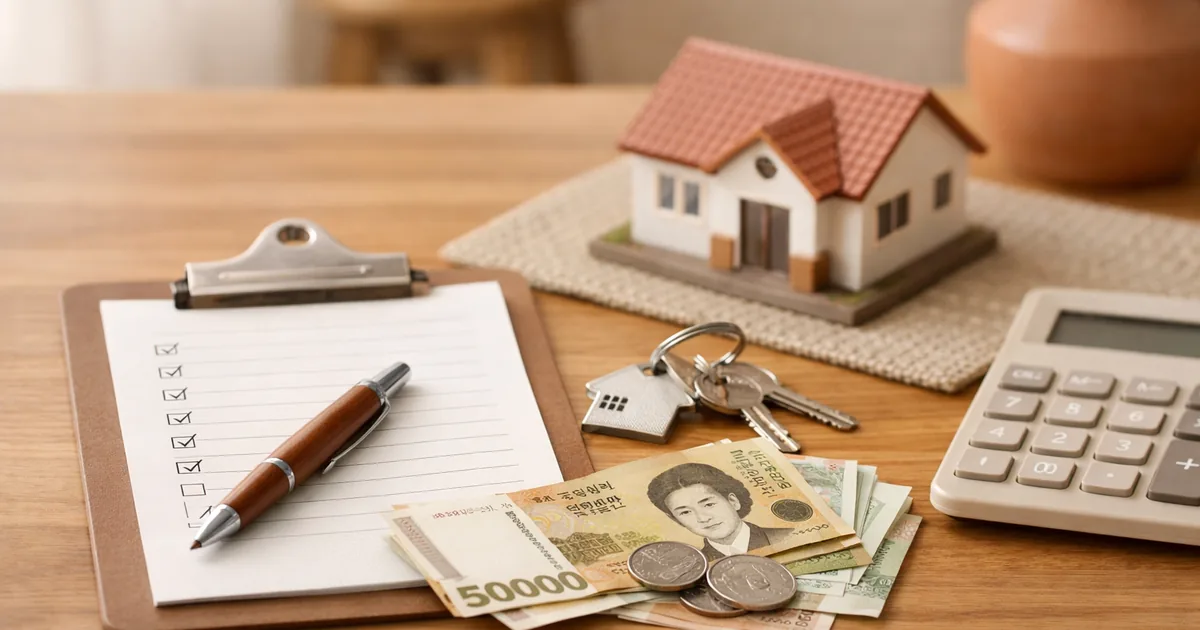
Korea's Jeonse Contract Checklist — the Order Comes From the Statute
Delivery and resident registration create opposing power; a fixed-date stamp adds priority repayment. And the statute says you cannot be repaid unless you hand the property over.

Splitting Your Accounts — The Law Only Fixes Two Things
Korea's deposit protection cap is ₩100 million, not ₩50 million (amended 29 Jul 2025). And “15.4%” is not a figure in the statute.
Korean Card Points — We Could Not Find “Five Years” in Any Statute
There is still no provision setting a five-year point expiry. What we did find is where the law does speak — what happens to points after the term runs, and what changes at 50,000 won.

Unclaimed Insurance Money — the Three Years, and the Provision That Protects Them
Commercial Act art. 662 fixes three years and nothing else — not the start, not interruption, not inheritance. All three are in the Civil Act, and a bare demand buys only six months.

Unclaimed Money in Korea — Where “But I Got a Notice” Does Not Help
For taxes the statute says the period is not interrupted by a notice urging you to claim. For health insurance and the pension, a claim does interrupt it.

Korean Residence Records — “Only You” Applies to the Online Service, Not the Counter
The provision opens with “the person or a member of the household” and its proviso spells out delegation. The counter is far wider than the app.

Korea's Medical and Education Tax Credits — What That Parenthesis Releases, and What It Doesn't
The medical credit is not one rate but three, fertility treatment is 30%, and the two age tests are measured from opposite ends of the year.

Magnesium Supplements — The Upper Limit Sits Below the Recommendation
RDA 420 mg, UL 350 mg. Not a typo — the two numbers count different things. And a blood test tells you less than you would think.
Unit Converter — and Why Traditional Korean Units Cannot Appear in Ads
Length, mass, volume, temperature, speed, area and data in one place. And Article 6 of the Measures Act bans non-legal units in trade and advertising.

“Carbon Monoxide Alarms Are Mandatory”? The Notice Says “May Install”
We opened Korea's fire agency notice. Article 4 says “shall install”; the very next article says “may install.” And homes are not on the covered list.

Emergency Fund — One Month First, and Where It Is Actually Safe (2026)
No agency source for ‘three to six months’ turned up, and the line a US regulator drew was one month. Meanwhile the same ‘CMA’ sits in both the protected and unprotected column.

Avoiding Jeonse Fraud 2026 — Register, Fixed Date, Deposit Guarantee
We opened the Housing Lease Protection Act: “0:00 the day after” is nowhere in it, and the test is delivery of the house plus resident registration — both.

Korea Parental Leave Benefit Calculator (2026)
“The deferred payment was abolished” appears nowhere on Employment 24. The pre-deletion version of Decree art. 95(4) and the addenda to Decree 35100 settle it — and the line runs through 1 January 2025, not your start date.

Korea's Parental Leave Benefit — 23.1m Won for a Year, How to Claim It, and Your Protections
Past an ordinary wage of 2.5m won the total lands at 23.1m either way. Dismissal is barred by statute, service keeps accruing, and claims open one month in.

6+6 Parental Leave in Korea — ₩6.5 Million More per Parent at Most: a Rising Ceiling, Not a Doubling
The provision never says “months used in common.” The ceiling turns on how many months each parent used, and a parenthesis states outright that the periods need not overlap. It also applies during pregnancy.

Pay Down the Loan or Keep the Deposit — 4.74m Won Over Five Years (2026)
A deposit rate above your loan rate still loses after tax. Breaking even needs 1.182 times the loan rate, and no such pairing exists in today's market.

Korea's Tax Calendar — What's Due in Every Month
Comprehensive real estate tax runs 1-15 December; property tax takes land in September, buildings in July, and splits only housing. Under ₩200,000 it is settled in July alone — and the car tax prepayment ceiling is 10%, not 5%.

Semi-Jeonse — How to Split Between Deposit and Rent
Reading the Decree in the Korean original turned up three restrictions the usual table omits. Chief among them: where one building holds several small-deposit tenants, the priority amount is divided proportionally — a common shape in semi-jeonse.

Korea's Conversion Rate Cap and How to Negotiate It
We opened the conversion-rate ceiling in the statute: neither 10% nor 2% is in the Act. Both sit in the Decree, so both can move without the National Assembly — and they already have, twice.

Tenant Rights in Korea — Opposing Power, Priority Repayment, Renewal
In Seoul, deposits up to ₩165m get small-deposit priority and ₩55m is repaid ahead of the mortgage — two different numbers. Renewal is due two months before expiry.

Rent Turns on 1.2 Billion, Jeonse on 300 Million — Two Different Provisions
The last multiplier in the deemed-rent formula — the term-deposit rate is 31 per 1,000, that is 3.1%. It was spelled out not in the Decree but in Article 23(1) of the Enforcement Rule.

How to Choose a Korea-Listed ETF — Fees, Price Gaps, Fund Size
By law an ETF must permit redemption — which is why divergence cannot widen indefinitely. It may also hold up to 30% in a single security, which sits awkwardly with “an ETF means diversification.”

US-Listed ETFs vs. Korea-Listed Foreign ETFs — Tax Decides
The ₩2.5m allowance for overseas shares comes from Article 103, not the foreign-asset provisions. One allowance across all “shares etc.”, separate from property — and unused, it simply lapses.

Korean ETF Tax — 0 to 1.65m Won on a 10m Won Gain, by Type (2026)
Not every Korea-listed ETF is exempt. Bond and commodity ETFs are taxed 15.4% as ‘other assets’, and the crossover against foreign-listed funds sits at 8.33m won.

Time Deposit or Installment — and the Trap in “Best Rate” (2026)
We worked out the exact multiple behind “an installment plan pays about half the headline rate”: an n-month plan yields (n+1)÷2n — 13/24, or 54.17%, over twelve months, converging on 50% as the term lengthens.

Deposit Protection at ₩100m — The Principal That Fits Is Not ₩100m
The cap covers principal and interest together, so at 3.5% the ceiling is ₩96.62 million. The higher the rate, the less principal fits.

Korean Part-Time Pay Calculator (2026) — The ₩41,280 Step at 15 Hours
The statute measures the 15-hour holiday-pay line as a four-week average, and the probation cut is not “up to 10% of pay” but “the hourly minimum wage minus 10 per cent” — a floor of ₩9,288 in 2026.

Korean Net Salary Calculator (2026) — 9.72% for Most, 6.53% at the Top
The ₩200,000 tax-free meal allowance carries a proviso: “limited to a person who is not provided with meals.” Childbirth support, meanwhile, is tax-free in full with no cap, and childcare allowance runs ₩200,000 per child.

Korea's Annual Paid Leave — 15 Days, a 25-Day Cap, and the Procedure That Cancels Your Payout
Knowing “one year, 15 days” gets you halfway. The statute sets the counting rule, the expiry condition, and the written procedure that lets a company owe you nothing — in three separate places.

Dismissal in Korea — Three Things “I Gave 30 Days' Notice” Does Not Settle
Just cause, written notice and 30 days' notice live in three different provisions. Only the written notice is tied to legal effect; the notice period can be settled with money.

Workplace Harassment in Korea — What the Law Punishes Hardest Is Not the Harassment
The scheme carries exactly one criminal penalty: disadvantaging someone for reporting. Everything else draws an administrative fine, and the definition requires all three of its pieces.

The Menopausal Transition — A Name You Can Only Use a Year Later
NIA and WHO name the same window. The ages, the symptoms, and the finding that waking may trigger the hot flash rather than the reverse.

US HSA vs FSA Explained — Tax-Advantaged Health Accounts (2026)
HSA grows and invests with triple tax-free; FSA is use-it-or-lose-it pre-tax. Plus 2026 limits.

US Credit Scores — Free Reports, 30 vs 45 Days, How Long Marks Stay
One free report a year from each of the three bureaus — and a dispute filed after it gets 45 days, not 30.

US Health Insurance Terms — Four Kinds of Money on Four Different Layers
The deductible marks the start, the out-of-pocket limit the end, and the premium sits outside. Taken verbatim from the Department of Labor's Uniform Glossary.

Find Unclaimed Tax Refunds — A 5-Minute Self-Check (2026)
A notice from the tax office does not stop the five years running — the provision says so in as many words.

Korea VAT Explained 2026 — General vs Simplified, Filing & Refunds
The 104 million won line is not in the Act — VAT Act art.61 sets only a band from 80 million to 130% of it, delegating the figure to the Decree.

Amended Returns — Reclaiming Missed Deductions Within Five Years
We opened Framework Act on National Taxes art.45-2 — and found two three-month clocks running alongside the five years.

Divided and Survivor Pensions — What Happens After Divorce or Loss
The divided pension's five years do not start at divorce — the provision says “from the time all the requirements are satisfied.”

Korea's Monthly Rent Tax Credit — Registration Is the Gateway
We opened Article 95-2 of the Restriction of Special Taxation Act. The 17% band carries a separate ₩45M aggregate-income test, and a clause inserted on 23 December 2025 lets a spouse claim as well — though the ₩10M cap is measured across both.
Making Your Phone Battery Last — Half the Common Advice Is Wrong
We finally checked “a swollen battery is dangerous” against the regulators. The FAA restricts spare batteries to carry-on only, and the CPSC tells consumers to take swollen power banks to hazardous waste, not the bin.

Buying an Apartment in Korea, Step by Step — Contract to Registration
A false transaction report is fined at up to 10% of the price, not a flat sum — on a ₩1B deal that ceiling is ₩100M.

Korean Comprehensive Income Tax Calculator (2026) — Where the 3.3% Refund Turns
The number 3.3% appears in no statute: it is Article 129 of the Income Tax Act (3%) multiplied by Article 103-13 of the Local Tax Act (10% of that tax). The statutory basis for the pension premium deduction is now filled in too.

Freelancer 3.3% Tax Refund in Korea — 3% x 1.1, and Two Simple Expense Rates: 64.1% and 49.7%
We opened the provisions themselves. The 3.3% turns out to be 3% x 1.1, and the 8.8% takes three provisions multiplied together.
What's Been Opened in Your Name — Lookup, Block and Alert Are Three Different Services
A ministerial notice defines all three separately. And name theft and name lending lead to opposite outcomes.

The Line an MVNO Has to Beat Is 75% of List Price, Not List Price
One sentence in the official guidance changes the whole comparison: the 25% discount is carrier-only, and MVNO users are excluded.
401(k) vs Roth IRA — 2026 Limits and Income Bands, Read Off the IRS Pages
We opened five IRS pages to pin down the 2026 numbers — and found two of them contradicting each other.

Youth Future Savings (2026) — What the Official Source Actually Says
Round 2 applications closed on 16 October — results on 12–13 November, account opening 16–27 November. The rate is 5% base plus 2–3 points of preferential rate (up to 7–8%), and there are three income bands, not the two usually cited.

Get up to ₩1.48M Back Just for Saving: Pension Savings & IRP (2026)
The common line that an IRP needs “six months of treatment plus 12.5% of wages” does not match the text. The 12.5% test belongs to DC plans; the general IRP article carries no such threshold. Articles 2, 14 and 18 of the Decree, side by side.

Side Income in Korea: Must You File in May? The Provision Lists Only Who Need Not
Income Tax Act art. 73 lists only who need not file. Its subparagraph 4 sends you to the Decree — which turns out to name just three trades.

Bridging the Pension Gap — Income & Health Insurance Before It Starts
Retire at 60, pension at 63–65. How to bridge the gap without an early-pension cut.

Retirement Prep by Age — Your 30s, 40s, 50s, 60s
Habit in your 30s, accelerate in your 40s, review in your 50s, design withdrawals in your 60s.

How Much for Retirement — Adequate Living Cost & the Shortfall
Adequate: ~1.976M won single, ~2.981M couple. Compute the gap vs your pension to see the plan.

5 Glute-Strengthening Moves — Protect Your Back and Knees
Sitting switches the glutes off and the lower back takes over. Test whether they fire, then climb five stages.

5 Moves to Fix a Hunched Back & Rounded Shoulders
Posture reverts not because the moves are hard, but because the other hours vastly outnumber your ten minutes.
5 Lower-Body Strength Moves — Metabolism, Knees, Balance
Half your muscle sits below the waist. Test the sit-to-stand, then climb five stages from knee direction to single leg.

Cheap Flights, and the Refund Thresholds Most People Miss
US DOT rules: a 3-hour domestic or 6-hour international delay means an automatic refund, no request needed.

Booking Hotels Cheaply — and the All-In Pricing Rule Since May 2025
US lodging must now show the total price. And which card you use swings the fee fivefold.

Korean National Pension Estimator — and Why 2026 Raised Your Contribution Twice
At the income ceiling the monthly contribution went ₩555,300 to ₩626,050 in two years. The rate and the ceiling rose together.

Korean Car Tax Prepayment — 4.58% in January, 1.25% in September
The familiar 10% discount is out of date: the 2026 rate is 5%, and it covers only the months after you pay — September gives 1.25%.
One Degree Costs 7% More Power — But Up to 20.8% More on the Bill (2026)
The Energy Agency's “7% per degree” is about consumption. Run it through the tiers and the bill rises 9.9–20.8%.

Korean Net Pay by Salary, 2026 — You Keep 90% at ₩24M and 79% at ₩100M
Salary rises 4.2 times while net pay rises 3.7. Social insurance is not the cause — income tax is.

Buying a Car in the US — Cash vs Finance vs Lease, and the 84-Month Trap
Stretching to 84 months halves the payment and multiplies total interest by 2.4.

US Home Sale Costs and Capital Gains — The Two-Year Rule Has Three Parts
Owning two years, living there two years, and no exclusion claimed in the prior two years. All three apply.

Korea Car Purchase Tax — Acquisition Tax Applies to the Pre-VAT Price
A ₩20M car carries ₩4.92M of tax. Apply 7% to the gross and you overstate it by ₩149,100.

Korean Property Tax — Between ₩600M and ₩900M It's a Ramp, Not a Step
That band has its own formula. And a single 85㎡ line decides ₩2 million.

Choosing OTC Medicine by Symptom — Acetaminophen Is in Over 600 Products
The FDA's daily maximum is 4,000mg. Add cold medicine and your pain-reliever ceiling drops from 8 tablets to 5.

Korea Dependent Deduction Explained — Income & Age Rules (2026)
1.5M won each. The 1M-won income and age rules, plus avoiding sibling double-claims — with cases.

Korea EITC & Child Tax Credit 2026 — Eligibility, Amounts, How to Apply
Cash for working households: 1.65M–3.3M won plus up to 1M won per child, filed in May.

US Drugstore Meds (2) — Allergy, Skin, Eyes, Sleep, Motion + How-To
Five of the twelve first-aid supplies are for skin and eyes — allergy, sleep and motion sickness too, by ingredient.
US Drugstore Meds (1) — Cold, Pain & Digestive by Symptom
Only one of the nine items on the agency list carries a brand name — shop the other eight by ingredient.

Reading Korean Care Labels — Five Symbols and Six Irreversible Mistakes
Half of all laundry disputes come down to the wrong washing method. The right one is already sewn into the garment.

Stains and Discolouration — Why Soaking in Bleach Removes Colour Too
A third of Korea's laundry complaints are colour problems. Stains are decided in the first three minutes.

Washing Machine Care and Bulky Items — 90% of the Energy Heats Water
Per the Korea Energy Agency, 90% of a wash cycle's energy heats water. Dropping to 40°C cuts it to a third.

Korea's Exchange Fee — 2,500 Won per $100, Where It Goes, and How to Pay Less (2026)
About 25 won per dollar on US cash. That is 75,000 won on $3,000, or 7,500 with a preferential rate. The rate printed large at the top of the app already had the fee in it.

Sending Money Abroad — The Question Isn't “What's the Fee?”
We set Korea's provisions beside the CFPB's 30 minutes, 180 days and 90 days. Korea's cancellation runs “until the payment takes effect” — an event, not a clock.

Overseas Remittance Calculator — Received Amount & Total Cost
The biggest cost is not in the fee box — the exchange spread is a percentage, so it grows with the amount.
Is BMI 25.5 Obese or Overweight? Korea's Scale vs the WHO's
The same 25.5 is obesity class I in Korea and merely overweight to the WHO. Whose ruler you used comes first.
Gritty Eyes at a Screen — What Resolves, and What Means Go Now
The same dryness arrives by two routes: one clears after sleep, the other needs treating.

US Paycheck Calculator — How $80,000 Becomes $61,643 (2026)
On $80,000 in California filing single, $2,371 lands every two weeks. Here is each of the four layers.

Three Start at Forty — Korea's National Cancer Screening by Age
Not a list of six cancers, but a single question: what starts at my age?

Korea's Comprehensive Income Tax 2026 — Verified Against the NTS's Own Example
We recomputed the tax office's published worked example and matched it to the won. Plus what really counts toward the 15-million-won pension line.

US Mortgage Guide 2026 — Rates, Conforming Limit, PMI, Down Payment
PMI does not just end at 78% — it also ends at the midpoint of the schedule, year 15 on a 30-year loan. The 2026 conforming limit is $832,750.

US Housing Market 2026 — +2.0% Nationally, +0.2% to +4.4% by Division
Up 2.0% nationally — but +0.2% to +4.4% once you split it by division. And the 19% jump in housing starts is printed with a ±15.9% band.
No Floor Needed — 5 Standing Core Moves
Standing core grows by stages, not reps — hold, sideways, rotate, load, each with a pass condition.
When Only the Lower Belly Won't Budge — 5 Lower-Ab Core Moves
Progress by stage, not by rep count. A self-test to find your starting stage, pass conditions for stages 1–5, and a stall-fix table.
Master the Plank — 5 Levels from Easy to Hard
Holding 30 seconds isn't the goal. A self-test to pick your stage, then five stages gated by pass conditions.
Older Adult Falls — The Damage Doesn't Require an Injury
From the CDC's January 2026 pages. More than one in four falls each year, and even an uninjured fall shrinks daily activity.
Sarcopenia — Muscle Peaks in Your Mid-Thirties, Not Your Sixties
The gradient changes at 65 for women and 70 for men. What to do during the thirty quiet years before that, from NIA source text.

Polypharmacy — One in Three People in Their 60s and 70s Takes Five or More
Past five medicines the problem is the combination, not any one drug. Why falls are filed as a medication issue — and the one sheet of paper to bring.

The US 401(k) Explained: Limits, Match, Roth vs Traditional (2026)
The employer match is an instant 100% return. 2026 limit $24,500, Traditional vs Roth, rollovers.

US IRA: Roth vs Traditional Explained (2026 Limits & Income Rules)
Pay tax now or later. 2026 limit $7,500, Roth income limits, and the order to save.

US Social Security Explained: 62 vs 67 vs 70, and the Korea Agreement
~30% less at 62, ~24% more at 70. The 40-credit rule and the US-Korea totalization agreement.

Reduced Working Hours for Childcare — Two Benefit Layers, and the 2026 Caps Rose
The first 10 hours a week are covered at 100%, anything beyond at 80%. And two pages on the same site show different numbers.

Prepayment Penalty Calculator (Korea, 2026)
The 2025 cut was not the same for everyone — bank credit loans fell to an eighth, savings banks by under a fifth.

Refinancing — The First Question Is Not the Rate Gap but How Long You'll Hold It
Halve the rate gap and the payback period doubles. The CFPB handout has no break-even formula, so we ran one.

Korean Prepayment Penalty: The Break-Even Is 24 Days
137,500 won of penalty versus 24 days of interest. Where the line actually crosses.
Infant Fever — the CDC Line Is “Any Fever Under 12 Weeks”
Stricter than the common “38°C under 3 months” rule. The full list of emergency warning signs, copied as written.
Baby Vomiting and Diarrhea — Contagious for 2+ Weeks After Recovery
The CDC's dehydration thresholds are countable: no urine for 8 hours, no tears when crying. And shedding outlasts the illness.

Baby Colds — the CDC Draws Three Different Age Lines
Honey at 1, lozenges at 4, OTC cough and cold medicine at 6. Not the single “under 2” rule in common use.

Sick or Injured Abroad — Two Korean Helplines to Save, One With an Emergency Physician 24 Hours, and What to Sort Out First (2026)
+82-44-320-0119 reaches a Korean emergency physician, in Korean, around the clock. Whether your medicines are allowed in is something only checkable before you go.

ER or Clinic? How Korea's Emergency System Works
The outpatient desk is open 46 hours of the 168 in a week. Counted in hours, being ill at night is not the exception.

Marine Unit Converter — Knots, Nautical Miles and Fathoms
Enter a wind speed and the Beaufort force appears too. Distance, speed, depth, pressure and temperature.

The Art of Drawing Down — Korea's 15M Won Rule and Withdrawal Strategy
Everyone explains how to save into a pension. Almost nobody explains how to take it out — where tax varies threefold.
Foreign Payment Fees — Paying in Your Home Currency Doesn't Remove Them
The wording reads “foreign currency, or outside the country, or with a foreign merchant.” Switching currency leaves nowhere to escape to.
The Complete Packing Guide — Liquid Rules and Doubling Your Space
Five of the agency's 26 items are not objects — and one of them is your glasses prescription.

Beating Jet Lag — Light Timing Is Almost Everything
The agency gives only four numbers — three time zones, 15-20 minute naps, two days early, and a bedtime shift that reverses with direction.

Password Security, Properly — Two-Factor Authentication and Passkeys
“Mix symbols, change every 90 days” - the US standards body writes SHALL NOT next to both.
Never Lose Your Photos — The 3-2-1 Backup Rule
“3-2-1” is CISA’s small-business wording, but its ransomware guide keeps demanding offline, encrypted and tested backups.
Claiming a Korean pension early or late — 70% against 136% (2026)
The source describes a scheme for undoing an early claim. And even an on-time pension is cut for five years if your income is high.

Six ways to raise a Korean pension — back-payment stops at 119 months (2026)
The source revealed an ‘under ten years’ ceiling on back-payment, and a childbirth credit that from 2026 counts the first child with no cap.

Korea's three pension tiers — two open at 55, one at 65, leaving a ten-year gap
Opening the Easy Law text tier by tier and overlaying the start ages: workplace and private pensions open first, the state pension a decade later.

Korea's Housing Pension — Mortgage Method or Trust Method (2026)
The method comes before the amount. “Automatic spousal succession” is not true of the mortgage method.

Korea's 43% pension replacement rate is a reversal, not a rise (2026)
Opening the NPS formula showed that the constant equals the replacement rate times 0.03, exactly. And the start age is set by birth year, not calendar year.

DB vs. DC Retirement Pensions in Korea — Which Should You Pick?
Does the company invest it, or do you? Plus how IRP fits in.

Korea's Basic Pension 2026 — halve the couple threshold and it is exactly 80%
The Easy Law text prints the formula with its statutory citations. Working it shows the Basic Pension is untouched until the National Pension passes a line.

What Is an ETF? Start With How It Differs From Stocks and Funds
An ETF is a fund on the inside that trades like a stock — and the price of that convenience is a market value that can drift from what it holds.

The Monthly-Dividend Trap — Covered Call and Leveraged ETFs Explained
From a US SEC investor alert: over four months an index gained 8% while a 3x ETF lost 53%. Leverage sells you time; covered calls sell you upside.
Is a BMI of 25.5 Obesity or Overweight? It Depends Where You Are
Three official tables side by side — Korea's NHIS, the WHO and the CDC. Two bands disagree, and that gap is the whole puzzle.
Diet Plateaus — the Answer Is Not Eating Less Still
The CDC says 150 minutes a week; Korea's NHIS says 200–300. The two serve different purposes, and a plateau calls for the second.
A Fasting Glucose of 108 Is Not Normal — The Full Prediabetes Table
Copied from the CDC table. Prediabetes opens at 100, and losing 5–7% of body weight cuts risk 58% — 71% over sixty.

Stroke Warning Signs — The Riskiest Moment Is When They Stop
Copied from four CDC pages. After a mini-stroke the 90-day risk runs as high as 17%, and the first week is the worst of it.
Thyroid Signals — a High TSH Means the Thyroid Is Running Low
The single most misread line on a thyroid report, from NIDDK originals. Nearly 5 in 100 Americans aged 12+ have hypothyroidism.
Your Check-up Report — the Kidney Line Is 60, Not 90
From NIDDK originals. And albumin can be leaking while urine protein still reads negative.
Home Workout Basics — 5 Bodyweight Moves, No Equipment
Home workouts stall on conditions, not willpower — space, equipment, noise, time, feedback.
Back First, Belly Second — 5 Quiet Core & Ab Moves
Ab work doesn't burn belly fat alone. Measure when your back lifts, then climb five back-safe stages.
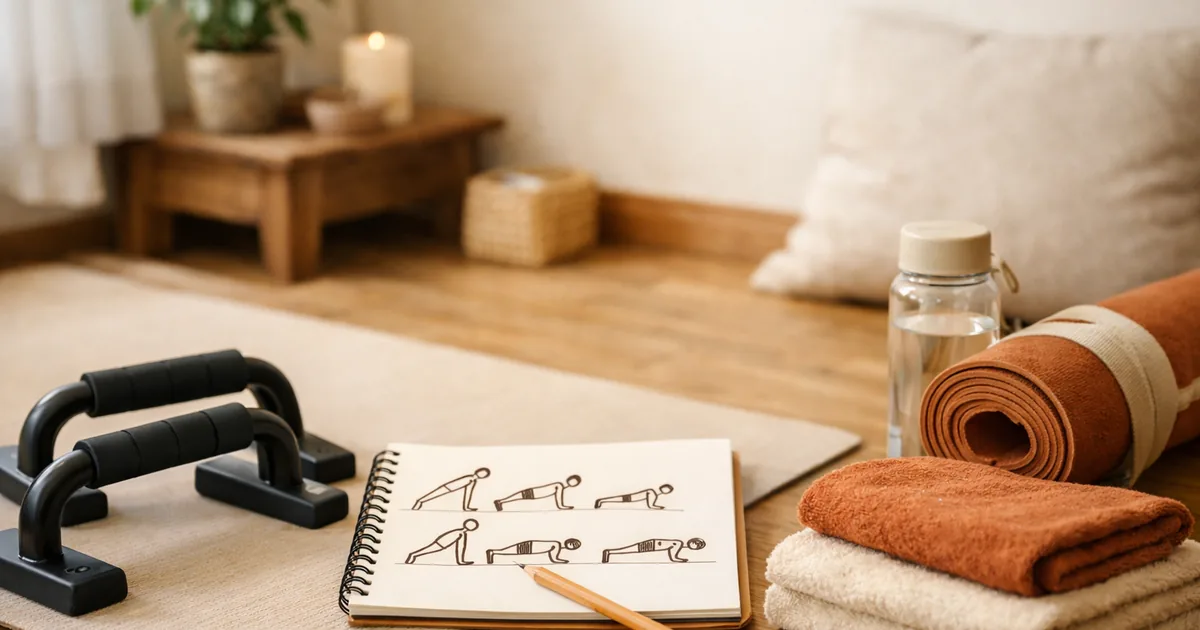
From Zero Push-Ups — The 5-Stage Progression, Wall to Floor
It isn't that you can't do one — the angle was wrong. Five stages from wall to floor, each gated by a pass condition.
5 Upper-Body Moves With Water Bottles (No Dumbbells)
Starts from the constraint: no equipment. What you need is resistance, not dumbbells — 5 moves and a fit-by-condition table.
A 15-Minute Full-Body Workout With Just a Chair
You need a chair not because it's easier, but because the floor, balance, wrists or shoulders are blocked.
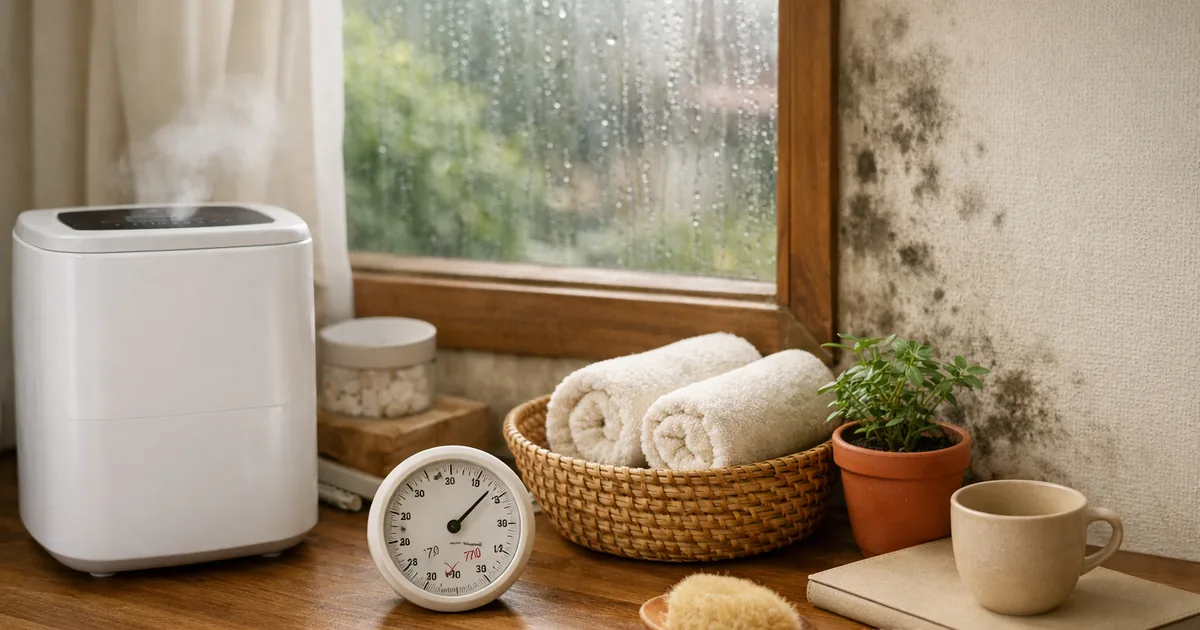
Monsoon Mold — CDC Does Not Recommend Mold Testing
Because no acceptable-amount standard exists, a result informs no decision. Two numbers remain: under 50% all day, and dry within 24-48 hours.
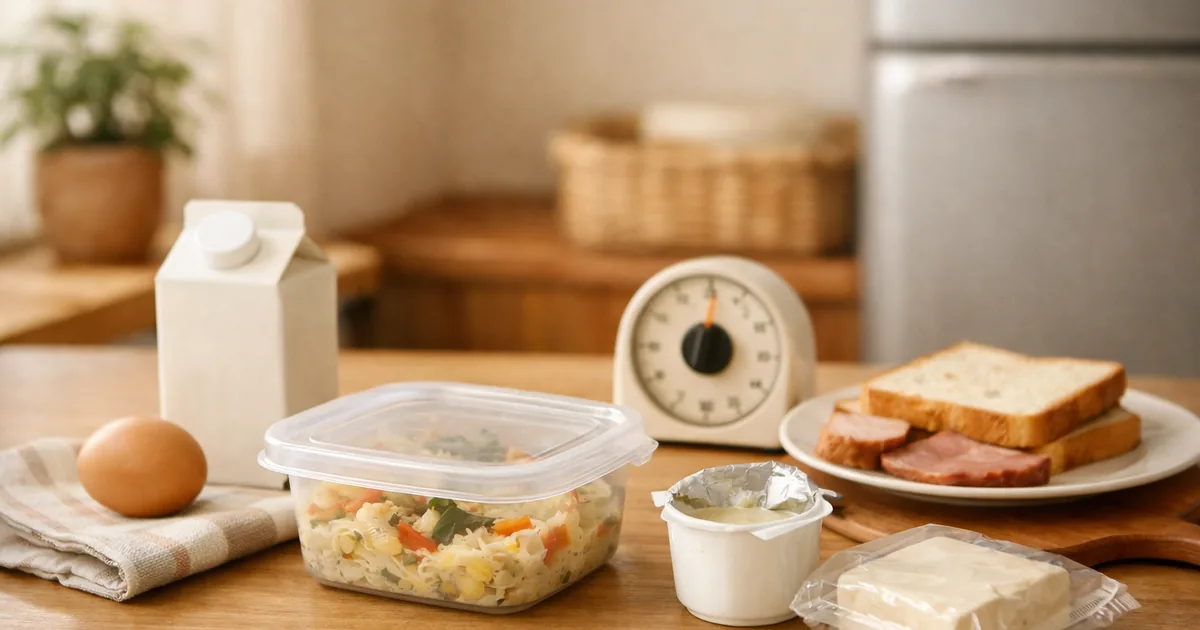
Sell-By vs Use-By in Korea — 60-70% and 80-90% of the Same Limit
Korea's consumption date sits at 80-90% of the quality-safety limit; the old distribution date sat at 60-70%. Ten-day noodles: 6-7 days versus 8-9.

Loosen Tight, Aching Shoulders — 5 Shoulder Stretches at Your Desk
Can't get your hands to meet behind your back? Range is shrinking. A five-question self-check, a four-week program, five moves.

Twinges in Your Knee? 5 Low-Impact Knee-Strengthening Moves
A painful knee isn't a strength problem — it hurts at specific angles, loads and directions only.
Apartment-Friendly Cardio — 5 No-Jump Moves (Quiet Home Workout)
Starts from the constraint: you can't jump here. Why the heart rate still rises without landing, plus 5 moves and a fit-by-condition table.

Wake a Stiff Body — 5 Full-Body Morning Stretches in 5 Minutes
A 30-second self-check tells you what's stiff; a four-week plan turns it into a five-minute habit.

Hip and Glute Stretches — 5 Moves for Desk-Bound Bodies, a 30-Second Self-Check and a Four-Week Plan
Release first or wake first? Find out in 30 seconds, then build to holding steady over four weeks.

Refinance Your Mortgage to Cut Interest — Minutes in an App
Still on an old high rate? Refinance in-app to save millions a year. Costs and watch-outs included.

Korea's Year-End Tax Settlement: the Credit-Card Rule Is Half Wrong
We ran the National Tax Service's own formula. Filling the 25% threshold with a credit card is worth exactly zero in tax.
What a Credit Score Is Actually Worth — Korean Bank Disclosures (2026)
What a credit score is worth depends on the bank. Some charge the same rate at 950 points and under 600.

Korean Loan Repayment Calculator — Equal Instalment vs Equal Principal
Same ₩300M at 4.32% over 30 years: ₩235.7M interest one way, ₩194.9M the other. See where the two methods cross over.

Korean Deposit & Savings Maturity Calculator — After Tax
A 3.20% deposit beats a 3.45% savings account by 1.71× after tax. The savings rate would need 5.91% to match.

Lower Back Stretches for Desk Sitters: 5 Moves at Your Desk
About 90% of low back pain is non-specific. A 30-second self-check, a four-week program, five moves — and when to stop.

Wrist & Hand Stretches for Typers: 5 Desk Moves
Tired, or a nerve signal? Sort that first, then remove the bent angle before you stretch.

Tired, Swollen Legs from Sitting? 5 Calf & Ankle Moves
Press the skin and you'll know which kind of swelling it is — then build intervals, not reps.

Can't Sleep? 5 Gentle Bedtime Stretches to Unwind
A 30-second self-check for what's keeping you awake, and a four-week plan that adds time, not moves.

Turtle Neck Stretches: 5 Moves You Can Do at Your Desk in a Minute
Ear ahead of your shoulder? That's forward-head posture. A 30-second self-check, a four-week program, and five moves.

Compounding and the Saving/Investing Line — CFPB's Example Ends at Year Two, Worth $2.50
Run the same conditions for thirty years and it becomes $1,821. Tax takes close to half of that.

Korea's grade-9 civil servant starts below the minimum wage — on base pay (2026)
We opened the Ministry of Personnel Management's Pay Table 3. Step-1 base pay sits under the monthly minimum wage, and the largest step increase lands between steps 8 and 9.

Interest Calculator — Simple vs Compound, After Korean Tax
₩30M over 3 years: a 3.20% deposit nets ₩2.52M, a 3.50% parking account ₩2.76M, and the same 3.20% deposit inside an ISA ₩2.88M.

Korean civil service pay tables — step 1 is anchored to the general-service grades (2026)
We laid all twelve annexes side by side. A researcher matches grade 5, an associate researcher grade 7, a police constable grade 9 — to the last digit.

US Capital Gains Tax Calculator: The One-Year Line
Hold over a year: 0/15/20%. Under a year: up to 37%. A few days can cost thousands.

US Median Earnings (2026) — By Education, By Occupation
US full-time median weekly earnings are $1,251 (BLS, Q2 2026) — a median, not an average, and before tax.

How US Tax Brackets Actually Work (2026)
‘I'm in the 24% bracket so I pay 24%’ — wrong, and the myth costs people money.

Jobseeker Benefit Calculator (Korea) — a 68,100 Won Cap, a 66,048 Won Floor, and 2,052 Won Between Them
Korea's 2026 jobseeker benefit: 60% of average wages, capped at 68,100 won with a 66,048 floor — a band just 2,052 won wide. Daily amount and benefit days.
Korea Electricity Bill Calculator — Why 451 kWh Costs ₩6,790 More Than 450
450 kWh is ₩85,740; 451 kWh is ₩92,530. See exactly which line item creates the jump.

US State Taxes 2026: Is It 7, 8, or 9 ‘No Income Tax’ States?
South Dakota says seven. The trackers say eight. Search says nine. Here's why the count differs — and what SALT does to the math.

Korea Severance Pay Calculator (퇴직금)
Korean law requires severance after 1 year. Enter your dates and salary to estimate it.
No results found.