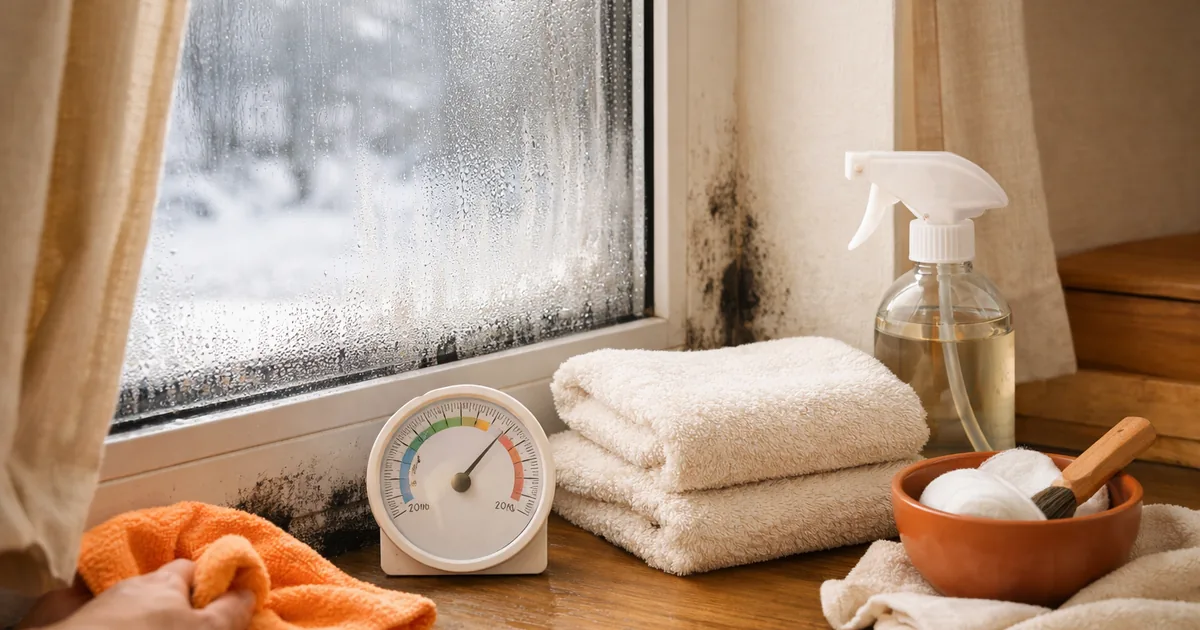
The first thing most people reach for when mold appears is testing — what kind is it? The US Centers for Disease Control and Prevention answers that in one line.
“CDC does not recommend mold testing.”
The reasons — no standards exist for acceptable amounts of mold, and testing is expensive.
— Centers for Disease Control and Prevention, About Mold (last reviewed September 26, 2024)
“No standards” is the operative part. A number can come back, but with no threshold to read it against, there is no decision the result can inform.
1. Should you test first. No. The CDC does not recommend mold testing — because no standards exist for acceptable amounts, so a number comes back with no decision it can inform. NIOSH says “careful visual inspection or detecting mold odours is more reliable than air sampling.”
2. So what do you look at. Two numbers — humidity and where water is getting in. Mold is the result, not the cause: leave the moisture and it comes back after cleaning.
3. If it is already there. On hard surfaces you can clean it yourself. Some people have to be more careful, and they are listed below.
Why do the agencies advise against testing
“We do not recommend routine air sampling for mold with building air quality evaluations.”
“Very short-term sampling for mold spores is performed. However, the results, especially negative findings of mold, may not represent actual exposures.”
“Measured mold concentrations in spore counts or colony forming units with short-term air samples cannot be interpreted in relation to health risks.”
“Thorough visual inspections or detecting problems by musty odors are more reliable than air sampling.”
— CDC National Institute for Occupational Safety and Health (NIOSH), Mold, Testing, and Remediation (last reviewed February 25, 2025)
The line that matters most is that “nothing detected” is not grounds for reassurance. And the alternative offered is not equipment but eyes and nose — can you see it, can you smell it.
So what do you look at — two numbers
| Item | What CDC says |
|---|---|
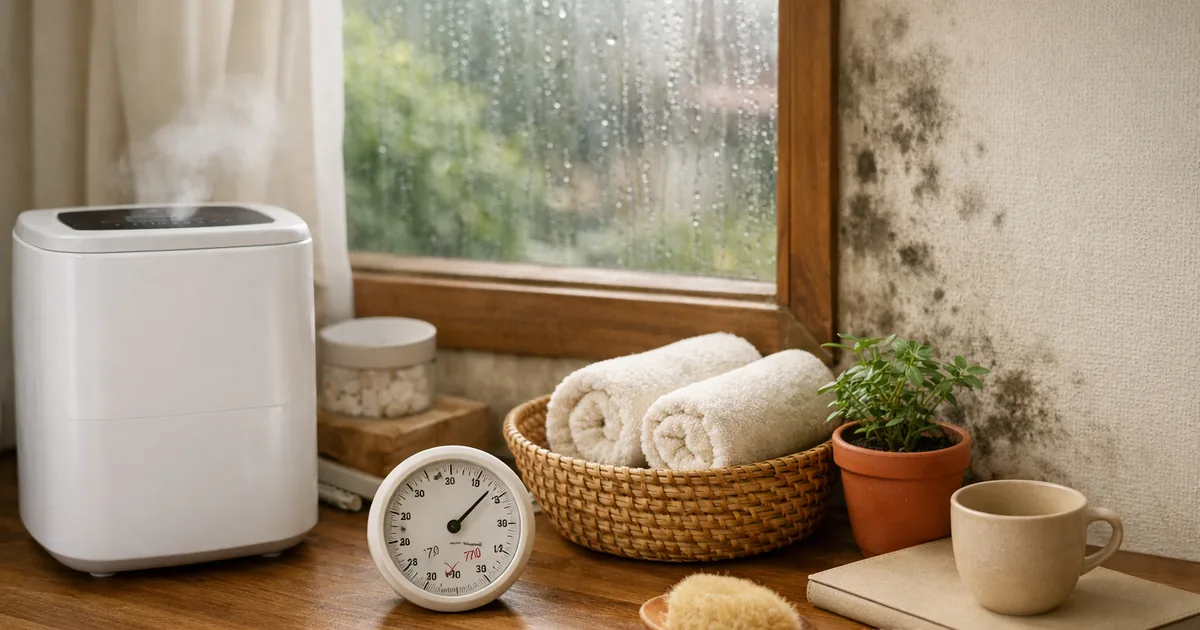
| Humidity | “Keep humidity levels in your home as low as you can — no higher than 50% — all day long.” |
| Drying time | “Clean up and dry out your home fully and quickly (within 24–48 hours) after a flood.” |
| Ventilation | “Use exhaust fans that vent outside your home in the kitchen and bathroom. Make sure your clothes dryer vents outside.” |
| Leaks | “Fix any leaks in your home's roof, walls, or plumbing so mold does not have moisture to grow.” |
| Equipment | An air conditioner or dehumidifier helps keep humidity low |
| Flooring | “Think about not using carpet in places like bathrooms or basements that may have a lot of moisture.” |

Note the qualifier “all day long.” Running a dehumidifier for a few hours to dip briefly under 50% is not the same as holding it there around the clock. Mold grows during the hours when humidity climbs back up.
What to do instead of testing
| Method | What NIOSH says |
|---|---|
| Air sampling for spores | “We do not recommend routine air sampling.” Results cannot be interpreted in relation to health risks |
| A “nothing detected” result | “May not represent actual exposures” |
| Visual inspection | “More reliable” |
| Musty odor | “More reliable” |
| Wetted materials | “Drying…within 48 hours…or remove the materials” · “necessary repairs to prevent further water entry” |
One thread runs through all five — stop measuring and cut the cause. Mold grows where the water is.

What if it is already there
“Mold can be removed from hard surfaces with household products, soap and water, or a bleach solution of no more than 1 cup of household laundry bleach in 1 gallon of water.”
“Never mix bleach with ammonia.”
— Centers for Disease Control and Prevention, About Mold
Two things to catch. “No more than” — stronger is not better with bleach. And the warning against mixing with ammonia — combining bleach with other cleaners is dangerous.
Who has to be more careful
“Exposure to damp and moldy environments may cause a variety of health effects, or none at all.” Symptoms listed include stuffy nose, sore throat, coughing, wheezing, and burning eyes.
“People with asthma or who are allergic to mold may have severe reactions. Immune-compromised people and people with chronic lung disease may get infections in their lungs from mold.”
— Centers for Disease Control and Prevention, About Mold
| Symptom group | What CDC says |
|---|---|
| Common symptoms | Stuffy nose · sore throat · coughing · wheezing · burning eyes |
| Asthma or mold allergy | “May have severe reactions” |
| Immune-compromised, chronic lung disease | “May get infections in their lungs from mold” |
| Everyone else | “May cause a variety of health effects, or none at all” |
The first sentence is admirably honest — “or none at all.” Mold in a home does not make everyone ill. But for people with asthma, mold allergy, weakened immunity or chronic lung disease, the calculation is different. If respiratory symptoms persist, see the cough and cold piece as well. For outdoor air the equivalent is what the fine-dust grades mean — the grade table and the legal standard are two different rulers.

In winter the problem is condensation rather than humidity; the EPA says dry water on windows and walls quickly and insulate cold pipes (winter condensation and mould).
Questions this raises
Do I need to know the species?
CDC does not recommend testing, and the reason given is that “no standards exist for acceptable amounts.” Knowing the species leaves no different action to take. NIOSH says visual inspection and odor are more reliable.
Dehumidifier or air conditioner?
CDC says both help and does not compare them. The test is not the appliance but the outcome — can you hold below 50% all day.
How strong should the bleach solution be?
“No more than 1 cup of household laundry bleach in 1 gallon of water.” And never mix it with ammonia.
What about after flooding?
CDC's number is 24–48 hours. NIOSH likewise says to dry wetted materials “within 48 hours… or remove the materials” and make “necessary repairs to prevent further water entry.” Time itself is the intervention.
When should I call a professional?
The EPA gives an area threshold. “Mold Cleanup in Your Home” says that if the moldy area is less than about 10 square feet (roughly 3 ft by 3 ft) you can usually handle it yourself, and that with a lot of water damage or more than 10 square feet you should consult its remediation guide (checked 23 September 2026).
The first thing everyone reaches for — testing — is the one thing CDC does not recommend, because with no acceptable-amount standard there is no decision a result can inform. What remains is two numbers: under 50% all day, and dry within 24 to 48 hours.
Laundry is split across three articles — looking after the inside of the machine in washing machine care and bulky loads, stains and discolouration in the stain guide, and care symbols by fabric in washing by fabric.
Sources
- Centers for Disease Control and Prevention — About Mold (last reviewed September 26, 2024). Source for “CDC does not recommend mold testing” and its reasons, “no higher than 50%…all day long,” the “no more than 1 cup…in 1 gallon” bleach ratio and the ammonia warning, and the health effects and vulnerable groups.
- CDC National Institute for Occupational Safety and Health — Mold, Testing, and Remediation (last reviewed February 25, 2025). Source for “we do not recommend routine air sampling,” “especially negative findings…may not represent actual exposures,” “cannot be interpreted in relation to health risks,” “visual inspections or musty odors are more reliable,” and the 48-hour drying rule.
- Centers for Disease Control and Prevention — You Can Control Mold. Source for venting exhaust fans and dryers outside, fixing roof, wall and plumbing leaks, drying within 24–48 hours after a flood, air conditioners and dehumidifiers, and avoiding carpet in bathrooms and basements.
Where to check further
- Korean indoor mold standards. Everything here comes from the US CDC and NIOSH — Korea's Ministry of Environment Indoor Air Quality Control Act and the Korea Environment Corporation set rules mainly for public-use facilities, which do not transfer directly to homes.
- Whether your patch passes the 10 sq ft line. The EPA threshold is about 0.9 m² — even below it, if it has spread behind wallpaper or plasterboard, surface cleaning will not finish it; ask a remediation contractor or your building management to inspect.
- Who is responsible for mold in rented housing. It turns on whether the cause is condensation or a leak, which is outside this article — the Korea Legal Aid Corporation (132) and the housing lease conciliation committees advise free of charge.
Written as of July 2026. The testing recommendation and the two numbers come from CDC and NIOSH source text and are US guidance. If respiratory symptoms persist see cough and cold; for household clutter and falls, fall prevention; for dates in the kitchen, food date labels. If damp air is disturbing your sleep, the sleep-hygiene list in the menopause piece may help. This is general information and does not replace medical diagnosis or treatment.