The accident that most often shatters an older adult's health in an instant is a fall. When you are young you brush it off; for an older person a single hip fracture can mean months in bed, a steep drop in strength, and complications that follow.
1. How common is it. The CDC writes that “more than one in four older adults falls each year” — about 3 million emergency visits and 1 million hospitalisations a year in the US. This is not an unusual accident.
2. Where the harm is. The damage does not require an injury. After one fall people move less for fear of falling, which costs strength and raises the odds of the next one. And the cause is often a medication that makes you dizzy or drowsy.
3. What to do. The CDC's first listed item is “talk to your doctor” — get a falls risk assessment, have every medication reviewed, prescription and over-the-counter, and discuss vitamin D. That comes before home modifications or exercise.
How common — the numbers first
“More than one out of four older people falls each year.”
— US Centers for Disease Control and Prevention, falls facts page (last reviewed 27 January 2026)
Annually that becomes:
| Item | Per year (US) |
|---|---|
| Emergency department visits from older adult falls | about 3 million |
| Fall-related hospitalizations | about 1 million |
| Older people hospitalized for hip fractures | nearly 319,000 |

※ Everything up to this point describes the US population. The Korean figures sit separately just below.
Korea — the 2023 Survey of Older Persons (Ministry of Health and Welfare)
On 21 September 2026 we opened the table on the national statistics portal and carried the values across. Base: 10,078 respondents aged 65 and over.
| Group | Fall rate |
|---|---|
| All | 5.6% |
| Men · women | 3.6% · 7.1% |
| 65–69 · 70–74 | 3.3% · 5.2% |
| 75–79 · 80–84 | 6.0% · 8.2% |
| 85–89 · 90+ | 8.9% · 11.1% |
| Living alone · couple only | 6.8% · 4.4% |
Those who fell in the past year fell 1.9 times on average, and 58.5% had hospital treatment. The rate climbs almost step by step with each five-year band; at 90+ it is a little over three times the 65–69 rate (our arithmetic — 11.1 ÷ 3.3 ≈ 3.4). Older people living alone fall more often than couples.
⚠️ Do not read this against the US “one in four”. Korea's 5.6% and the US 25%+ come from different methods — this is a national survey (proxy answers included), and its note flags the count and treatment columns as “small samples, interpret with care”. The gap does not mean older Koreans fall less. The prevention advice here stands.
The KDCA health-information portal still returned a service error today, so hospital-record injury statistics are not included.
The damage does not require an injury
This is the sentence most worth carrying over.
“Many people who fall, even if they're not injured, become afraid of falling. This fear may cause a person to cut down on their everyday activities.”
— US Centers for Disease Control and Prevention, falls facts page
That is the real cost of a fall. You go out less, walk less, lose leg strength faster, and become more likely to fall next time. It is not one accident — it is the point at which a decline begins.
Which is why “luckily nothing was broken” is the wrong place to stop. Telling a doctor that you fell is the first step. Age-related muscle loss is covered separately in the sarcopenia guide.

The CDC's four lines of defence
① Talk to a doctor
| What | Why |
|---|---|
| Have your risk of falling evaluated | The CDC lists this first |
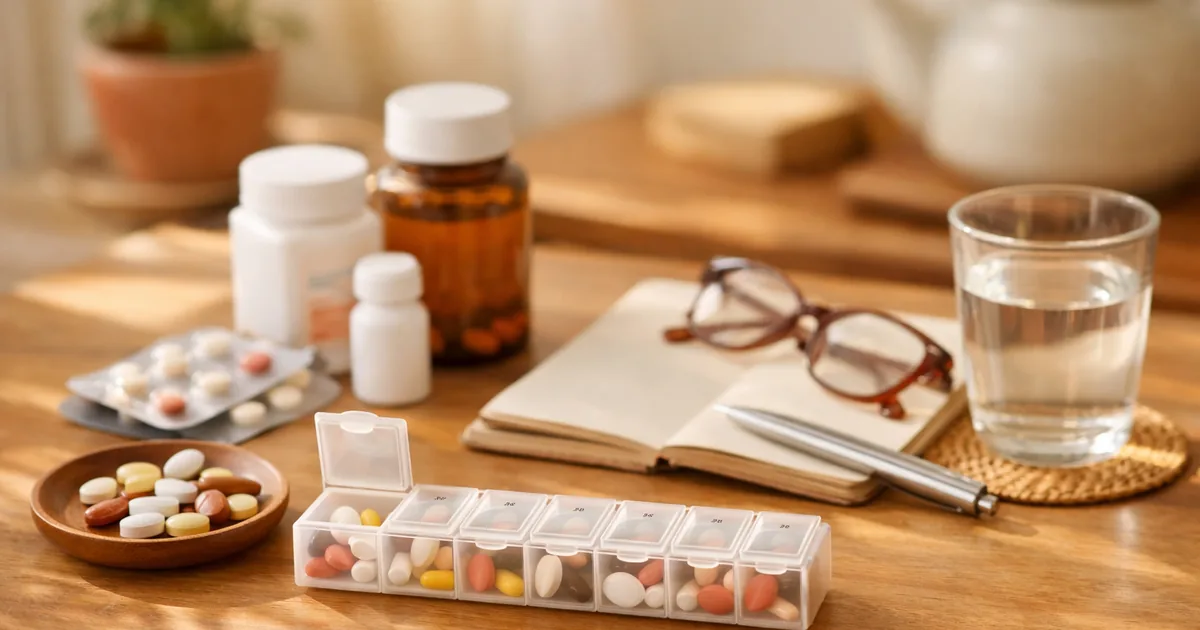
| Review your medicines — prescription and over-the-counter | “to see if any might make you dizzy or sleepy” |
| Ask about vitamin D supplements | The CDC lists it as its own item |
| Osteoporosis screening and treatment if needed | It decides whether a fall breaks something |
Medication review appears second, which is worth noticing. If you take several prescriptions, read it with managing multiple medications.
② Exercise — legs and balance
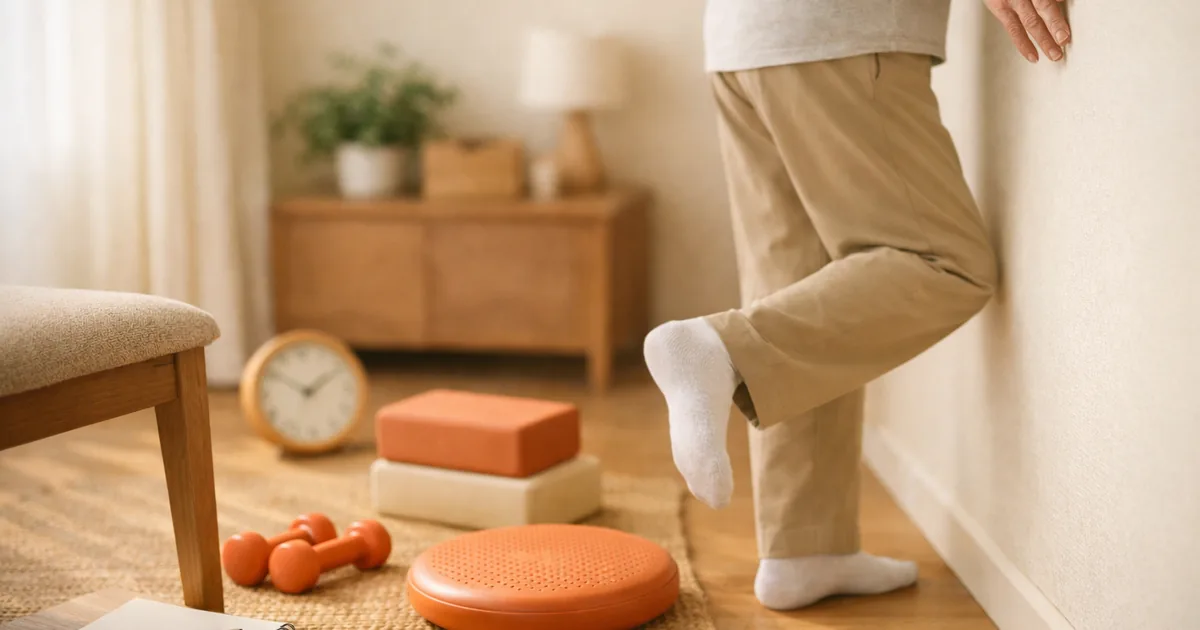
The CDC's wording: “Do exercises that make your legs stronger and improve your balance.” The example it gives is Tai Chi.
Places to start at home: chair exercises if standing is difficult, knee strengthening for weak knees, and lower body training for legs and balance together.
The CDC page does not state a frequency (how many times a week). Neither does this article.
③ Eyes — at least once a year
“Have your eyes checked by an eye doctor at least once a year”, and update your glasses if needed. Not seeing well is not seeing the floor.
④ Home — four changes
| Where | What |
|---|---|
| Floors | Remove things you can trip over |
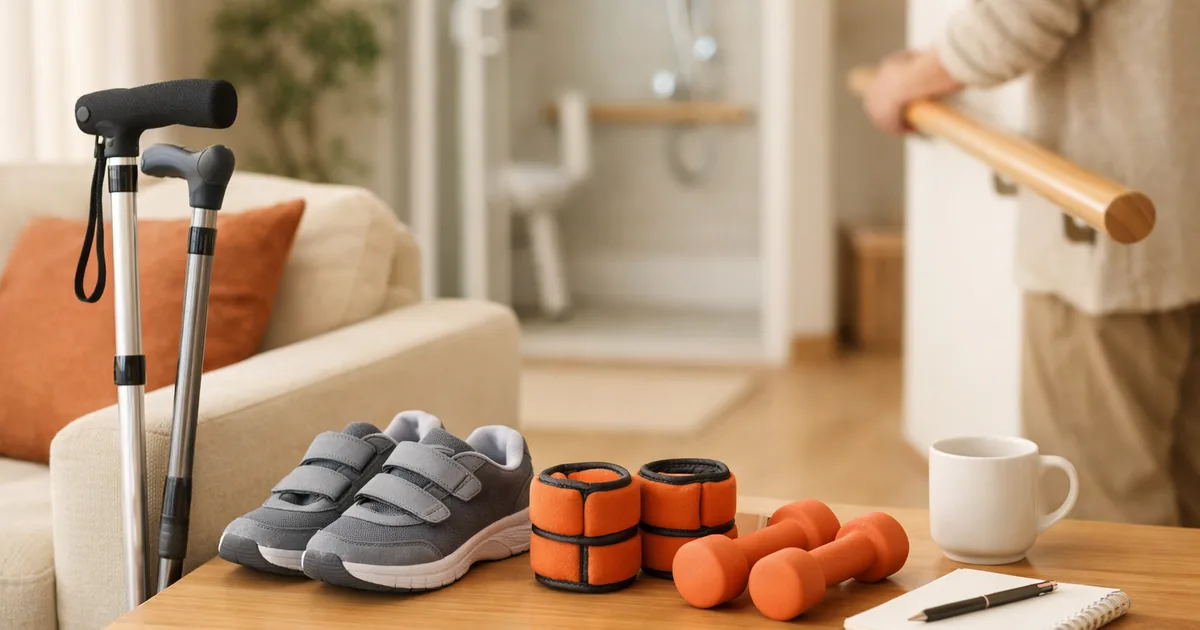
| Bathroom | Grab bars beside the bath or shower and the toilet |
| Stairs | Handrails on both sides — not one side |
| Lighting | Add lights or make them brighter |
Four items, and the detail that matters is “both sides” on the stairs — with a rail on one side only, one direction of travel leaves nothing to hold.

If a fall happens
- Do not rush to stand. Stay put for a moment and check for pain.
- If you can get up, roll onto your side, then onto hands and knees, and rise slowly using a sturdy chair.
- If you cannot get up alone, or the pain is severe, do not force it — call emergency services.
- Tell a doctor even if you were not hurt. That is exactly why “have your risk of falling evaluated” is the CDC's first item.
Other household emergencies are covered in this guide, and whether a situation needs an emergency room in ER or clinic. If the person is unconscious, CPR and choking first aid.
Shovelling, ice and what to do if stranded are in snow shoveling and ice safety.
Questions this raises
At what age should I start worrying?
The CDC material addresses “older people” and this page gives no starting age. That said, most of the recommendations — medication review, eye tests, clearing the floor — cost nothing at any age.
What exercise, and how much?
The CDC says only “exercises that make your legs stronger and improve your balance”, with Tai Chi as its example. No frequency is given. Set the intensity with a clinician.
Do I need to see a doctor if I wasn't hurt?
It is better to go. The CDC notes that even without injury a fall leads to fear of falling and reduced daily activity — and that reduction raises the risk of the next fall.
Should I take vitamin D?
The CDC lists it as something to discuss with a doctor. Whether and how much is a clinical decision, not a self-prescribed one.
In winter, cold matters as much as falls — 57.1% of last winter’s cold-related deaths were people over 80, and those over 65 collapsed most often near or inside their homes (cold-related illness).
If your parents still drive — from 75 on the last renewal date the licence is renewed every 3 years, and anyone 75 or over on the renewal date must complete road safety training to renew (driving licences at 70 and 75).
To cut falls through exercise — WHO recommends balance activities on 3 or more days for people 65+, and the NHS sets out five moves by a wall, such as one-leg stands of 5-10 seconds 3 times (balance exercises for older adults).
When dizzy, the NHS says to lie down until it passes, get up slowly, and not bend or stand up suddenly (dizziness).
Sources
- Ministry of Health and Welfare, Survey of Older Persons — via KOSIS — “Falls experienced by older people” (2023). Source of the 5.6% fall rate (men 3.6%, women 7.1%), 3.3–11.1% by age band, 6.8% living alone vs 4.4% couples, 1.9 falls a year and 58.5% hospital treatment, plus the notes (proxy answers included; count and treatment columns small-sample). Checked 21 September 2026.
- US Centers for Disease Control and Prevention — Facts About Falls (last reviewed 27 January 2026). Source of “more than one out of four older people falls each year”, the annual 3 million emergency visits / 1 million hospitalizations / nearly 319,000 hip fracture admissions, and “even if they're not injured, become afraid of falling… may cause a person to cut down on their everyday activities.”
- US Centers for Disease Control and Prevention — Preventing Falls and Hip Fractures (last reviewed 27 January 2026). Source of the fall-risk evaluation, “review your medicines to see if any might make you dizzy or sleepy”, vitamin D, “exercises that make your legs stronger and improve your balance — Tai Chi is a good example”, “have your eyes checked by an eye doctor at least once a year”, the four home changes, and osteoporosis screening.
Where to check further
- Korean falls from hospital records. The survey-based Korean figures are now above. Emergency and admission counts from hospital records sit with the KDCA National Injury Information Portal, which was returning errors, so they are not yet here. Until then, do not transplant the US absolute counts.
- Exercise frequency and intensity, and the vitamin D dose. The CDC page stops at “talk to your doctor” and gives no sessions per week and no IU figure. These are meant to be set for your own condition, so raise them at the same appointment.
- How to get up after a fall. The sequence in this article is the widely taught one, but it was not on the CDC pages we opened (what was verified word for word is the statistics and the prevention recommendations). A fall-prevention class at a public health centre lets you practise it, which is worth more than reading it.
Written as of July 2026. The statistics and recommendations come from the two CDC pages above, both last reviewed on 27 January 2026. This is general health information and does not replace medical diagnosis or treatment. A fall-risk evaluation and a medication review belong with a clinician.