The morning after heavy snow brings shovelling and icy paths. On its “Safety Guidelines: During & After a Winter Storm” page, the CDC says cold weather puts an extra strain on the heart: follow your doctor’s advice about shovelling snow or other hard work in the cold, and if you must do it, dress warmly and work slowly to avoid excess sweating. Walking on ice is extremely dangerous, it says, and if you’re stranded in a car, run the motor and heater for about 10 minutes per hour with one window slightly open, and make sure snow isn’t blocking the exhaust. Here is the page’s “Outdoors” part — clothing, ice, outdoor activities, cleanup, travel and being stranded — in its own order.
1. Shovel slowly — cold strains the heart; follow your doctor’s advice and avoid excess sweating.
2. Stay off the ice — rock salt or sand on steps and walkways.
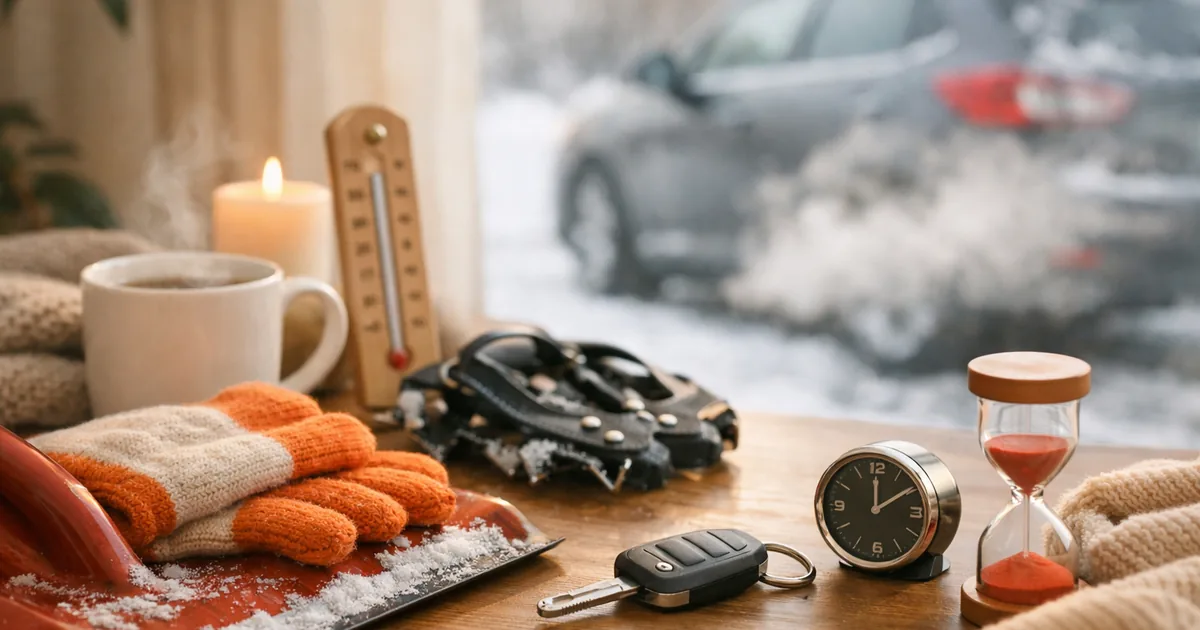
3. Stranded in a car — motor and heater about 10 minutes per hour, one window slightly open, exhaust clear of snow, don’t eat snow.
Clothing — CDC
| Type | What the source says | Worth noting (ours) |
|---|---|---|
| Six things to wear | A hat; a scarf or knit mask over face and mouth; sleeves snug at the wrist; mittens (warmer than gloves); a water-resistant coat and boots; several layers of loose clothing | — |
| Inner layer | Fabrics that hold body heat and don’t absorb moisture — wool, silk or polypropylene beat cotton | Sweaty cotton turns cold (our note) |
| Insulation layer | Traps air close to the body — wool, goose down or fleece | — |
| Outer layer | Protects from wind, rain and snow — tightly woven, ideally water- and wind-resistant | — |
Extra tips — CDC
| Type | What the source says | Worth noting (ours) |
|---|---|---|
| Stay dry | Wet clothing chills the body quickly | — |
| Sweat | Excess sweating loses more heat; remove layers when too warm | — |
| Petrol, alcohol | Keep gasoline or alcohol off your skin when de-icing, fuelling or using a snow blower | — |
| Shivering | Don’t ignore it — the first sign of heat loss; constant shivering means go inside | — |
| Asthma | Cold, dry air can trigger an asthma attack | — |
Ice — CDC
The CDC says walking on ice is extremely dangerous. Keep steps and walkways as free of ice as possible with rock salt and similar products, and use sand on walkways to cut the risk of slipping. In Korea, calcium chloride is the common de-icer (our note). For older people worried about falls, see fall prevention for older adults.
Outdoor activities — CDC
| Type | What the source says | Worth noting (ours) |
|---|---|---|
| Tell someone | Let friends and family know where you’ll be before hiking, camping or skiing | — |
| Skin, wet | Leave no skin exposed and avoid getting wet | — |
| Sweat, fatigue | Try not to sweat or get too tired | — |
| Shelter | Be ready for emergency shelter — dry clothing, a two-way radio, waterproof matches, paraffin fire starters | — |
| Alcohol, caffeine | No alcohol or mood-altering substances; avoid caffeinated drinks | — |
| Watch | Avoid walking on ice; watch for signs of hypothermia and frostbite | — |
Shovelling and hard work — CDC
The CDC says cold weather puts an extra strain on the heart. So follow your doctor’s advice about shovelling snow or other hard work in the cold, and if you must, dress warmly and work slowly to avoid excess sweating. Your body is already working hard just to stay warm, so don’t overdo it — the section’s last line. If you are treated for heart disease or high blood pressure, asking at your pre-winter appointment whether you can shovel snow is worth doing (our note).
Travel — CDC
| Type | What the source says | Worth noting (ours) |
|---|---|---|
| Advisories | Listen for travel advisories on radio or TV | In Korea, KMA weather warnings (our note) |
| Visibility | Don’t travel in low visibility | — |
| Icy roads | Avoid ice-covered roads, overpasses and bridges if at all possible | — |
| Windshield | Never pour water on the windshield to clear ice or snow — it can shatter | — |
| If you must go | Tire chains and a mobile phone; tell someone your destination and arrival time and ask them to alert authorities if you’re late | — |
| In the car | Check and restock winter supplies first; always carry extra warm clothing and blankets; don’t rely on the car for heat | — |
If you get stranded — CDC
| Type | What the source says | Worth noting (ours) |
|---|---|---|
| Signal | Tie a brightly coloured cloth to the antenna; raise the hood if it isn’t snowing | — |
| Supplies | Move what you need from the trunk into the passenger area | — |
| Wrap up | Wrap your whole body including your head in clothing, blankets or newspapers | — |
| Stay awake | Don’t fall asleep | — |
| Engine | Run motor and heater about 10 minutes per hour, with one window slightly open | About a sixth of each hour (our sum) |
| Exhaust | Make sure snow isn’t blocking the exhaust pipe — reduces the risk of CO poisoning | — |
| Move | Keep moving arms and legs while you sit | — |
| Snow | Don’t eat snow — it lowers body temperature | — |
| Together | Huddle with others for warmth | — |
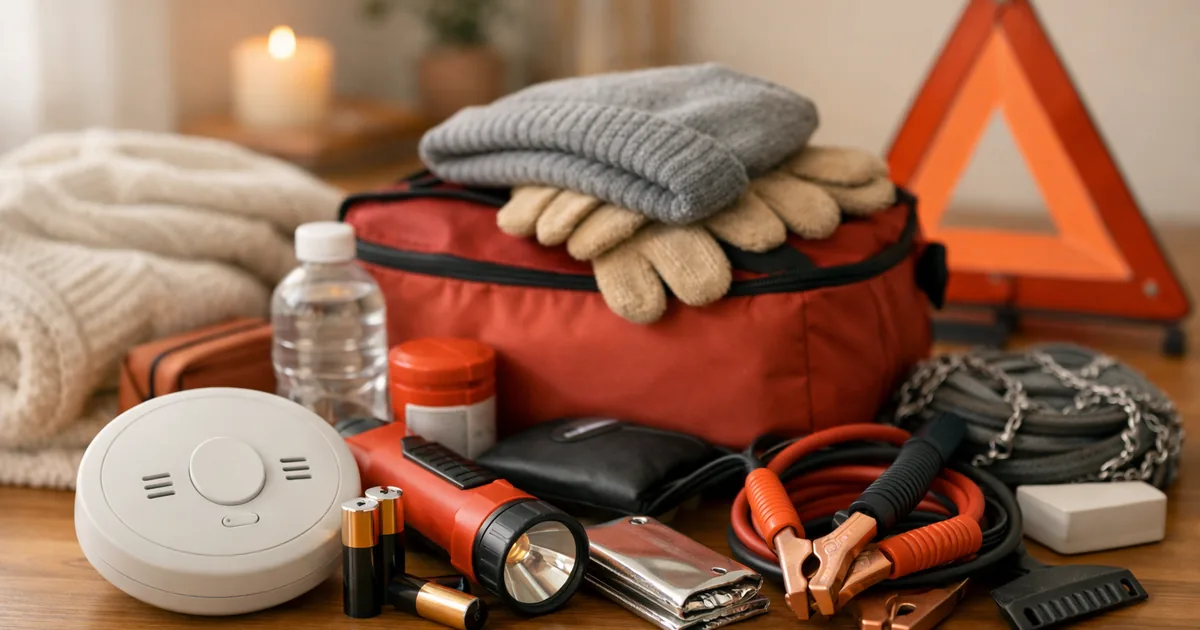
NHTSA also says to stay with the car, clear the exhaust and run the engine sparingly (winter car preparation); the CDC adds the “about 10 minutes per hour” figure. The 17-item car kit is in winter storm preparation.
Hypothermia and frostbite signs — CDC
The same page lists adult hypothermia signs as shivering, exhaustion, confusion, fumbling hands, memory loss, slurred speech and drowsiness, and says a body temperature below 95°F (35°C, our conversion) is an emergency needing immediate medical attention. Frostbite shows as a white or greyish-yellow patch, skin that feels unusually firm or waxy, and numbness. First aid is in hypothermia and frostbite.
Checklist
- ☐ Hat, scarf, mittens; layers, off when too warm
- ☐ Rock salt or sand on steps; stay off the ice
- ☐ Shovel only as your doctor advises, slowly
- ☐ No water on the windshield; tell someone your route and arrival time
- ☐ Stranded: engine about 10 minutes per hour, window slightly open, exhaust clear
Questions that remain
How many minutes of shovelling before a break?
The page sets no time. “Slowly, without excess sweating, don’t overdo it” and your doctor’s advice are the rule.
Why not keep the engine running when stranded?
The CDC says about 10 minutes per hour with a window slightly open, and warns that a blocked exhaust risks CO poisoning.
Sources
- CDC — Safety Guidelines: During & After a Winter Storm — source (page last reviewed 25 August 2026; checked 26 October 2026). The “Outdoors” part — six things to wear and three layers, six extra tips, ice (rock salt, sand), outdoor activities, cleanup (heart strain, doctor’s advice, slowly), ten travel points, nine stranded steps (engine about 10 minutes per hour), hypothermia and frostbite signs (95°F).
- Not read. The page’s “Indoors” part (in staying warm indoors); Korean snow and road rules.
- What we added. The “worth noting” column and the Korean everyday gloss.
Where to check further
- Your doctor — shovelling with heart disease or high blood pressure.
- KMA weather warnings — road conditions before you set out.
Written on 26 October 2026. The content is from the source; the glosses are ours.