Exercise
Stretches and workouts for everyday relief
Exercise
60 posts
Work-Related Musculoskeletal Injuries — NHS inform: Prevention Tips, a 20-Minute Walk Twice a Day, Change Position Often
NHS inform says muscle, back and joint problems are the biggest single cause of work absence in Scotland, with over a million GP visits a year. A 20-minute walk twice a day, stretches, changing position and a proper chair help prevent them.

Soft Tissue Injury — NHS inform: Sprains and Strains Advice, Don't Over-Rest, Ice Up to 15 Minutes, Early Anti-Inflammatories May Slow Healing
NHS inform says the first few days after a ligament, muscle or tendon injury are the worst, but too much rest slows recovery. If swelling is a major problem, ice with a towel for up to 15 minutes, a few hours apart.
Exercise Injury Prevention — NHS inform: Warm Up 10 to 15 Minutes, Cool Down 5 to 10, Raise Running 10% a Week or Less
NHS inform says warm up for around 10 to 15 minutes, cool down for 5 to 10, and allow over 24 hours to recover from an intense session. Raise running by 10% a week or less, rest at least one day a week, and do resistance training twice a week.

Postnatal Exercise — NHS: Pelvic Floor 10 Seconds, 10 Repeats, 3 Times a Day, Deep Stomach Exercise, Check the Tummy Gap at 8 Weeks
The NHS says after birth to build up to 10 long pelvic floor squeezes of up to 10 seconds and 10 quick ones, at least 3 times a day. Tummy muscle separation usually goes by about 8 weeks; if the gap is still obvious then, contact a GP.

Exercise in Pregnancy — NHS: 150 Minutes a Week, Start With 10 Minutes a Day, Strength on 2 Days, Avoid Lying Flat
The NHS says exercise is safe in pregnancy and recommends, as for all adults, 150 minutes (2 and a half hours) of moderate activity a week plus strengthening on 2 days. New to exercise? Start with about 10 minutes a day and don't take up running.
How to Be More Active — NHS Better Health: Move Every 30 Minutes, About 20 Minutes a Day for 150 a Week, Strength 2 Times a Week
NHS Better Health sets a target of 150 minutes of moderate activity a week, about 20 minutes a day, and says every minute counts. Set a reminder to move every 30 minutes, take the stairs, and do strength activity at least 2 times a week.
Building Up Exercise When It Hurts — Pain 0 to 5, Start at 2 to 3 Reps, Up to 2 Sets of 15 (NHS inform)
NHS inform's rules for exercising with joint and muscle pain: keep pain within 0 to 5 out of 10, start new exercises at 2 to 3 reps, add 1 or 2 every few days, and aim for a maximum of 2 sets of 15. Stretches: 20 to 30 seconds, 2 to 3 sets, 2 to 3 times a day.
Pelvic Floor Exercises — At Least 8 Squeezes, 3 Times a Day, for 3 Months (NHS Incontinence Treatment)
The NHS says pelvic floor muscle training can help everyone with urinary incontinence: at least 8 squeezes at least 3 times a day for at least 3 months. Bladder training usually takes at least 6 weeks; cut caffeine and drink neither too much nor too little.

Breathing Exercise for Stress — Deep into the Belly, Counting 1 to 5, at Least 5 Minutes (NHS)
The NHS breathing exercise for stress: breathe deep into your belly, in through the nose and out through the mouth, counting 1 to 5 each way if it helps, for at least 5 minutes. Lying, sitting or standing; it works best as a daily routine.

Exercising with Chronic Conditions — Arthritis, Diabetes, Heart Disease, Osteoporosis, Rest Swollen Joints (NIA)
The US National Institute on Aging says most older adults can exercise safely if they build up slowly: rest swollen arthritic joints, do weight-bearing activity 3–4 times a week for osteoporosis, and aim for 150 minutes for heart health. Inactivity nearly doubles heart disease risk.

Exercise for Bone Health — Weight-Bearing Exercise Builds Density, Not Swimming or Cycling, 700mg Calcium (NHS)
The NHS says weight-bearing exercise such as running, skipping, dancing and jumping builds bone density, while swimming and cycling don't count. It adds resistance exercise like press-ups and weights, 700mg of calcium and 10 micrograms of vitamin D a day.
Weekly Exercise Plan — 150 Minutes + 2 Strength Days, 30 × 5, CDC's Three Sample Weeks and a Checker
The CDC recommends adults get 150 moderate minutes and 2 strength days a week, split like 30 minutes on 5 days, and shows three sample weeks; three 25-minute jogs (75 minutes) also work. A checker tells you whether this week meets the guideline.
Physical Inactivity in Numbers — 31% of Adults (1.8 Billion) Fall Short, 20–30% Higher Risk of Death (WHO)
The WHO physical activity fact sheet says 31% of adults worldwide, about 1.8 billion, miss the recommended level, projected to reach 35% by 2030, and that insufficient activity carries a 20–30% higher risk of death.
Exercise with Diabetes — 150 Minutes a Week, 30 Minutes Most Days, Start with a 10-Minute Walk After Dinner (CDC)
The CDC sets a goal of 150 minutes+ of moderate activity a week with diabetes, about 30 minutes on most days, starting small with a 10-minute walk after dinner and no more than two days off in a row. Blood sugar is likely lower after a walk.
Exercise with a Disability — the 150-Minute Guideline Still Applies; Do What You Can; 82% More Active When a Doctor Advises (CDC)
The CDC recommends that adults with disabilities get 150 minutes moderate or 75 vigorous a week plus 2 strength days, or be as active as abilities allow. A doctor's recommendation made activity 82% more likely, but only 44% received one.

Eight Reasons People Don't Exercise and How to Get Past Them — Find Five 30-Minute Slots in a Week (CDC)
The CDC names eight barriers to exercise — time, social support, energy, motivation, fear of injury, skill, cost and facilities, and weather — and, for lack of time, suggests tracking a week to find at least five 30-minute slots.

Calories Burned by Activity — 140 kcal for a 30-Minute Walk and 295 for a Run at 70 kg; Weight Loss Is Mostly Diet (CDC Table)
By the CDC table, a 154 lb (70 kg) person uses about 140 kcal walking at 3.5 mph for 30 minutes and about 295 kcal running at 5 mph. The CDC says most weight loss comes from eating less, and keeping it off needs regular activity.
Exercise for Depression — Especially Useful for Less Severe Depression, Start with 10 Minutes, NICE Suggests 10 Weeks of Group Exercise (NHS)
The NHS says regular exercise can improve mood in people with depression and is especially useful for less severe depression. Start with a 10-minute brisk walk and build to 150 minutes a week; NICE NG222 recommends group exercise more than once a week over 10 weeks.
How Much Exercise Adults Need — 150 Minutes Moderate or 75 Vigorous a Week, Strength on 2 Days (NHS, Ages 19 to 64)
The NHS guidelines for adults aged 19 to 64: 150 minutes moderate or 75 vigorous a week, spread over 4 to 5 days or more, plus strength work for all major muscles on at least 2 days. Moderate means you can talk but not sing.
Sciatica — NHS: Keep Moving Rather Than Rest, Usually Better in Weeks to Months, and Five Emergency Signs
The NHS says sciatica usually improves within a few weeks to a few months, and advises carrying on with normal activities and starting gentle exercise as soon as possible. It says not to sit or lie down for long, and treats symptoms in both legs, numbness around the genitals or bottom, and loss of control of pee or poo as emergencies.
Should You Exercise With Arthritis — CDC: 150 Minutes and 2 Days of Strength Work, Start From 5 Minutes, Some Pain at First Is Normal
The CDC says physical activity is safe for people with arthritis and reduces pain. The amounts match other adults: 150 minutes a week of moderate aerobic activity and strength work on 2 days, and 5 or 10 minutes at a time counts. It recommends joint-friendly activities such as walking, cycling, swimming and tai chi.
How Active Should You Be at 65 and Over — NHS: Every Day, 150 or 75 Minutes a Week, Strength, Balance and Flexibility on 2 Days
The NHS guidance for adults aged 65 and over has four lines: be active every day even if only lightly, do strength, balance and flexibility activities on at least 2 days, do 150 minutes of moderate or 75 minutes of vigorous activity a week, and sit less. With examples by intensity and a sample week.
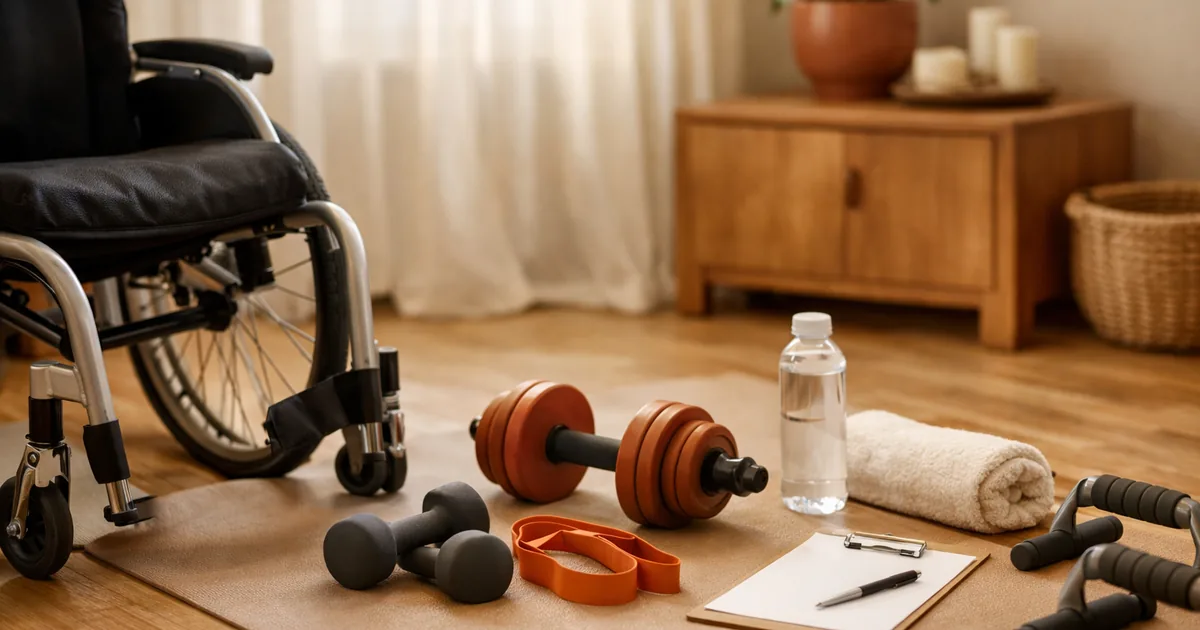
Exercise for Wheelchair Users — NHS: the Same 150 Minutes and 2 Days of Strength Work, Starting at 10 Minutes and Building to 20
The NHS recommends that adults aged 19 to 64, wheelchair users included, do at least 150 minutes of aerobic activity a week plus strength exercises on 2 or more days. Start with 10-minute sessions, build to 20, and look after the chest and shoulders that tighten and the back that weakens from pushing.
How Much Strength Exercise, by the NHS — At Least 2 Days a Week, 2 Sets of 8 to 12 Repetitions, Separate From the 150 Aerobic Minutes
The NHS says to do strength exercise at least 2 days a week, working all the major muscle groups, with 8 to 12 repetitions as 1 set and at least 2 sets (3 for more benefit). Strength time does not count towards the 150 aerobic minutes, though 75 minutes of vigorous activity can cover both.
Benefits of Exercise, by the NHS — Up to 30% Lower Risk of Early Death, 10 Lower Risks, 150 Minutes a Week, and 7 Hours of Sitting
The NHS says exercise can reduce the risk of major illnesses such as heart disease, stroke, type 2 diabetes and cancer and lower the risk of early death by up to 30%. It lists 10 lower risks and tells adults to aim for at least 150 minutes a week. Many adults sit for more than 7 hours a day.

Five Running Injuries, by the NHS — Knee, Achilles, Shin, Heel and Muscle Strain: Ice up to 20 Minutes, See a Doctor After 1 Week for the Knee and 2 to 3 Weeks for the Achilles
The NHS sets out how five common running injuries feel and what to do. Ice goes on wrapped, for up to 20 minutes a few times a day; for the heel, roll a frozen bottle for 15 to 20 minutes. See a doctor if knee pain lasts 1 week or Achilles pain 2 to 3 weeks, and warm up and cool down for 5 to 10 minutes.
Knee Exercises for Runners, by the NHS — Five Moves: Thigh Contraction 10 Sets of 5 Seconds, Hamstring 3 Sets of 15 Seconds, Lunges 3 Sets of 5 Reps
The NHS sets out five knee exercises for runners: wall squats, thigh contraction, hamstring stretch, squats and lunges. Thigh contraction is 10 sets of 5 seconds with each leg, the hamstring stretch 3 sets of 15 seconds and lunges 3 sets of 5 reps. They are not suitable for people with an existing knee injury.
How to Stretch After Exercise, by the NHS — Five Stretches, About 5 Minutes: Buttock, Hamstring, Inner Thigh, Calf and Thigh for 15 to 20 Seconds Each
The NHS says about 5 minutes of gentle stretching after exercise helps you gradually relax, improve flexibility and slow your heart rate. Hold the buttock, hamstring, inner thigh, calf and thigh stretches for 15 to 20 seconds each. Counting both sides there are 9 holds, 2 minutes 15 seconds to 3 minutes.
How to Warm Up Before Exercise, by the NHS — Five Moves, at Least 6 Minutes: 3 Minutes Marching, 60 Heel Digs, 30 Knee Lifts
The NHS says a warm-up should take at least 6 minutes: marching on the spot for 3 minutes, 60 heel digs in 60 seconds, 30 knee lifts in 30 seconds, 2 sets of 10 shoulder rolls and 10 knee bends of no more than 10cm. The three timed moves add up to 4 minutes 30 seconds.
Brisk Walking, by the NHS — Start With 10 Minutes a Day, About 3 Miles an Hour, Talk but Not Sing, Counts Towards 150 Minutes
The NHS says a brisk 10-minute daily walk has health benefits and counts towards 150 minutes of weekly exercise. A brisk walk is about 3 miles an hour (roughly 4.8 km/h), a pace at which you can talk but not sing. Ten minutes a day is 70 minutes a week; 22 minutes a day passes 150.
Sitting Exercises From the NHS — Twice a Week, Chest Stretch 5-10 Seconds 5 Times, Twists and Hip Marching 5 Each, Ankles 2 Sets of 5
The NHS sets out five exercises done on a solid chair without wheels, at least twice a week: a chest stretch held 5 to 10 seconds 5 times, an upper-body twist held 5 seconds 5 times each side, hip marching 5 lifts each leg, an ankle stretch in 2 sets of 5 per foot, and neck rotations held 5 seconds 3 times each side.

Sitting Too Long, by WHO — No Hour Limit, Sit Less and Move More Than 150-300 Minutes a Week
WHO's 2020 guidelines define sedentary behaviour as any waking behaviour at 1.5 METs or lower while sitting, reclining or lying, and set no daily hour limit because evidence was insufficient. Instead, replace sitting with activity of any intensity, and if you sit a lot, do more than the 150-300 minutes a week recommended.
Exercise During Pregnancy, by WHO — 150 Minutes a Week, Strength and Stretching, No Lying Flat After the First Trimester, Heat or Fall Risks
WHO's 2020 guidelines recommend at least 150 minutes a week of moderate aerobic activity, plus muscle strengthening and gentle stretching, for pregnant and postpartum women, and say women already doing vigorous exercise can continue. Avoid heat, contact and fall risks, lying flat after the first trimester, and high altitude.
How Much Exercise Children Need, by WHO — 60 Minutes a Day at 5-17, Muscle and Bone 3 Times a Week, 180 Minutes at 1-4, Screens Under 1 Hour
WHO recommends 5- to 17-year-olds get at least 60 minutes of moderate-to-vigorous activity daily and muscle- and bone-strengthening activity at least 3 times a week. Children aged 1-4 should move at least 180 minutes a day, with 60 of those moderate to vigorous at 3-4, and no more than 1 hour of screens at 2-4. 81% of 11-17-year-olds fall short.
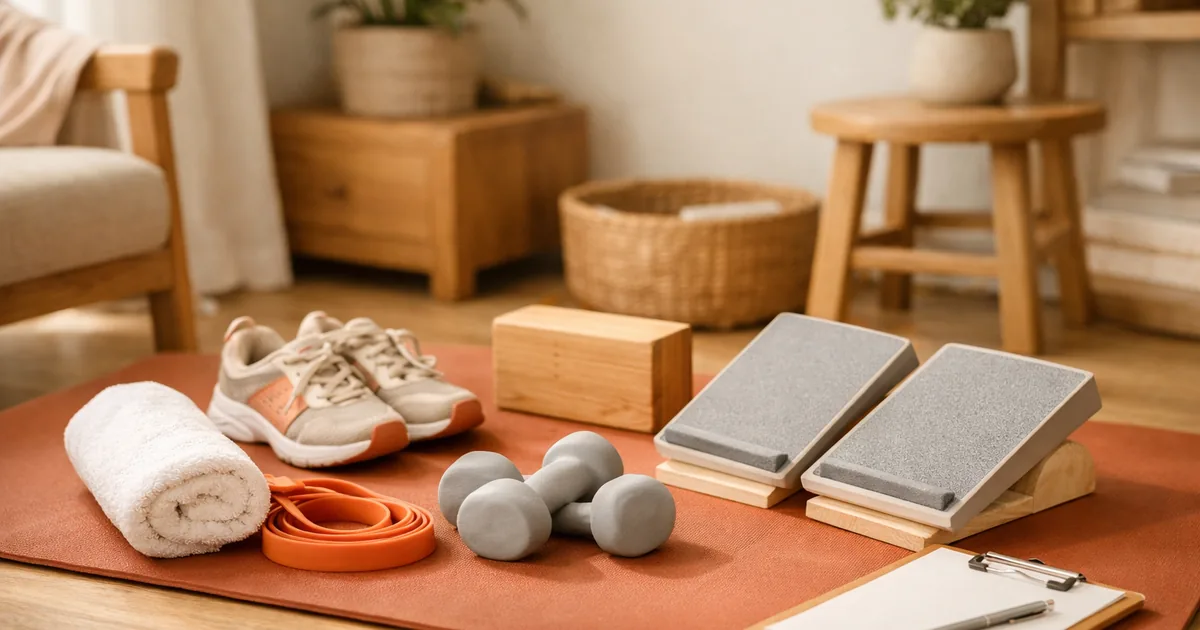
Flexibility Exercises for Older Adults — Twice a Week, Neck Rotations and Stretches Held 5 Seconds 3 Times, Sideways Bends, Calf Stretches
The NHS sets out four flexibility exercises to do at home at least twice a week alongside strength and balance work. Neck rotations and neck stretches are held 5 seconds, 3 times each side; sideways bends 2 seconds, 3 times each side; calf stretches 3 each side, building up repetitions slowly.
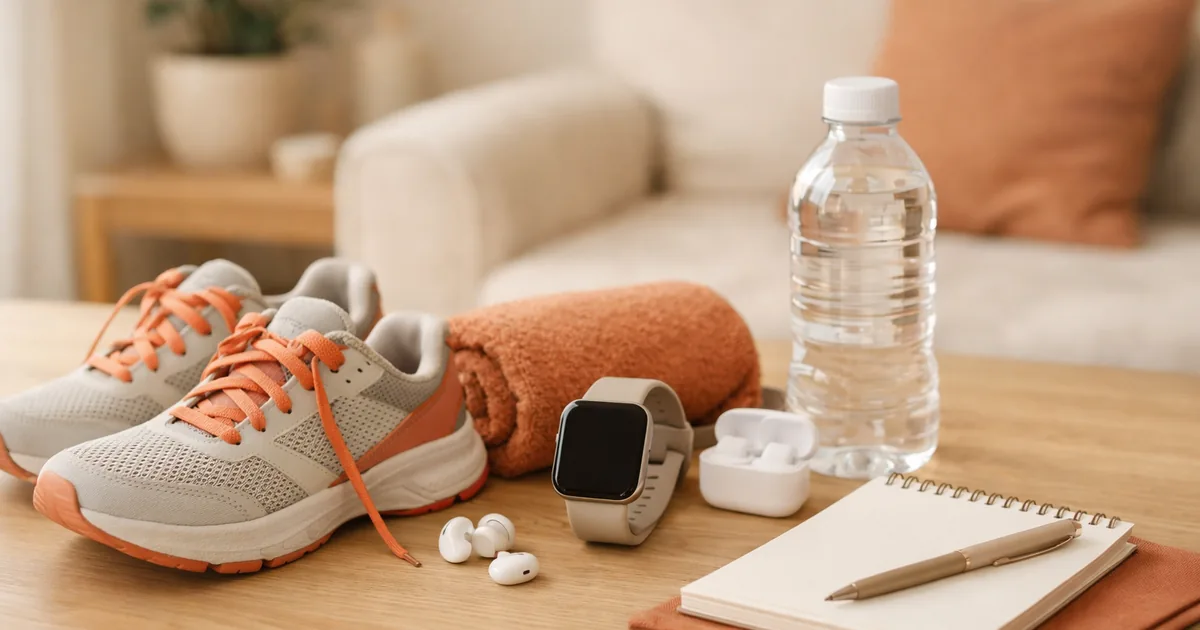
Couch to 5K Running Plan — 9 Weeks, 3 Runs a Week, From Eight 1-Minute Runs to 30 Minutes Non-Stop
The NHS Couch to 5K builds running over 9 weeks, 3 times a week with rest days between. Week 1 alternates 1-minute runs and 1 minute 30 second walks for 28 minutes 30 seconds in all; the last week is a 5-minute walk then 30 minutes non-stop, 40 minutes in all. Repeat a week if you are not ready.
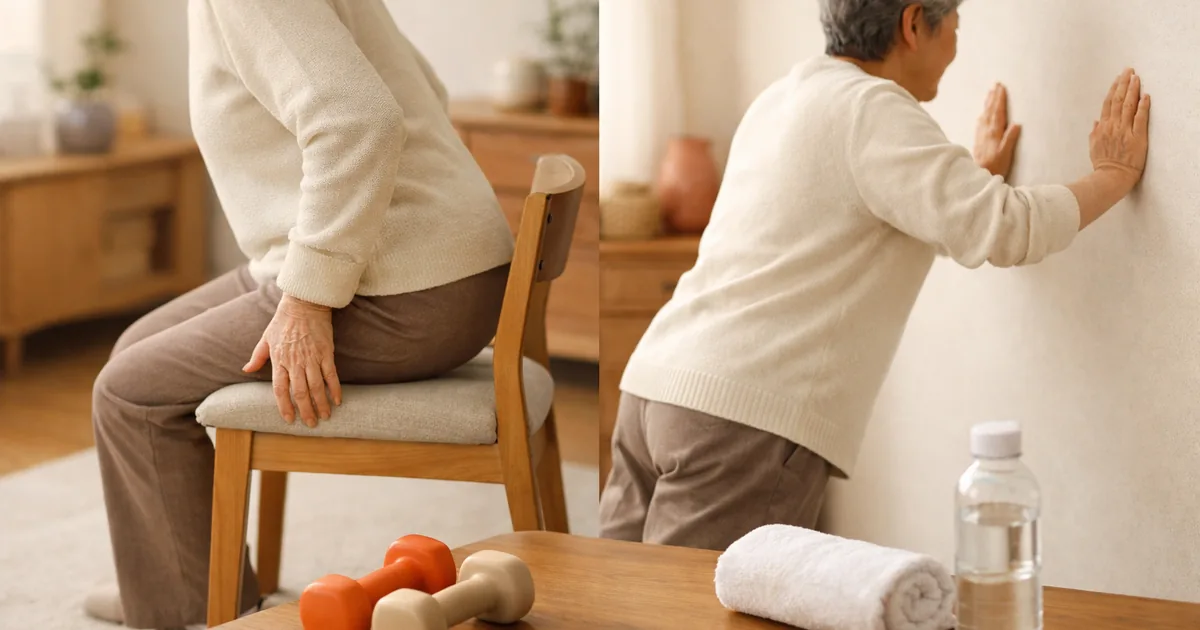
Strength Exercises for Older Adults — Twice a Week, 5 Sit-to-Stands, 3 Sets of 5-10 Wall Press-Ups
WHO recommends strength training on 2 or more days a week for people 65+, and the NHS sets out seven chair-and-wall moves at least twice a week. Sit-to-stands, mini-squats and calf raises are 5 each, leg extensions are held 5 seconds 5 times, and wall press-ups are 3 sets of 5-10.
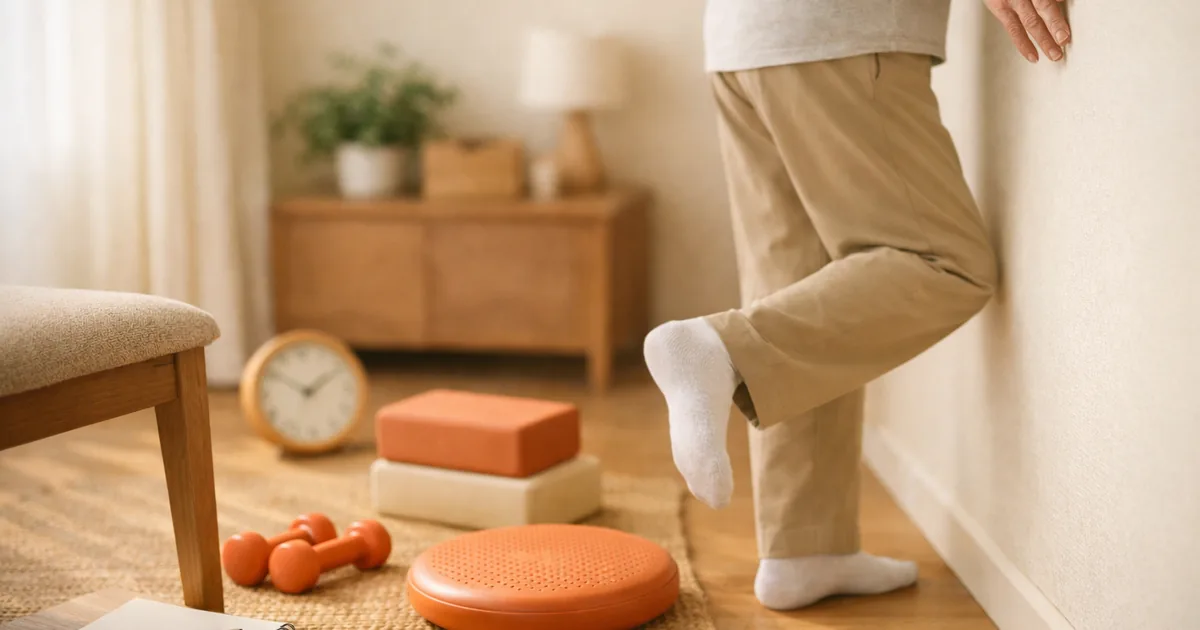
Balance Exercises for Older Adults — 3 Days a Week With Poor Mobility, One-Leg Stands of 5-10 Seconds, Five Moves by a Wall
WHO recommends balance activities on 3 or more days a week for people 65+, and the NHS sets out five moves by a wall or chair at least twice a week: sideways walking 10 steps, grapevine 5, heel-to-toe 5 steps, one-leg stand 5-10 seconds 3 times, and step-ups 5.
Measuring Exercise Intensity — Talk but Not Sing Is Moderate, and 1 Vigorous Minute Counts as 2
The CDC gauges exercise intensity by the talk test, METs (3 to 5.9 moderate, 6 or more vigorous) and perceived exertion (5-6 moderate and 7-8 vigorous on a 0-10 scale). WHO recommends 150 moderate or 75 vigorous minutes a week, and by the ratio of those numbers 1 vigorous minute counts as 2 moderate minutes.
5 Glute-Strengthening Moves — Protect Your Back and Knees
Sitting switches the glutes off and the lower back takes over. Test whether they fire, then climb five stages.
5 Moves to Fix a Hunched Back & Rounded Shoulders
Posture reverts not because the moves are hard, but because the other hours vastly outnumber your ten minutes.
5 Lower-Body Strength Moves — Metabolism, Knees, Balance
Half your muscle sits below the waist. Test the sit-to-stand, then climb five stages from knee direction to single leg.
No Floor Needed — 5 Standing Core Moves
Standing core grows by stages, not reps — hold, sideways, rotate, load, each with a pass condition.
When Only the Lower Belly Won't Budge — 5 Lower-Ab Core Moves
Progress by stage, not by rep count. A self-test to find your starting stage, pass conditions for stages 1–5, and a stall-fix table.
Master the Plank — 5 Levels from Easy to Hard
Holding 30 seconds isn't the goal. A self-test to pick your stage, then five stages gated by pass conditions.
Home Workout Basics — 5 Bodyweight Moves, No Equipment
Home workouts stall on conditions, not willpower — space, equipment, noise, time, feedback.
Back First, Belly Second — 5 Quiet Core & Ab Moves
Ab work doesn't burn belly fat alone. Measure when your back lifts, then climb five back-safe stages.
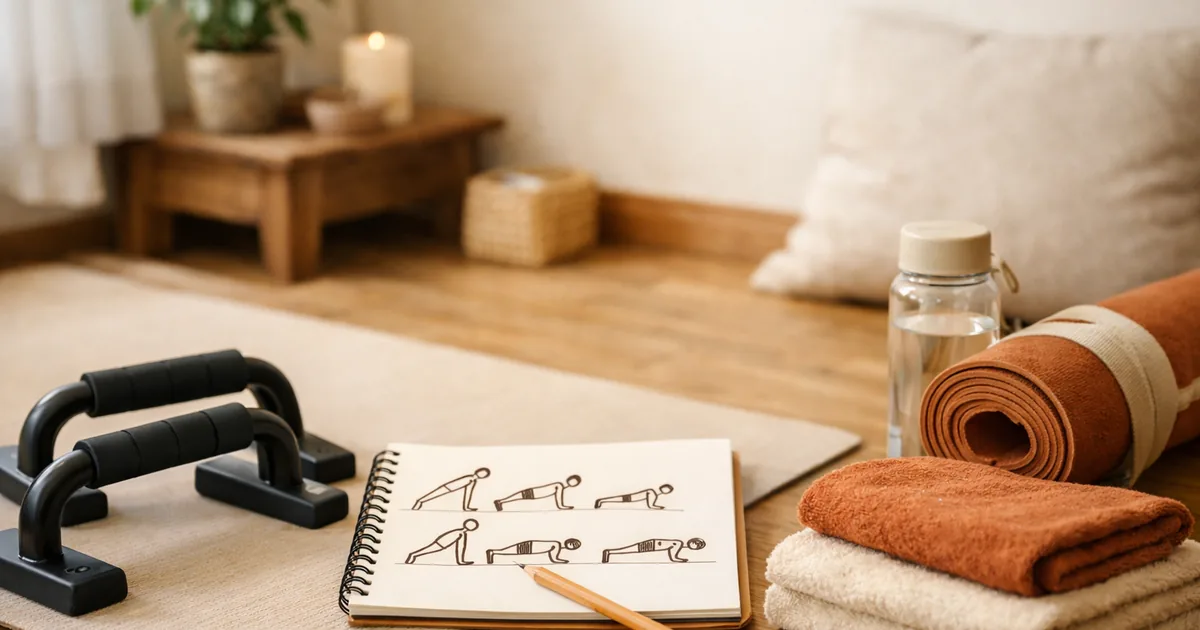
From Zero Push-Ups — The 5-Stage Progression, Wall to Floor
It isn't that you can't do one — the angle was wrong. Five stages from wall to floor, each gated by a pass condition.

5 Upper-Body Moves With Water Bottles (No Dumbbells)
Starts from the constraint: no equipment. What you need is resistance, not dumbbells — 5 moves and a fit-by-condition table.
A 15-Minute Full-Body Workout With Just a Chair
You need a chair not because it's easier, but because the floor, balance, wrists or shoulders are blocked.
Loosen Tight, Aching Shoulders — 5 Shoulder Stretches at Your Desk
Can't get your hands to meet behind your back? Range is shrinking. A five-question self-check, a four-week program, five moves.
Twinges in Your Knee? 5 Low-Impact Knee-Strengthening Moves
A painful knee isn't a strength problem — it hurts at specific angles, loads and directions only.
Apartment-Friendly Cardio — 5 No-Jump Moves (Quiet Home Workout)
Starts from the constraint: you can't jump here. Why the heart rate still rises without landing, plus 5 moves and a fit-by-condition table.
Wake a Stiff Body — 5 Full-Body Morning Stretches in 5 Minutes
A 30-second self-check tells you what's stiff; a four-week plan turns it into a five-minute habit.

Hip and Glute Stretches — 5 Moves for Desk-Bound Bodies, a 30-Second Self-Check and a Four-Week Plan
Release first or wake first? Find out in 30 seconds, then build to holding steady over four weeks.

Lower Back Stretches for Desk Sitters: 5 Moves at Your Desk
About 90% of low back pain is non-specific. A 30-second self-check, a four-week program, five moves — and when to stop.

Wrist & Hand Stretches for Typers: 5 Desk Moves
Tired, or a nerve signal? Sort that first, then remove the bent angle before you stretch.

Tired, Swollen Legs from Sitting? 5 Calf & Ankle Moves
Press the skin and you'll know which kind of swelling it is — then build intervals, not reps.

Can't Sleep? 5 Gentle Bedtime Stretches to Unwind
A 30-second self-check for what's keeping you awake, and a four-week plan that adds time, not moves.

Turtle Neck Stretches: 5 Moves You Can Do at Your Desk in a Minute
Ear ahead of your shoulder? That's forward-head posture. A 30-second self-check, a four-week program, and five moves.