#WHO
Related posts · 11 posts
Physical Inactivity in Numbers — 31% of Adults (1.8 Billion) Fall Short, 20–30% Higher Risk of Death (WHO)
The WHO physical activity fact sheet says 31% of adults worldwide, about 1.8 billion, miss the recommended level, projected to reach 35% by 2030, and that insufficient activity carries a 20–30% higher risk of death.
How Loud Is Too Loud for Earphones — WHO: Under 60% Volume, 40 Hours a Week at 80dB, 4 Hours at 90dB
The WHO says to keep device volume at no more than 60% of maximum, and gives safe listening time per week by sound level: 40 hours at 80dB, 12 hours 30 minutes at 85dB, 4 hours at 90dB and 20 minutes at 100dB. At concerts, rest 10 minutes somewhere quiet every hour.

How Much Sugar a Day — WHO Free Sugars Under 10% (50g, 12 Teaspoons at 2,000 Calories), Better at 5% or Less
The WHO says to keep free sugars under 10% of daily energy intake — 50g, or about 12 level teaspoons, for an adult eating 2,000 calories a day. Going to 5% or less may bring extra benefits, and sugar in honey, syrups and fruit juices counts as free sugar.
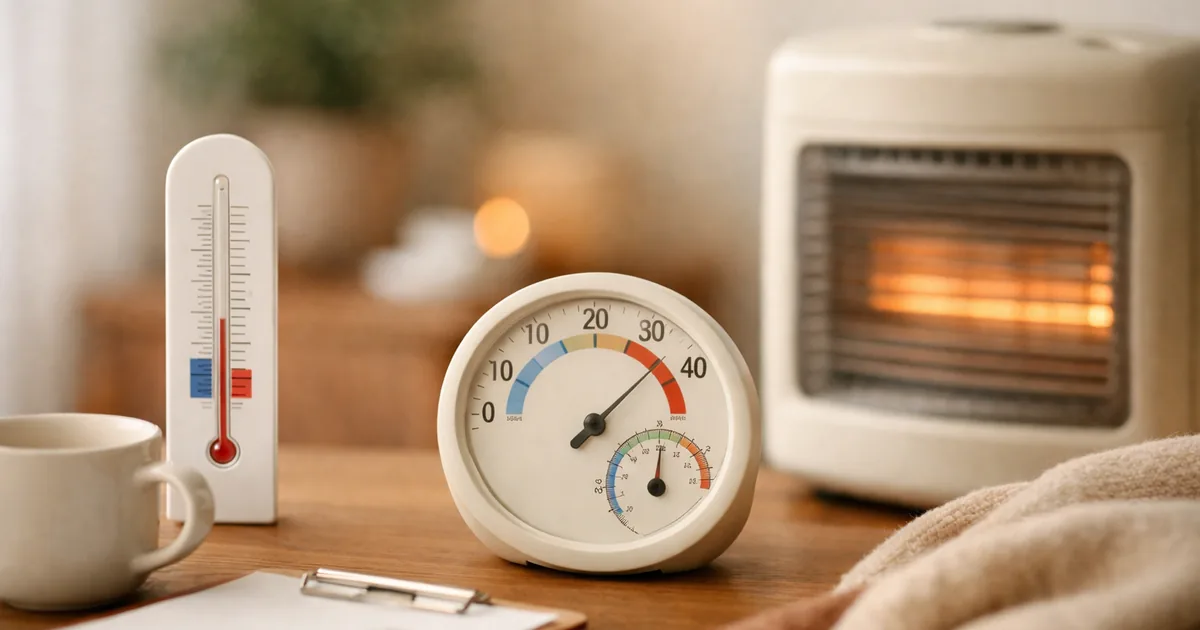
Winter Indoor Temperature of 18°C — the WHO's Floor for Health and Korean Public Buildings' Heating Cap
The WHO Housing and health guidelines propose 18°C as a safe and well-balanced indoor temperature in the cold season, adding that older people, children and people with chronic illness may need it warmer. Korea's public-institution energy rule caps heating at an average 18°C or below and cooling at 28°C or above, with exceptions such as hospitals, childcare and elderly care facilities.

How Much Salt a Day — WHO's Under 5g (2,000mg Sodium), a World Average of 11g, and Label Sodium × 2.5 as Salt
The WHO recommends adults have less than 5g of salt, or 2,000mg of sodium, a day, just under a teaspoon. The global adult average in 2021 was 4,278mg of sodium, or 11g of salt, and about 1.7 million deaths in 2023 were associated with too much sodium. Multiplying label sodium by 2.5 gives roughly the salt (our arithmetic).

Sitting Too Long, by WHO — No Hour Limit, Sit Less and Move More Than 150-300 Minutes a Week
WHO's 2020 guidelines define sedentary behaviour as any waking behaviour at 1.5 METs or lower while sitting, reclining or lying, and set no daily hour limit because evidence was insufficient. Instead, replace sitting with activity of any intensity, and if you sit a lot, do more than the 150-300 minutes a week recommended.
Exercise During Pregnancy, by WHO — 150 Minutes a Week, Strength and Stretching, No Lying Flat After the First Trimester, Heat or Fall Risks
WHO's 2020 guidelines recommend at least 150 minutes a week of moderate aerobic activity, plus muscle strengthening and gentle stretching, for pregnant and postpartum women, and say women already doing vigorous exercise can continue. Avoid heat, contact and fall risks, lying flat after the first trimester, and high altitude.

How Much Exercise Children Need, by WHO — 60 Minutes a Day at 5-17, Muscle and Bone 3 Times a Week, 180 Minutes at 1-4, Screens Under 1 Hour
WHO recommends 5- to 17-year-olds get at least 60 minutes of moderate-to-vigorous activity daily and muscle- and bone-strengthening activity at least 3 times a week. Children aged 1-4 should move at least 180 minutes a day, with 60 of those moderate to vigorous at 3-4, and no more than 1 hour of screens at 2-4. 81% of 11-17-year-olds fall short.
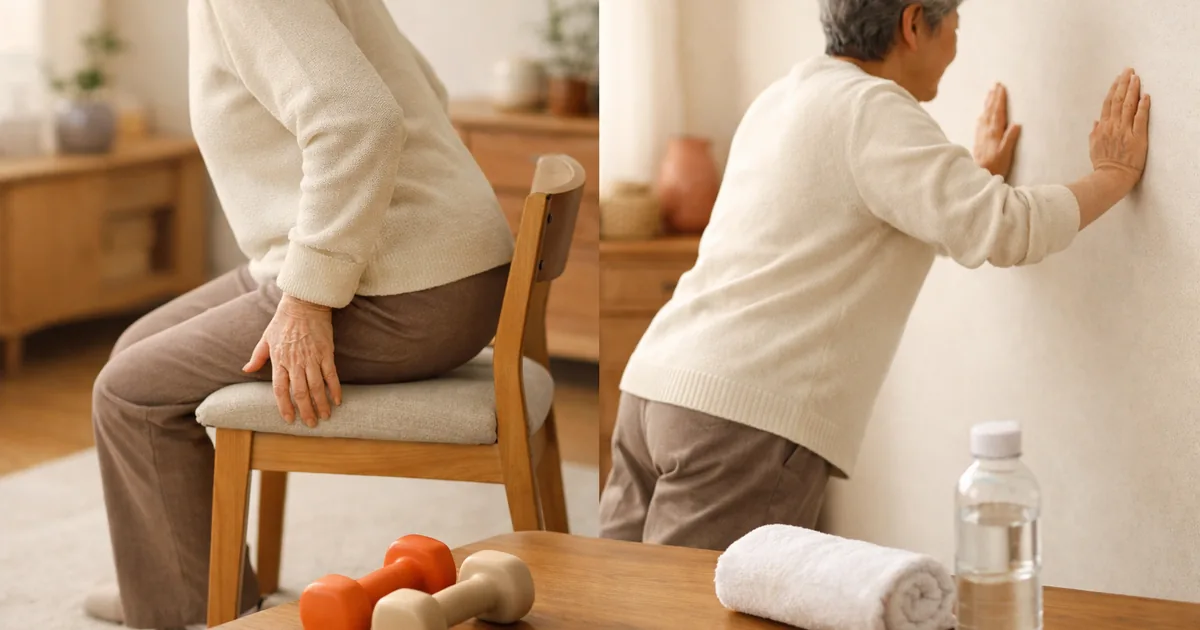
Strength Exercises for Older Adults — Twice a Week, 5 Sit-to-Stands, 3 Sets of 5-10 Wall Press-Ups
WHO recommends strength training on 2 or more days a week for people 65+, and the NHS sets out seven chair-and-wall moves at least twice a week. Sit-to-stands, mini-squats and calf raises are 5 each, leg extensions are held 5 seconds 5 times, and wall press-ups are 3 sets of 5-10.
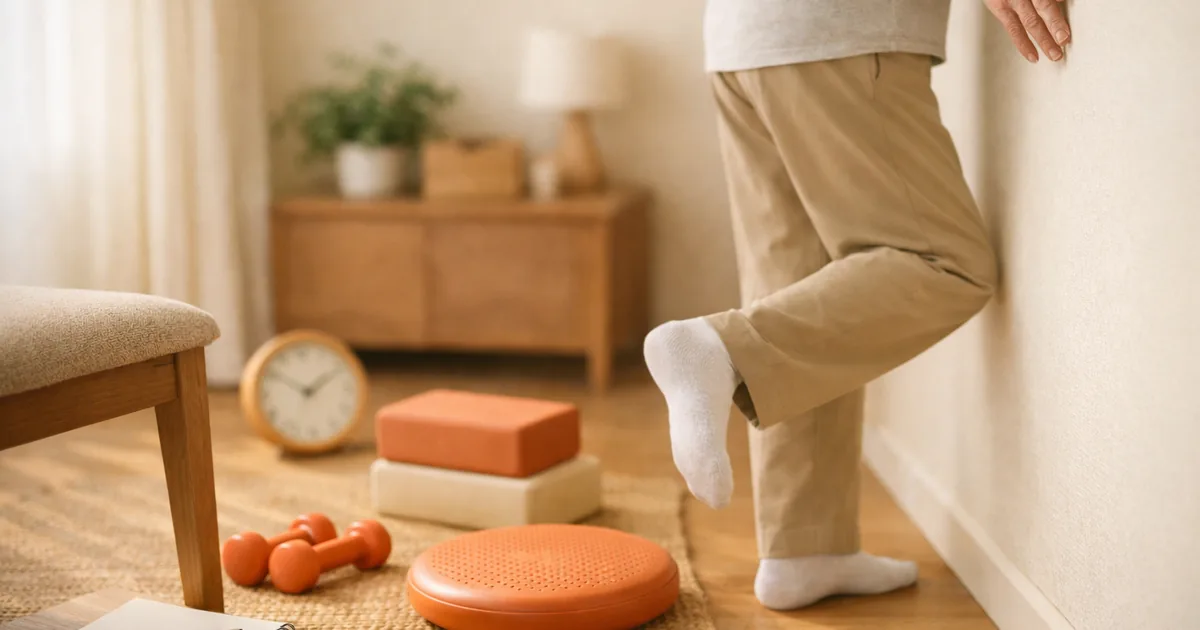
Balance Exercises for Older Adults — 3 Days a Week With Poor Mobility, One-Leg Stands of 5-10 Seconds, Five Moves by a Wall
WHO recommends balance activities on 3 or more days a week for people 65+, and the NHS sets out five moves by a wall or chair at least twice a week: sideways walking 10 steps, grapevine 5, heel-to-toe 5 steps, one-leg stand 5-10 seconds 3 times, and step-ups 5.
The Talk Test for Exercise Intensity (CDC) — Talk but Not Sing Is Moderate, Only a Few Words Is Vigorous
The CDC gauges exercise intensity by the talk test, METs (3 to 5.9 moderate, 6 or more vigorous) and perceived exertion (5-6 moderate and 7-8 vigorous on a 0-10 scale). WHO recommends 150 moderate or 75 vigorous minutes a week, and by the ratio of those numbers 1 vigorous minute counts as 2 moderate minutes.