Winter changes the accidents that happen at home: heater fires, power cuts and carbon monoxide, frozen pipes, and what the cold does to the body. We have set out winter safety guidance from the US Centers for Disease Control and Prevention (CDC), the US Fire Administration (USFA), the Consumer Product Safety Commission (CPSC), the UK National Health Service (NHS), the World Health Organization (WHO) and Korean law, one page at a time — 33 guides. This page lines all 33 up in one table, with the rule each guide puts in its title.
1. Keep the home at 18°C or above. 18°C is the WHO's indoor temperature for health. The CDC says not to put a baby under 1 to sleep in a cold room.
2. Distance keeps fire and carbon monoxide away. Space heaters 3 feet from anything that burns (USFA); generators 20 feet from the house (CPSC). Test smoke alarms monthly.
3. Below 35C is an emergency. The NHS treats a body temperature below 35C as an emergency.
999 and 911 are the UK and US emergency numbers; in Korea it is 119 (our note). How long common illnesses last and when to get help is in Common illnesses.
1. Keeping the home warm in a cold snap (7 guides)
Keeping the home safe in a cold snap: temperature, water and humidity, mostly in numbers.
| Topic | What the guide says | Source |
|---|---|---|
| Indoors in a winter storm | No baby under 1 in a cold room, never heat with the stove, boil water 1 minute | CDC |
| Indoor temperature 18°C | The WHO's floor for health and Korean public buildings' heating cap | WHO, Korean rule |
| Winter storm preparation | Test CO detectors monthly, batteries twice a year, a 17-item car emergency kit | CDC |
| Snow and ice | Cold strains the heart, work slowly, stranded cars run about 10 minutes an hour | CDC |
| Frozen pipes | Drip the cold tap, open sink cabinets, no open flames | American Red Cross |
| Condensation and mould | Humidity 30 to 50%, dry condensation straight away | EPA |
| Humidifier care | Empty and dry daily, clean every third day, humidity up to 50% | EPA |
2. Heaters and fire (10 guides)
Winter brings heater fires. Distance, switching off at bedtime and testing alarms come up again and again.
| Topic | What the guide says | Source |
|---|---|---|
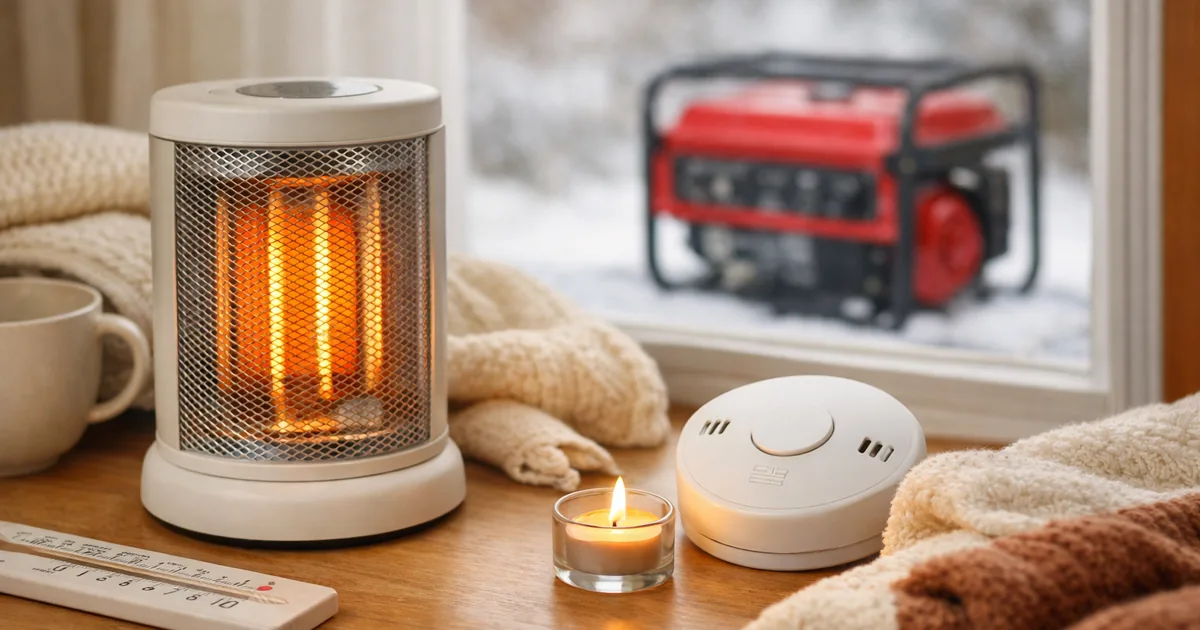
| Space heaters | 3 feet away, no power strips, off at bedtime | USFA |
| Electric blankets | No hot water bottle, a check every three years | UK Fire Service |
| Fireplaces and wood stoves | 3 feet clear, ashes in a lidded metal can 10 feet out, chimney checked every year | USFA |
| Electrical fires | Outlets, extension cords and power strips; 1 heat-producing appliance per wall outlet, deaths peak in December and January | USFA |
| Candles | 12 inches from anything that burns, no candles in bedrooms, flashlights in a power outage | USFA |
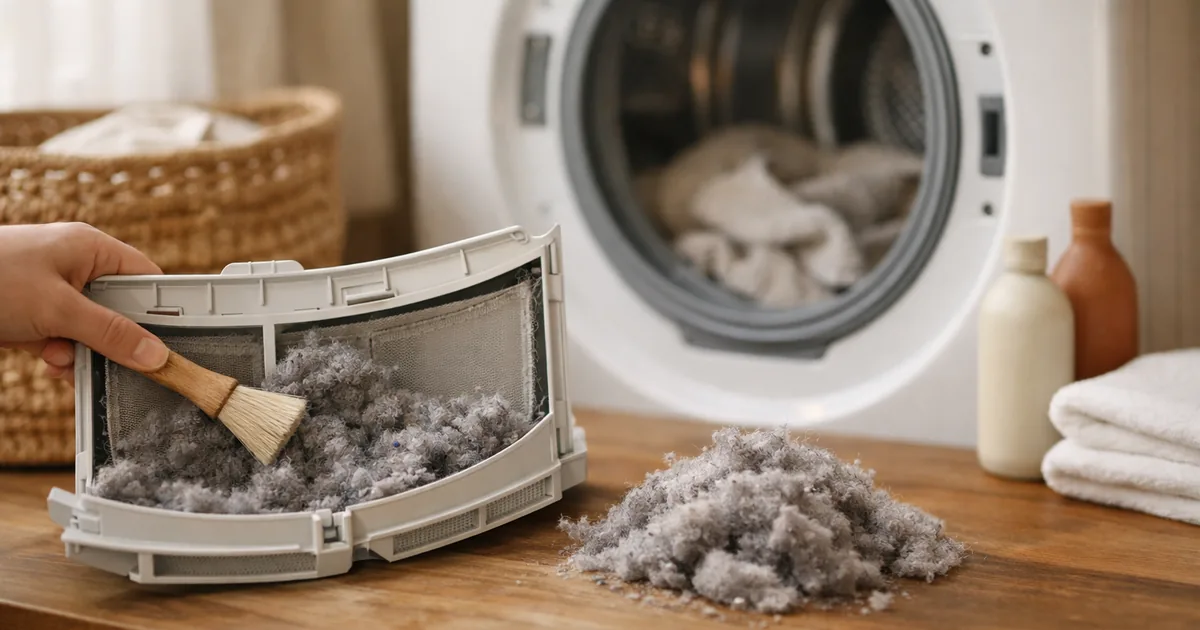
| Clothes dryers | Clean the lint filter before and after each load; failure to clean led home dryer fires at 31% | USFA, CPSC |
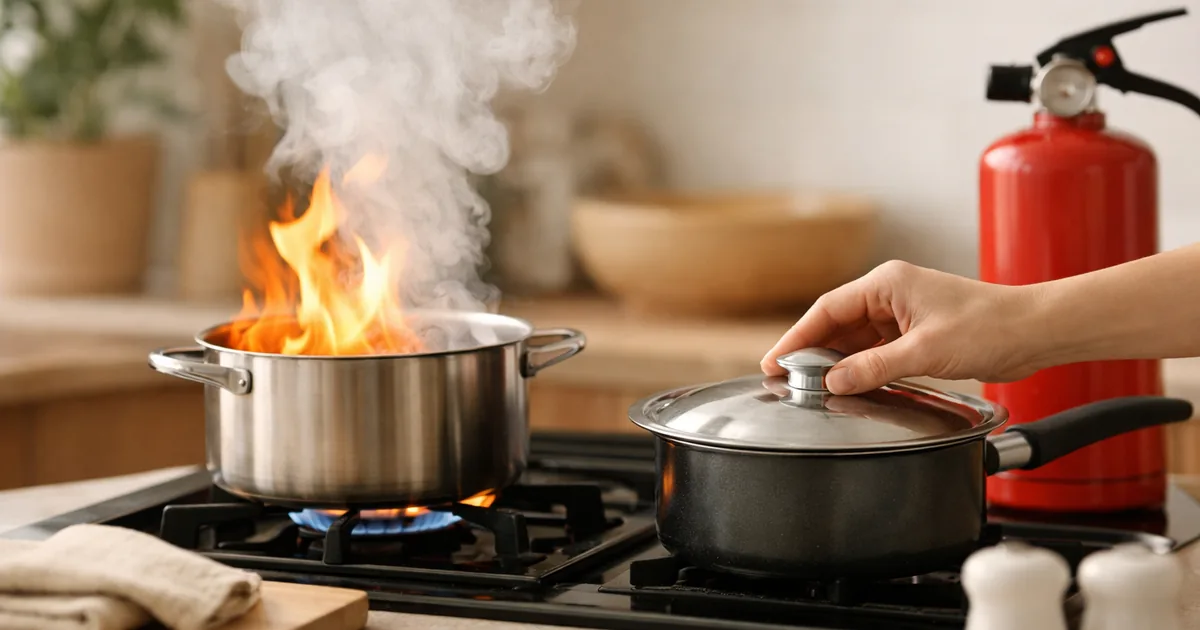
| Cooking fires | Stay by the pan, turn off at smoke, smother small fires with a lid | USFA |
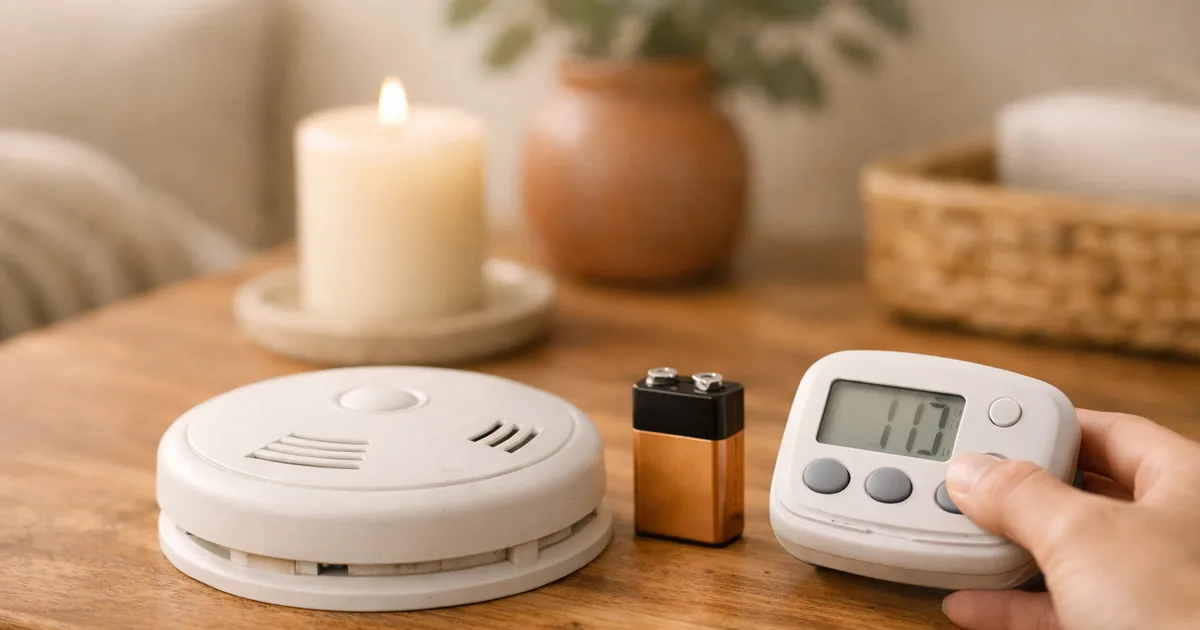
| Smoke alarms | Test monthly, batteries yearly, replace after 10 years | USFA |
| Fire escape plan | 2 ways out of every room, less than 2 minutes after the smoke alarm, 7 steps and high-rise escape | USFA |
| Fire extinguishers | Apartments are out, used cars are in | Fire Facilities Act |
3. Carbon monoxide and power cuts (5 guides)
Carbon monoxide has no smell or colour. Generators and makeshift heating in a power cut are where it happens.
| Topic | What the guide says | Source |
|---|---|---|
| Carbon monoxide poisoning | No smell or colour; headaches worse at home; switch off and get outside | NHS |
| CO alarms in Korea | “Carbon Monoxide Alarms Are Mandatory”? The Notice Says “May Install” | NFA notice |
| Generators | 20 feet from the house, never in a garage, about 100 deaths a year | CPSC |
| Health in a power cut | Refrigerated medicine after 1 day, generators 20 feet from windows, hypothermia below 95°F | CDC |
| Food in a power cut | Fridge 4 hours, full freezer 48 hours, don't taste-test | CDC |
4. Cold and your body (8 guides)
What cold does to the body: the emergency line (35C) and the things to do ahead, such as vaccination.
| Topic | What the guide says | Source |
|---|---|---|
| Hypothermia | Below 35C is an emergency; remove wet clothes, wrap the head, no hot bath or rubbing | NHS |
| Frostbite | At 0C or below, fingers, toes, nose and ears; warm, not hot, water and no rubbing | NHS |
| Chilblains | Dry and warm slowly, no radiators or hot water, usually 2 to 3 weeks | NHS |
| Raynaud's | Fingers turn white, blue, then red in the cold; keep warm, cut caffeine; GP if it starts after 30 | NHS |
| Cold-related illness in Korea | 364 Cold-Related Illnesses in Korea Last Winter — Deaths Rose 1.75 Times, and Over-80s Were More Than Half | KDCA |
| Flu vaccination | Who pays nothing, and what “by the end of October” means | KDCA, CDC |
| Vitamin D | 10 micrograms (400 IU) a day, adult upper limit 100 micrograms (4,000 IU) | NHS |
| Seasonal affective disorder | Comes in winter, goes in summer; daylight every day; 10,000 lux light therapy | NHS |
5. Winter driving and the holidays (3 guides)
Winter driving, and holiday decorations and gifts.
| Topic | What the guide says | Source |
|---|---|---|
| Winter car prep | Battery, coolant, tyre pressure; keep the exhaust clear if stranded | NHTSA |
| Holiday decorating | About 160 injuries a day, nearly half falls, three sets of incandescent lights max | CPSC |
| Toy gifts | No small parts under 3, no balloons under 8, helmets with scooters (CPSC: 154,700 in 2023) | CPSC |
Checklist — before the first cold snap
- ☐ Press the test button on every smoke alarm, and on a CO alarm if you have one
- ☐ Clear 3 feet around space heaters; no power strips
- ☐ Find pipes on outside walls; let the cold tap drip when a freeze is forecast
- ☐ Torch and power bank for a power cut; keep the fridge door shut
- ☐ With someone 65 or over or a baby at home, keep rooms at 18°C or above
Questions that remain
Why so many foreign agencies?
The USFA, CDC, CPSC and NHS publish winter safety advice for the public and give distances, times and frequencies in numbers. Where Korean law sets its own rule (fire extinguishers, CO alarms, heating in public buildings) we used the Korean text.
Feet and Fahrenheit?
Where the original uses feet or Fahrenheit, each guide gives metres or Celsius alongside. The cells here keep each guide's title as written.
Sources
- Our 33 guides linked above — each cites the page it sets out, with the date checked and the wording quoted. The cells on this page are taken from each guide's title.
- What we added. The five groups, their order and the checklist.
Written on 29 October 2026. The rules are taken from the linked guides; the grouping is ours. This is general information; in an emergency in Korea call 119 first.