As the days get shorter, some people find their mood drops, they sleep more and crave sweet food. The NHS calls this seasonal affective disorder (SAD), a type of depression that usually happens in the winter. Symptoms usually appear in winter and go away in the summer, and a diagnosis is usually considered if depression symptoms come at a particular time of year for 2 years or longer. The exact cause isn’t known, but it’s thought to be linked to reduced daylight in winter. The NHS suggests going outside in daytime every day, regular exercise and consistent sleep and wake times, and lists light therapy, talking therapies such as CBT, and antidepressants as treatments. This sets out the NHS page “Seasonal affective disorder (SAD)”.
1. A type of depression that usually happens in winter — it usually goes away in summer.
2. Get outside in daylight every day, exercise regularly, keep sleep and wake times steady. Avoid heavy drinking and screens just before bed.
3. Think you have SAD, or treatment isn’t helping: see a GP. Thoughts of suicide or self-harm: get help straight away.
Symptoms — NHS
- Low mood; losing interest in things you usually enjoy
- Feeling guilty, hopeless or worthless
- Feeling restless or irritable
- Difficulty concentrating
- Eating more and feeling hungrier than usual
- Sleeping and feeling tired more than usual
- Thoughts of suicide or self-harm
The NHS says symptoms usually appear in winter and go away in summer; some people have symptoms in summer instead, but this is less common. Some also have a stretch of unusually high energy at the start of spring or summer.
Sleep problems are covered in insomnia and how much sleep.
Why it happens — NHS
The exact cause isn’t known. It’s thought to be linked to reduced daylight in winter, which may change brain chemicals that affect mood and sleep — melatonin and serotonin — and the body clock (circadian rhythm).
Vitamin D, often mentioned alongside winter daylight, has its own NHS advice in vitamin D. The SAD page doesn’t list vitamin D as a treatment.
Self-care and treatment — NHS
| Type | What the NHS says | Worth noting (our gloss) |
|---|---|---|
| Lifestyle | Get as much natural daylight as you can; go outside in daytime every day | Matches the cause (less daylight) |
| Lifestyle | Exercise regularly; stay in touch with friends and family; keep up usual activities | Links to our exercise posts |
| Lifestyle | Consistent sleep and wake times; avoid heavy alcohol or illegal drugs and screens right before bed | — |
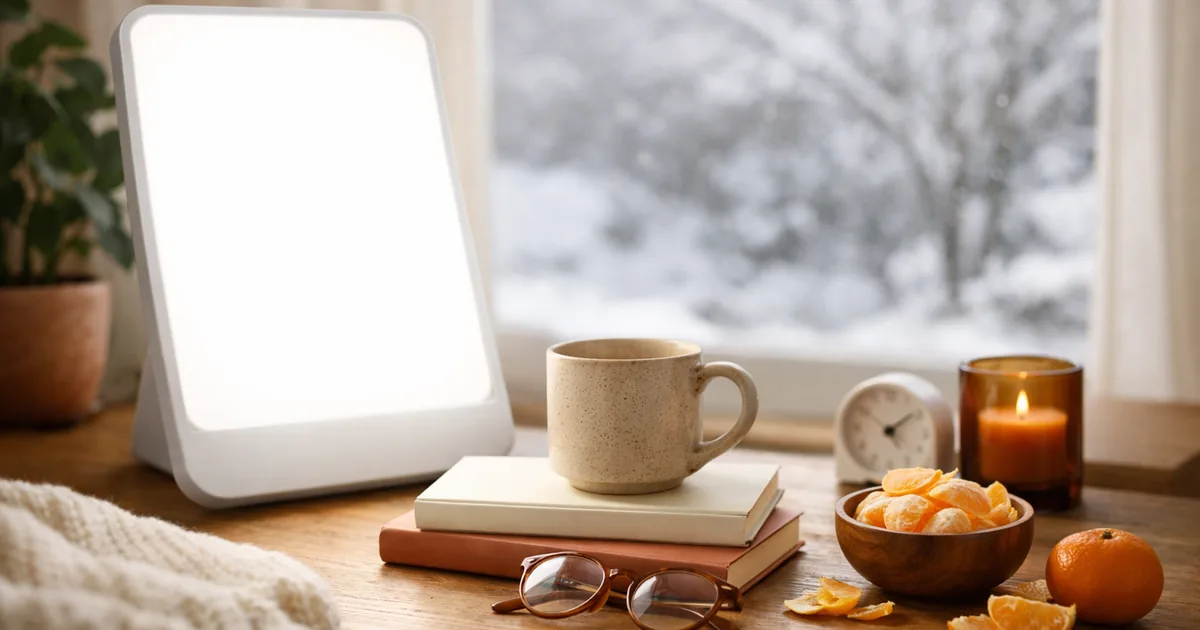
| Light therapy | A bright light box (SAD lamp); 10,000 lux is standard; UV-free | Not usually available on the NHS; talk to a GP first |
| Talking therapy | Talking therapies such as cognitive behavioural therapy (CBT) | — |
| Medicine | Antidepressants | — |
Light boxes may not suit some eye conditions or medicines, so the NHS says to speak to a GP first. How much exercise to aim for is in benefits of exercise.
When to get help — NHS
- You think you might have SAD — see a GP
- You’ve been diagnosed and treatment isn’t helping — see a GP
- In England, adults 18 and over (16 and over in some areas) can refer themselves to NHS talking therapies without a GP
- Support is available if you or someone you know is having a mental health crisis or emergency
In Korea, if you are having thoughts of suicide or self-harm, the suicide prevention line 109 offers 24-hour counselling. This line is our addition for Korean readers, not from the NHS page.
Checklist
- ☐ Low mood with more sleep and appetite every winter?
- ☐ Get outside in daylight every day
- ☐ Regular exercise; steady sleep and wake times
- ☐ Cut down on heavy drinking and screens before bed
- ☐ Worried: see a GP. In crisis: get help straight away
Questions that remain
How is it different from just disliking winter?
The NHS says SAD is usually considered when depression symptoms come at a particular time of year for 2 years or longer. Diagnosis is for a professional.
Can I buy and use a SAD lamp?
The NHS says 10,000 lux is standard and the lamp should be UV-free, but to talk to a GP first.
Sources
- NHS — Seasonal affective disorder (SAD) — source (page shows: reviewed 17 December 2025, next review 17 December 2028; checked 14 October 2026). Definition, symptoms, 2 years, causes, lifestyle, 10,000 lux, CBT, antidepressants, GP, self-referral (18, or 16 in some areas).
- Not read. Korean agency guidance on seasonal depression.
- What we added. The “worth noting” column and the Korean suicide prevention line.
Where else to check
- Your GP or a mental health clinic — if low mood returns every winter.
Written on 14 October 2026. The content is from the NHS; the glosses are ours. It does not replace diagnosis or treatment.