A winter power cut stops more than the lights: heating, medicines in the fridge and water purifiers stop too. The US Centers for Disease Control and Prevention (CDC) power outage page sorts the health risks into five groups: carbon monoxide, food, water and medicines, heat and cold, electricity and light, and gasoline siphoning. Never run a generator or gasoline engine inside a home, basement or garage, or within 20 feet of any window, door or vent; throw away medicines that need refrigeration once the power has been out for 1 day or more, unless the label says otherwise; and if you suspect hypothermia, take the temperature and get medical help at once if it is below 95°F (35°C). This sets out the CDC page item by item.
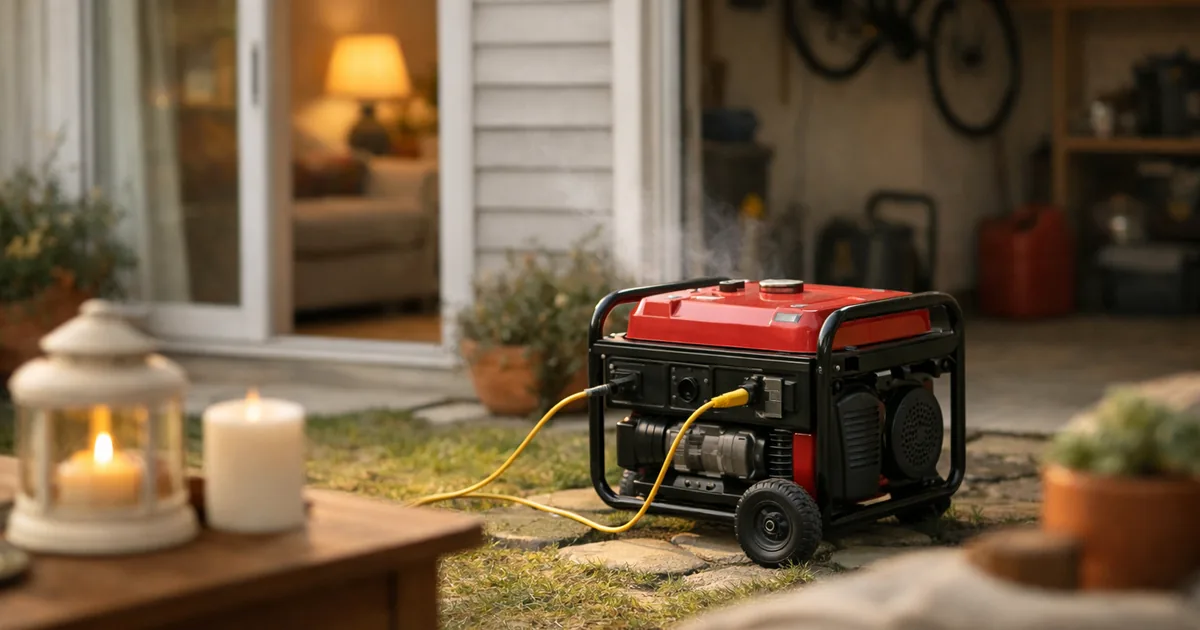
1. Generators and gasoline engines: never inside or in a garage, and 20 feet (about 6.1 m) from windows, doors and vents.
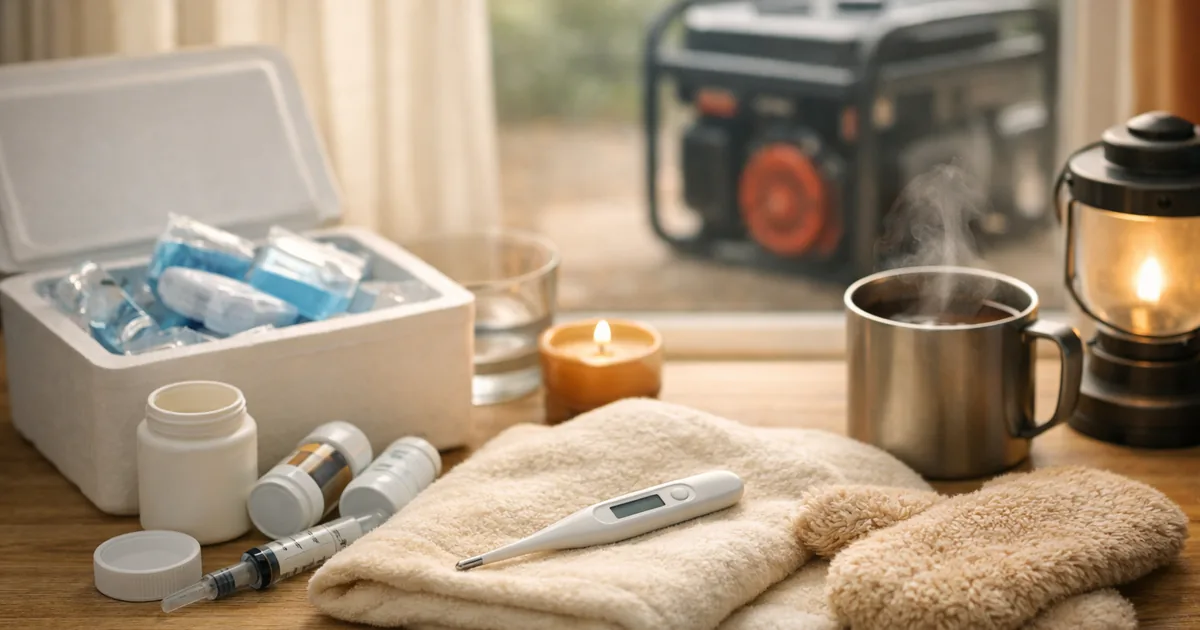
2. Refrigerated medicines: throw out after 1 day or more without power and replace — unless the label says otherwise, or a life depends on it.
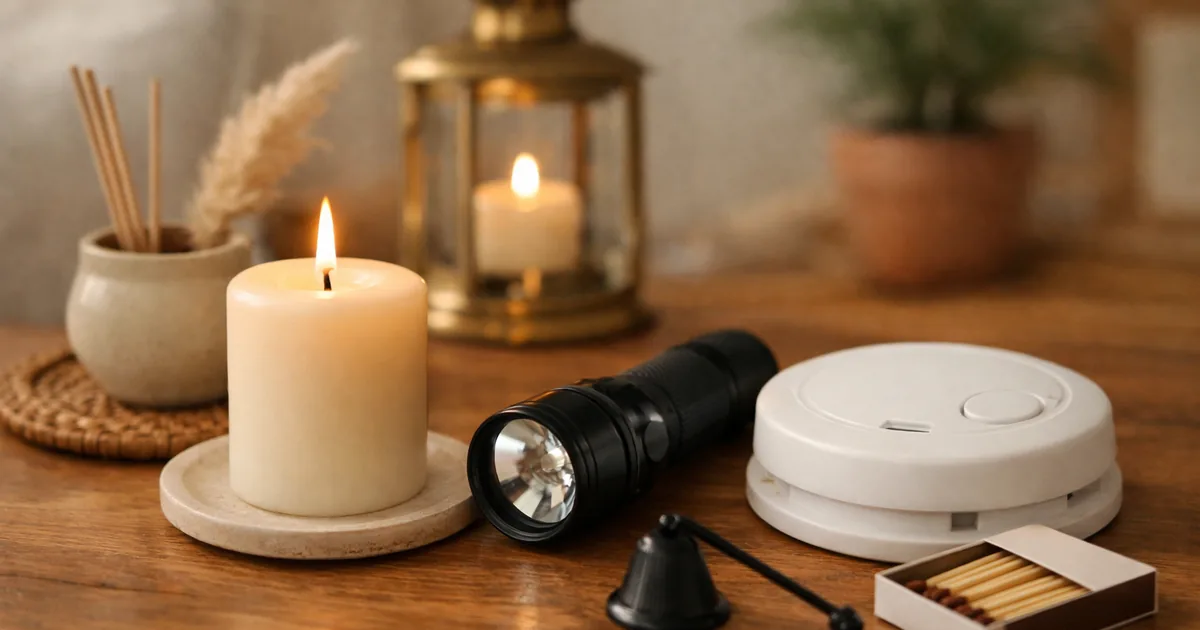
3. Suspected hypothermia: check the temperature; below 95°F (35°C), get help now. Flashlights, not candles.
Carbon monoxide — CDC
| Type | What the source says | Worth noting (ours) |
|---|---|---|
| What it is | An odourless, colourless gas that can cause sudden illness or death; alternative fuel or power for heating, cooling or cooking can build it up indoors, in garages or campers | — |
| Generators, engines | Never run a generator, pressure washer or other gasoline engine inside a home, basement or garage, or within 20 feet of any window, door or vent | 20 ft ≈ 6.1 m (ours) |
| Keeping distance | Use an extension cord longer than 20 feet | — |
| Alarm | A battery-powered or battery-backup CO detector when using a generator | Mains-only alarms may stop in an outage (our note) |
| Enclosed spaces | No gasoline engines in enclosed spaces even with doors or windows open, unless professionally installed and vented | — |
| Charcoal, camping gear | No charcoal grill, hibachi, lantern or portable camping stove inside a home, tent or camper | — |
| Cars | Never leave a vehicle running in an enclosed or partly enclosed space such as a garage | — |
| Gas range, oven | Never use them to heat your home | The USFA heating page also rules out oven heating |
| Symptoms | Headache, dizziness, weakness, nausea, vomiting, chest pain, confusion. People asleep or who have been drinking can die before symptoms | If suspected, call emergency services and get care at once (119 in Korea) |
Generator rules from the CPSC are in generator safety in a power cut; symptoms and what to do in carbon monoxide poisoning symptoms.
Food, water, medicines — CDC
| Type | What the source says | Worth noting (ours) |
|---|---|---|
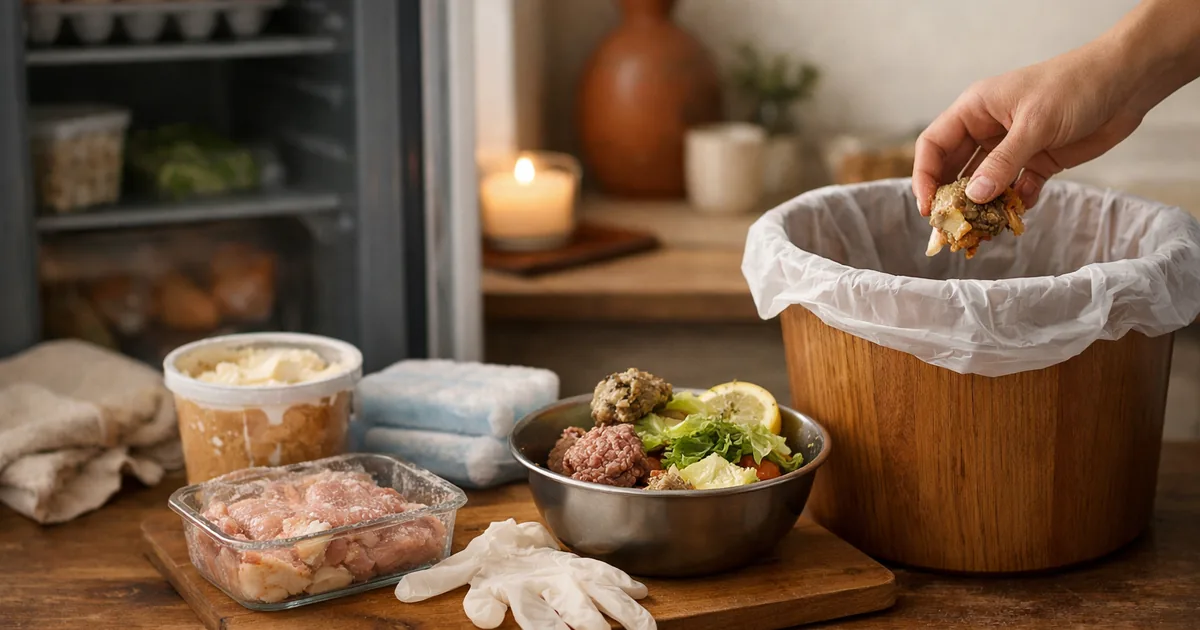
| Fridge, freezer | Keep doors closed. With doors shut, a full freezer 48 hours, a half-full freezer 24 hours, a fridge up to 4 hours | What to throw or refreeze is in the power outage food page |
| What to throw | After 4 hours or more, perishable fridge food (meat, poultry, fish, eggs, leftovers); thawed perishable freezer food too | Food with ice crystals that feels fridge-cold can be refrozen or cooked |
| Water | Purifiers may not work fully. For drinking, cooking and hygiene: bottled, boiled or treated water | Local health departments advise on boiling or treating |
| Refrigerated medicines | If the power is out 1 day or more, throw away medicines that need refrigeration — unless the label says otherwise | E.g. injections or syrups marked for refrigeration — check the label (our example) |
| Life-sustaining | If a life depends on it, use it after room temperature only until a new supply is available | Don’t stop it; get new supply fast (our reading) |
| Replace | Replace all refrigerated medicines as soon as possible | — |
Cold and heat — CDC
| Type | What the source says | Worth noting (ours) |
|---|---|---|
| Hypothermia | Dangerously low body temperature, a medical emergency. If suspected, check the temperature; below 95°F, get medical help immediately; if help is delayed, warm the person | 95°F = 35°C (ours). Symptoms in the hypothermia page |
| One heat source | Have at least one during an outage: extra blankets, sleeping bags, winter coats; a code-compliant fireplace with dry firewood or a gas log fireplace; portable space or kerosene heaters (check local fire rules) | In a Korean flat, blankets, sleeping bags and coats are the realistic ones (our note) |
| Using heaters | Wood stoves, fireplaces and space heaters with extreme care, following the maker | Fireplace rules are in the fireplace and wood stove page |
| Too cold or hot | Go to friends or a community shelter | — |
| Heat | Heat stroke can push body temperature to 106°F or higher within 10 to 15 minutes; without emergency care, death or permanent disability. Don’t rely only on fans | 106°F ≈ 41.1°C (ours). Summer outages |
Electricity, light, gasoline — CDC
| Type | What the source says | Worth noting (ours) |
|---|---|---|
| Fallen power lines | Never touch them; don’t drive through standing water that may hide one | — |
| Possible shock | Call emergency help, or have someone else do it | 119 in Korea |
| Light | Battery flashlights and lanterns instead of candles, gas lanterns or torches | If you must use candles, see the candle page |
| If using candles | Away from flammables, never left unattended | — |
| Extinguisher | Keep one handy and make sure everyone knows how to use it | Choosing one is in the extinguisher page |
| Siphoning gasoline | Don’t, by mouth or pump, even when fuel is short — ignited fumes burn; confusion, drowsiness, headache; skin and eye irritation. By mouth it can damage lungs; swallowed, nausea, vomiting, stomach pain | See a doctor if unwell |
A Korean winter power cut — our note
Three parts of the CDC page fit a winter outage in a Korean apartment directly. First, no camping stoves or charcoal indoors — the obvious idea when heating fails, but the CDC rules out homes, tents and campers alike. Second, refrigerated medicines — remember the 1-day line together with its two exceptions: “unless the label says otherwise” and life-sustaining medicines until a new supply arrives. Third, flashlights for light — candles are the last resort because of fire. In a long outage, heat sources that need no fuel, like blankets, sleeping bags and coats, come first (our note). Hypothermia symptoms are in hypothermia, from the NHS.
Checklist
- ☐ Generators and engines never indoors or in garages; 20 feet from windows, doors and vents
- ☐ Battery CO alarm
- ☐ No charcoal, camping stoves or gas ranges for heat
- ☐ Refrigerated medicine: out 1 day or more, check the label, throw out and replace
- ☐ At least one heat source: blankets, sleeping bags, coats
- ☐ Temperature below 95°F (35°C): get help now
- ☐ Flashlights, lanterns and an extinguisher
Questions that remain
Does every refrigerated medicine go after one day?
The CDC adds “unless the label says otherwise” and says life-sustaining medicines can be used until a new supply is available. Checking with a pharmacist is the safe course (our note).
Where is the 95°F measured?
The CDC page doesn’t say. We set out only its line: below 95°F, get medical help immediately.
Sources
- CDC — What to Do to Protect Yourself During a Power Outage — source (first published 15 May 2024, reviewed 26 August 2026; checked 22 October 2026). Carbon monoxide (20 feet, extension cord, alarms, charcoal and camping gear, cars, ovens, symptoms), food (48, 24, 4 hours), water, refrigerated medicine after 1 day, hypothermia below 95°F, heat sources, heat stroke 106°F in 10–15 minutes, power lines, light, extinguisher, siphoning.
- Not read. The FoodSafety.gov food chart; Korean outage guidance.
- What we added. The “worth noting” column and the Korean everyday gloss.
Where to check further
- The medicine label and a pharmacist — refrigerated medicine left at room temperature.
- KEPCO or your building management office — outage restoration.
Written on 22 October 2026. The content is from the source; the glosses are ours.