After sitting all day, by afternoon your legs feel heavy, sock marks dig deep, and swollen ankles make your shoes feel tight. The calf is called the “second heart” because it pumps blood back up — and when you sit still, that pump stops and blood and fluid pool in the legs.
The fix is simple: move your calves often to restart the pump. One thing worth knowing first, though. The CDC lists slow blood flow caused by limited movement as a risk factor for deep vein thrombosis (DVT), and advises moving around every 1 to 2 hours on trips longer than four hours. The five moves below are one way to follow that advice without leaving your chair.
1. What changes. The calf is called the “second heart” because it pumps blood back up — sit still and that pump stops, so blood and fluid pool in the legs. The fix is moving the calves often enough to restart it.
2. What is the risk. Swelling needs completely different handling depending on the cause. One leg only, or swelling with pain, heat or redness, may not be simple oedema — see a clinician.
3. How to start. The CDC lists slow blood flow from limited movement as a DVT risk factor and advises moving every 1 to 2 hours on trips over four hours — the point is not the rep count but building the interval that breaks up sitting.
Keep it gentle. If only one leg swells, or there's pain, warmth or redness, it may be more than simple swelling — get it checked.
Is this the kind exercise fixes?
We cannot set our own line between swelling that movement handles and swelling that needs a clinician first. The NHS oedema page sorts it like this.
- At home — raise your legs on a chair or pillows and get gentle exercise such as walking to help blood flow; do not stand or sit for long periods, and avoid clothes, socks or shoes that are too tight.
- GP — swelling in both legs that has not improved after a few days of home care
- Urgent (GP or NHS 111 in the UK) — swelling in one ankle, foot or leg and you do not know why, or the area is red or hot to the touch
- 999 — short of breath or struggling to breathe, or a chest that feels tight, heavy or painful
The US CDC also lists swelling, pain, warmth and redness in one leg as signs of deep vein thrombosis. The five moves here are our example for the first line — everyday swelling from sitting too long. This post first gave five self-checks and a verdict table (“a dent that stays over a minute”, “more than two weeks”) without a source; on 15 October 2026 we replaced them with the NHS levels.

How to use the four weeks
Swollen legs aren't solved by one 30-minute session; they're solved by how often you break up the sitting. The table below raises frequency before intensity.
| Week | Times per day | Each time | New this week | Goal for the week |
|---|---|---|---|---|
| Week 1 | 3× | ① ② (1 min each) | Seated moves only | No two-hour block of unbroken sitting |
| Week 2 | 4× | ① ② + ④ × 15 | ④ calf raises | Stand up once every hour |
| Week 3 | 4× plus evening | ① ② ④ + ③ 20 sec each side | ③ wall calf stretch | A full 3 minutes of ⑤ in the evening |
| Week 4 | 5× plus evening | ① ② ④ + ③ ⑤ | Single-leg calf raises | Smaller ankle circumference at day's end |
None of this counts as your weekly exercise, though. The WHO recommends adults get 150 minutes of moderate aerobic activity a week (or 75 minutes vigorous) plus muscle-strengthening on 2 or more days — and 31% of adults worldwide fall short of that. If you'd rather cover it at home, schedule something like quiet home cardio separately.

The five moves — what each one does
| Move | Main target | Where / load | Reps or time | If it's too much |
|---|---|---|---|---|
| ① Ankle pumps | Calf muscle pump | Seated / no load | 15–20 each foot | Keep the foot on the floor, lift only the toes |
| ② Ankle circles | Ankle joint | Seated / no load | 10 each direction | Smaller circles, slower |
| ③ Wall calf stretch | Back of calf (gastrocnemius) | Standing / low ankle load | 20 sec each side × 2 | Shorten the stance until the heel stays down |
| ④ Calf raises | Whole calf | Standing / some calf load | 15–20 × 2 sets | Fingertips on a wall or desk |
| ⑤ Legs up the wall | Whole-leg circulation | Lying / no load | 3–5 min | Slide the hips a hand's width off the wall |
① Ankle pumps — a second heart, done sitting down
Extend one leg while seated and pull the toes toward you, then point them away, repeatedly. The calf contracts and releases, squeezing the veins upward like a pump. It's the only move here you can do without anyone noticing, which is why how often you do it decides how well the whole routine works.
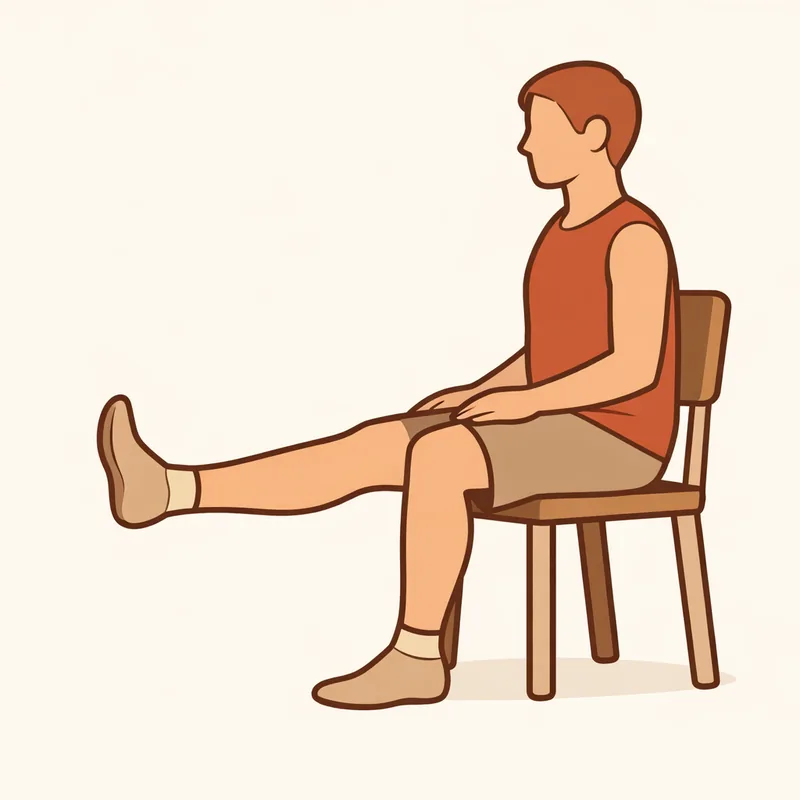
Common mistake: flicking the foot quickly through a small range. Go all the way to each end so the muscle fully contracts. Easier version: if extending the leg is awkward, keep the foot on the floor and lift just the forefoot.
② Ankle circles — loosen the joint before you pump it
Lift the foot slightly and draw circles with the ankle, slowly. A stiff ankle limits how far ① can travel, so this belongs right before or after it. Bigger circles are better.
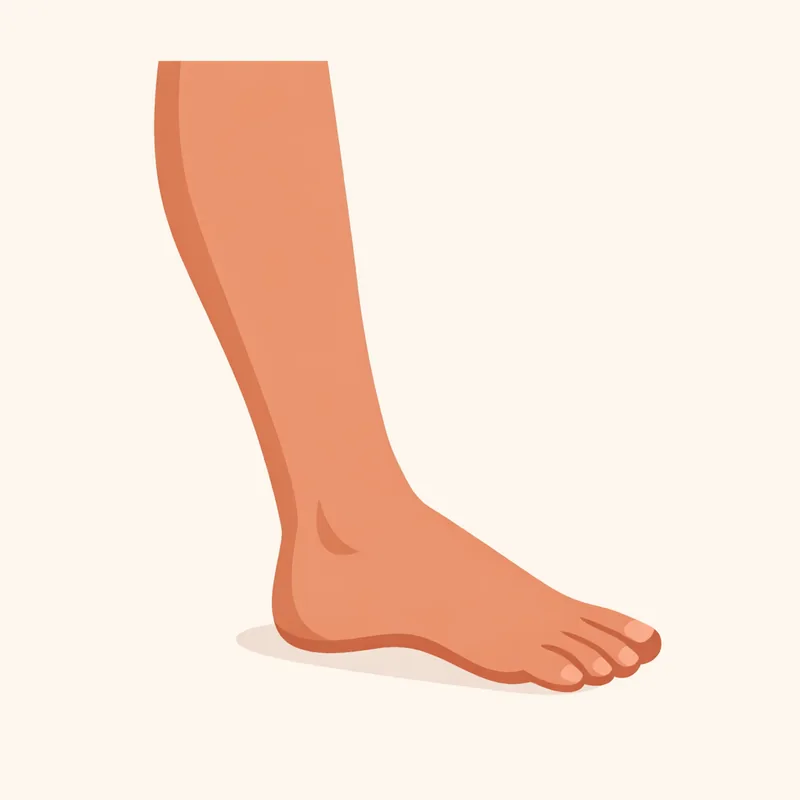
Common mistake: rotating from the knee as well. Keep the knee still and move only the ankle. Easier version: if the calf cramps, shrink the circle and slow down.
③ Standing calf stretch — giving back the length you lost
Hands on a wall, step one leg back with the heel down and knee straight, and lean forward slightly. A day in heeled shoes or a chair leaves the calf short and tight, and a short calf gives the pump less range to work with.
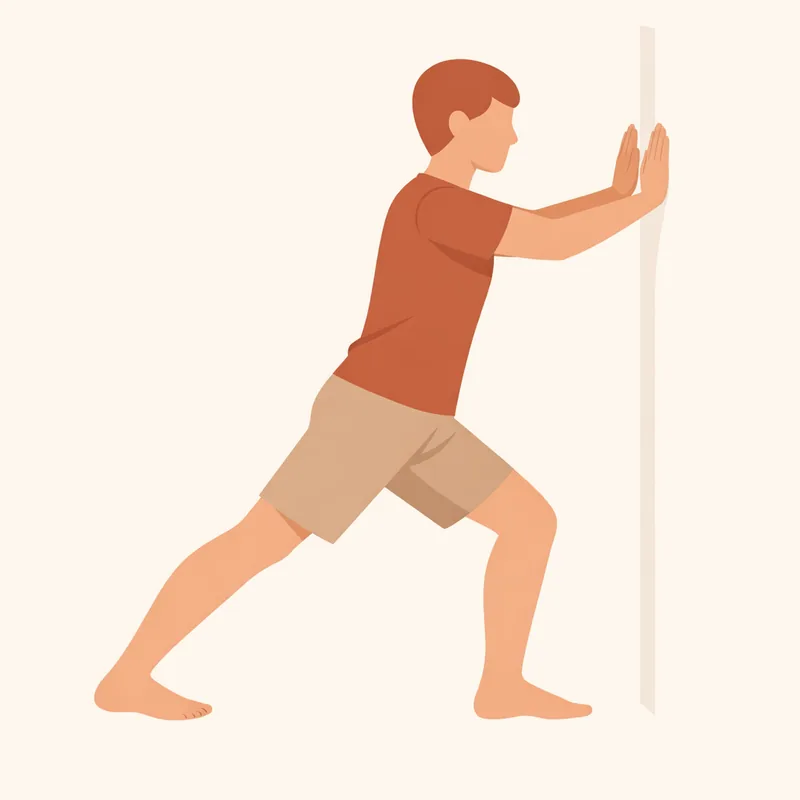
Common mistake: leaning forward while the heel lifts. The moment the heel leaves the floor, the stretch is gone. Easier version: shorten the stance until the heel stays down. If the knees are also bothering you, look at knee strengthening first.
④ Calf raises — the strongest pump of the five
Stand tall and slowly rise onto the balls of your feet, then lower, repeatedly. This drives the calf pump harder than anything else here, pushing pooled blood upward. You can do it in a meeting or on a train without drawing attention. The trick is lowering slowly.
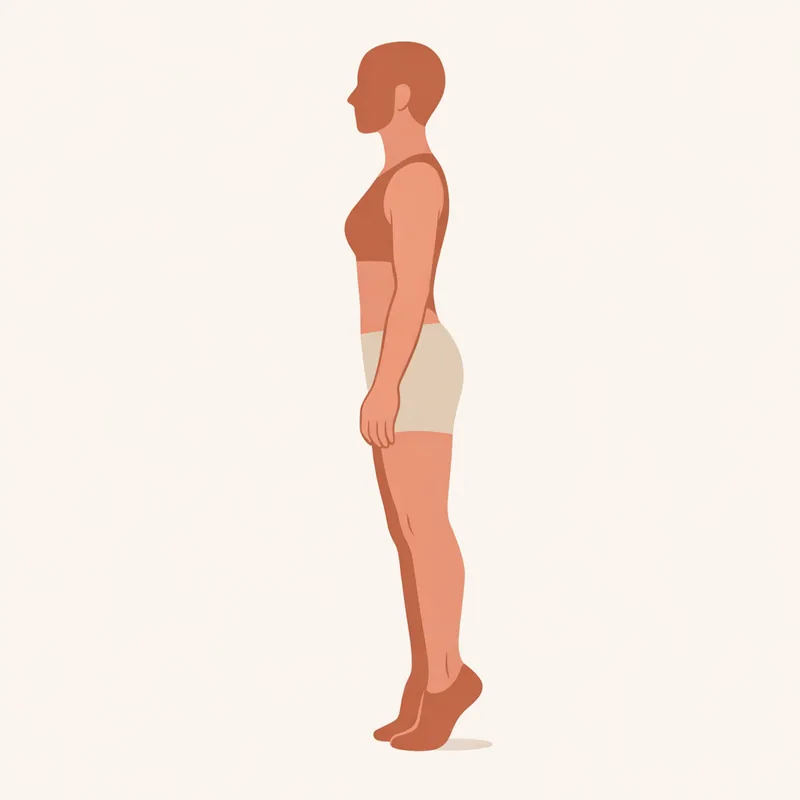
Common mistake: bouncing through the reps. One second up, two seconds down. Easier version: rest your fingertips on a wall or desk if your balance wavers. To work the legs more completely, move on to a lower-body routine.
⑤ Legs up the wall — five minutes of using gravity backwards
Lie down and rest your legs straight up a wall for a few minutes. Where the first four moves squeeze fluid upward with muscle, this one hands the job to gravity. It's the natural end to the day, and it plugs straight into a bedtime routine.
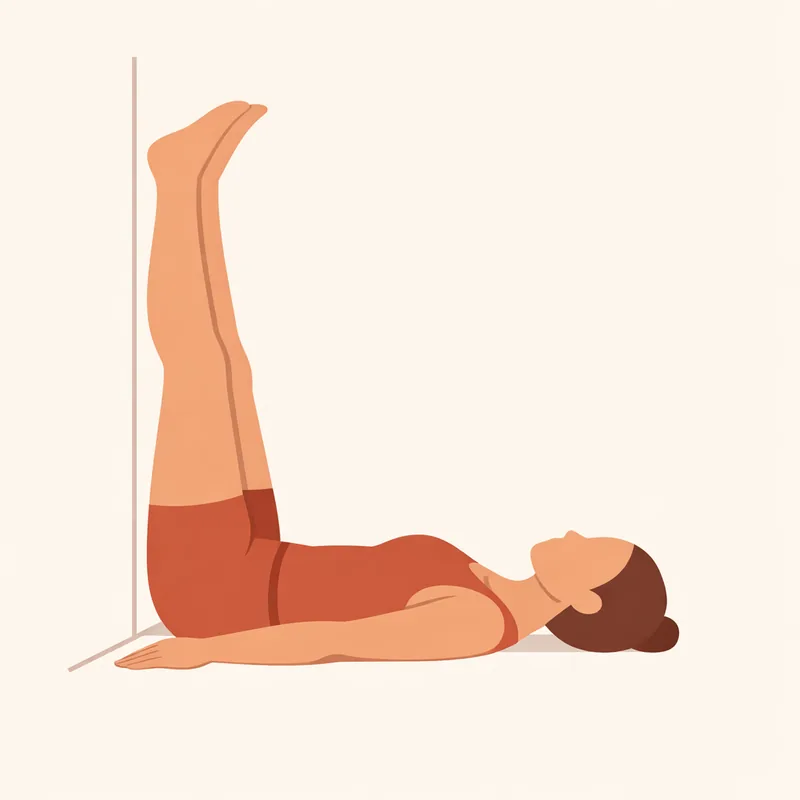
Common mistake: pressing the hips flat to the wall so the lower back lifts. A hand's width of gap fixes it. Easier version: soften the knees if the legs go numb. Carry straight on into bedtime stretches and the day closes cleanly.

What are the common mistakes
These moves are easy, which means the damage is done by habits rather than technique.
| What you notice | What went wrong | Change this |
|---|---|---|
| Afternoons are unchanged despite the exercise | You did it all in one go and the sitting stayed the same | Split it up — one minute every hour |
| Calves are knotted the day after ④ | You bounced through the reps and dropped too fast | Take two seconds to lower; cut a set |
| ③ pulls in the arch of the foot, not the calf | The stance was too long and the plantar fascia stretched first | Shorten the stance and keep the heel firmly down |
| Swelling unchanged after several days | It may not be sitting alone | Don't add more exercise; if both legs are no better after a few days, see a GP (NHS). If the hips are stiff too, add hip and glute stretches |
When do you progress
What goes up here isn't load — it's frequency and duration. In this order:
- Frequency first. Three times a day to five, with each round the same length.
- Take ④ to one leg. Once 20 two-legged reps feel easy, switch to 10 single-leg — that doubles the load.
- Add a bent-knee version of ③. Softening the back knee reaches the deeper calf muscle (soleus).
- Take ⑤ to five minutes. Three and five feel noticeably different; this is the one not to rush.
When to stop
If any of these apply, hold off on the exercises and get checked first.
- Short of breath, or a chest that feels tight, heavy or painful — the NHS says call 999 at once
- One leg swollen for no known reason, or red or hot to the touch — urgent care in the NHS levels; the CDC lists these as signs of deep vein thrombosis
- Both legs swollen and no better after a few days of home care — a GP (NHS)
Questions that remain
Which swelling needs a clinician before exercise?
By the NHS levels, one leg swollen for no known reason, or red or hot, means urgent care, and breathlessness or chest pain means 999. Both legs no better after a few days means a GP (the four levels above).
How many times a day?
The four-week table runs 3 → 4 → 5 → 6 sessions a day, and the number of moves runs 2 → 3 → 4 → 5. The two stay exactly one apart — one more move and one more session each week (our arithmetic). But the real target here isn't a count. Week 1's goal is “no two-hour block of unbroken sitting” and week 2's is “stand up once every hour” — written as habits, not reps.
On a swollen day, should I do nothing?
Only ④ calf raises carries any load among the five, so ①, ② and ⑤ still work — none of the three asks anything. ① and ② are seated and ⑤ is lying down. That said, swelling in one leg only, or with pain, warmth or redness, is a different matter entirely: that is not something to stretch, it is something to have checked now.
What does “progressing” mean here?
Not load but frequency and duration. In order: three sessions a day to five (each round the same length); ④ from 20 two-legged reps to 10 single-leg, which doubles the load; a bent-knee version of ③ to reach the deeper soleus; and finally ⑤ out to five minutes. The underlying problem is how often you break up the sitting, which is why one 30-minute session never solves it.
Is there anything I can do at my desk without being noticed?
① ankle pumps is the one — the only move of the five you can do without anyone noticing, which is why how often you do it decides how well the whole routine works. ④ calf raises also passes unnoticed in a meeting or on a train. The CDC advises moving every 1 to 2 hours on trips over four hours, and ① and ② are how you follow that without leaving your chair.
Where to check further
- What is behind swelling in one leg only. This article goes as far as see a clinician if it is one-sided — deep vein thrombosis versus lymphoedema is separated by ultrasound, in vascular surgery or internal medicine.
- Both legs swollen and not resolving. Heart, kidney, thyroid and drug side effects are all possible systemic causes not covered here — internal medicine separates them with blood work.
- Choosing a compression class for stockings. They are known to help but we could not verify the class criteria — a pharmacist or your clinician can match the pressure to your condition.
On sitting time itself — WHO’s 2020 guidelines set no hour limit, but recommend sitting less and moving more than the recommended amount (sitting too long, by WHO).
Night-time calf cramps are a different matter — the NHS suggests a wall calf stretch 3 times a day, the last just before bed (leg cramps).
Where the moves and counts come from
The order of the moves and the repetitions, sets and hold times in this post are our own example. The sources below give weekly activity amounts and condition information; they do not set counts for these moves. Where an agency gives the moves and counts itself, we carry them in its own words in sitting exercises and leg cramps (NHS).
Sources used
- NHS — Swollen ankles, feet and legs (oedema) · reviewed 26 February 2026, checked 15 October 2026 · source for home care and the GP, urgent and 999 levels
- CDC — About blood clots (DVT) · source for slow blood flow from limited movement as a risk factor, the move-every-1-to-2-hours advice on long trips, and the one-sided swelling, pain, warmth and discoloration symptom list
- WHO — Physical activity fact sheet · source for the 31% of adults not meeting recommended activity levels
- WHO — Be Healthy, Be Mobile: physical activity · 150 minutes moderate or 75 minutes vigorous a week, plus strengthening on 2 or more days
This is general health information and does not replace medical diagnosis or treatment. The recommendations and symptom lists above are taken from published CDC and WHO material; the cause of an individual's swelling can only be determined by a clinician. If symptoms persist or worsen, consult a professional. Written as of July 2026.