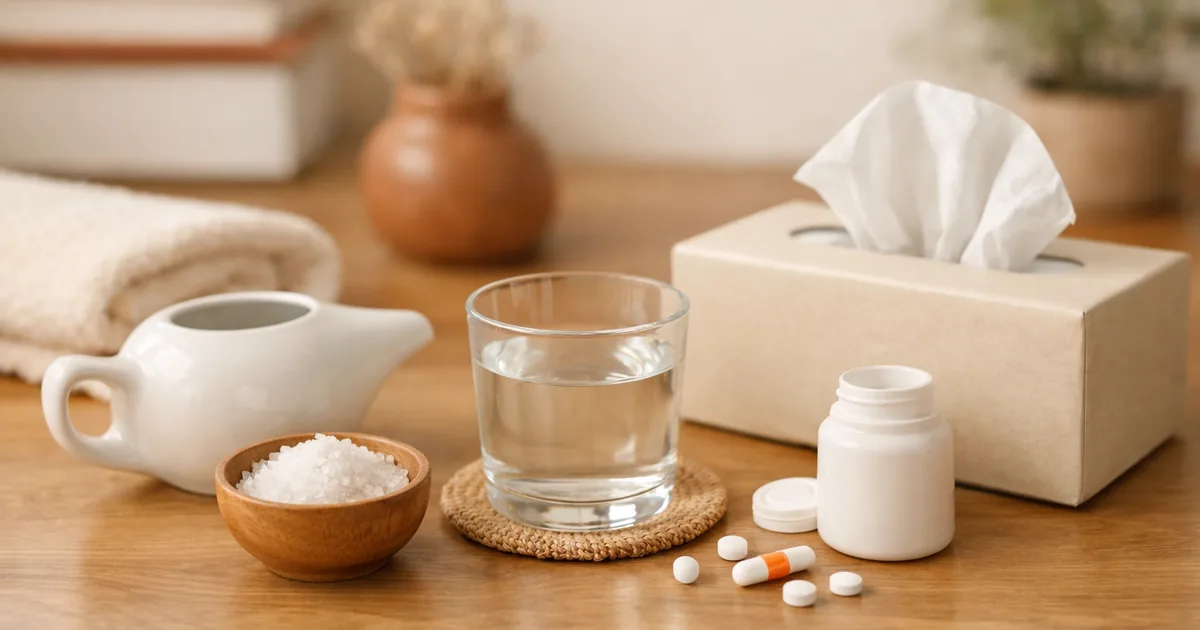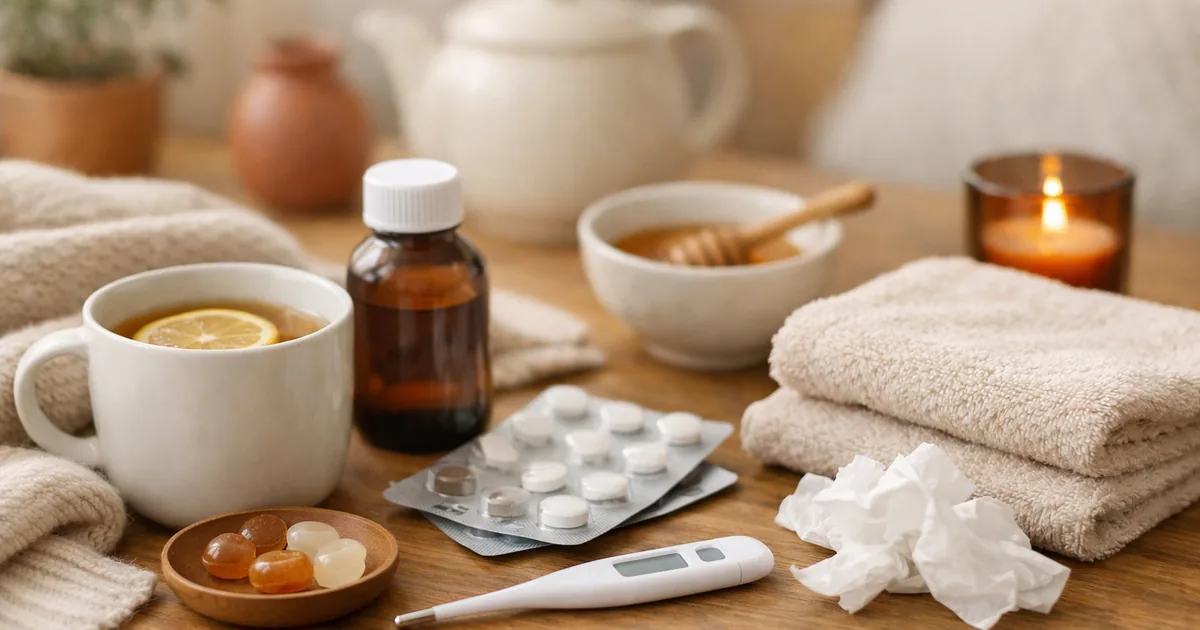
A cold is the illness people most often search “how to get over fast” for. The NHS says cold symptoms come on gradually over 2 to 3 days, and you should start to feel better in about 1 to 2 weeks. The advice is simple: rest, drink plenty of fluids, eat healthily, gargle salt water for a sore throat (not for children), try a warm lemon and honey drink, and breathe in steam for a blocked nose. And it is clear that GPs do not recommend antibiotics for colds: colds are caused by viruses, and antibiotics only work on bacteria. See a GP if a high temperature lasts more than 3 days, symptoms haven’t improved after 10 days, or a cough lasts more than 3 weeks. This sets out the NHS page “Common cold”.
1. You should start to feel better in about 1 to 2 weeks. No antibiotics — colds are viral.
2. Rest, fluids, eat well; salt-water gargle (not children), lemon and honey, steam (no hot-water bowls for children).
3. Fever over 3 days, no better after 10 days, cough over 3 weeks, breathlessness or chest pain: see a GP.
Symptoms and how long it lasts — NHS
- Main symptoms: blocked or runny nose, sneezing, sore throat, hoarse voice, cough, feeling tired and unwell
- Less common: high temperature, aching muscles, loss of taste and smell
- Young children: symptoms can last longer; they may be irritable, have trouble feeding and sleeping, breathe through the mouth or be sick after coughing
Symptoms develop gradually over 2 to 3 days, and you should start to feel better in about 1 to 2 weeks. The gradual start is what separates a cold from flu, which comes on suddenly — the CDC comparison is in cold or flu.
Treating it yourself — NHS
| Type | What the NHS says | Worth noting (our gloss) |
|---|---|---|
| Do | Rest, drink plenty of fluids to avoid dehydration, eat healthily | — |
| Do | Gargle salt water for a sore throat — not for children | — |
| Do | A warm lemon and honey drink | No honey under 12 months |
| Do | Breathe in steam for a blocked nose | For children, see below |
| Don’t | Let children breathe steam from a bowl of hot water — risk of scalding | — |
| Don’t | Give aspirin to children under 16 | — |
| Don’t | Smoke — it can make symptoms worse | — |
If you have a high temperature or can’t do your normal activities, the NHS says stay at home and avoid other people, and don’t give hot drinks to small children. It also says there is little evidence that vitamin C, echinacea or garlic prevent colds or speed recovery.
At the pharmacy — NHS
- Paracetamol or ibuprofen for aches and fever
- Decongestant sprays, drops or tablets — not for children under 6; don’t use sprays for more than a week (they can make things worse)
- Vapour rubs for chesty coughs in babies and small children
One important warning: don’t take other cough and cold medicines alongside paracetamol and ibuprofen, as you may take too much — we read this as cold remedies often containing the same ingredients (our reading). Some medicines aren’t suitable for babies, children or pregnant women.
When to see a GP — NHS
| When | Number | Worth noting (our gloss) |
|---|---|---|
| High temperature continues | More than 3 days | — |
| Symptoms not improving | After 10 days | — |
| Cough continues | More than 3 weeks | Same 3 weeks as the cough post |
| Symptoms getting worse; very high temperature or shivery | — | — |
| Shortness of breath or chest pain | — | — |
| Worried about a child’s symptoms | — | See the child cold post |
| A long-term condition such as diabetes, heart, lung or kidney disease, or a weakened immune system | — | — |
The page doesn’t mention NHS 111. Coughs are in cough, sore throats in sore throat, and children in baby cough and cold.
Avoiding spreading it — NHS
Colds spread through germs from coughs and sneezes, which can live on hands and surfaces for 24 hours. You can pass it on from a few days before symptoms start until they have all gone — usually 1 to 2 weeks, and longer in babies and young children.
- Wash your hands often with warm water and soap
- Catch coughs and sneezes in tissues and bin them quickly
- Don’t share towels or household items such as cups or children’s toys
- Avoid touching your eyes and nose
Checklist
- ☐ Rest, fluids, eat well
- ☐ Don’t double up cold remedies with paracetamol or ibuprofen
- ☐ Decongestant sprays for a week at most; not under 6
- ☐ Fever over 3 days, symptoms over 10 days, cough over 3 weeks: GP
- ☐ Don’t ask for antibiotics — colds are viral
Questions that remain
Does lots of vitamin C help?
The NHS says there is little evidence that vitamin C, echinacea or garlic prevent colds or help you recover faster.
How do I know if it’s flu?
The CDC says colds start gradually and flu abruptly — see cold or flu.
A cough with breathlessness, chest pain and fever may be pneumonia rather than a cold — the NHS says not to take cough medicine for pneumonia (pneumonia).
If your voice went hoarse after a cold, see the NHS laryngitis advice — usually 1 to 2 weeks, and whispering strains your voice too (laryngitis).
Sources
- NHS — Common cold — source (page shows: reviewed 22 March 2024, next review 22 March 2027; checked 14 October 2026). 2 to 3 days, 1 to 2 weeks, dos and don’ts, under 16, under 12 months, under 6, a week, 3 days, 10 days, 3 weeks, antibiotics, 24 hours.
- Not read. Korean agency guidance on colds; ingredients of Korean cold remedies.
- What we added. The “worth noting” column.
Where else to check
- A pharmacist — overlapping ingredients with medicines you already take.
- Your GP — if you pass the numbers above or are short of breath.
Written on 14 October 2026. The content is from the NHS; the glosses are ours. It does not replace diagnosis or treatment.