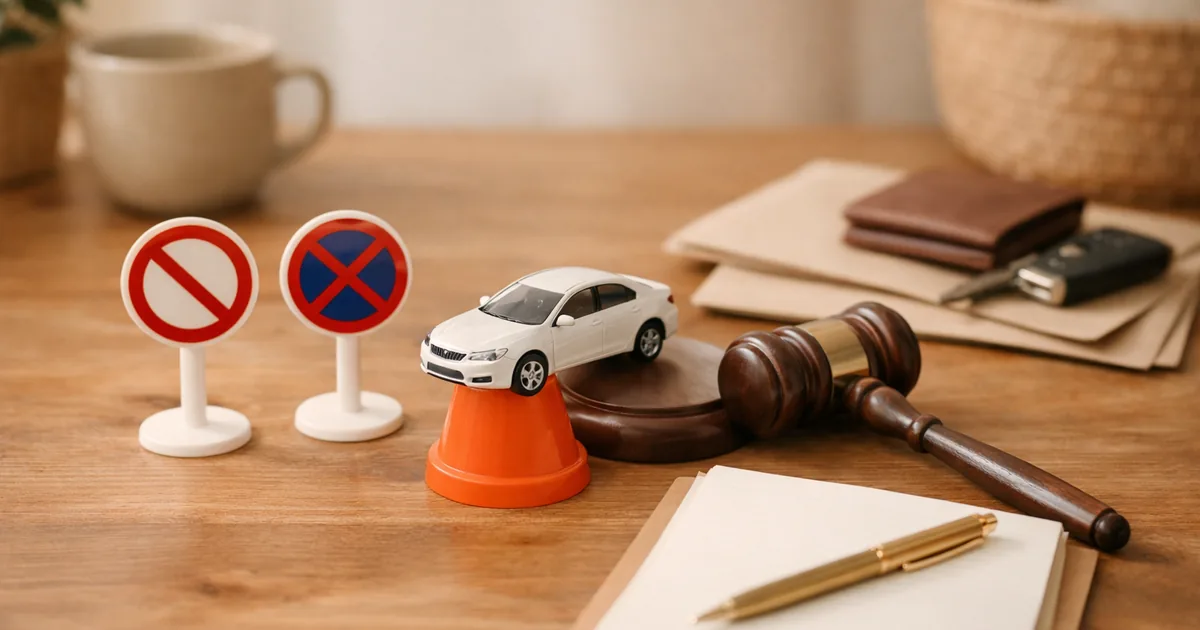
“I’ll only be five minutes” can be right or wrong under Korean law. Article 2 of the Road Traffic Act calls a stop of up to 5 minutes stopping, and leaving the car stationary or leaving it so you cannot drive off at once parking. But the eight places in article 32 allow neither stopping nor parking. We read the articles and Decree Annexes 6 and 8 as written.
1. A car stopping or parking illegally is fined 40,000 won, or 50,000 after 2 hours. The fine is 40,000 won for a car (50,000 won for 2 hours or more in the same place) and 50,000 won (60,000) for a van.
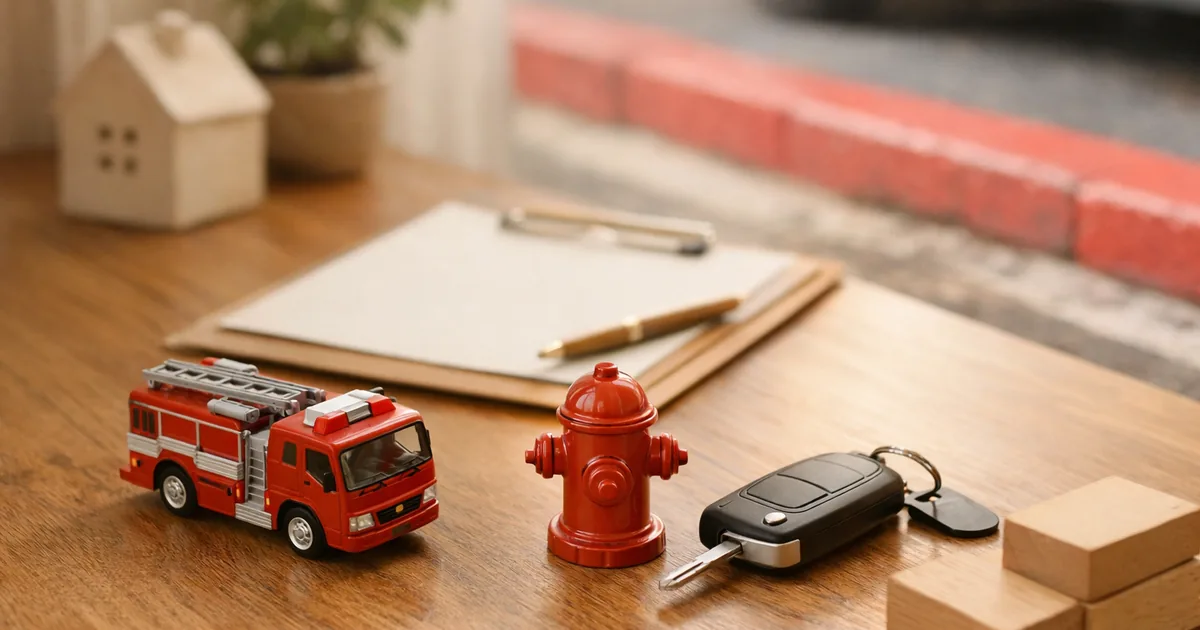
2. Junctions, crossings and bus stops ban even stopping. Within 5 m of a junction edge or corner, 10 m of a crossing, level crossing or bus-stop sign, and 5 m of a hydrant, you may not even stop briefly.
3. No parking in tunnels or on bridges. Article 33 adds 5 m either side of roadworks and more. There, stopping for up to 5 minutes reads as allowed.
Stopping and parking — two definitions in article 2
| Term | Definition | Basis |
|---|---|---|
| Parking | Keeping a vehicle stationary to wait for passengers, load goods, because of a breakdown and so on, or leaving it so the driver has left and cannot drive it at once | Art. 2 item 24 |
| Stopping | The driver stopping the vehicle for no more than 5 minutes, other than parking | Art. 2 item 25 |
Even under 5 minutes, if the driver has left the car and cannot drive off at once, it is “parking” by definition. Stopping is closest to a short halt with the driver still at the wheel.
No stopping or parking — article 32
- Junctions, pedestrian crossings, level crossings and the pavement of roads with separate pavements (except on-street parking laid across both)
- Within 5 m of the edge of a junction or a road corner
- Within 10 m in every direction of a safety island
- Within 10 m of a bus-stop post, sign or line (except buses picking up or dropping off in service)
- Within 10 m of a level crossing edge or pedestrian crossing
- Within 5 m of fire hydrants, emergency fire devices or designated fire facilities
- Places designated by the provincial police chief
- School zones designated by mayors and similar
Following laws or police instructions and stopping briefly to prevent danger are exceptions (proviso to art. 32). Article 34-2 sets some special cases, such as e-bike charging points and bicycle racks.
No parking only — article 33
- Inside tunnels and on bridges
- Within 5 m of either edge of roadworks in progress
- Within 5 m of buildings housing multi-user businesses designated by the provincial police chief at the fire chief’s request
- Places the provincial police chief designates as necessary
Amounts — fines and penalty charges
| Breach | Cars and similar | Vans and similar |
|---|---|---|
| Fine — articles 32 to 34 (except hydrants) | 40,000 won (2 hours+: 50,000) | 50,000 won (60,000) |
| Fine — within 5 m of a hydrant with a safety sign | 80,000 won (90,000) | 90,000 won (100,000) |
| Penalty charge — police on the spot (arts. 32 to 34-3) | 40,000 won | 50,000 won |
Fines are Annex 6 items 6 and 6-2; the amounts in brackets apply, under note 4, to breaches lasting 2 hours or more in the same place. Penalty charges are Annex 8 items 29 (no stopping or parking), 30 (no parking), 31 (method) and 31-2 (slopes), 30,000 won for motorcycles. Hydrants are covered in fire-engine bays and hydrants and school zones in school-zone fines.
Under article 160(3)1, parking fines go to the employer or keeper (usually the owner) where the driver cannot be identified and no notice can be issued to them.
Checklist
- ☐ 5 m from junction corners · 10 m from crossings · 10 m from bus stops — no stopping
- ☐ Leave the car and it is “parking,” even under 5 minutes
- ☐ Past 2 hours, the fine rises by 10,000 won
- ☐ No parking in tunnels or on bridges
Questions that remain
Does leaving the hazard lights on help?
No article makes hazard lights an exception. In an article 32 place even stopping is banned, and elsewhere leaving the car is parking.
I only put one wheel on the pavement.
Article 32 item 1 lists “the pavement of roads with separate pavements” as a no-stopping place. It has no exception based on how far you are over it; only on-street parking laid across both is excluded.
Sources
- Road Traffic Act [in force 1 Jul 2026] [Act No. 21246] — original text (checked 30 September 2026). Source for article 2 items 24 and 25 (parking and stopping), article 32 (eight places), article 33 (no parking), articles 34 and 34-2 and article 160(3)1.
- Enforcement Decree of the Road Traffic Act [in force 1 Aug 2026] [Presidential Decree No. 36114] — Annex 6, fines items 6 and 6-2 and notes, and Annex 8, penalty charges items 29 to 31-2.
Where to check further
- Checking a parking fine or giving your side — the issuing city, county or district office, or eFINE.
- Reporting illegal parking — the Safety e-Report (Anjeon Sinmungo) app.
Written on 30 September 2026. Articles and annexes are from the National Law Information Center; the tables are ours.