Most food poisoning can be stopped in the kitchen. FoodSafety.gov says 1 in 6 Americans get food poisoning each year and about 128,000 are hospitalised, and sets prevention out as Clean, Separate, Cook, Chill. Hands at least 20 seconds; perishables in the fridge within 2 hours (1 hour above 32°C); fridge 4°C or below. Here is each step as written.
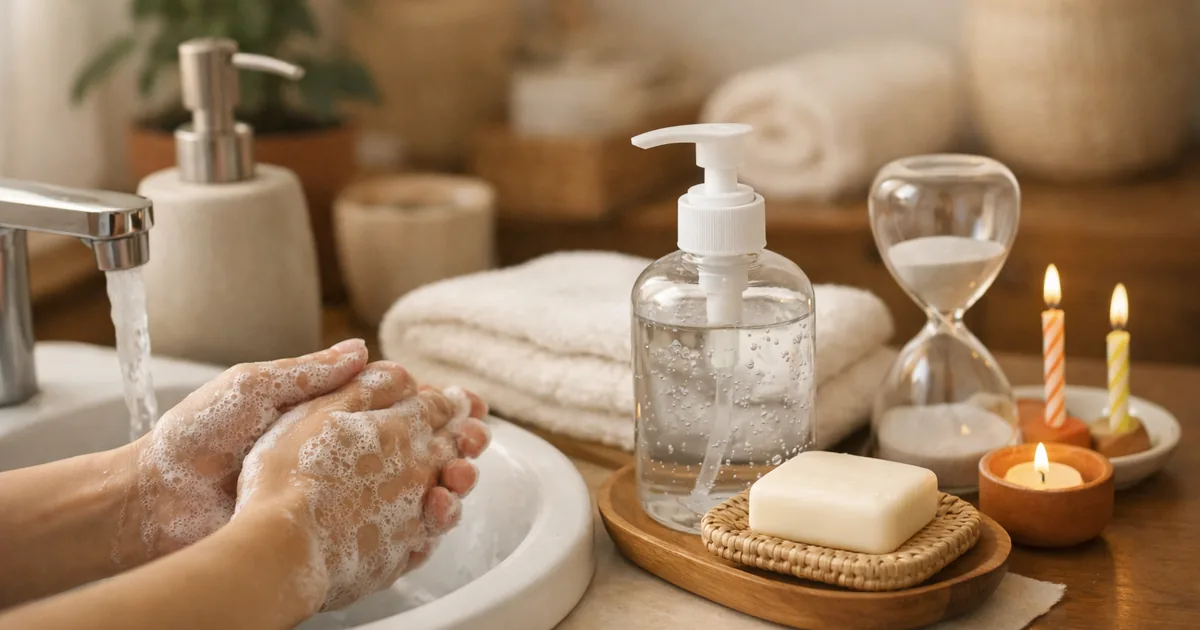
1. Clean — hands 20 seconds; don’t wash raw meat, poultry or eggs.
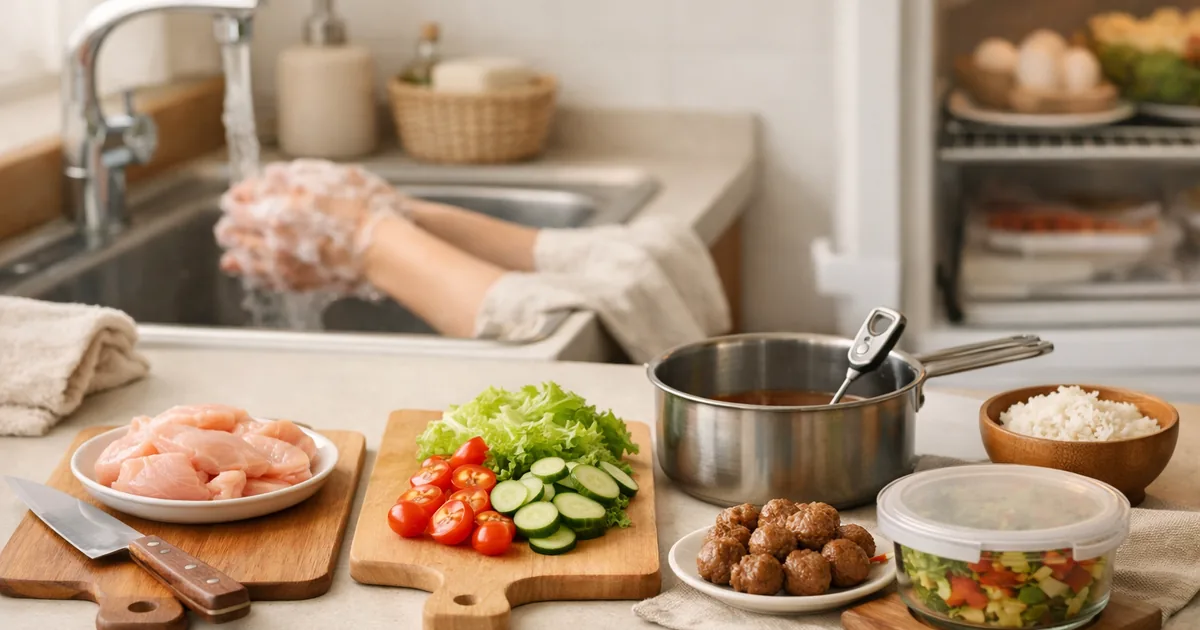
2. Separate — separate boards for produce and raw meat.
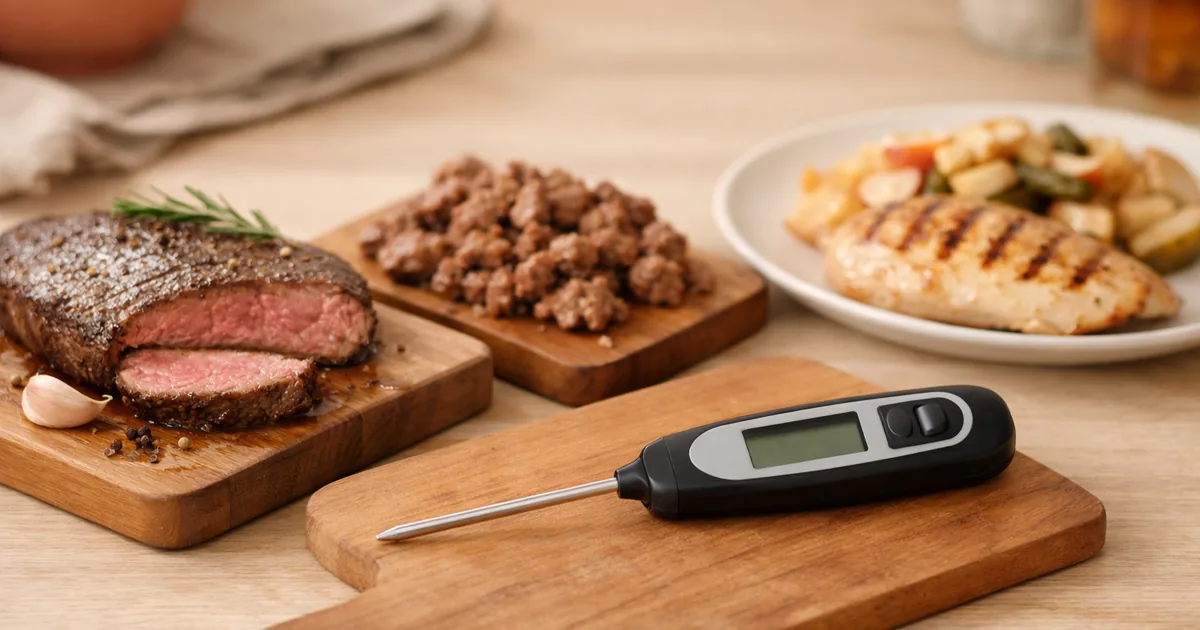
3. Cook — use a thermometer; danger zone 4–60°C.
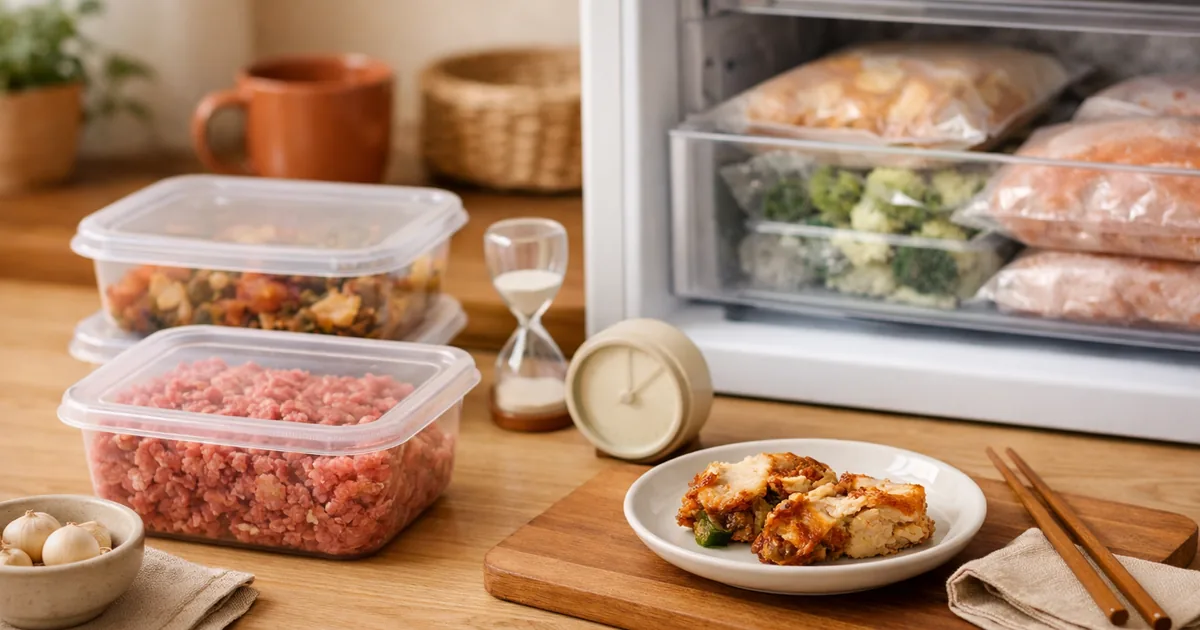
4. Chill — refrigerate within 2 hours; fridge 4°C, freezer −18°C.
Clean — FoodSafety.gov
| Type | What the source says | Worth noting (ours) |
|---|---|---|
| Hands | Soap and water for at least 20 seconds — humming Happy Birthday twice; before, during, after preparing food and before eating | See the handwashing link |
| Tools, counters | Boards, dishes, utensils and counters with hot soapy water after each use; wash cloths often on the hot cycle | — |
| Fruit and veg | Rinse under running water, no soap or detergent; scrub firm produce; rinse even if peeling | — |
| Don’t wash | Raw meat, poultry, eggs, seafood — washing spreads germs | Cooking kills them |
Separate — FoodSafety.gov
| Type | What the source says | Worth noting (ours) |
|---|---|---|
| Boards | One for produce, one for raw meat, poultry and seafood; replace boards with deep grooves | — |
| Plates | Don’t reuse a plate that held raw food for cooked food before washing it | — |
| Shopping | Keep raw meat, poultry and seafood apart from other food in the cart and bags | — |
| Fridge | Raw meat, poultry and seafood in sealed containers or bags; freeze if not used within a few days; eggs in their carton in the main compartment, not the door | — |
Cook — FoodSafety.gov
| Type | What the source says | Worth noting (ours) |
|---|---|---|
| Thermometer | Not colour or texture — a food thermometer in the thickest part | Temperatures by food: link below |
| Danger zone | 40–140°F (4–60°C) — bacteria multiply fast | — |
| Holding | Keep hot food at 140°F (60°C) or above | — |
| Microwave | To 165°F (74°C); stir and let stand | — |
Chill — FoodSafety.gov
| Type | What the source says | Worth noting (ours) |
|---|---|---|
| Time | Perishables in the fridge within 2 hours; 1 hour above 90°F (32°C) | 90°F = 32.2°C (our sum) |
| Temperatures | Fridge 40°F (4°C) or below, freezer 0°F (−18°C) or below — check with an appliance thermometer | Korean labels use 0–10°C |
| Leftovers | Divide into shallow containers to cool fast | — |
| Thawing, marinating | Never on the counter — in the fridge; cold-water or microwave thawing means cook right away | — |
| Freezing | Does not kill germs | — |
The numbers together (our summary)
Five numbers run through the steps: 20 seconds of handwashing; the 4–60°C danger zone; hot food held at 60°C or above; 2 hours at room temperature (1 hour on hot days); fridge 4°C and freezer −18°C. The 4°C and 60°C are the two ends of the danger zone, so the steps read as one rule: cold food below 4°C, hot food above 60°C, and under 2 hours in between (our reading). One in six is about 16.7% (our sum).
Korean label storage (0–10°C) is in food dates and storage; handwashing in handwashing; norovirus in norovirus; temperatures by food in safe cooking temperatures.
Checklist
- ☐ Hands 20 seconds; don’t wash raw meat
- ☐ Two boards
- ☐ Thermometer in the thickest part
- ☐ Fridge within 2 hours (1 if hot)
- ☐ Fridge 4°C or below; thaw in the fridge
Questions that remain
Not washing chicken feels wrong.
FoodSafety.gov says don’t; cooking kills the germs.
Wood or plastic boards?
The page doesn’t choose; it says keep them separate and replace worn ones.
Sources
- FoodSafety.gov (US HHS) — 4 Steps to Food Safety — source (reviewed 18 September 2023; checked 20 October 2026). 1 in 6 and about 128,000 hospitalised; the Clean, Separate, Cook, Chill rules.
- Not read. Underlying CDC food poisoning estimates; Korean MFDS guidance.
- What we added. The “worth noting” column and the Korean everyday gloss.
Written on 20 October 2026. The content is from the source; the glosses are ours.