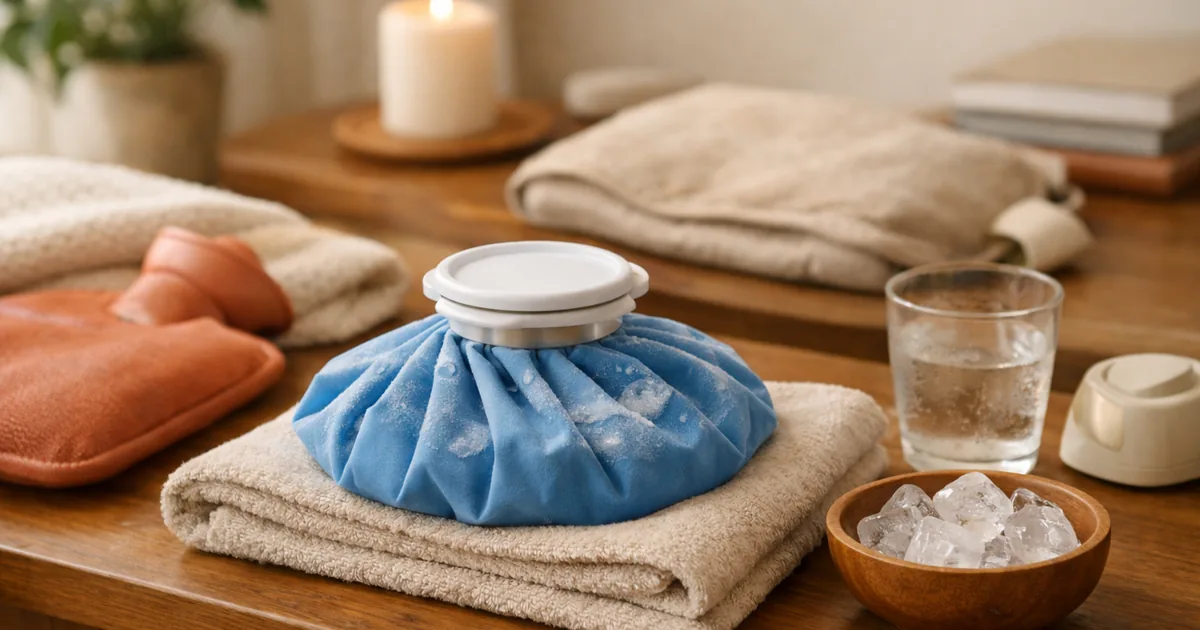
A sore knee makes even walking awkward. The NHS says knee pain can often be treated at home and you should start to feel better in a few days. At home it says put as little weight on the knee as possible, hold an ice pack wrapped in a tea towel on it for up to 20 minutes every 2 to 3 hours, and take painkillers. See a GP if it doesn’t improve within a few weeks; call 111 if it’s very painful, you can’t move it or put weight on it, it’s badly swollen or changed shape, it locks, gives way or clicks painfully, or it’s red and hot with a high temperature. This sets out the NHS page “Knee pain”.
1. You should start to feel better in a few days. Less weight on it, ice up to 20 minutes every 2 to 3 hours, painkillers.
2. Not better within a few weeks: see a GP.
3. Very painful, can’t take weight, badly swollen or misshapen, locking or giving way, or red and hot with a fever: call 111 — painless clicking is normal, the NHS says.
What to do at home — NHS
| Type | What the NHS says | Worth noting (ours) |
|---|---|---|
| Do | Put as little weight as possible on the knee — avoid standing for long | — |
| Do | An ice pack or frozen peas in a tea towel for up to 20 minutes every 2 to 3 hours | Different from the 5 minutes on the neck pain page |
| Do | Painkillers such as paracetamol or ibuprofen (gel or tablets) | Choosing one: OTC medicine by symptom |
This page has no separate “don’t” list. Choosing a painkiller is in OTC medicine by symptom; example strengthening moves are in knee strengthening.
When to get help — NHS
| If | Where | Worth noting (ours) |
|---|---|---|
| Knee pain doesn’t improve within a few weeks | GP | — |
| The knee is very painful | 111 | In Korea, same-day care or A&E (our gloss) |
| You can’t move it or put any weight on it | 111 | — |
| It’s badly swollen or has changed shape | 111 | — |
| It locks, gives way or clicks painfully | 111 | Painless clicking is normal, the NHS says |
| A high temperature or feeling hot, cold or shivery, with the knee red and hot | 111 | Could be an infection |
The NHS also points to urgent treatment centres in the UK, where you may be seen quicker than at A&E. A doctor may suggest medicine or physiotherapy depending on the cause, or refer you to hospital for a scan or specialist treatment such as surgery.
Causes by symptom — NHS
The NHS pairs symptoms with possible causes and says not to self-diagnose. It splits pain after an injury from pain with no obvious injury.
| Symptoms | Possible cause (NHS) | Worth noting (ours) |
|---|---|---|
| (Injury) Pain after overstretching, overusing or twisting | Sprain or strain | — |
| (Injury) Pain between the kneecap and shin, often from repeated running or jumping | Tendonitis | Running: knee exercises for runners |
| (Injury) Unstable or giving way, can’t straighten the leg, a popping sound when hurt | Torn ligament, tendon or meniscus | — |
| (Injury) Kneecap changes shape after a knock or sudden change of direction | Dislocated kneecap | — |
| (No injury) Stiffness and mild swelling in both knees, more common in older people | Osteoarthritis | — |
| (No injury) Warm and red, pain and swelling worse when kneeling or bending | Bursitis | — |
| (No injury) Swelling, warmth and bruising, more likely on anticoagulants | Bleeding in the joint | — |
| (No injury) Hot, red knee with sudden attacks of severe pain | Gout or septic arthritis | — |
| (No injury) Pain and swelling below the kneecap in teenagers and young adults | Osgood-Schlatter’s disease | — |
Checklist
- ☐ Less weight on it; avoid standing for long
- ☐ Ice up to 20 minutes every 2 to 3 hours
- ☐ Painkillers (gel or tablets)
- ☐ No better after a few weeks: GP
- ☐ Very painful, can’t take weight, badly swollen, locking, or red and hot with fever: get help now
Questions that remain
My knee clicks.
The NHS says painless clicking is normal. Locking, giving way or painful clicking is a reason to call 111.
When can I start exercising?
This page doesn’t say. The exercises the NHS gives for runners’ knee pain are in knee exercises for runners.
Why is the ice time different from neck pain?
Different NHS pages give different numbers. The knee page says up to 20 minutes every 2 to 3 hours; the neck pain page says 5 minutes up to 3 times a day. We carry each page’s figure as written.
Sources
- NHS — Knee pain — source (page shows: reviewed 21 December 2023, next review 21 December 2026; checked 19 October 2026). 3 things to do at home, 1 GP and 5 111 reasons, 9 causes by symptom, treatment.
- Not read. Korean agency guidance on knee pain.
- What we added. The “worth noting” column and the Korean care gloss.
Where else to check
- Your GP or an orthopaedic clinic — if it’s no better after a few weeks.
Written on 19 October 2026. The content is from the NHS; the glosses are ours.