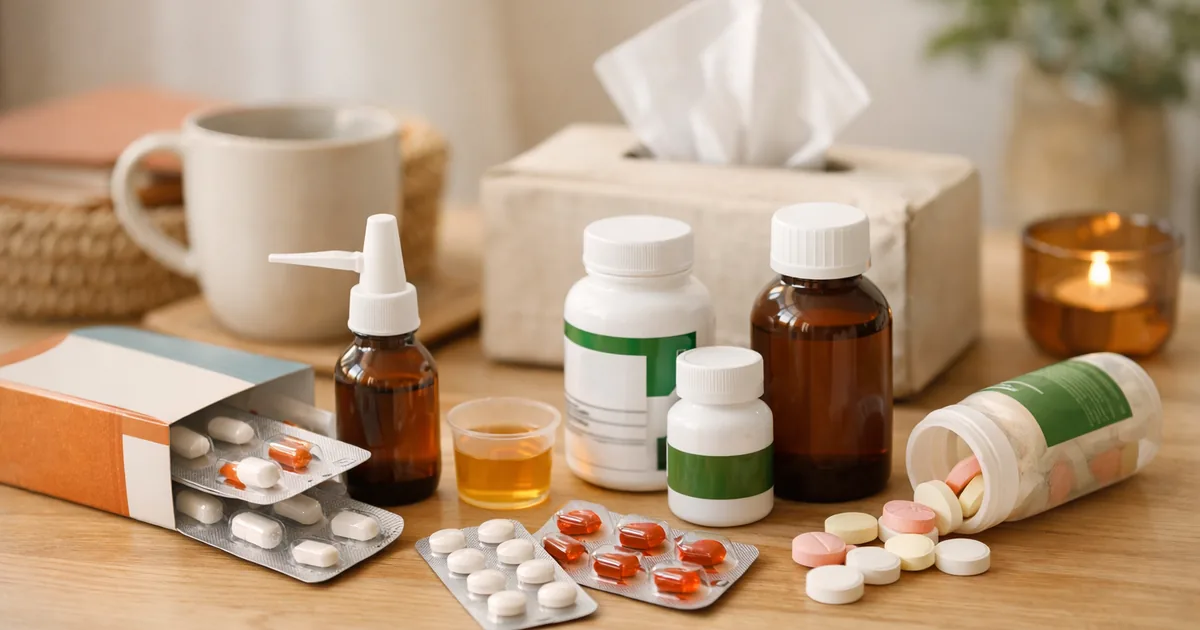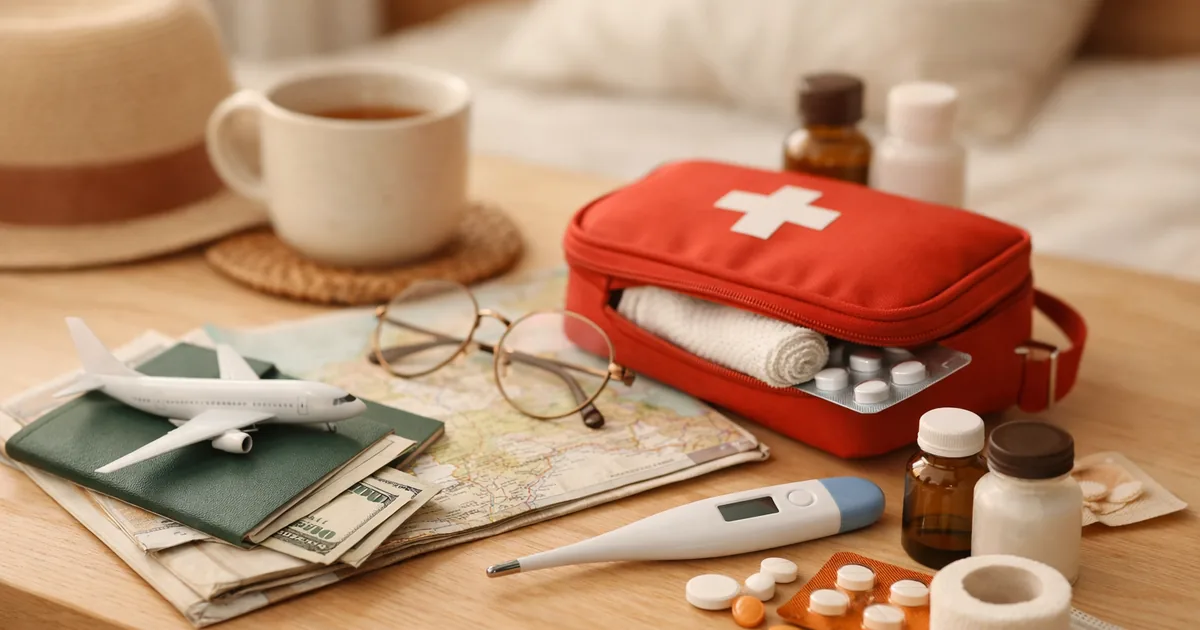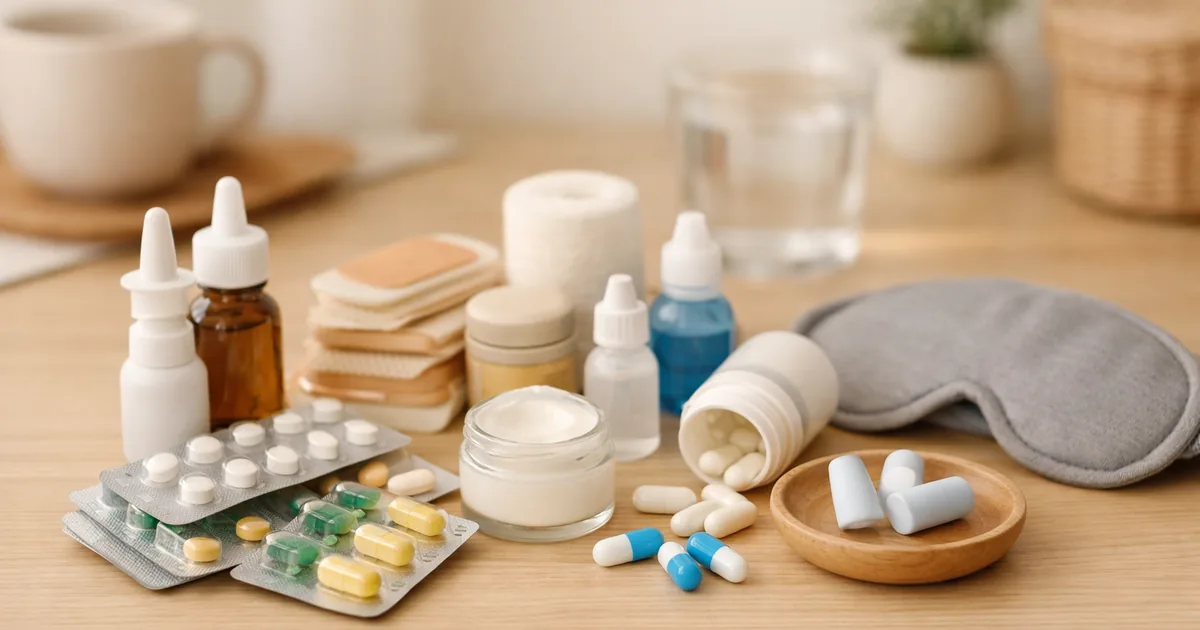
Following Part 1 (cold, pain, digestive), this covers allergy, skin, wounds, eyes, sleep, and motion sickness.
1. What to pack. Of the 12 first-aid items the CDC tells travellers to carry, five are skin and eye — where Part 1 was things you swallow, half of this one is things you apply. That is not a coincidence.
2. What trips people up. Almost everything is straight off the shelf, but pseudoephedrine is behind the pharmacy counter and needs photo ID (no prescription). First-timers lose time here.
3. What to do. Same rule as Part 1 — shop by active ingredient, not brand. And the pharmacist consultation is free, so always ask if you take regular medication or have a condition.
Allergy / rhinitis
Second-generation antihistamines cause less drowsiness — good for daytime.
| Ingredient | Brand | Notes |
|---|---|---|
| Loratadine | Claritin | Non-drowsy, once daily |
| Cetirizine | Zyrtec | Fast, mild drowsiness possible |
| Fexofenadine | Allegra | Non-drowsy |
| Diphenhydramine | Benadryl | Very drowsy; acute hives/itch, sleep aid |
| Fluticasone (nasal steroid) | Flonase | Ongoing nasal-allergy control |
Caution. A severe reaction — face/lip/tongue swelling, trouble breathing, whole-body hives (anaphylaxis) — is an emergency. Don't wait on antihistamines; call 911. If you have a known severe allergy, travel with a prescribed EpiPen.
Five of the twelve supplies are for skin and eyes
Part one was about what you swallow. Half of this one is about what you apply. That is not a coincidence.
We grouped the twelve first-aid supplies the US Centers for Disease Control and Prevention tells travelers to pack.

The same rule as part one applies here — the list names ingredients and uses, not brands.
“1% hydrocortisone cream” even carries the strength. Whatever the name on the shelf, if the back reads hydrocortisone 1%, that is the one.
Note too that “antibacterial or antifungal ointments” is a single entry — bacteria and fungus need different drugs, and the list says to carry both.
Parts one and two split the CDC list cleanly. Of the nine medicines, six belong to part one (pain and fever, cough, decongestant, diarrhea, antacid, laxative) and three to this one (antihistamine, sleep aid, motion sickness) — our count.
Remember this is a travel list. Aloe gel is there for sunburn and insect-bite gel for being outdoors. It is not the same as what someone living in the US keeps at home.
Skin, wounds, itch, fungus, burns
| Symptom | Ingredient | Brand |
|---|---|---|
| Wound ointment | Antibiotic (bacitracin) | Neosporin |
| Itch/rash/bites | Hydrocortisone 1% | Cortizone-10, Calamine |
| Athlete's foot | Clotrimazole/Terbinafine | Lotrimin, Lamisil |
| Sunburn/burn | Aloe vera, Lidocaine | Aloe gel, burn spray |
| Blisters/cuts | — | Band-Aid, blister bandage |
Deep or gaping wounds, animal bites, and large or blistering burns need care. This overlaps a first-aid kit.
Eyes — dryness, redness, allergy
| Symptom | Ingredient | Brand |
|---|---|---|
| Dry eyes | Artificial tears | Systane, Refresh |
| Eye allergy/itch | Ketotifen drops | Zaditor, Alaway |
| Redness | Redness reliever (Visine) | Short-term only (rebound) |
Sleep and jet lag
| Use | Ingredient | Brand |
|---|---|---|
| Jet lag / sleep rhythm | Melatonin | Melatonin (low dose to start) |
| Short-term sleep aid | Diphenhydramine | ZzzQuil, Unisom |
| Short-term sleep aid | Doxylamine | Unisom SleepTabs |
Antihistamine sleep aids can leave next-day grogginess. See beating jet lag. Start melatonin low.

Motion sickness
Take Dimenhydrinate (Dramamine) or the less-drowsy Meclizine (Dramamine Less Drowsy, Bonine) 30–60 min before travel. Wristbands and ginger help too.

How to use a US drugstore
- Where — CVS, Walgreens, Rite Aid, Walmart, Target; many 24-hour.
- Shelf (OTC) vs behind counter — grab most items off the shelf; only pseudoephedrine (Sudafed) needs the pharmacy counter and ID (no Rx).
- Pharmacist advice is free — describe symptoms and they'll suggest ingredients. Tell them your conditions/meds.
- No prescription drugs — antibiotics etc. need a doctor.
- Save with store brands — same ingredient, half the price.
- Keep receipts for travel insurance (payment tips: overseas card fees).
Children, pregnancy, chronic illness
- Children — use Children's products by weight/age, never split adult pills; no aspirin (baby fever).
- Pregnancy/nursing — many meds restricted; confirm with a pharmacist/doctor.
- Chronic illness/meds — BP, heart, liver, kidney, blood thinners: interaction risk. Be careful with Sudafed and NSAIDs.
When to see a doctor instead
- Trouble breathing, lip/face swelling → 911 now
- High fever that persists, confusion, severe dehydration
- Chest pain, weakness, slurred speech (heart attack/stroke signs)
- Bloody/black stool, severe abdominal pain, symptoms >3 days
Unsure? See ER or clinic? and travel emergencies.
Questions that remain
Which allergy meds aren't drowsy?
Claritin and Allegra are non-drowsy; Zyrtec is fast but mildly drowsy. Benadryl is very drowsy — skip it for daytime.
Can I buy melatonin here?
Yes — easily at any US drugstore (sold as a supplement). Start low; see jet lag tips.
How do I pick children's medicine?
Use Children's/Infants' products by weight/age. Never split adult pills; no aspirin for kids.
Even an unfamiliar aisle follows one rule: know the ingredient for your symptom, read the Active Ingredient label, and ask the pharmacist when unsure.
Sources
- US CDC Travelers' Health — “Pack Smart” (checked July 2026). Source for the twelve first-aid supplies, the “1% hydrocortisone cream” entry that carries a strength, the fact that “antibacterial or antifungal ointments” is one entry, and the nine medicines.
- US CDC Travelers' Health — “Travelers' Diarrhea” (checked July 2026). Source for oral rehydration solution in serious cases.
- Our own calculation. The grouping of the twelve (5 skin and eyes / 4 wound care / 3 other) and the six-to-three split of the nine medicines across parts one and two are ours.
Where to check further
- Dose, directions and age limits for the product you pick up. This article covers ingredients and categories only — read the Drug Facts panel on the box. Eye drops and children's formulations vary most from product to product.
- How melatonin is classified in the US. The National Center for Complementary and Integrative Health, “Melatonin: What You Need To Know” (updated May 2024): “In the United States, melatonin is considered a dietary supplement,” so it is “regulated less strictly by the FDA”; “in several other countries, melatonin is available only with a prescription and is considered a drug” (checked 23 September 2026). That is why it is easy to buy at a US drugstore — and why bringing it home needs a separate check. If you plan to use it for jet lag, ask the pharmacist about interactions with what you already take.
- Whether travel insurance reimburses medication. Not covered by these sources. Check your policy wording for whether over-the-counter purchases qualify and what receipts you need to keep.
As of July 2026. The list and its wording come from CDC source text; the grouping is ours. This is general information and does not replace diagnosis or prescription. For what you swallow see part one, for the home kit see the first-aid kit, and for when to stop self-treating see ER or clinic?