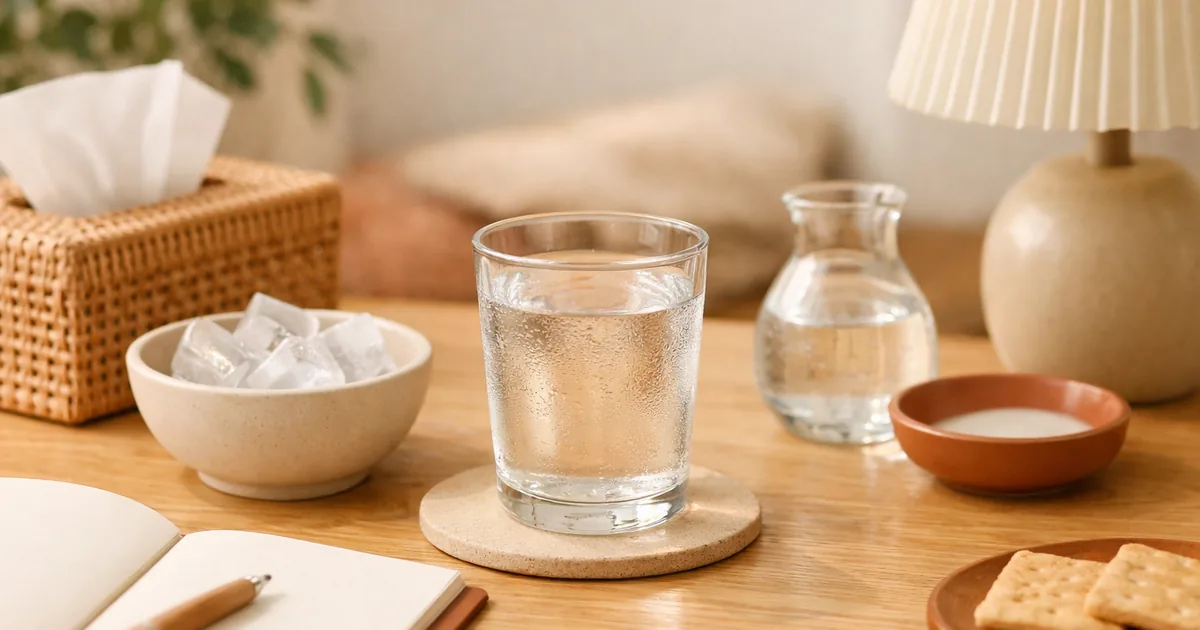
A mouth that feels parched with little saliva can come from the medicines you take, among other things. The NHS says a dry mouth is rarely a sign of anything serious, and suggests regular sips of cold water, ice cubes and sugar-free gum. It says not to have lots of alcohol, caffeine or fizzy drinks, or acidic, spicy, salty or sugary food. See a GP if it makes talking or eating difficult, it’s still dry after a few weeks of home or pharmacy treatment, or your mouth is painful, swollen or bleeding. This sets out the NHS page “Dry mouth”.
1. It’s rarely a sign of anything serious. Common causes include dehydration, medicines and breathing through your mouth at night.
2. Regular sips of cold water, ice, sugar-free gum, brushing twice a day. Don’t stop a prescribed medicine without advice.
3. Hard to talk or eat, still dry after a few weeks, or a painful, swollen or bleeding mouth: see a GP.
Why it happens — NHS
| Cause | What the NHS says | Worth noting (ours) |
|---|---|---|
| Dehydration | From not drinking enough, sweating a lot or being ill | — |
| Medicines | Check the leaflet to see if dry mouth is a side effect | — |
| Mouth breathing at night | If you have a blocked nose or sleep with your mouth open | Links to snoring |
| Anxiety | — | — |
| Cancer treatment | Radiotherapy or chemotherapy | — |
| Oral thrush | — | White patches: see the GP table |
What to do and not do at home — NHS
| Type | What the NHS says | Worth noting (ours) |
|---|---|---|
| Do | Drink cold water in regular sips through the day; keep some by your bed at night | — |
| Do | Suck ice cubes or ice lollies; sip cold unsweetened drinks | — |
| Do | Chew sugar-free gum or suck sugar-free sweets | — |
| Do | Use lip balm if your lips are dry too | — |
| Do | Brush twice a day and use an alcohol-free mouthwash | — |
| Don’t | Sleep with dentures in | — |
| Don’t | Use acidic artificial saliva products if you have your own teeth | — |
| Don’t | Smoke, or drink lots of alcohol, caffeine (tea and coffee) or fizzy drinks | — |
| Don’t | Eat acidic (like lemons), spicy, salty or sugary foods | — |
| Don’t | Stop a prescribed medicine without medical advice | — |
A pharmacist can advise on gels, sprays, tablets or lozenges to keep your mouth moist, but not all products are suitable for everyone. If a dry mouth comes with worries about breath, see bad breath.
When to see a GP — NHS
| If | Where | Worth noting (ours) |
|---|---|---|
| It makes talking or eating difficult | GP | — |
| Still dry after a few weeks of home or pharmacy treatment | GP | — |
| You’re struggling to eat regularly, or have lasting problems with taste | GP | — |
| Your mouth is painful, red, swollen or bleeding | GP | — |
| Sore white patches in your mouth | GP | — |
| You think a prescribed medicine is causing it | GP | — |
| Other symptoms, like needing to pee a lot or dry eyes | GP | Dry eyes: see dry eyes |
A GP can check the cause and recommend treatment for it. This page has no urgent or 999 list. If your eyes are dry too, see dry eyes; for sleeping with your mouth open, see snoring.
Checklist
- ☐ Regular sips of cold water; water by the bed
- ☐ Sugar-free gum or sweets; lip balm
- ☐ Brush twice a day; alcohol-free mouthwash
- ☐ Cut down alcohol, caffeine, fizzy drinks and acidic, salty or sugary food
- ☐ Check your medicine leaflet for side effects — don’t stop, ask
- ☐ Still dry after a few weeks, or a painful, swollen mouth or white patches: GP
Questions that remain
I think it’s my medicine.
The NHS says check the leaflet for dry mouth as a side effect, but don’t stop a prescribed medicine without advice. If you think it’s the cause, see a GP.
Does a humidifier help?
This page doesn’t mention humidifiers, and we haven’t added anything.
Sources
- NHS — Dry mouth — source (page shows: reviewed 29 November 2023, next review 29 November 2026; checked 19 October 2026). 6 causes, 6 dos and 6 don’ts, pharmacist, 8 GP reasons.
- Not read. Korean agency guidance on dry mouth; Korean artificial saliva products.
- What we added. The “worth noting” column and the Korean care gloss.
Where else to check
- A pharmacy — products to keep your mouth moist.
- Your GP or clinic — if it’s still dry after a few weeks.
Written on 19 October 2026. The content is from the NHS; the glosses are ours.