Winter brings more ways to get burned: hot soup, kettles, heaters. The NHS first aid for burns and scalds starts with one number — cool running water for 20 minutes, as soon as possible and within 3 hours. Once cooled, cover it with cling film, but don’t wrap it around. Don’t put creams, oils or butter on it, don’t use plasters, and don’t burst blisters. Large or deep burns, burns on the face, genitals or bottom, and burns from acid, chemicals or electricity need A&E or 999. Small burns can often be treated at home and take around 2 weeks to heal. This sets out the NHS page “Burns and scalds”.
1. Cool running water for 20 minutes, within 3 hours. No tap? Cool bottled water or a wet towel.
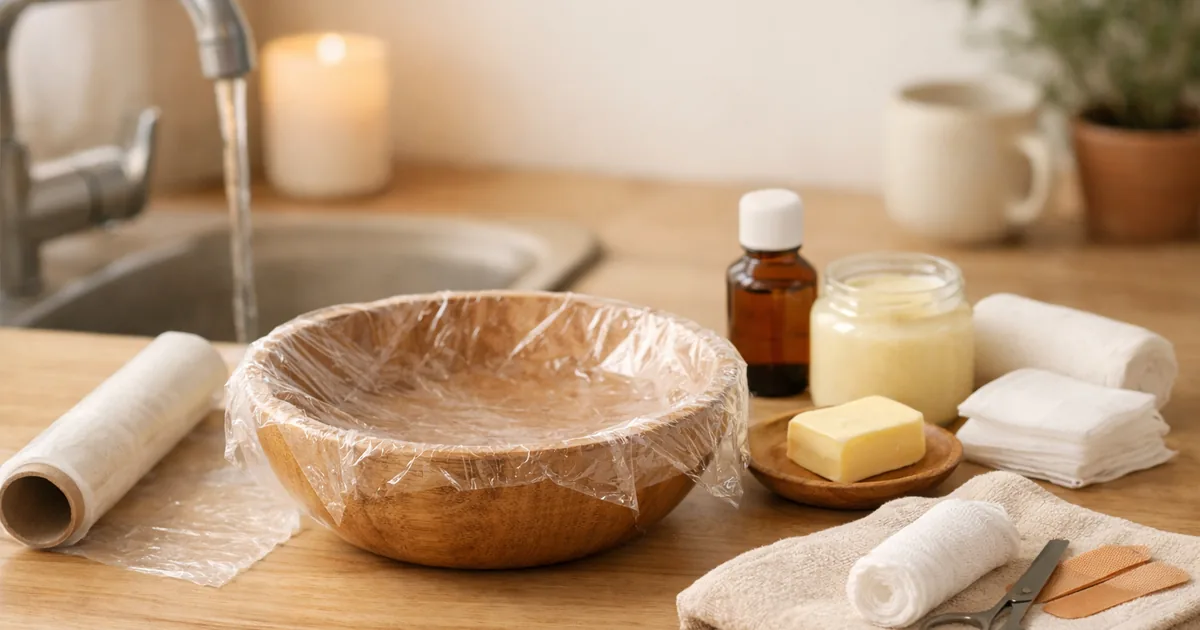
2. Remove nearby clothing and jewellery but leave anything stuck; cover with cling film once cooled (don’t wrap).
3. No creams, oils, butter or plasters; don’t burst blisters. Large or deep, face or genitals, chemical or electrical: A&E.
First aid in three steps — NHS
| Step | What the NHS says | Worth noting (our gloss) |
|---|---|---|
| 1 | Cool running water for 20 minutes, as soon as possible, within 3 hours | Still worth cooling if you’re late but within 3 hours |
| 1 (no tap) | Cool bottled water or a wet towel | — |
| 2 | Remove clothing or jewellery near the area, leave anything stuck to it | — |
| 3 | Once cooled, cover with cling film if you can; don’t wrap it around | No reason given on the page |
Our home emergencies post says “15 to 20 minutes”. The NHS says 20 minutes, so aim for the full 20.
What not to do — NHS
- Don’t put creams, oils or butter on it
- Don’t use plasters or sticky dressings
- Don’t burst blisters
The page doesn’t mention ice; it only says “cool” water. It also doesn’t cover low-temperature burns from hand warmers or electric blankets.
Where to go — NHS
| Where | When | Worth noting (our gloss) |
|---|---|---|
| A&E or 999 | The burn is very large or deep | No size threshold given |
| A&E or 999 | On the face, genitals or bottom | — |
| A&E or 999 | Caused by acid, a chemical or electricity | — |
| 111 | You’re not sure what to do | — |
| 111 | Advice about a child under 5 | — |
Don’t drive yourself to A&E: ask someone to drive you or call an ambulance, and bring your medicines. Finding an open emergency room in Korea is covered in emergency rooms on holidays.
Treating it at home — NHS
- Small burns can often be treated at home and take around 2 weeks to heal
- Paracetamol or ibuprofen for pain
- If it gets itchy and dry while healing, an emollient — a pharmacist can advise which
Blisters are covered in blisters, and what to keep in a kit in first aid kit essentials.
Checklist
- ☐ Cool running water for 20 minutes — time it
- ☐ Still cool it if it’s been less than 3 hours
- ☐ Remove jewellery; leave stuck clothing
- ☐ No creams, butter or plasters; don’t burst blisters
- ☐ Face or genitals, chemical or electrical, large or deep: A&E
Questions that remain
What about home remedies like toothpaste?
The NHS says not to put creams, oils or butter on burns. Toothpaste isn’t named, but the same logic seems to apply (our reading). Cooling with water for 20 minutes comes first.
Can I use ice?
The page doesn’t mention ice; it says “cool running water”.
Sources
- NHS — Burns and scalds — source (page shows: reviewed 31 March 2026, next review 31 March 2029; checked 14 October 2026). 20 minutes, 3 hours, cling film, 3 don’ts, A&E and 999, 111 and under 5, around 2 weeks, painkillers, emollients.
- Not read. Korean agency first-aid guidance on burns; guidance on low-temperature burns.
- What we added. The “worth noting” column and the comparison with our other post.
Where else to check
- The nearest emergency department — for large, deep, facial, chemical or electrical burns.
- A pharmacist — emollients while it heals.
Written on 14 October 2026. The content is from the NHS; the glosses are ours. It does not replace diagnosis or treatment.