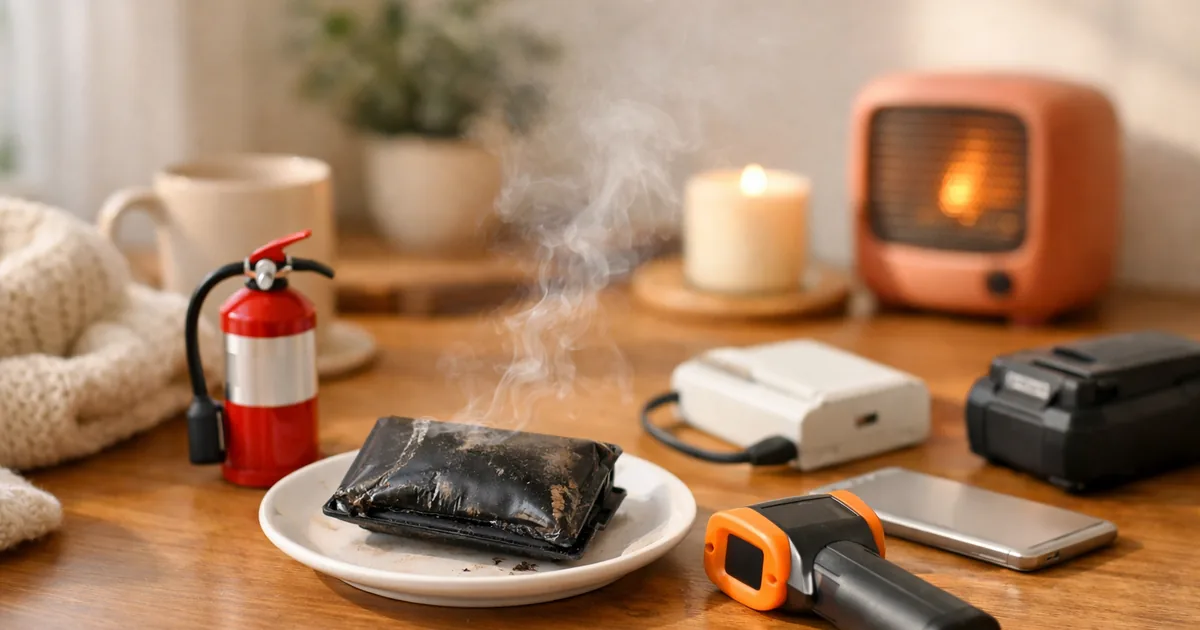
A dead power bank, broken earbuds, an old phone, a worn power tool battery — where do they go? The US Environmental Protection Agency (EPA) says lithium-ion batteries and devices containing them should not go in household garbage or municipal recycling bins (plastic, paper, glass), because they can be damaged or crushed in transport or by sorting equipment and start a fire. Before dropping them off, put each battery or device in its own plastic bag and cover the terminals with non-conductive tape such as electrical tape. Even used batteries can have enough energy to injure or start fires. Here is the consumer part of EPA’s “Used Lithium-Ion Batteries” page (last updated 20 March 2026), with matching lines from the US Fire Administration (USFA) and the Consumer Product Safety Commission (CPSC).
1. Not in the trash or recycling bin — they can be crushed and catch fire.
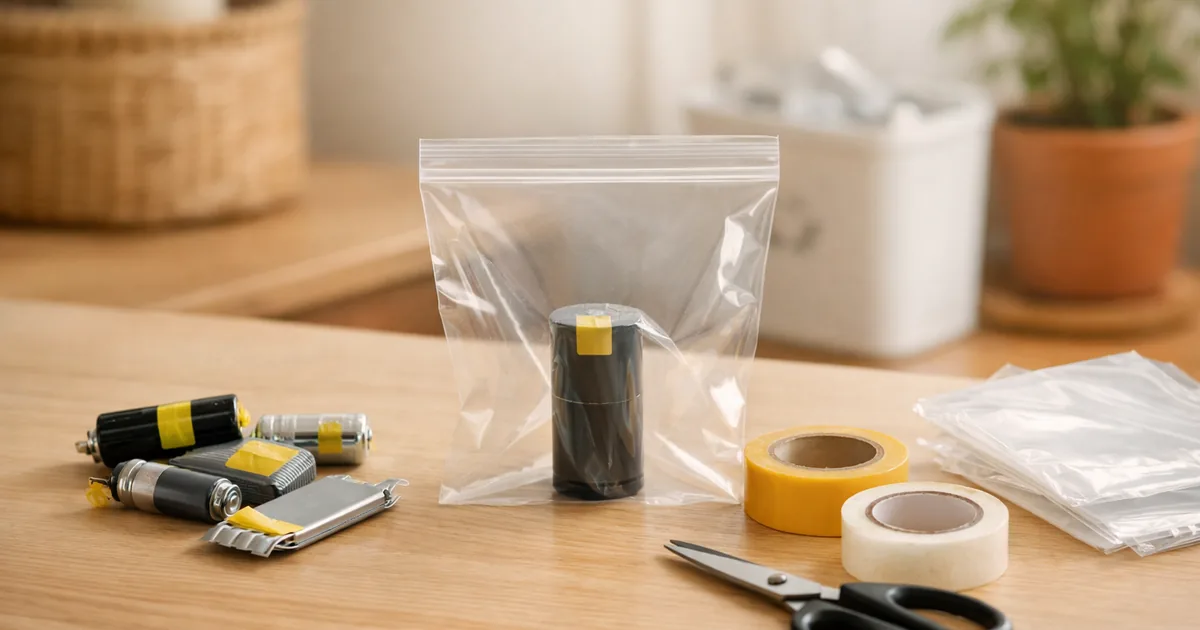
2. One per plastic bag; electrical tape over the terminals.
3. Damaged or swollen? Ask the manufacturer how to handle it.
Two kinds of lithium battery at home — EPA
| Type | What the source says | Worth noting (ours) |
|---|---|---|
| Single-use lithium metal | Not rechargeable; common in cameras, watches, remote controls, handheld games and smoke detectors. Can look like ordinary alkaline sizes, or come as button and coin cells — look for the word “lithium” | If a child swallows a coin cell, see the link below |
| Rechargeable Li-ion (lithium-polymer) cells | Phones, power tools, digital cameras, laptops, children’s toys, e-cigarettes, small and large appliances, tablets, e-readers. Some come out easily, some don’t | Power banks and earbuds belong here too (ours) |
Why not the bin — EPA
| Type | What the source says | Worth noting (ours) |
|---|---|---|
| Fire | In the trash or a municipal recycling bin, a battery or device can be damaged or crushed in transport or by processing and sorting equipment, creating a fire hazard | The route to bin-lorry and sorting-plant fires (ours) |
| Resources | Li-ion batteries contain cobalt, graphite and lithium, critical minerals lost outright when binned | — |
| So | Recycle them at certified battery or electronics recyclers that accept batteries | — |
How to dispose — EPA
| Type | What the source says | Worth noting (ours) |
|---|---|---|
| Rule | Find a recycling location; not the trash or municipal recycling bins | — |
| In electronics | Certified electronics recyclers, retailers in take-back services, or your local solid waste or household hazardous waste programme | — |
| Removable batteries | Easily removed ones (e.g. power tools) to specialised battery recyclers, take-back retailers or local programmes | EPA’s locator tools are US-only |
| Bag | Each battery or battery-containing device in a separate plastic bag | — |
| Tape | Non-conductive tape (e.g. electrical tape) over the terminals | — |
| Damaged | Contact the battery or device manufacturer for handling information | — |
| Used | Even used batteries can have enough energy to injure or start fires | “It’s flat, so it’s safe” is wrong (ours) |
| Non-removable | Not all batteries are removable or serviceable by the user; heed the markings | Don’t pry them out (ours) |
Bigger batteries — EPA
| Type | What the source says | Worth noting (ours) |
|---|---|---|
| Medium and large | Ask the manufacturer, car dealer or installer; not in the trash or recycling bins; consumers may not be able to remove them | — |
| Cars | The dealer, shop or salvage yard where the battery was bought | — |
| Energy storage | The equipment maker or the installer | — |
Other agencies say the same — USFA and CPSC
The USFA handout on batteries in electronic devices also says to tape the terminals to prevent accidental discharge and fire, and not to put lithium-ion batteries in the trash or recycling, because they can ignite. The CPSC’s micromobility guidance says to take lithium batteries to a battery recycler or hazardous waste centre, never the trash or general recycling, and to follow the CPSC release for recalled products. Three agencies, one line: no bin, taped terminals, a collection point (our summary). Charging and storage are in lithium-ion battery fire safety; e-scooter batteries in e-bike and e-scooter battery fires.
What to do in Korea — our reading
EPA’s collection routes (retailer take-back, household hazardous waste) are American. We did not read Korean law or council guidance on battery separation this time, so check your district office. EPA’s two preparation steps — one per bag, tape on the terminals — work wherever you take them. Don’t press or prise open a swollen phone or power bank (making your phone battery last); ask the maker, as EPA says. When replacing a 10-year smoke alarm, look for “lithium” on its battery too (smoke alarms).
Checklist
- ☐ Look for “lithium” on the battery
- ☐ Not in general waste or the plastic, paper or glass bins
- ☐ One per plastic bag, electrical tape on the terminals
- ☐ Swollen or damaged: ask the maker, don’t force it out
- ☐ Find your local battery collection point
Questions that remain
If it’s flat, can’t I just bin it?
EPA says even used batteries can have enough energy to injure or start fires. Tape and bags apply to flat batteries too.
Are coin batteries lithium?
EPA says single-use lithium metal batteries include button and coin cells, identified by the word “lithium”. If a child swallows one, see if a child swallows a button battery.
What about an EV battery?
EPA says to contact the dealer, shop or salvage yard, and notes consumers may not be able to remove it.
Sources
- US Environmental Protection Agency (EPA) — Used Lithium-Ion Batteries — source (last updated 20 March 2026; checked 4 November 2026). Two battery types and where they are used; fire risk in trash and municipal recycling, critical minerals (cobalt, graphite, lithium); consumer disposal for devices and removable batteries; bags, electrical tape, manufacturer for damage, energy in used batteries, non-removable batteries; medium and large (cars, energy storage).
- USFA — Lithium-Ion Battery Safety for Electronic Devices (handout PDF) — source (no date shown; checked 4 November 2026). Taped terminals, certified repairs, no trash or recycling (can ignite).
- CPSC — Micromobility: E-Bikes, E-Scooters and Hoverboards — source (no update date shown; checked 4 November 2026). Lithium batteries to a battery recycler or hazardous waste centre; recalled products per the CPSC release.
- Not read. The business, worker and transporter sections (hazardous waste rules), EPA’s linked locators, Korean battery separation rules and council guidance.
- What we added. The “worth noting” column and the Korean everyday gloss.
Where to check further
- Your district office — battery collection bins.
- The device maker — swollen or damaged batteries.
Written on 4 November 2026. The content is from the source; the glosses are ours.