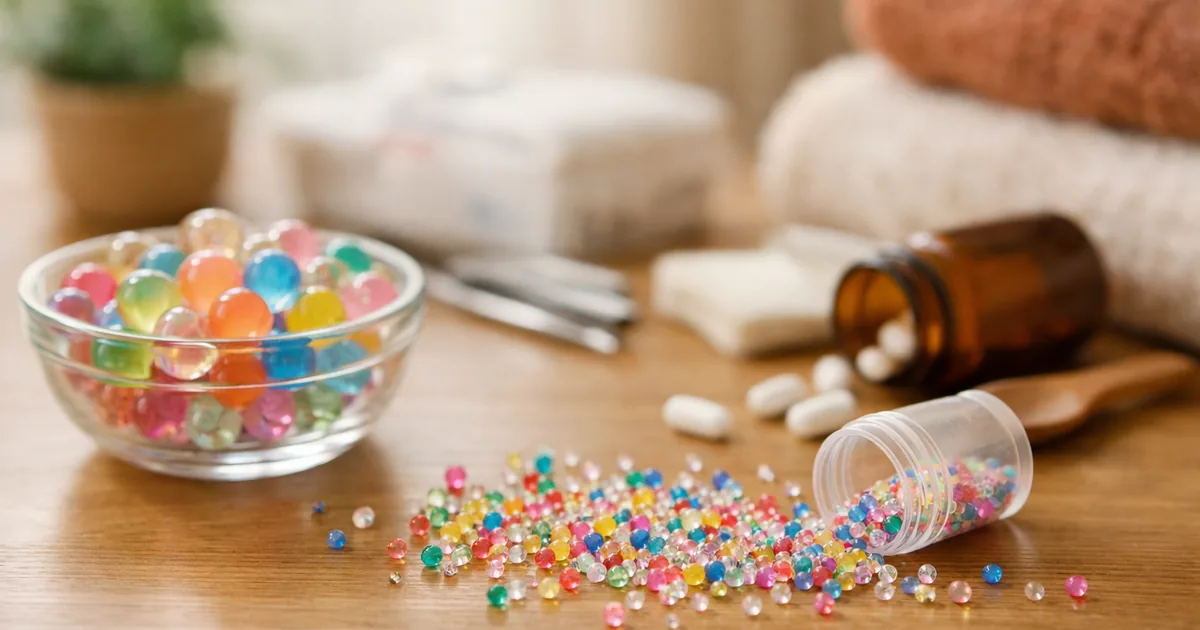
Small, strong ball and cube magnets can look harmless after a child swallows them while serious harm builds inside. The US Consumer Product Safety Commission (CPSC) says that when two or more magnets are swallowed, they attract each other internally, and that magnets lodged in the digestive system can cause perforations, twisting or blockage of the intestines, infection, blood poisoning and death. From 2009 to 2018 there were at least an estimated 4,500 US emergency department cases for swallowing magnets like those in magnet sets, and 2 deaths, most involving children 11 months to 16 years old. These high-powered magnets are up to eight times stronger than magnets used in toys. We set out three CPSC pages and add a checker that runs magnet safety at home through six points.
1. Suspect a swallowed magnet? Get medical help now — do not wait for symptoms — symptoms may not appear until after serious internal injury (CPSC).
2. Remove magnet sets and small magnets from homes with children — and take great care with magnets sold for adults too.
3. Look for missing magnets — inspect toys and play areas regularly, and tell teens never to put magnets near their mouth or nose.
Why they are dangerous — CPSC
- They pull together inside — swallowed high-powered magnets can attract each other or other metallic objects and become lodged in the digestive system, leading to perforations, twisting or blockage of the intestines, infection, blood poisoning and death (2021 release).
- Surgery — many incidents ended in surgery to remove the magnets, and removal can also mean repairing a damaged stomach and intestines (CPSC magnets page).
- Not fridge magnets — the CPSC says these are not the magnets off your grandfather’s refrigerator door; they are up to eight times stronger than magnets used in toys.
- Toddlers to teens — infants, toddlers and teens all get hold of them and swallow them, including teens who use magnets to mimic mouth piercings and swallow them by accident (2021 release).
- One object on an X-ray — several magnetic pieces held together across trapped intestinal walls can look like a single object on an X-ray.
The numbers — CPSC (US)
| Item | What the source says | Source |
|---|---|---|
| ER cases and deaths | 2009–2018: at least an estimated 4,500 emergency department cases for swallowing magnets with magnet-set features (many small, round magnets) and 2 deaths, most aged 11 months to 16 years | Release 17 August 2021 (21-178) |
| Strength | Up to eight times stronger than magnets used in toys | CPSC magnets page |
| Mandatory recall | 10 million Zen and Neoballs magnets — the firm did not agree to a voluntary recall, so the CPSC sued for a mandatory one | Release 17 August 2021 |
| Recent warning | About 94 magnetic building ball and stick sets (25 pieces: 16 sticks and 9 balls) with stronger than permitted magnets that can come loose, sold on Shein.com June 2024 to October 2025 for about $21; the seller did not respond to recall requests | Warning 20 November 2025 (26-100) |
By our calculation, about 4,500 cases over the ten years 2009–2018 is an average of about 450 a year. These are US emergency department estimates; we have not read Korean figures.
Checker
Magnet pieces unaccounted for: 0
Results update as you type. The six points are safety tips from the CPSC’s 2021 release (21-178); splitting them into items, counting them and “pieces it came with minus pieces now” are our calculation. If pieces are missing, search the home first, and if a child may have swallowed one, get medical help at once even without symptoms (CPSC). This checker is not a diagnosis.
For example, if a 25-piece magnetic building set (the set in CPSC warning 26-100 had 25 pieces) now counts 23, 2 pieces are unaccounted for; and if you keep the other rules but do not check toys for loose magnets, you have 1 of the 6 points to fix. If the same home has not yet removed its magnet set, it becomes 2 of the 6 (all our calculation).
If you think a magnet was swallowed — CPSC
- Get medical help now — seek immediate medical attention if you suspect your child has swallowed a magnet.
- Symptoms — look for non-specific abdominal symptoms such as abdominal pain, nausea, vomiting and diarrhoea. But these may not appear until after serious internal injury, so do not wait for symptoms.
- X-rays — what looks like one object may be several magnets separated by trapped intestinal walls. Telling the doctor what you know, such as “a few pieces are missing from a magnet set”, helps (our note).
In Korea, call 119 or go to the nearest emergency department (our note). The CPSC rules here are US guidance; we have not read the magnet provisions in Korea’s children’s product safety standards.
Before it happens — CPSC
- Explain — make sure children, teens included, understand the magnet ingestion hazard and never put magnets near their mouth or nose. Explain that ingestions often happen by accident while playing or using magnets like piercings.
- Remove — take magnet sets, small magnets and small pieces containing magnets out of homes with children who might swallow them by mistake or on purpose.
- Inspect — look out for loose magnetic pieces and regularly check toys and play areas for missing or dislodged magnets.
- Adult magnets too — be extremely cautious with magnets marketed for adults, which the toy standard does not cover; many incident reports involving children and teens concern magnets marketed only to adults.
- Check recalls — check cpsc.gov to see whether your children’s magnetic toys have been recalled; if so, stop using them and get the firm’s remedy.
The rules — what the CPSC says
The CPSC says it accepted the industry’s ASTM F963 toy manufacturing standard as a mandatory toy standard in February 2012, in force from 12 June 2012. The warnings and violation notices above concern products that break this toy standard. Separately, the CPSC magnets page carries a notice that the magnet sets final rule was vacated by a federal court and removed from the Code of Federal Regulations (it points to a Federal Register notice for details, which we have not read).
Checklist
- ☐ Tell children and teens never to put magnets in their mouth or nose
- ☐ Remove magnet sets, small magnets and small pieces with magnets (adult ones too)
- ☐ Count the pieces of magnetic toys; check play areas regularly
- ☐ Check magnetic toys for recalls
- ☐ Suspect a swallowed magnet? Doctor at once, symptoms or not
Questions that remain
Is swallowing just one magnet all right?
The CPSC says two or more swallowed magnets attract each other, and that a magnet can also stick to other metal objects. It is hard to be sure at home that only one went down, and the CPSC simply says to seek medical attention if you suspect it. The sources do not say one magnet is safe.
Is it different from swallowing a button battery?
The cause and the kind of injury differ. The CPSC warns about button batteries separately; see button battery safety. Either way, a suspected swallow means seeing a doctor at once (our summary).
Can I give a magnetic toy as a present?
The CPSC warnings concern products whose magnets are stronger than the toy standard allows and can come loose. Check the age label and recalls, and in a home with small children, skipping magnet sets fits the CPSC advice to remove them (our note). For toy gifts in general, see toy gift safety CPSC.
Sources
- CPSC — Ingestion of High-Powered Magnetic Balls and Magnetic Cubes Poses Serious Risk of Severe Internal Injury or Death in Children and Teens — source (17 August 2021, number 21-178; checked 24 November 2026). How injury happens, teens mimicking piercings, adult magnets, 2009–2018 about 4,500 ER cases and 2 deaths aged 11 months to 16, the 10 million Zen and Neoballs mandatory recall, seven safety tips.
- CPSC — Magnets (Safety Education) — source (no date shown; checked 24 November 2026). Two or more attract inside, surgery, symptoms, X-rays, up to eight times stronger, the notice that the magnet sets final rule was vacated, ASTM F963 mandatory standard (in force 12 June 2012), table of violation notices.
- CPSC — CPSC Warns Consumers to Immediately Stop Using Magnetic Building Ball and Stick Sets Due to Risk of Serious Injury or Death from Magnet Ingestion; Violates Mandatory Standard for Toys — source (warning 20 November 2025, number 26-100; checked 24 November 2026). About 94 units, 25 pieces (16 sticks and 9 balls), Shein.com June 2024 to October 2025 for about $21, stop using and dispose, do not sell or give away.
- Not read. The Federal Register notice on the vacated magnet sets rule and the 2022 final rule text, the CPSC’s 2021 proposed rule package, the magnet clauses of ASTM F963, paediatric clinical guidelines, the magnet provisions of Korea’s children’s product safety standards and Korea Consumer Agency magnet cases, and Korean recall information.
- What we added. The checker and its sums (item count, missing pieces, yearly average) and the Korean gloss. We have not copied the media and office contacts, phone numbers or email addresses on the pages.
Where to check further
- CPSC recall and warning lists — search by the name of the magnetic toy you have.
- The age label on the box — when buying a present.
Written on 24 November 2026. The content is from the sources; the glosses and checker are ours. This is general information; if you suspect a child has swallowed a magnet, call 119 in Korea or go to an emergency department at once.