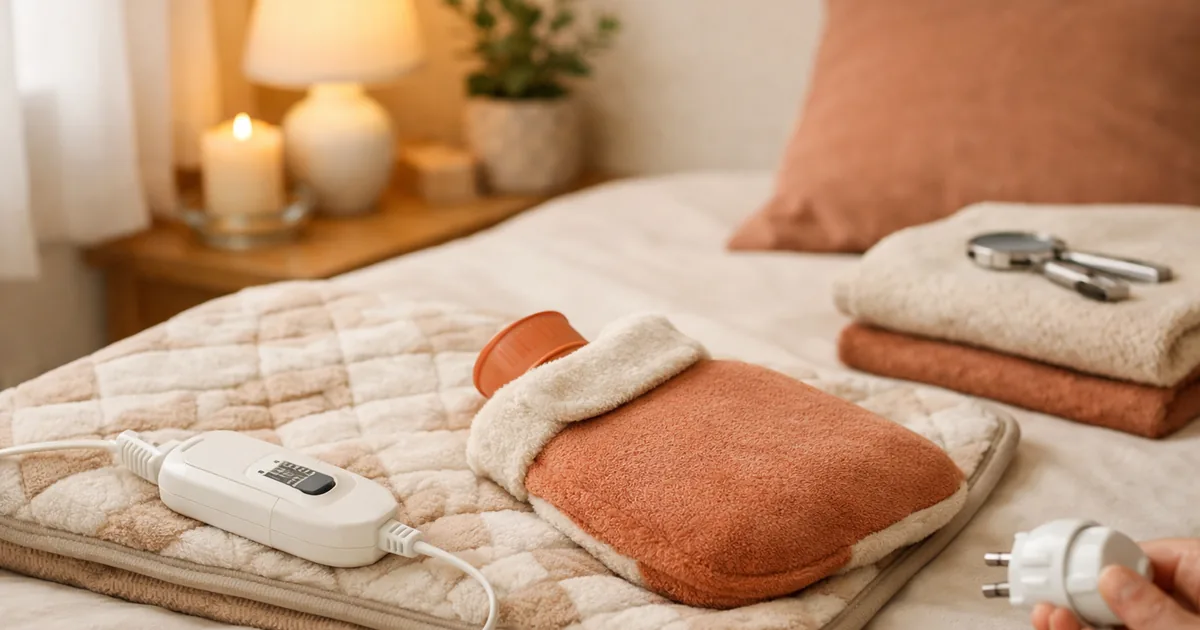
Woke up with a red mark where your hot pack was? It may be a low-temperature burn. Korea’s Disease Control and Prevention Agency (KDCA) says a hot pack can reach up to 70°C, and two hours of continuous contact with the skin causes a low-temperature burn, so use it over clothing, not directly on the skin. Korea’s National Fire Agency (NFA) says the body burns easily under 40–50°C heat — only a little above body temperature — if exposure goes on for a long time, and tells you not to put a hot pack on bare skin and to keep moving it. If you do get burned, the KDCA says to hold the area under running water for about 10 minutes to take the heat out and to see a burns hospital as soon as possible. Here are both agencies’ low-temperature burn notices from the Korea Policy Briefing, with a checker that compares your hot pack time, electric blanket setting and heater distance against them.
1. Hot packs and hand warmers go over clothing, not on bare skin — and keep moving them — up to 70°C, 40–70°C on average for a long time.
2. Set a time limit for anything that heats — electric blankets at 37°C, close to body temperature; heaters at least 1 m away.
3. Burned? About 10 minutes under running water, then a burns hospital — take extra care with diabetes or after sleeping pills.
What a low-temperature burn is — the two agencies
Unlike a burn from boiling water or a flame, a low-temperature burn comes from heat that is not especially hot but stays in contact for a long time. The KDCA explains that when something warmer than the body touches the skin for a long time, blood flow to that patch of skin slows and the heat building up in the tissue cannot move away, causing a burn. The NFA puts the temperature at 40–50°C.
| Item | KDCA (December 2020) | NFA (December 2021) |
|---|---|---|
| What it is | A burn from long contact with something warmer than the body: blood flow slows and the built-up heat cannot escape | A burn from long exposure to 40–50°C, a little above body temperature |
| Hot packs | Reach up to 70°C; two hours of continuous skin contact causes a low-temperature burn → use over clothing | Up to 70°C, 40–70°C on average for a long time → not on bare skin, move it often |
| Electric blankets | Set to 37°C, close to body temperature; lay a quilt on the mat; not for long periods | Falling asleep with it on high dulls the skin’s feeling → put a quilt or similar on the mat |
| Heaters | At least 1 m away; lotion on exposed skin now and then | At least 1 m; moisturiser on exposed skin |
| Laptops and phones | Don’t use a laptop on your lap; don’t hold a phone to your face for long | The same — the face can flush |
| Take extra care | — | People with diabetes or who have taken sleeping pills |
| General rule | Don’t let it touch the skin directly | Don’t let it touch the body directly; set a time for using it |
Both notices treat hot packs and hand warmers together (the KDCA heading is “hot packs & hand warmers”). Neither gives a number for how often to move one, or how many hours are safe over clothing. So the checker below counts only “two hours on bare skin” as the source’s line.
Symptoms and first aid — KDCA
The KDCA says a low-temperature burn may be no more than reddened or itchy skin, but it can cause heat-related redness, pigmentation and red spots, come with itching or blisters, and in some cases the skin dies (necrosis). In other words it can be deep even when it looks mild at first (our reading).
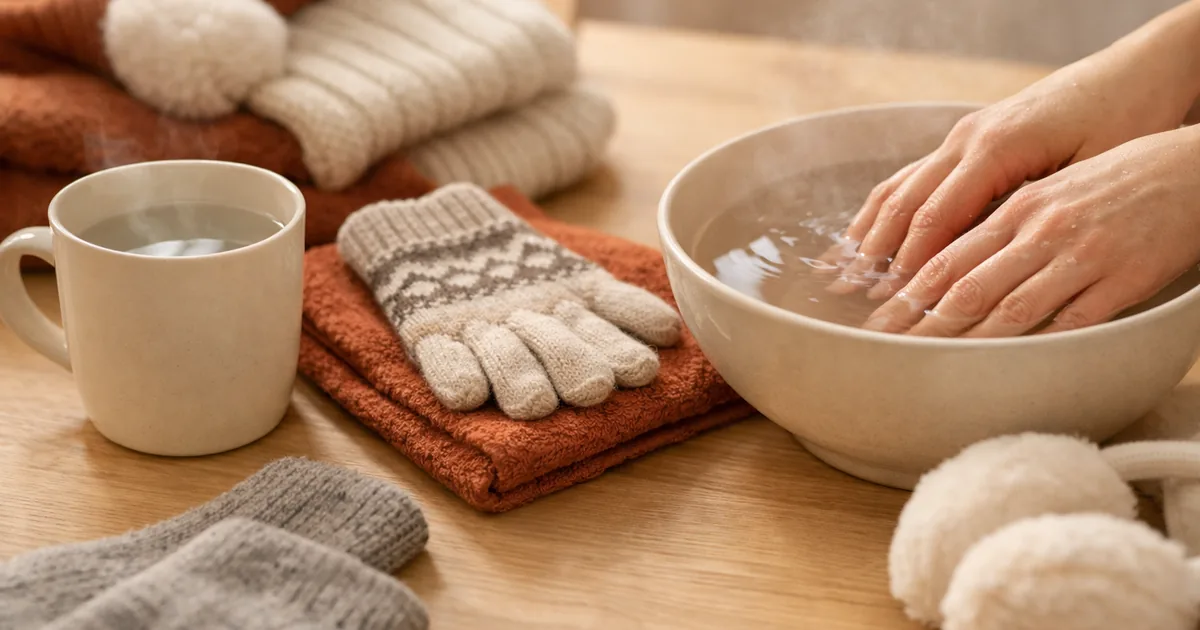
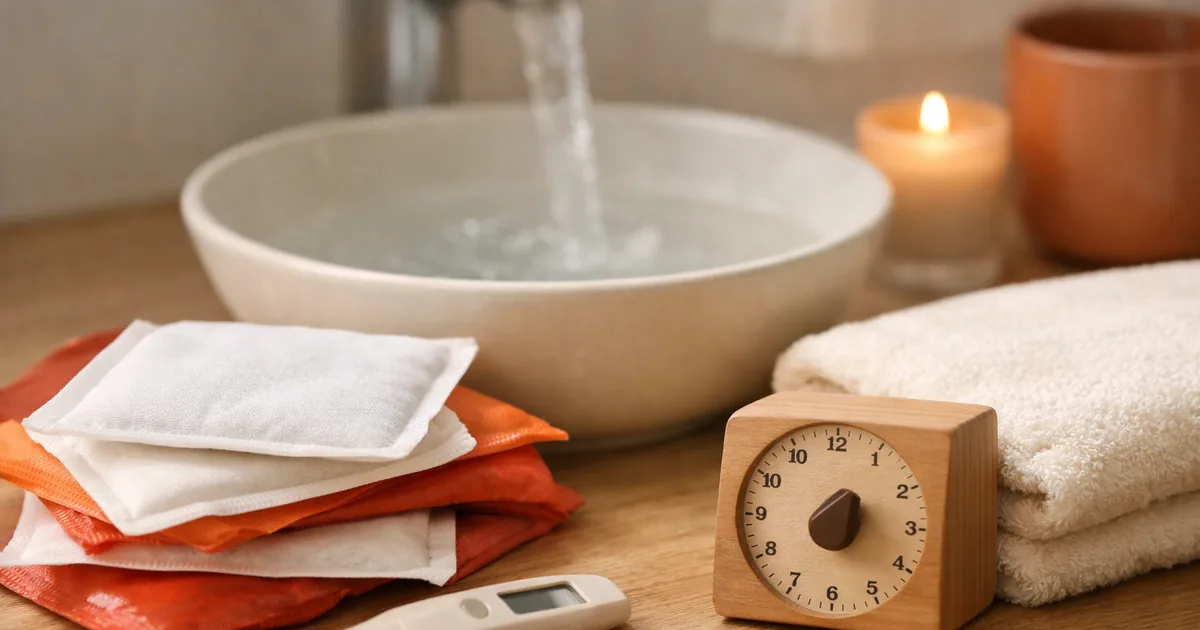
- Cool it — hold the burn under running water for about 10 minutes to take the heat out.
- Apply — the KDCA notice says a burn ointment or cream is good to put on.
- Get seen — go to a burns hospital for diagnosis and treatment as soon as you can.
Agencies differ on the cooling time and on creams. The UK NHS says to cool a burn under cool running water for 20 minutes and not to put butter or creams on it — see our burns and scalds NHS post. We have kept the KDCA wording as it is and have not judged which is right. If the blister is large or the skin has changed colour, the first step in both is to get medical care.
Calculator
Minutes left to two hours on bare skin: - · minutes past two hours: - · degrees above 37°C: - · cm short of 1 m: -
Results update as you type. The five items are (1) hot pack on bare skin, (2) two hours (120 minutes) or more on bare skin, (3) electric blanket above 37°C, (4) heater closer than 1 m (100 cm) and (5) diabetes or sleeping pills. 70°C, two hours, 37°C and 1 m come from the KDCA, diabetes and sleeping pills from the NFA; “left = 120 − minutes”, “past = minutes − 120”, “above = setting − 37” and “short = 100 − distance” are our sums. Zero does not mean safe — the sources give no time limit for use over clothing. Electric blankets show their setting in different ways (levels, dials), so enter a figure only if yours displays degrees.
For example, 90 minutes after putting a hot pack on bare skin leaves 30 minutes to the two-hour line. If the same night the electric blanket is at 45°C, that is 8 degrees above 37°C, and a heater 70 cm away is 30 cm short of 1 m — 3 of the five items. At 150 minutes on bare skin you are 30 minutes past two hours, and it becomes 4 of the five (all our sums).
Product by product
| Product | Source rule | Worth noting (our reading) |
|---|---|---|
| Stick-on hot packs and hand warmers | Over clothing, never straight on bare skin, move often | You cannot “move it often” while asleep |
| Electric blankets | 37°C, quilt on the mat, not for long periods | The NFA’s reason is that feeling dulls if you fall asleep with it on — fire rules are in our electric blanket safety post |
| Heaters | At least 1 m; lotion or moisturiser on exposed skin | The US Fire Administration also says 3 feet (about 1 m), for fire reasons (space heater safety) |
| Laptops and phones | No laptop on the lap; don’t hold a phone to the face for long | Not winter heating, but the same mechanism, both agencies say |
Checklist
- ☐ Hot packs and hand warmers over clothing, never straight on bare skin
- ☐ Don’t leave one in the same spot — move it often
- ☐ Set a time limit — two hours on bare skin is the KDCA’s burn line
- ☐ Electric blanket around 37°C with a quilt on the mat
- ☐ Heaters at least 1 m away
- ☐ Extra care with heat products if you have diabetes or took sleeping pills
- ☐ Red spots or blisters: about 10 minutes under running water, then a burns hospital
Questions that remain
How many hours is it safe over clothing?
The sources give no number. The KDCA says “over clothing so it doesn’t touch the skin directly”; the NFA says “set a time” and “move it around”. Check the use time and warnings on the pack too (our reading).
Are rechargeable hand warmers the same?
Both notices cover hot packs and hand warmers together, so the low-temperature burn rules are the same. Rechargeable ones add a separate risk: the battery can overheat and catch fire — recalled US models and how to dispose of them are in our rechargeable hand warmer recall CPSC post.
Are the rules different for children or older people?
The two sources we read give no age-based rules. The only people the NFA singles out for extra care are those with diabetes and those who have taken sleeping pills.
Putting a hot pack on frozen fingers is a different matter — our frostbite NHS post says not to rewarm with one.
Sources
- Korea Policy Briefing — “Burned by a hot pack? How to prevent low-temperature burns” (material: KDCA) — source (17 December 2020; checked 23 November 2026). What a low-temperature burn is, symptoms (heat-related redness, pigmentation, red spots, blisters, necrosis), first aid (about 10 minutes under running water, burn ointment, burns hospital), electric blankets 37°C, hot packs up to 70°C and two hours, heaters 1 m, laptops and smart devices.
- Korea Policy Briefing — “Is that stinging skin a low-temperature burn?” (NFA) — source (13 December 2021; checked 23 November 2026). 40–50°C, three general rules (no direct contact, set a time, extra care with diabetes or sleeping pills), hot packs 40–70°C on average and moving them, electric blankets, heaters and smart devices.
- Not read. The original press-release files on the KDCA and NFA websites, Korea’s KATS safety standards and safety-confirmation marking rules for hand warmers and heating products, Korea Consumer Agency injury data on hot packs, clinical guidelines such as those of the Korean Burn Society, individual product labels, and any separate NHS page on low-temperature burns.
- What we added. The checker and its sums, the “worth noting” column and the layout of the two-agency table.
Where to check further
- The hot pack or electric blanket packaging and manual — use times and temperature levels for that product.
- A burns hospital or emergency department — if you see blisters or dead skin.
Written on 23 November 2026. The content is from the sources; the glosses and checker are ours.