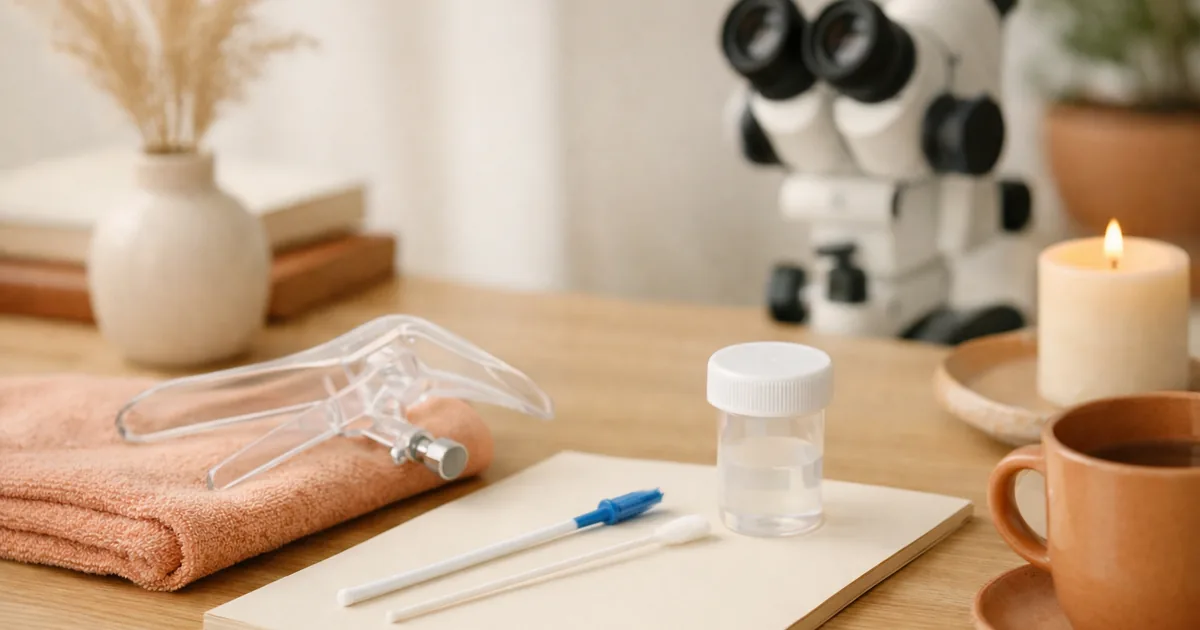
The UK National Health Service (NHS) does bowel cancer screening as a home test. The NHS bowel cancer screening page says people aged 50 to 74 are sent a faecal immunochemical test (FIT) kit every 2 years, which checks a sample of poo for blood. People aged 75 or over can also be screened every 2 years, but are not invited and have to ask. Most results arrive within 2 weeks by letter, and the GOV.UK guide says around 97 to 98 in 100 people get “no further tests needed” while 2 to 3 in 100 are offered further tests (usually a colonoscopy). We added a checker that works out your next turn from your age, last result and the date you posted the kit.
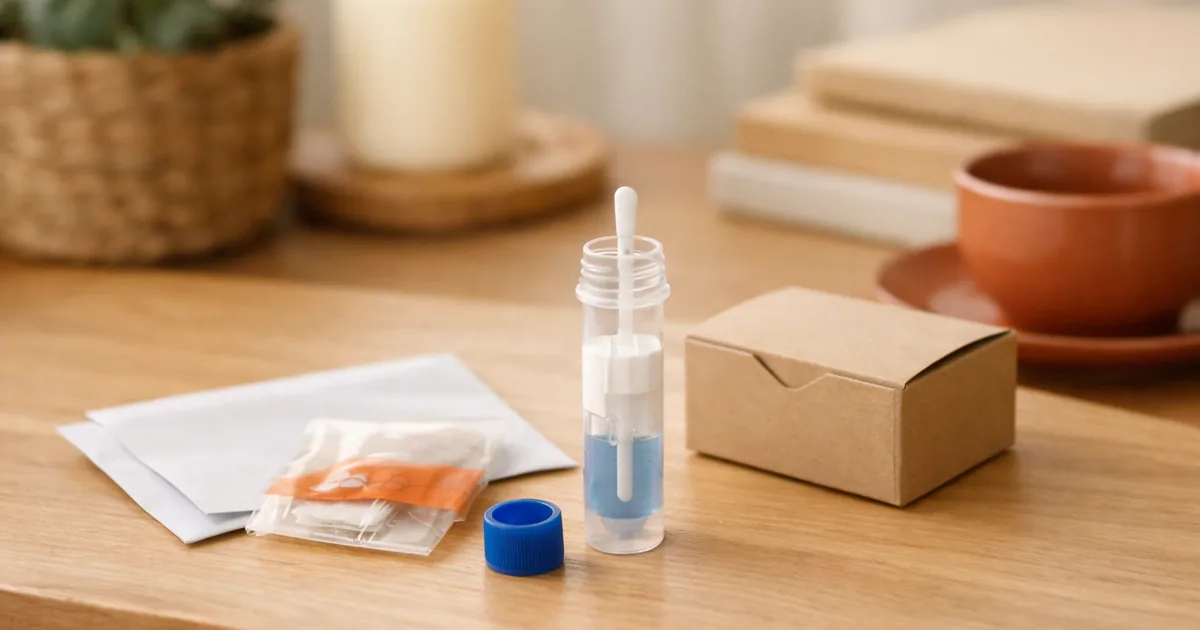
1. Aged 50 to 74, every 2 years, a FIT kit at home — catch a small sample so it doesn’t touch the toilet water, use the stick, seal it in the bottle, write the date and post it back free.
2. 97 to 98 in 100 get “no further tests” — invited again in 2 years. 2 to 3 in 100 have blood found: a specialist nurse appointment, usually a colonoscopy.
3. Screening does not rule bowel cancer out — symptoms for 3 weeks or more: see a GP; black or dark red poo or bloody diarrhoea: urgent.
Checker
Further tests (example): - people
Updates as you type. The next invitation date is our sum of “date posted + 2 years”; the NHS sets the real date. Age then is estimated as age now + 2 (birthday not used). The further-tests count is our sum of the GOV.UK guide’s “97 to 98 in 100” applied to the number of people, rounded.
For example, a 60-year-old who posts a kit on 12 November 2026 and gets “no further tests needed” is next invited around 12 November 2028, at about 62 (our sum). Get a normal result at 73 and your next turn falls at 75, so no kit comes automatically — you can ask for one every 2 years. If 1,000 people send a kit, 20 to 30 are offered further tests (our sum of the guide’s 2 to 3 in 100).
Who and how often — NHS
| Item | What the NHS says | Worth noting (ours) |
|---|---|---|
| Who | Aged 50 to 74, because risk rises with age | Sent automatically to people registered with a GP |
| How often | Every 2 years, a kit by post | Korea’s national programme is yearly (below) |
| First kit | At 50, 52 or 54, depending on when you turned 50 | It may not arrive on your 50th birthday |
| 75 or over | Can screen every 2 years but not invited; ask the helpline | The checker flags “next turn 75 or over” |
| No permanent address | Ask your GP surgery to send the kit elsewhere | — |
| Choice | Optional; you can opt out or back in through the helpline | — |
Doing the kit — NHS
| Step | NHS advice | Worth noting (ours) |
|---|---|---|
| 1. Catch | A small sample in a clean container, not touching the toilet water | Water can spoil the sample |
| 2. Collect | Use the kit’s stick, put it in the bottle and seal it | — |
| 3. Date | Write the date on the bottle | The “date posted” in the checker |
| 4. Post | Post it back; postage is free | — |
| Periods | GOV.UK guide: don’t collect a sample 2 days before or after a period | So period blood doesn’t blur the result |
The helpline can help if you have had bowel surgery or have a stoma, and can send alternative formats such as Braille.
The two results — NHS
| Result | What the NHS says | Worth noting (ours) |
|---|---|---|
| No further tests needed | No blood found; the most common result; invited again in 2 years | GOV.UK guide: 97 to 98 in 100 |
| Further tests needed | Blood found; invited to see a specialist nurse; usually a colonoscopy | GOV.UK guide: 2 to 3 in 100 |
| Repeat | Occasionally asked to do the test again | — |
| Timing | Most get a letter within 2 weeks; sometimes longer | — |
Blood does not always mean cancer: the NHS names more common, less serious causes such as anal fissures and bowel polyps. Equally, “no further tests needed” does not rule bowel cancer out — so know the symptoms and see a GP if worried. The GOV.UK guide says regular screening lowers the risk of getting or dying from bowel cancer but gives no figure for how much.
Symptoms to act on regardless of screening — NHS
| Situation | NHS advice | Worth noting (ours) |
|---|---|---|
| Poo changes (softer, unusual diarrhoea or constipation), pooing more or less often, blood in poo (red or black), bleeding from the bottom, needing to go again just after, tummy pain or a lump, bloating, losing weight without trying, very tired or short of breath | Symptoms page: see a GP. GOV.UK guide: if they last 3 weeks or more | The NHS notes tiredness or breathlessness can be anaemia |
| Black or dark red poo, bloody diarrhoea | Urgent (urgent GP appointment or NHS 111) | Same-day care |
| Bleeding non-stop, a lot of blood or large clots | 999 or A&E; don’t drive yourself | In Korea, 119 or an emergency room |
Signs of anaemia are covered in iron deficiency anaemia; pain and bloating that come and go in IBS.
How Korea’s national bowel screening differs
Korea’s national colorectal screening offers a faecal occult blood test to everyone aged 50 or over every year, moving to colonoscopy if it is abnormal, with no charge. The ages and interval are as Annex 1 of the Enforcement Decree of the Cancer Control Act (as amended 14 May 2019; current text in force 2 January 2026, Presidential Decree No. 35948; checked 12 November 2026) puts them — “colorectal cancer · 1 year · men and women aged 50 or over”; the test type and the cost are from our national cancer screening by age post (Annex 1 gives only age, interval and who is covered). Side by side (our table):
| Item | UK NHS | Korea (Annex 1 · existing post) |
|---|---|---|
| Ages | Invited 50 to 74; 75+ on request | Men and women 50 or over (Annex 1), no upper age (only “or over” — our reading) |
| Interval | 2 years | 1 year (Annex 1) |
| First test | FIT kit at home, posted back | Faecal occult blood test (existing post) |
| If abnormal | Specialist nurse, usually colonoscopy | Colonoscopy (existing post) |
Over 10 years that is 5 tests in the UK and 10 in Korea (10 years divided by the interval, our sum). In both countries the first step looks for blood in poo — expecting a colonoscopy straight away is the same mistake in both.
Checklist
- ☐ Aged 50 to 74: a kit every 2 years (first at 50, 52 or 54)
- ☐ Keep it off the toilet water; avoid 2 days before or after a period; date the bottle
- ☐ Results usually within 2 weeks
- ☐ Even after “no further tests”, symptoms for 3 weeks or more: GP
- ☐ Black or dark red poo or bloody diarrhoea: urgent; non-stop bleeding: 999
Korea’s six cancer screenings by age are in national cancer screening by age; whether you are due this year in health check-up eligibility.
Questions that remain
How much blood counts as positive on a FIT kit?
The GOV.UK guide refers to a “screening level” but gives no number.
How risky is a colonoscopy?
The guide says bowel damage is rare without giving a rate, and does not say how many in 100 have polyps or cancer found. The NHS colonoscopy page (summary, our wording) also calls complications rare — a reaction to sedation, bleeding from the bottom, a tear in the bowel — with no rates. The test takes 30 to 45 minutes, you are in hospital for about 2 hours in all, and after sedation you cannot drive for 24 hours. Diarrhoea can start a few hours after the laxative; bloating for 2 to 3 hours and a little bleeding for a couple of days afterwards are common. Results come by letter or call within a few weeks; if you have heard nothing after 3 weeks, contact the hospital. That page does not cover the screening programme itself.
What if I don’t live in England?
This post sets out the NHS (England) pages. In Korea, follow the yearly national screening.
Sources
- NHS — Bowel cancer screening — source (page shows: reviewed 11 October 2024, next review 11 October 2027; checked 12 November 2026). Ages 50 to 74 every 2 years, 75+ on request, first kit at 50, 52 or 54, kit steps, the two results and repeats, 2 weeks, fissures and polyps, choice and helpline support.
- NHS — Bowel cancer symptoms — source (page shows: reviewed 4 September 2026). Main symptoms, urgent help, 999.
- GOV.UK — NHS bowel cancer screening: helping you decide — source (page shows: updated 23 June 2025). 97 to 98 and 2 to 3 in 100, 2 weeks, 2 days around a period, 3 weeks of symptoms.
- NHS — Colonoscopy — source (page reviewed 29 September 2026, next review 29 September 2029; checked 12 November 2026). 30–45 minutes and about 2 hours, 24 hours after sedation, laxatives, rare complications (no rates), results within weeks and 3 weeks.
- Korea Law Information Center — Enforcement Decree of the Cancer Control Act Art. 8 and Annex 1 — source (current text, in force 2 January 2026, Presidential Decree No. 35948; Annex 1 as amended 14 May 2019; checked 12 November 2026). Six cancers screened; colorectal cancer every year for men and women 50 or over.
- Not read. The GOV.UK Easy Read PDF, Scottish, Welsh and Northern Irish programmes, the UK screening committee recommendation, any FIT threshold notice, and the Korean notice setting the test type and cost.
- What we added. The “worth noting” column, the checker’s date, age and head-count sums, the Korea comparison table and the 10-year count.
- Also seen. The source lists a helpline number; we have not copied it — check the source.
Where to check further
- Your GP surgery — if no kit arrives, or with symptoms.
- In Korea — the National Health Insurance Service screening eligibility lookup.
Written on 12 November 2026. The content is from the NHS and GOV.UK; the glosses and sums are ours.