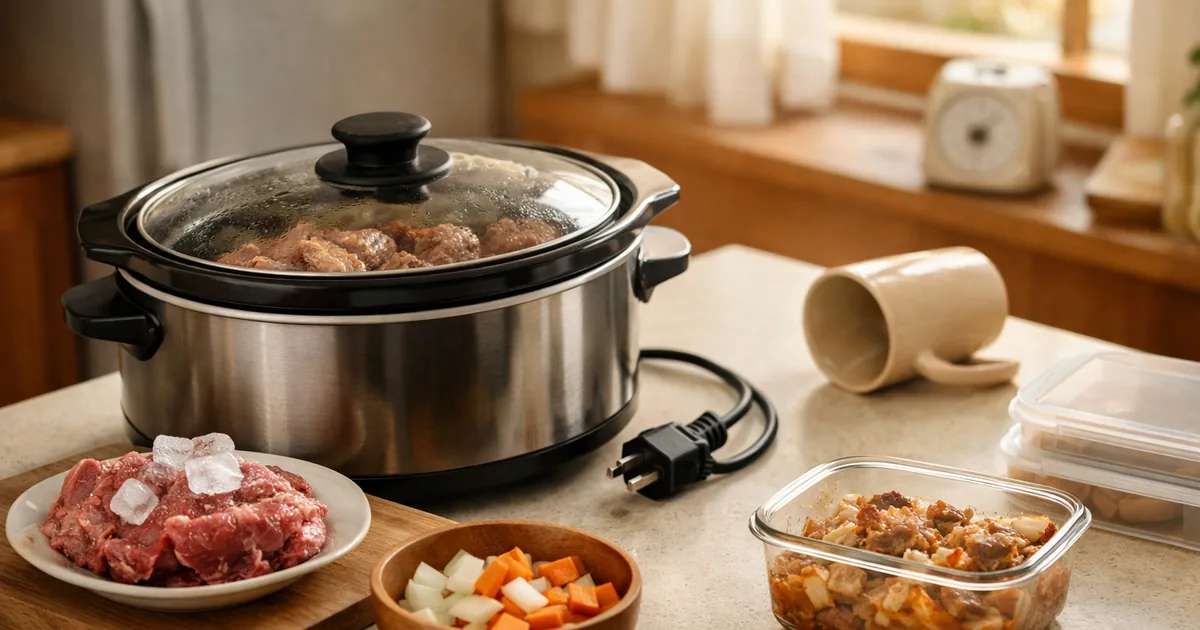
When the cold sets in, more people load a slow cooker with stew or soup in the morning and leave for work. The US Department of Agriculture’s Food Safety and Inspection Service (USDA FSIS) says the slow cooker is a safe process. It cooks slowly at a low temperature, generally 170° to 280 °F (about 77–138 °C, our conversion), and the direct heat, long cooking and steam in the covered pot together destroy bacteria. But there are conditions: always thaw meat first, use the highest setting for the first hour where possible, throw the food away after a power cut while you were out even if it looks done, and refrigerate leftovers within 2 hours, reheating them by another method to 165 °F.
1. No frozen meat or poultry — thaw first. Keep ingredients chilled until you start.
2. High for the first hour; lid on except to stir or check. Low all day is safe too.
3. Power cut while you were out → throw it away. Leftovers in the fridge within 2 hours; reheat to 165 °F.
Getting started — USDA
| Type | What the source says | Worth noting (ours) |
|---|---|---|
| Why it’s safe | Direct heat, lengthy cooking and steam in a tightly covered pot destroy bacteria; generally 170–280 °F | About 77–138 °C (ours) |
| Clean start | Clean cooker, utensils and work area; wash hands before and during preparation | — |
| Keep it cold | Refrigerate perishables until preparation; if cut in advance, store meat and vegetables separately | The cooker may take several hours to reach a bacteria-killing temperature |
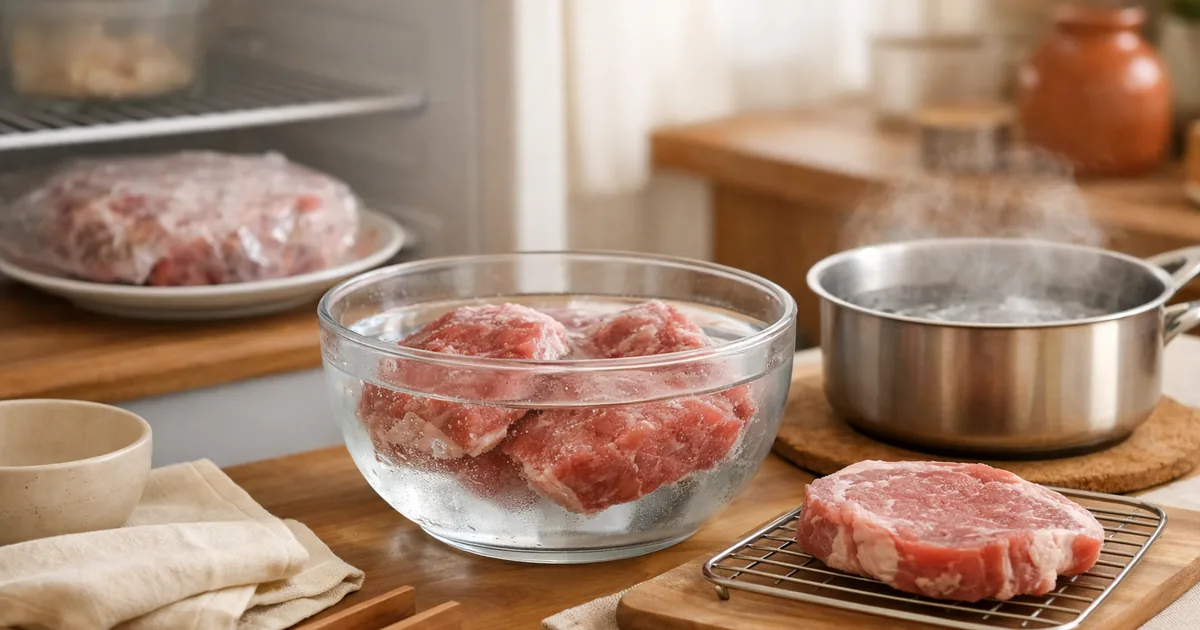
| Thaw | Always thaw meat or poultry first; follow the maker for commercial frozen slow-cooker meals | How to thaw: see the related guide below |
| What to cook | High-moisture dishes: chili, soup, stew, spaghetti sauce | — |
| Order | Vegetables cook slower than meat, so vegetables go in first; use the right amount; check the booklet for meat sizes | — |
While it cooks — USDA
| Type | What the source says | Worth noting (ours) |
|---|---|---|
| Check | Make sure it’s plugged in and turned on; keep the lid in place, removing it only to stir or check doneness | — |
| Settings | High cooks faster than low; low suits all-day cooking or less-tender cuts | — |
| First hour | If possible, highest setting for the first hour, then low or as the recipe says; low the entire time is safe if you’re leaving for work | — |
| During and after | Food stays safe as long as the cooker is operating | — |
Power cuts and leftovers — USDA
| Type | What the source says | Worth noting (ours) |
|---|---|---|
| Out when the power went | If you weren’t home for the whole cook and the power went out, throw the food away even if it looks done | Because you can’t know when it stopped, in our reading |
| Home when the power went | Finish cooking at once by other means — a gas stove, an outdoor grill, or a house with power | — |
| Cut after it was done | If it was fully cooked before the cut and you were home, it stays safe up to 2 hours in the cooker with the power off | — |
| Leftovers | Shallow covered containers, refrigerated within 2 hours after cooking ends | — |
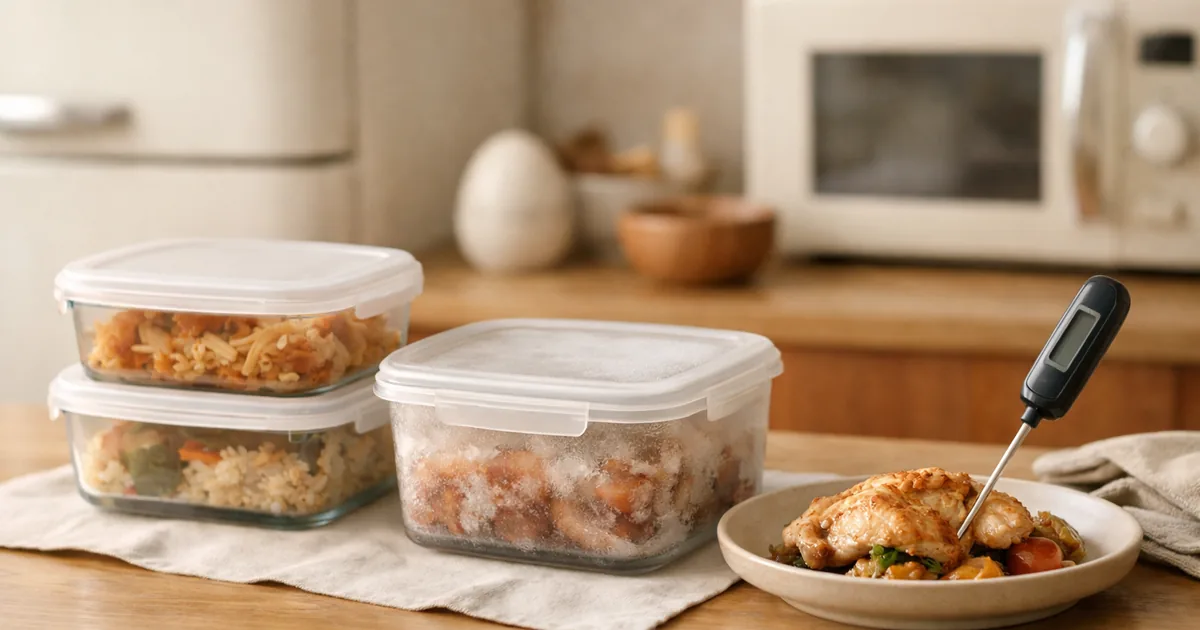
| Reheating | Reheating in a slow cooker is not recommended. Reheat on the stove, in a microwave or an oven to 165 °F, then keep hot in a preheated cooker at 140 °F or more | 165 °F ≈ 74 °C, 140 °F = 60 °C (ours); use a food thermometer |
In a Korean kitchen — our note
Two habits clash most with this guidance: putting meat straight from the freezer into the cooker before work, and reheating leftover stew in the cooker itself. USDA says “always thaw” for the first and “not recommended” for the second. Both come from the same point, in our reading: a slow cooker can take several hours to reach a bacteria-killing temperature. Moving the meat to the fridge the day before, and reheating leftovers to 165 °F (about 74 °C) in a pan or microwave before transferring them to keep warm, follows the source.
The source also says a slow cooker uses less electricity than an oven and, in summer, keeps oven heat out of the house. It gives no figure for how much less.
Checklist
- ☐ Meat and poultry thawed; ingredients chilled until the start
- ☐ Vegetables first; high-moisture dishes
- ☐ Plugged in, high for the first hour, lid on
- ☐ Power cut while you were out: throw it away
- ☐ Leftovers chilled within 2 hours; reheat by another method to 165 °F
Questions that remain
Is 8 hours on low risky?
USDA says cooking on low the entire time is safe if time is short. High for the first hour is “if possible”.
Can I leave it on “keep warm” overnight?
The source only says food stays safe while the cooker operates and sets no keep-warm limit. Its rule for leftovers is the fridge within 2 hours after cooking ends.
Sources
- USDA FSIS — Slow Cookers and Food Safety — source (page shows: last updated 8 August 2013; checked 2 November 2026). 170–280 °F and why it is safe; clean start, chilling, meat and vegetables apart; always thaw; high-moisture dishes; vegetables first; plugged in, lid on; high/low and the first hour; power cuts (discard, other means, 2 hours); leftovers within 2 hours in shallow containers; reheating to 165 °F and holding at 140 °F; less electricity than an oven.
- Not read. Individual product manuals; Korean agency guidance on cooking appliances.
- What we added. The “worth noting” column and the Korean everyday gloss.
Where to check further
- Your cooker’s manual — meat sizes and setting temperatures.
- A food thermometer — to check 165 °F and 140 °F.
Written on 2 November 2026. The content is from the source; the glosses are ours.