Getting sick, injured, or robbed in a foreign country is frightening — you don't speak the language, you don't know who to call, and every decision feels urgent. The good news: two or three phone numbers and a few documents solve most travel emergencies. Read this once before your trip and bookmark it.
5 things to prepare before you leave
Half of emergency response happens before departure. These five items take less than half an hour combined.
| Item | Why it matters | Time needed |
|---|---|---|
| Travel insurance | Foreign hospital bills are brutal — a single US ER visit can run thousands of dollars. You can only buy it before departure | 5 min online |
| Your embassy's emergency line | Most countries run a 24/7 consular hotline for citizens abroad. Save it in your phone | 1 min |
| Passport copy + 2 passport photos | Makes replacement dramatically faster if yours is lost or stolen. Keep a scan in the cloud too | 5 min |
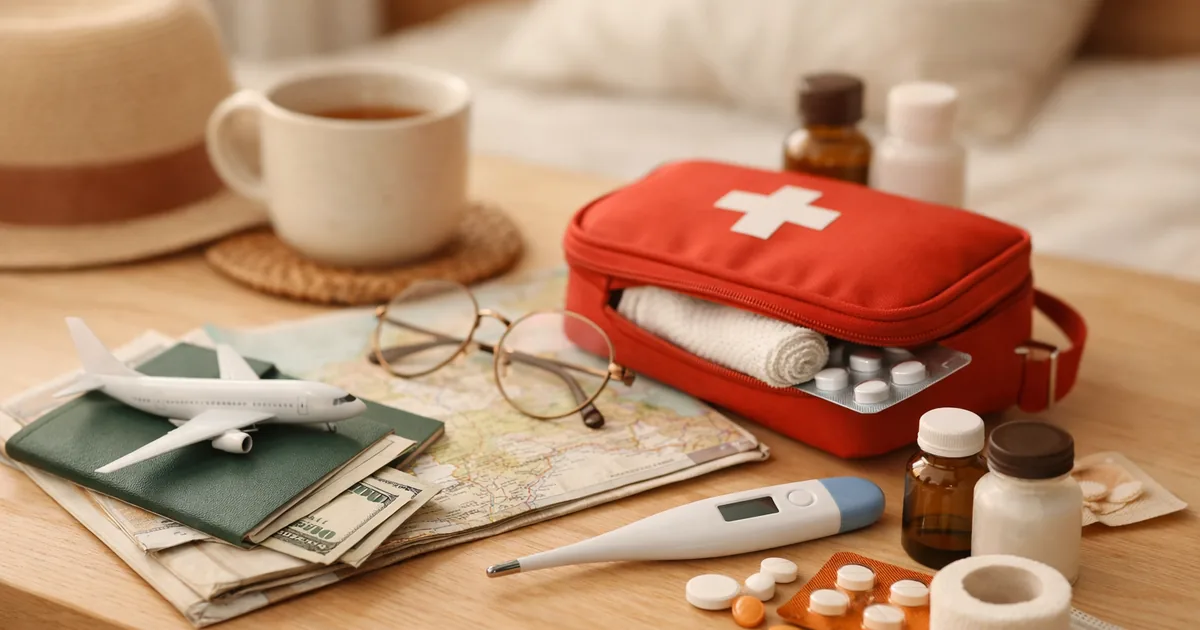
| Basic medicine kit | Pain reliever, anti-diarrheal, antacid, bandages. Far easier than hunting a pharmacy at midnight | 10 min |
| Local emergency numbers | It's not 911 everywhere — see the table below | 1 min |
For what belongs in that medicine kit, see our home first-aid kit guide — it includes a travel-size version.
Emergency numbers by country
Most smartphones can dial emergency numbers even when locked. Check the number for your destination on day one.
| Region | Ambulance / Fire | Police |
|---|---|---|
| US & Canada | 911 (unified) | |
| European Union | 112 (unified, English widely available) | |
| United Kingdom | 999 or 112 | |
| South Korea | 119 (English support available) | 112 |
| Japan | 119 | 110 |
| China | 120 (ambulance) / 119 (fire) | 110 |
| Australia | 000 (unified) | |
| Thailand | 1669 | 191 (tourist police 1155) |
| Vietnam | 115 | 113 |
| Singapore | 995 | 999 |
Your embassy is your lifeline
Nearly every country operates consular services for citizens in trouble abroad. They typically help with:
- Lost or stolen passports — emergency travel documents, usually within a day or two if you have a copy and photos.
- Interpretation help — some consulates offer three-way interpretation with local police or hospitals.
- Emergency funds — many governments run a system where family at home deposits money and you collect local currency at the consulate.
- Lists of local doctors and lawyers — vetted, English-speaking professionals.
Find your nearest embassy or consulate before you travel, and register your trip if your government offers a traveler registration program (like the US STEP program).
What to do, situation by situation
| Situation | Do this, in order |
|---|---|
| Sudden illness | ① Severe symptoms → local emergency number. ② Mild → ask hotel front desk for a clinic or pharmacy. ③ Keep every document (see below) |
| Injury | ① First aid (pressure on bleeding). ② Get to a hospital. ③ Photograph the scene and record what happened. ④ Collect documents |
| Lost passport | ① Police report at the nearest station. ② Go to your embassy. ③ Emergency travel document (faster with a copy + photos) |
| Stolen wallet/phone | ① Freeze cards immediately. ② Police report — required for insurance claims. ③ Emergency funds via your consulate if needed |
| Traffic accident | ① Call police. ② See a doctor the same day, even for "minor" pain. ③ Get the other party's details and photos |
Hospital visits and insurance claims
Travel insurance reimburses overseas medical costs — but only if you collect the paperwork while you're still there. Getting documents from a foreign hospital after you've flown home is painful.
| Document | Purpose | Note |
|---|---|---|
| Medical certificate / doctor's note | Proves diagnosis and treatment | English versions are widely accepted |
| Itemized bill + receipts | Proves the amount paid | A card slip alone is not enough |
| Prescription + pharmacy receipt | Claims medication costs | Keep pharmacy receipts separately |
| Police report | Proves theft or accident | Required for stolen-property claims |
File your claim as soon as you get home — most insurers now accept photos of documents through their app.
A real-world example: food poisoning in Osaka at 11 p.m.
Day two of your trip, sudden cramps and vomiting. ① If symptoms are manageable, take the anti-diarrheal from your kit, sip fluids, and rest. ② If vomiting continues into the night and you're getting dehydrated, call 119 — ambulances in Japan are free. ③ If language fails, call your country's consular hotline or use a translation app for key phrases. ④ At the hospital, ask for a medical certificate, itemized bill, and receipts before you leave. ⑤ Back home, upload photos of everything to your insurer's app. Follow this flow and most of the bill comes back to you.
Pre-departure checklist
- ☐ Travel insurance purchased (check the overseas medical coverage limit)
- ☐ Embassy hotline saved; trip registered if available
- ☐ Passport copy + 2 photos, scan in the cloud
- ☐ Medicine kit: pain reliever, anti-diarrheal, antacid, bandages, personal prescriptions (with extra days' supply)
- ☐ Destination emergency numbers saved (screenshot the table above)
- ☐ Card-issuer fraud hotline saved
- ☐ Itinerary shared with family
Tip. If you take prescription medication, carry a doctor's note or the generic drug name in English. Some countries restrict ingredients found in common cold medicine (like pseudoephedrine), so check the destination's rules before packing large quantities.
FAQ
Q. I forgot to buy travel insurance and I've already left. Any options?
Standard travel insurance can't be purchased after departure. Check your credit cards — premium cards often include travel medical coverage automatically. Going forward, treat insurance like your passport: no policy, no trip.
Q. What if nobody at the hospital speaks English?
Ask your consulate about interpretation services, use your phone's translation app for key symptoms, and write numbers down. Pointing at a translated sentence works better than struggling to pronounce it.
Q. The hospital wants payment upfront and it's more cash than I have.
Call your insurer's emergency assistance line first — many arrange direct (cashless) payment with hospitals. Otherwise, your consulate's emergency funds transfer system lets family at home get money to you quickly.
Q. Anything extra when traveling with kids?
Pack children's fever reducer (syrup, dosed by weight) and a thermometer. The basics of handling emergencies are the same as at home — see our guides to home emergencies and CPR and choking response, and how to decide when a symptom needs an ER in ER or clinic?
Three things solve most travel emergencies: the local emergency number, your embassy's hotline, and collecting every document. Remember those and you'll find your way in any country.
Emergency numbers and consular services change over time — verify details for your destination before departure. This article is general information and does not replace professional medical or legal advice.