Runny nose nonstop, coughing all night, so congested they can't even feed. Colds in babies are so common that 6–8 a year is normal. And here's where many parents slip up — reaching for over-the-counter cold medicine. Children under 2 should not be given store cold medicine. So what can you actually do? And which coughs are danger signs?
First: be careful with OTC cold medicine
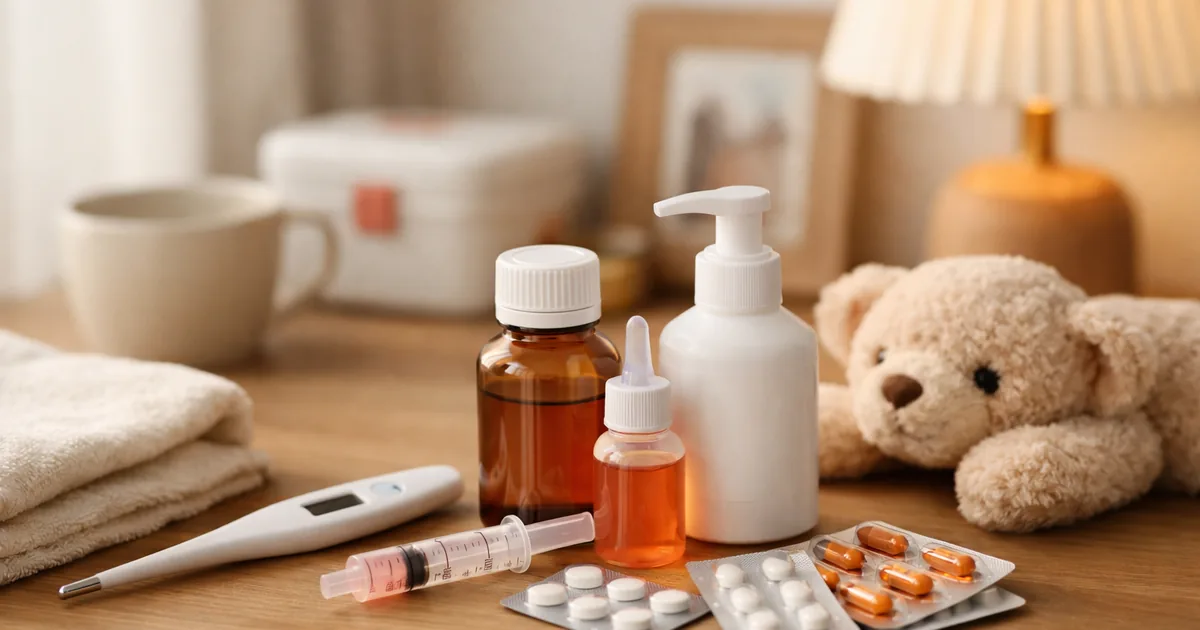
Korea's drug safety agency advises against giving over-the-counter cold medicines (cough suppressants, decongestants, antihistamines) to children under 2 — the benefit is unclear while side effects (seizures, breathing suppression) are a real risk. The US FDA advises against it under 4, and the UK under 6.
| Age | OTC cold medicine | Do this instead |
|---|---|---|
| Under 2 | Avoid (only if a doctor prescribes) | Saline drops, humidity, fluids — home care |
| 2–6 | Discouraged; avoid self-medicating | If severe, see a doctor for a prescription |
| With fever | Fever medicine is separate (by age/weight) | See our baby fever guide |
In other words, there's no medicine that cures a cold. While the body fights it off, your job is to ease the symptoms.
What you can do at home (evidence-based)
| Symptom | Home care | Caution |
|---|---|---|
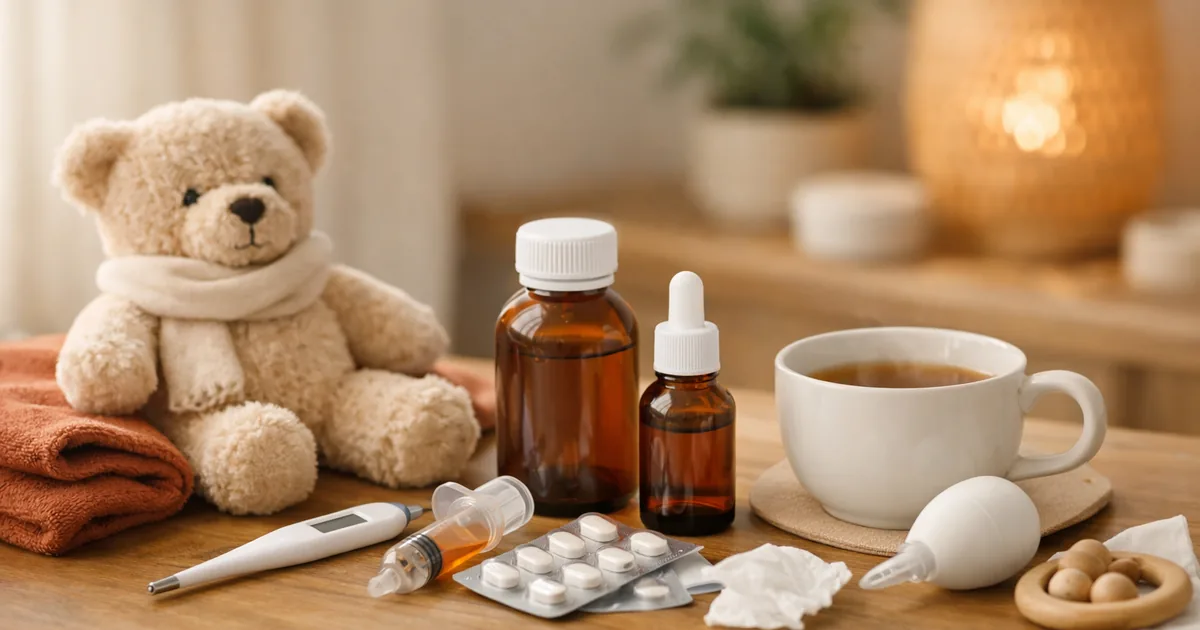
| Congestion/runny nose | Saline drops (1–2 drops) then a nasal aspirator. Especially helpful before feeding and sleep | Aspirate gently, not too often |
| Dry cough/throat | Humidifier at 40–60% humidity; offer fluids often | Refill and clean the humidifier daily (mold/bacteria) |
| Cough (over age 1) | Over 12 months, a small amount of honey before bed can ease coughing | Never give honey under 1 (botulism risk) |
| Stuffiness | Sleep with the upper body slightly raised; air out the room | Don't kink a newborn's neck with pillows |
Key point. Most colds improve within 7–10 days. Yellow or thicker mucus is a normal part of the course — it does NOT mean "bacterial = antibiotics." Antibiotics don't work on a viral cold; whether they're needed is a doctor's call.
Cold, or something else? A quick guide
These can look alike but call for different responses. When unsure, a pediatrician beats guessing.
| Condition | Tends to look like |
|---|---|
| Common cold | Runny nose, sneezing, mild cough, low fever, gradual onset, still eating and playing |
| Flu (influenza) | Sudden high fever, body aches, marked lethargy, during flu season |
| Bronchiolitis (RSV) | Common under 2 — wheezing, fast breathing, ribs sucking in |
| Croup | Barking (seal-like) cough, hoarse voice, worse at night |
High fever, breathing difficulty, or marked lethargy is a hospital sign regardless of cause. Unsure about the ER? See our ER vs. clinic guide.
Coughs and breathing that are danger signs
Unlike a simple cold, these can mean bronchiolitis, pneumonia, or croup and need medical care.
| Sign | Possible cause | Action |
|---|---|---|
| Barking (seal-like) cough + hoarse voice | Croup | Cool, humid air; if there's noisy breathing (stridor) at rest, see a doctor |
| Skin sucking in between the ribs / at the neck when breathing | Respiratory distress (bronchiolitis/pneumonia) | Go to a doctor/ER now |
| Wheezing + fast breathing | Bronchiolitis (RSV, esp. under 2) | Watch feeding and breathing; if struggling, go in |
| Bluish lips or face | Low oxygen | Emergency — call now |
| Feeding poorly, limp, less urine | Dehydration/worsening | See a doctor (see dehydration signs) |
A real example: an 8-month-old waking with congestion and cough
Your under-one baby is so blocked they struggle to feed and fuss all night. ① Do not give OTC cold medicine. ② Before feeding and sleep, put 1–2 saline drops in the nose and gently clear it with an aspirator. ③ Raise the room humidity and offer fluids often. ④ Sleep them with the upper body slightly raised. ⑤ But if the skin sucks in between the ribs, they wheeze, lips turn blue, or they feed poorly and go limp, go to a doctor regardless of the hour. Under 2, bronchiolitis can worsen fast, so watch the breathing closely.
Home care checklist
- ☐ Keep saline drops + nasal aspirator (use before feeding/sleep)
- ☐ Humidifier at 40–60%, clean the tank daily
- ☐ Offer fluids often — breastmilk/formula/water (age-appropriate)
- ☐ No OTC cold medicine under 2 / no honey under 1
- ☐ Handwashing and airing out to reduce spread; no secondhand smoke
- ☐ Watch breathing (ribs/lip color) — the most important danger sign in a cold
- ☐ Have baby fever medicine and a thermometer ready (first-aid kit guide)
FAQ
Q. The mucus turned yellow. Do we need antibiotics?
Usually not. Mucus shifting from clear to yellow during a cold is normal. Antibiotics don't work on a viral cold; a doctor decides if bacterial sinusitis or ear infection is suspected.
Q. The coughing looks miserable — really no cough medicine?
Under 2, OTC cough suppressants aren't advised. Over age 1, a small amount of honey before bed may help, with humidity and fluids as the basics. If the cough is severe or lingers, see a doctor to find the cause.
Q. Can they go to daycare with a cold?
If there's no fever and they eat and play well, usually yes — but fever, severe cough, or lethargy means rest, for your child and others. Check your daycare's return policy.
Q. Can I use the nasal aspirator often?
Gently and as needed (mainly before feeding/sleep) is fine. Too often or too hard can swell or irritate the nasal lining, so soften mucus with saline first and clear it gently.
Baby colds are managed, not medicated. No cold medicine under 2, no honey under 1, and saline, humidity, and fluids. Above all, keep watching the breathing (ribs and lip color).
This is general information, not a diagnosis. If you see signs of breathing difficulty, go to a doctor or call emergency services without delay. If fever is also present, see our baby fever guide; if you're unsure about the ER, see ER or clinic?