Your child throws up everything they ate, and the diaper is soaked with watery diarrhea. After a few changes through the night, the fear creeps in. Vomiting and diarrhea in babies is usually viral gastroenteritis that passes in a few days — but the real danger isn't the vomiting or diarrhea itself. It's dehydration. The key isn't "what to stop" but "how to protect fluids."
The one rule: don't starve them, give little and often
- Fluids come first. Replacing the water and electrolytes lost is the core of treatment.
- "Small and frequent" wins. A big amount at once irritates the stomach and comes right back up. A spoonful every 5–10 minutes.
- Don't starve them. The old "fasting" advice is outdated. Once fluids stay down, continue their usual food (breastmilk, formula, meals).
What to give vs. avoid
| Category | Give | Avoid |
|---|---|---|
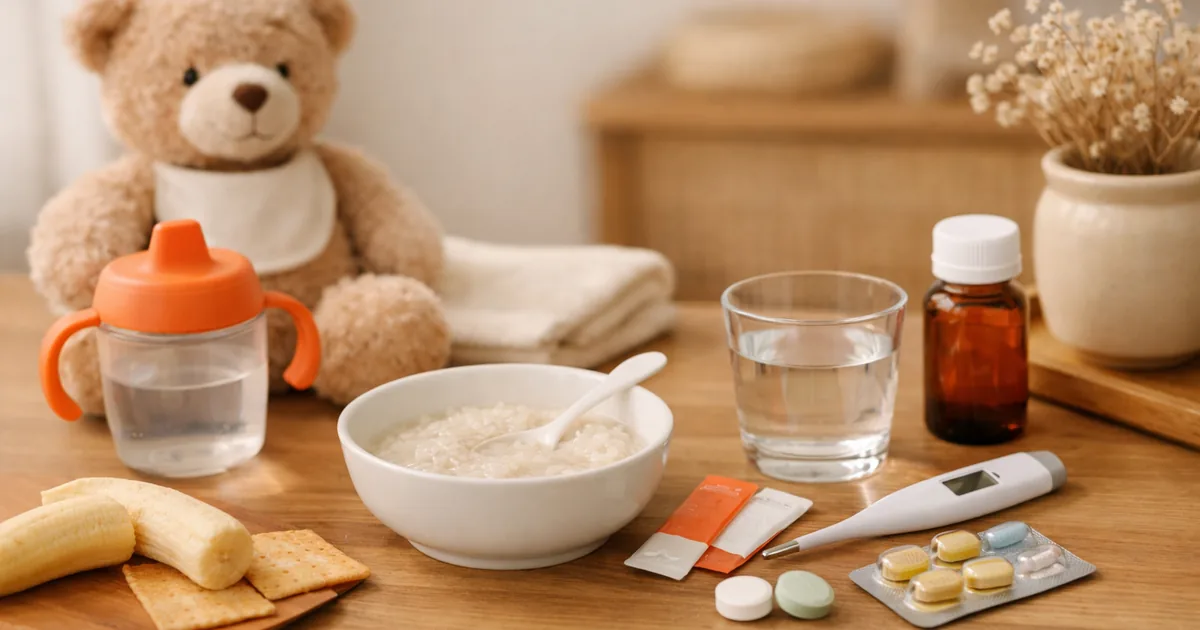
| Fluids | Oral rehydration solution (ORS), little and often. Keep breastmilk/formula going | Plain water only (lacks electrolytes); undiluted sports drinks/juice (too much sugar worsens diarrhea) |
| Food | If they want it: rice, porridge, banana, potato — normal food | Greasy foods, very sugary snacks, caffeine |
| Nursing infants | Breastmilk/formula as usual, small and frequent | Watering down formula on your own (distorts nutrition/electrolytes) |
ORS (sold at pharmacies and convenience stores) has an optimized water-salt-sugar ratio for absorption. Using the product beats mixing your own. Our home first-aid kit guide covers what to keep on hand.
How much to give: a quick guide
The rule is "small enough not to trigger vomiting." These are general starting points — increase slowly as they tolerate it.
| Child | Per serving | Interval |
|---|---|---|
| Breastfed infant | Nurse briefly and often | Rest 30 min after a vomit, then resume |
| Formula/weaning age | Start with ORS ~1 tsp (5 mL) | Every 5 min, increase if tolerated |
| Toddler (over 1) | ORS 5–10 mL | Every 5–10 min |
A whole cup at once irritates the stomach and comes back up. The "spoon method" looks tedious but it's the surest way to prevent dehydration. No need to wake a sleeping child, but keep it up diligently while they're awake.
Dehydration signs — save this table
Babies dehydrate much faster than adults. If these appear, head to a doctor.
| Level | Signs | Action |
|---|---|---|
| Mild | Slightly less urine, mouth a bit dry. Still playful, drinking well | ORS little and often, observe at home |
| Moderate | Clearly less urine, few tears when crying, dry mouth/lips, sluggish | Push ORS + see a pediatrician |
| Severe (emergency) | No urine for 6–8 hrs, sunken eyes/soft spot, limp, cold hands and feet | ER immediately |
Signs to go to the ER now
- ☐ "Severe" dehydration above (no urine for half a day, sunken soft spot/eyes, limp)
- ☐ Under 3 months with vomiting/diarrhea
- ☐ Green (bile) vomit, or blood in vomit or stool
- ☐ Can't keep down even a sip, vomiting everything for 8+ hours
- ☐ Severe pain — screaming inconsolably in waves (possible intussusception)
- ☐ High fever with lethargy or seizure (see baby fever guide)
Caution. Don't casually give anti-diarrheal medicine to babies — it can block the gut from clearing the virus/toxins and is not recommended in young children. Likewise, don't give anti-nausea medicine or antibiotics without a doctor's order. The center of treatment is fluids, not drugs.
A real example: a 10-month-old vomiting and having diarrhea all night
It starts in the evening and watery diarrhea continues through the night. ① After a vomit, rest the stomach for about 30 minutes, then give ORS a teaspoon (5 mL) every 5 minutes. ② If nothing comes up for 15–20 minutes, increase the amount slowly. If breastfeeding, nurse briefly and often. ③ If they vomit again, rest 10 minutes and restart with a smaller amount. ④ If the diaper is dry for over 6 hours, they cry without tears, or they go limp, that's dehydration — go to a doctor. ⑤ If fever is also present, give weight-appropriate medicine. Most gastroenteritis resolves in 3–5 days when fluids are protected. Unsure? See our ER vs. clinic guide.
Prevention & recovery checklist
- ☐ Thorough handwashing — gastroenteritis mostly spreads hand-to-mouth (rota/norovirus)
- ☐ Wash hands after diaper changes and before meals; sanitize toys and dishes
- ☐ Check the rotavirus vaccination schedule (for infants)
- ☐ Keep ORS at home for the nights you can't reach a pharmacy
- ☐ In recovery, briefly avoid greasy foods and very sugary snacks
- ☐ If diarrhea lasts over 2 weeks or weight drops, revisit the pediatrician
FAQ
Q. Can I give sports drinks or juice?
Not recommended. Store sports drinks and juice are high in sugar, which can pull water into the gut and worsen diarrhea. The right choice is a properly balanced oral rehydration solution (ORS).
Q. Isn't it better to fast them so they don't vomit?
No. Prolonged fasting slows recovery and raises dehydration risk. Rest the stomach briefly (about 30 minutes), start fluids little and often, and resume normal food once tolerated — that's the current guidance.
Q. How many days of diarrhea is normal?
Viral gastroenteritis diarrhea usually lasts 5–7 days, sometimes up to ten. As long as fluids hold and the child is active, it's usually fine. See a doctor for diarrhea over 2 weeks, blood in stool, weight loss, or dehydration signs.
Q. I heard not to give honey water before age one?
Correct. Never give honey under 12 months — risk of infant botulism. Rehydrate with ORS, breastmilk, or formula, not honey water.
The whole game with baby gastroenteritis is preventing dehydration: little and often, don't starve, don't casually use anti-diarrheals. No urine for half a day → go to a doctor.
This is general information, not a diagnosis. Babies dehydrate quickly — if danger signs appear, contact a pediatrician or emergency line without delay. If cough or a cold is also present, see baby cough and cold care, and our home emergency guide covers the broader basics.