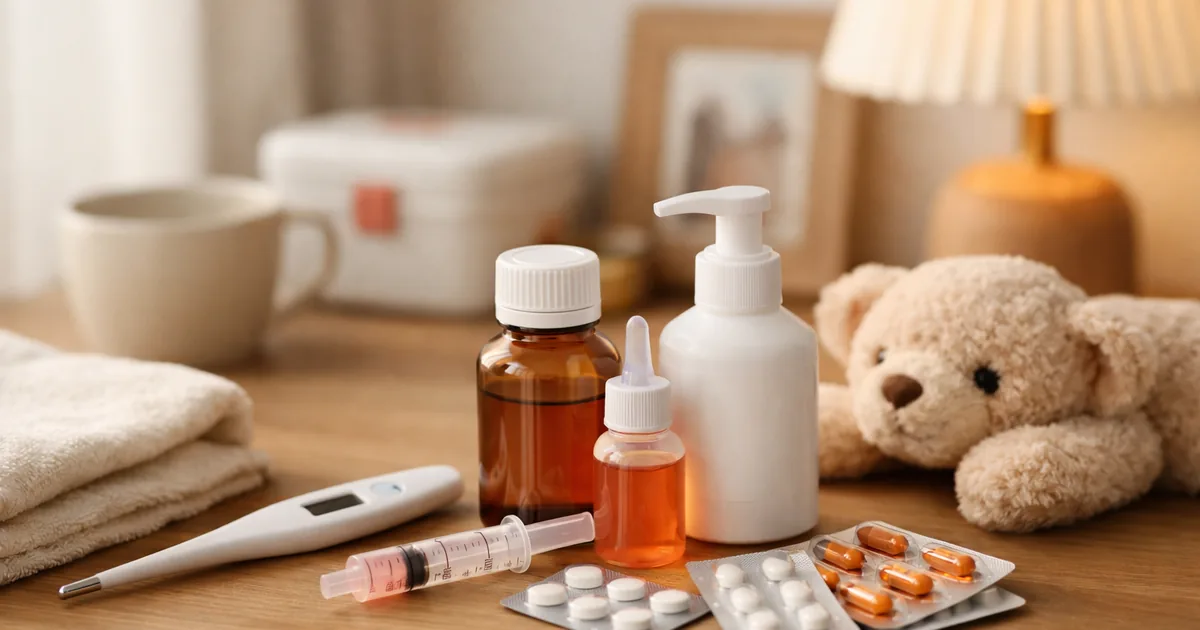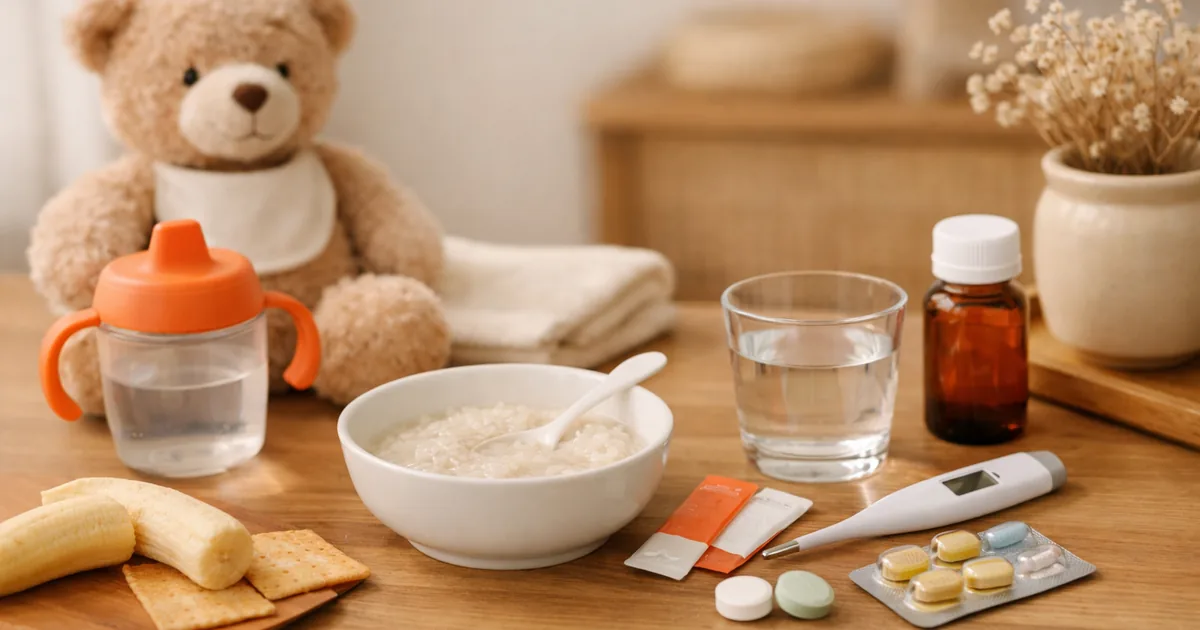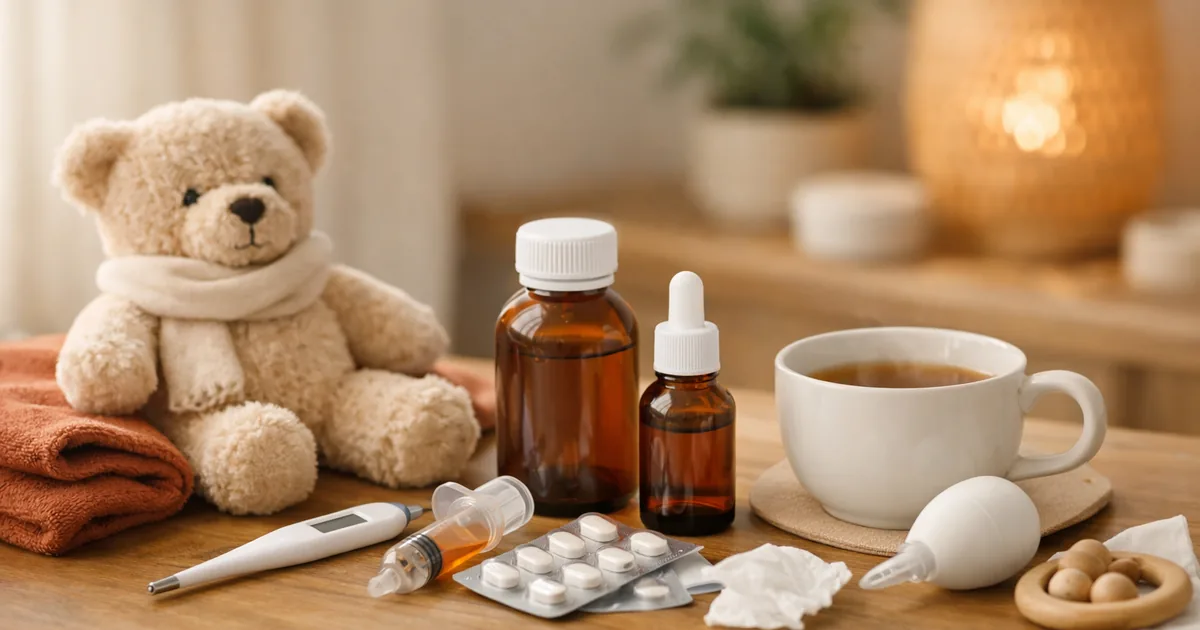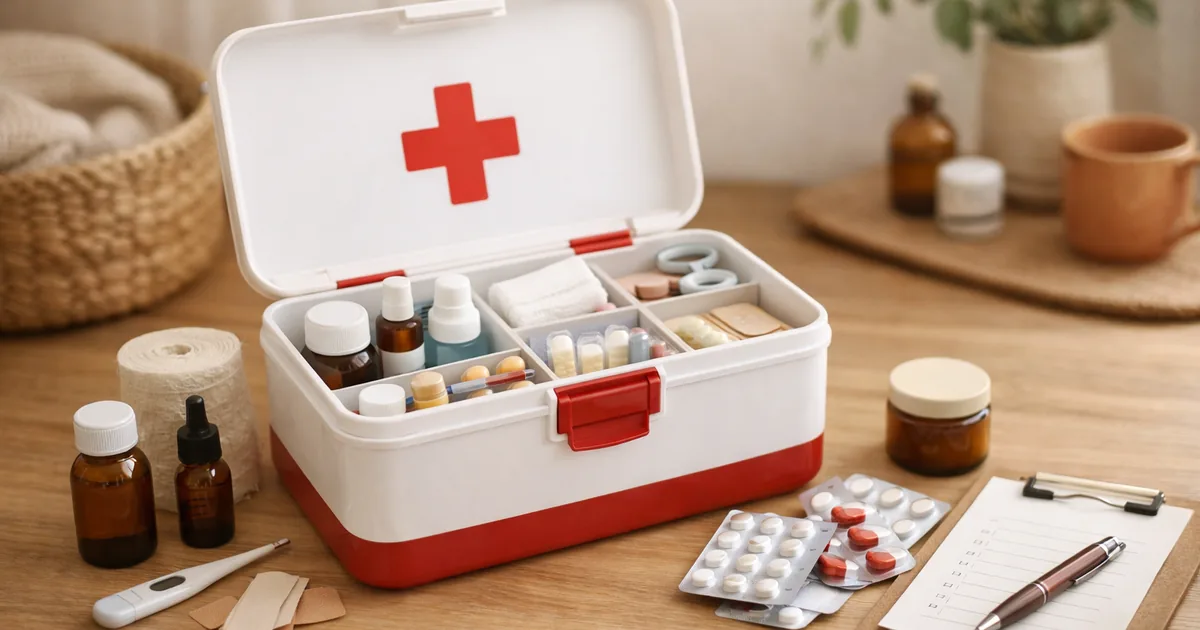
You discover there's no fever medicine in the house at 2 a.m., after the fever starts. You find out there's no sterile gauze after the knife slips. A first-aid kit can only be built before the accident. Here's exactly what to buy, how to manage expiration dates, and how to dispose of old medicine — a guide to finishing your home kit today.
The essential kit: take this list to a pharmacy
Nothing fancy is required. This entire table costs roughly the price of a takeout dinner for two.
| Category | Items | Purpose & buying tips |
|---|---|---|
| Wound care | Sterile gauze pads, paper tape, adhesive bandages (assorted sizes), elastic bandage | Buy individually wrapped gauze. The elastic bandage doubles as sprain compression |
| Povidone-iodine, small bottles of sterile saline | Saline works for wound and eye rinsing. Hydrogen peroxide is no longer recommended | |
| Oral medicine | Two classes of pain/fever relievers: acetaminophen + ibuprofen | Different classes allow alternating (ask a pharmacist). With kids, weight-dosed syrup is a must |
| Antacid, anti-diarrheal, laxative | For acute diarrhea, hydration comes first; medication is backup | |
| Antihistamine (allergies, hives, insect bites) | Second-generation ones cause less drowsiness for daytime use | |
| Topicals | Antibiotic ointment, burn ointment, mild steroid cream (bites, eczema) | Burns get cool water first; ointment only for redness-level burns |
| Pain-relief patches (cold & warm), blister bandages | Cold patches for fresh injuries (first 48h), warm for chronic aches | |
| Tools | Thermometer, scissors, tweezers, disposable gloves, cotton swabs, ice pack (keep in freezer) | A non-contact thermometer is easiest for families |
Expiration management: don't let your kit become a medicine graveyard
The biggest enemy of a first-aid kit is time — everything's expired exactly when you finally need it. The rule is simple: check twice a year, when the seasons change.
| Type | Use within (after opening) | Note |
|---|---|---|
| Tablets/capsules (sealed) | Printed expiration date | Never store in a humid bathroom |
| Syrups (children's fever medicine) | About 1 month | Write the opening date on the bottle |
| Ointments & creams | About 6 months | Discard if the nozzle discolors |
| Eye drops (multi-use) | 1 month | Single-use vials: same day only |
| Sterile saline | Immediately to a few days | Small bottles are the answer |
| Antiseptics (povidone) | 6–12 months | Discard if discolored or separated |
Key point. Don't throw expired medicine in the trash or flush it — it contaminates water. In Korea, take it to the collection box at any pharmacy or public health center; many countries have similar take-back programs at pharmacies.
Out of medicine at midnight? (Korea edition)
When every pharmacy is closed, Korean 24-hour convenience stores legally sell a set of designated OTC medicines — acetaminophen (Tylenol), cold medicine, digestive aids, and pain-relief patches. The government is currently working to expand the list (up to 20 items). Treat it as a bridge to get through one night; if symptoms continue, see a doctor the next day. For finding late-night hospitals and pharmacies, see our guide to ER vs. clinic in Korea.
Custom additions for your household
| Household | Add these |
|---|---|
| Infants and toddlers | Two classes of weight-dosed fever syrup, digital thermometer, oral rehydration solution (ORS), nasal aspirator |
| Elderly family members | Blood pressure monitor, medication list posted on the fridge, juice or candy for dizzy spells |
| Allergy sufferers | Prescribed antihistamines, an emergency action plan agreed with your doctor, epinephrine auto-injector if prescribed |
| Hikers and campers | A portable mini kit, fine-tipped tweezers for ticks; skip "venom extractors" — soap and water work better |
| Frequent travelers | A travel pouch with anti-diarrheal and motion-sickness medicine (see our travel emergency guide) |
A real-world example: Sunday-night hives
Thirty minutes after dinner, hives bloom on a family member's arms and legs. ① Give an antihistamine from the kit and watch. ② Hives alone usually fade within hours. ③ But swelling lips or eyes, a changing voice, or any trouble breathing suggests anaphylaxis — call an ambulance immediately. ④ Even if it settles, note what they ate and get an allergy test on a weekday. Knowing these decision points in advance matters more than the kit itself — see when symptoms need an ER.
Today's checklist
- ☐ Screenshot the essentials table and go to a pharmacy
- ☐ Use a lidded box or pouch, clearly labeled (an airtight container is plenty)
- ☐ Location: not the humid bathroom or under the sink — cool, dry, out of children's reach
- ☐ Tell the whole family where it is (a kit only you know about doesn't exist)
- ☐ Write opening dates on syrups and ointments
- ☐ Put two check-up dates on the calendar (e.g., first weekends of April and October)
- ☐ Bag up expired medicine for the pharmacy take-back box
FAQ
Q. Is a store-bought pre-made first-aid kit good enough?
It's a fine start, but pre-made kits are mostly bandages and gauze — they usually contain no oral medicine at all. Add the two fever-reducer classes, an antihistamine, and a thermometer yourself.
Q. Why do I need both acetaminophen and ibuprofen?
They're different drug classes, so when one isn't enough you can alternate them (confirm dosing with a pharmacist), and each suits different situations — acetaminophen is gentler on an empty or sensitive stomach. For children, always dose by weight.
Q. Can I keep leftover prescription antibiotics in the kit?
No. Prescriptions are matched to a specific illness and duration; reusing them is risky, and antibiotics should be finished as prescribed, not saved. Leftovers go to the take-back box.
Q. Is a stocked kit enough to handle emergencies?
The kit is a tool — skills make it work. Pair it with our guides to home emergencies and CPR and choking response, and keep the everyday basics strong too, like smart hydration.
A first-aid kit proves its worth in the ten seconds after an accident. Findable, usable, and known to the whole family — build it today, not the night you need it.
This article is general information. Follow package directions and the advice of pharmacists and doctors — especially for infants, pregnancy, and chronic conditions.