The accident that most often shatters an older adult's health in an instant is a fall. When you're young you brush it off; for seniors, a single hip fracture can mean months in bed, a steep drop in strength, and dangerous complications. The good news: falls are largely preventable. Here's why they happen, what to change at home, and what to do if a fall occurs.
Why seniors fall — and get hurt badly
Falls come from several overlapping factors. Reduce each and the risk drops noticeably.
| Risk factor | Why it's dangerous | What to do |
|---|---|---|
| Weak muscles/balance | Legs give out, hard to stay centered (sarcopenia) | Strength and balance exercise help |
| Poor vision | Can't see thresholds or objects | Regular eye exams, brighter lighting |
| Medications | Sleeping pills, BP drugs cause dizziness/low BP | Review meds (senior medication) |
| Dizziness/orthostatic drop | Head spins on standing | Stand up slowly, stay hydrated |
| Home hazards | Slippery floors, thresholds, cords, dim lights | Home changes below (biggest impact) |
Change the home (biggest impact)
Over half of falls happen at home. These changes cost little.
| Area | Change |
|---|---|
| Bathroom | Non-slip mat, grab bars, shower chair |
| All floors | Remove thresholds/add ramps, tidy cords, remove or secure rugs |
| Lighting | Bright, especially night lights (bedroom→bathroom path) |
| Stairs | Rails on both sides, non-slip tape, bright light |
| Layout | Keep used items at waist-to-eye level; clear clutter underfoot |
Build a fall-proof body
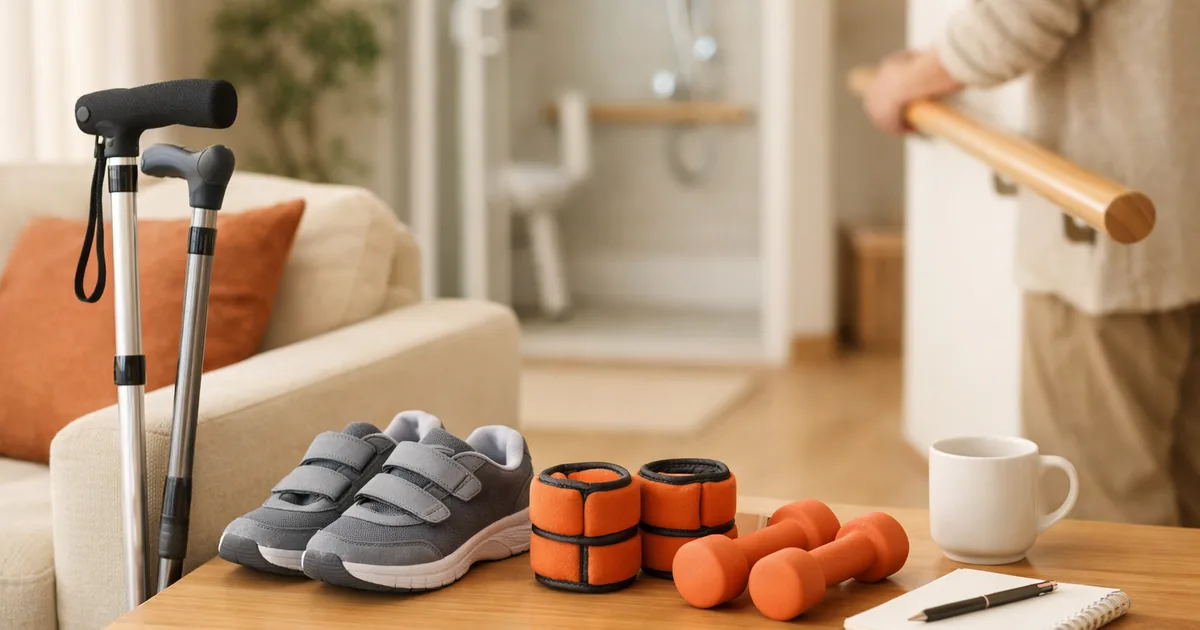
- Strength/balance exercise — leg strength and balance are key. Tai chi, chair squats, single-leg stands actually reduce falls. Start with walking (walking for health).
- Vitamin D — low levels hurt muscle and bone; sunlight, diet, or supplements (ask a doctor).
- Vision/hearing checks — regular exams keep you aware of your surroundings.
- Shoes — low heels, non-slip soles that fit. Indoors, non-slip socks/slippers.
- Move slowly — pause when rising from sitting or waking at night.
If a fall happens
- ① Pause, catch your breath, and check what hurts.
- ② If nothing hurts badly, roll to your side and rise slowly using sturdy furniture.
- ③ Severe hip/back pain, can't get up, or a head hit → don't force it; call for help.
- ④ Head hit, confusion, vomiting, or severe pain → call emergency services. Unsure? See ER or clinic?
Caution. Even if an older adult says "I'm fine," the hidden problem (hip fracture) can be serious. Pain on standing or a changed gait needs a check-up. Seniors living alone should keep an emergency contact (phone/alert button) within reach at all times.
Example: fall-check your parents' home
Doing a weekend check. ① Add a non-slip mat and grab bar in the bathroom first (biggest impact). ② Put a sensor night light on the bedroom-to-bathroom path. ③ Tidy cords and slippery rugs; check thresholds. ④ Gather their meds into a medication list and ask at the next visit about dizziness-causing drugs. ⑤ Start walking and leg-strength exercise together. These five steps cut fall risk dramatically.
Fall-prevention checklist
- ☐ Bathroom non-slip mat + grab bar
- ☐ Night lights (bedroom to bathroom)
- ☐ Clear thresholds, cords, rugs
- ☐ Leg strength/balance exercise 2+×/week
- ☐ Low-heel, non-slip shoes
- ☐ Regular eye exams + medication review
- ☐ If living alone, carry an emergency contact device
- ☐ Stock a home first-aid kit
FAQ
Q. Isn't it safer to just move less?
The opposite. Moving less weakens muscles and balance, raising fall risk. Steady walking and leg-strength work in a safe environment is the best prevention.
Q. Which exercises help most?
Those combining balance and leg strength — tai chi, sit-to-stands, wall-supported single-leg stands, heel raises. Start near something to hold, without overdoing it.
Q. Do I need a vitamin D supplement?
Low levels hurt muscle and bone, but more isn't always better. Test your level and set a dose with your doctor.
Q. Why is a hip fracture so dangerous?
Months of bed rest for surgery/rehab cause a sharp loss of strength and lung function, and complication risk (pneumonia, clots) rises. That's why "not falling" beats any treatment.
Falls aren't luck — they're prevention. Bathroom grab bars, night lights, leg strength: these three alone cut the risk sharply. And if you fall, don't force yourself up — check your condition first.
This is general health information, not a diagnosis or treatment. Recurrent falls or suspected fracture need medical evaluation. See also our sarcopenia guide and home emergency guide.