If a flight of stairs leaves you out of breath, you're always tired, your skin looks pale, and your nails crack easily — it may not be plain fatigue but iron deficiency (iron-deficiency anemia). It's very common in women of reproductive age, yet easy to shrug off. Here's why it happens and how to fix it.
Why it's common in women
Iron is essential for red blood cells to carry oxygen. When it's low, less oxygen reaches your body, causing fatigue and dizziness. Women are especially prone for these reasons:
| Cause | Detail |
|---|---|
| Menstruation | Monthly blood (and iron) loss — the biggest cause |
| Pregnancy & nursing | Iron demand jumps for baby and milk |
| Heavy periods | More bleeding, more loss |
| Dieting / picky eating | Too little meat and iron |
| Gut issues | Poor absorption, chronic bleeding |
So many women live with borderline low iron and mistake it for "just being a tired person."
Symptoms to suspect
| Area | Symptoms |
|---|---|
| Whole body | Fatigue, weakness, breathlessness on exertion |
| Head | Dizziness, headache, poor focus |
| Skin & nails | Pallor, thin brittle (spoon-shaped) nails |
| Other | Hair loss, cracked mouth corners, craving ice, restless legs |
Key. Craving ice or restless, tingly legs at night are classic iron-deficiency signs. One blood test (hemoglobin + ferritin) settles it.
Fatigue and dizziness also overlap with thyroid issues and menopause, so confirm with a test rather than guessing.
Diagnosis — hemoglobin vs ferritin
| Marker | Meaning |
|---|---|
| Hemoglobin (Hb) | Current anemia. In women, under 12 g/dL = anemia |
| Ferritin | Stored iron. Low = depleted even before anemia |
Hemoglobin can be normal while ferritin is low — and you may already have fatigue and hair loss, so checking ferritin matters (reading lab numbers).
Eating to restore iron
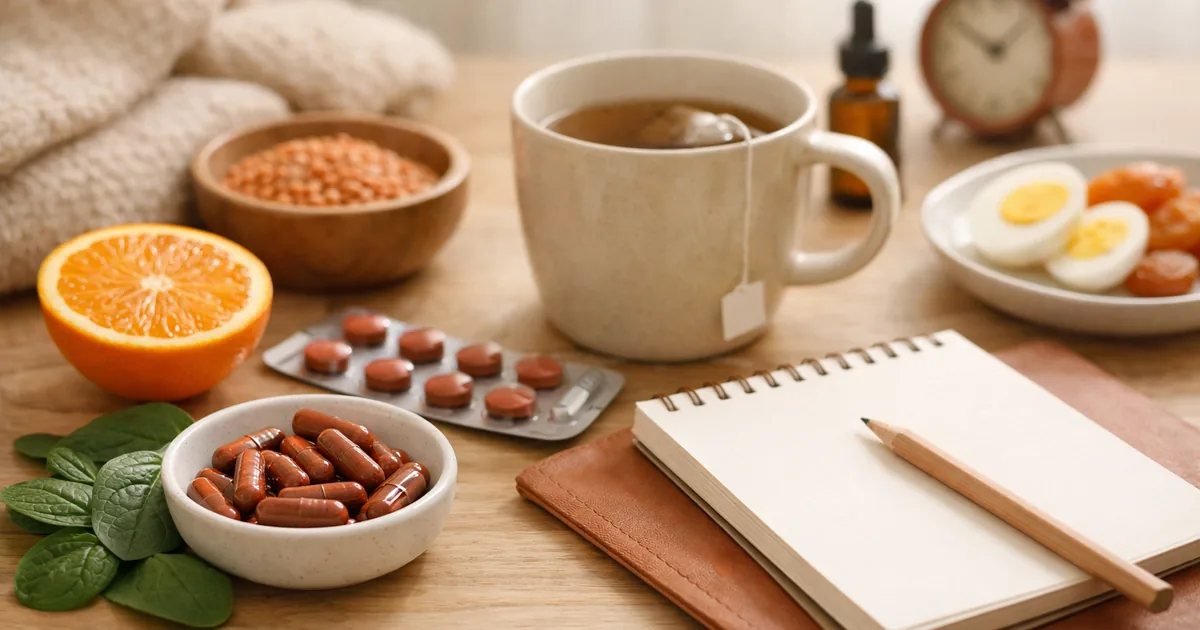
There are two kinds: heme iron (animal, well absorbed) and non-heme iron (plant, poorly absorbed but boosted by vitamin C).
| Type | Foods | Tip |
|---|---|---|
| Heme (high) | Beef, liver, clams, oysters, red meat | Most efficient |
| Non-heme | Spinach, tofu, beans, eggs, prunes | Pair with vitamin C |
| Blockers | Coffee/tea (tannin), dairy (calcium) | Avoid right after meals |
So combine iron + vitamin C (beef with peppers, tofu with broccoli), and keep coffee away from meals.
Taking iron supplements
- Better on an empty stomach — but take with food if it upsets you; orange juice (vitamin C) helps absorption.
- Separate from calcium and coffee — space them by ~2 hours.
- Dark stools are normal — a common, harmless effect.
- Keep taking it long enough — even after hemoglobin normalizes, continue 2–3 months to refill ferritin.
- Don't mega-dose on your own — excess iron can harm; check the dose.
When to see a doctor
If it keeps recurring, if your periods are very heavy, or if you see signs of gut bleeding (black/bloody stool), the cause needs investigating. Anemia in men or postmenopausal women especially warrants checking for hidden bleeding.
FAQ
Can I just eat lots of spinach?
Plant iron absorbs poorly. Add heme iron (red meat) and pair with vitamin C for far better results.
How long do I take supplements?
Even after hemoglobin normalizes, refill stored iron — usually 2–3 more months, then recheck ferritin.
Does anemia make you faint?
Iron-deficiency anemia usually develops slowly, so it shows as chronic fatigue and breathlessness rather than fainting.
Behind a woman's chronic fatigue there's often hidden iron deficiency. Check hemoglobin and ferritin together, eat "iron + vitamin C," and take iron consistently.
This is general information, not a diagnosis or prescription. Anemia has many causes — if you have symptoms, get a blood test and see a physician. See also menopause and osteoporosis in women.