Have you ever paid faithfully into a savings plan for years, then felt deflated at the interest you got back? "All those years, and this is it?" You didn't do anything wrong — savings alone just don't grow money much.
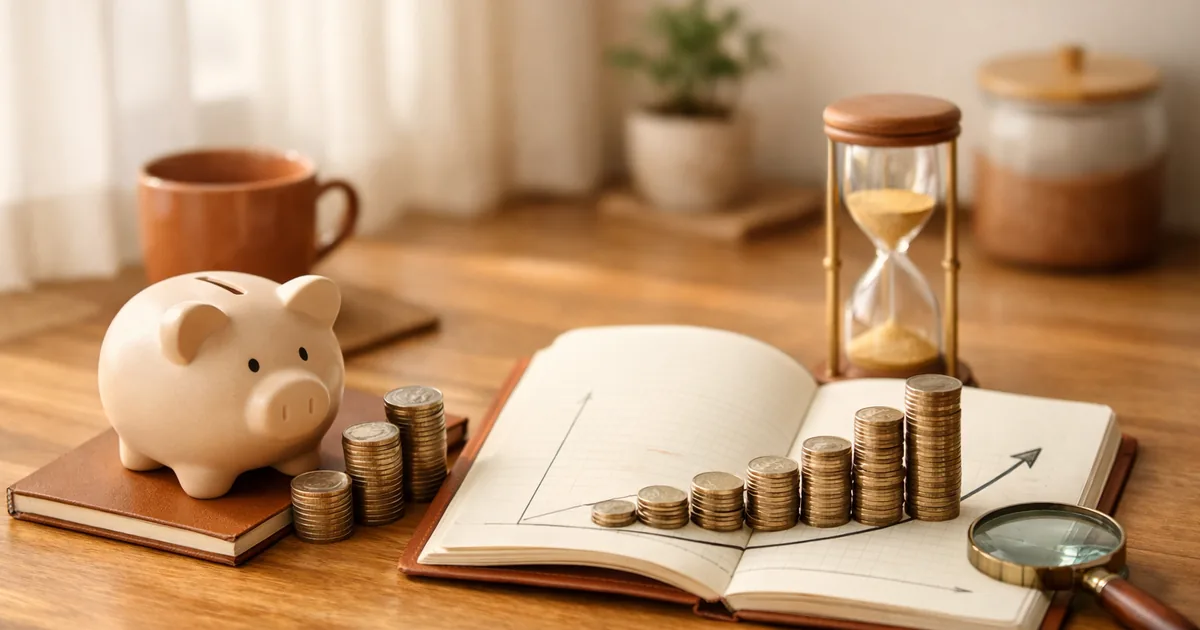
The key is compounding and time. With the same money over the same period, letting gains earn their own gains makes the gap widen like a snowball. Twenty years later the difference is bigger than you'd guess.
Want to see it in numbers? Try the compound interest calculator — enter an amount, rate and horizon to see the balance grow monthly, yearly, or in 5-year steps.
Why savings-only falls short
Savings are safe and certain. But the interest is low and prices rise. When inflation outpaces interest, your money loses value just sitting there. Deposits suit emergency funds and short-term goals — but parking money you could leave for years entirely in savings wastes time.
What compounding is — the snowball
Compounding means gains are earned not just on your principal but on the gains already added. The difference is small at first, then the curve steepens. So the earlier you start and the longer you stay, the better. "How long" matters as much as "how much."
Even contributing the same amount monthly, a ~2% savings plan and a long-term diversified investment (assumed rate) can end up far apart after 20 years. See the exact figures in the compound interest calculator.
So where do you start
- Emergency fund (3–6 months) first — keep that in a parking account. Investing comes after.
- Fill the tax-advantaged "buckets" — the same investment inside an ISA, pension savings or IRP saves tax, so compounding works even harder.
- Diversify, stay long — spread broadly rather than betting on one thing, on the premise of holding for years.
FAQ
So should I not use savings plans at all?
Not at all. For an emergency fund or money you'll use within 1–3 years, deposits are right. The problem is putting even long-term money entirely into savings. Split by purpose.
Isn't investing risky?
Investing can lose principal. That's why you build the emergency fund first and invest only spare money you can afford to lose, diversified, over a long horizon.
What return should I assume?
No one can guarantee future returns. The calculator's rate is only an assumption — it's safer not to plan around optimistic numbers.
The most powerful ingredient in compounding isn't money — it's time. Rather than waiting for perfect timing, it's better to start small and early.
This is general information, not a product recommendation or investment advice. Investing carries the risk of losing principal, and the final decision and responsibility are yours.