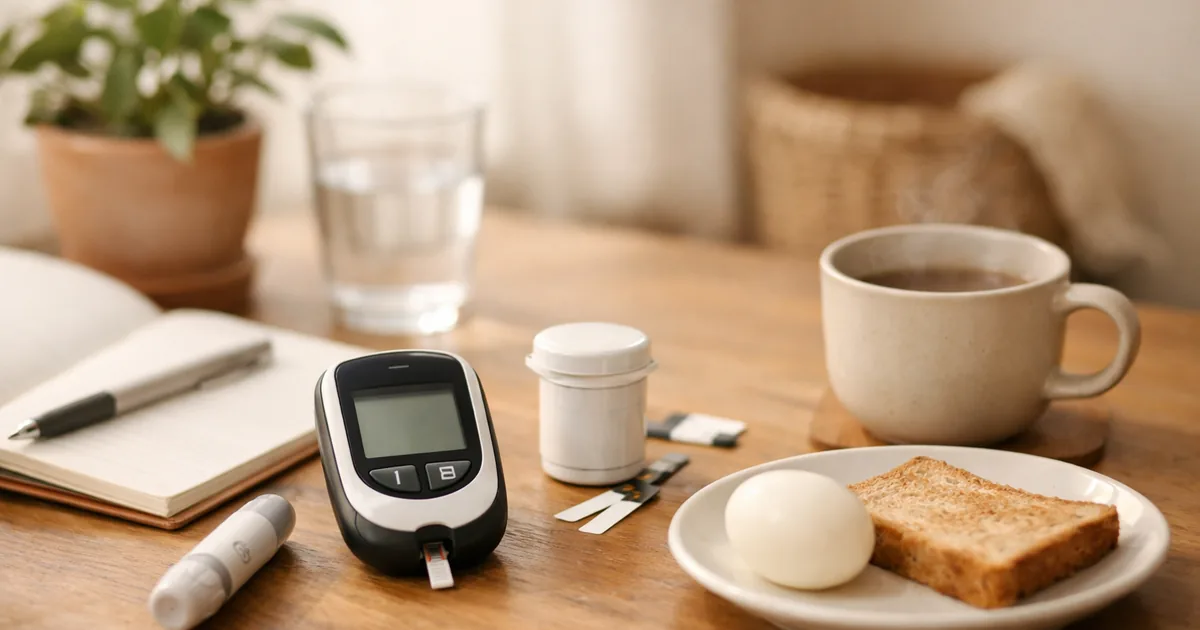
Ever glanced at a check-up result showing "fasting glucose 108 — normal B" and moved on? It's a relief that it isn't diabetes, but this may be the kindest warning your body will ever give you. It's prediabetes.
Here's what matters: diabetes is hard to reverse, but prediabetes can return to normal with lifestyle changes alone. That's why catching this window counts.
The numbers — fasting glucose 100–125 mg/dL, HbA1c 5.7–6.4%, or a 2-hour glucose tolerance result of 140–199 mg/dL. Any one of these indicates prediabetes. (Fasting ≥126 or HbA1c ≥6.5% meets the diabetes diagnostic criteria.)
The signals — though there may be none
To be honest up front: prediabetes usually causes no symptoms. That's why lab numbers are the clearest clue. Still, if several of these overlap, it's worth checking.
- Unusual thirst and drinking more often
- Frequent urination, including waking at night
- Tiring easily, with heavy post-meal sleepiness
- Wounds that heal slowly or frequent skin infections
- Dark, thickened skin on the back of the neck or armpits (acanthosis nigricans — a sign of insulin resistance)
That last one is less known but meaningful. If darkening on the back of your neck won't scrub off, have it looked at.
Get tested even without symptoms if you have
- Overweight or abdominal obesity
- A parent or sibling with diabetes
- Diagnosed hypertension or dyslipidemia
- A history of gestational diabetes or a baby over 4kg
- Little exercise and long hours sitting
How to turn it around
The most reliable lever is weight loss. Research shows that losing just 5–7% of body weight substantially lowers the risk of progressing to diabetes — about 3.5–5kg for a 70kg person.
- Change your eating order — vegetables and protein first, rice or noodles later. The same meal raises glucose less.
- Walk 10–15 minutes after meals — the easiest way to blunt the post-meal spike.
- 150 minutes of cardio weekly plus strength work twice — more muscle means a bigger storage tank for glucose.
- Cut liquid sugar — drinks and juices raise glucose fastest.
- Sleep and stress — poor sleep worsens glucose control.
FAQ
If fasting glucose is normal, am I fine?
Not necessarily. Some people have normal fasting glucose but elevated post-meal levels, so if you have risk factors, HbA1c or a tolerance test is worth adding.
What is HbA1c?
It reflects your average glucose over the past 2–3 months, so it's less swayed by a single day.
Do I need medication at this stage?
Usually lifestyle change comes first. If risk is high, a doctor may consider medication — discuss it at your visit.
How often should I test?
With a prediabetes result, yearly checks are commonly advised. Set the interval with your doctor.
Prediabetes isn't a disease — it's an opportunity. Catch it here and you can return to normal without medication.
This is general health information and does not replace medical diagnosis or treatment. Always discuss lab results and treatment with a healthcare professional.